Daily insights for city builders, delivered every morning at 6 AM ET. I’m Brandon Donnelly — a Toronto-based real estate developer and founder of Globizen. I’ve been writing here since 2013.

Author: Brandon Graham Donnelly

  • Fashion and design capital of the world!

    The first and only other time that I have visited Milan was over 20 years ago. I was 19 or so, and a close friend and I decided to take the train into Centrale without a place to stay and without a plan, other than to get into some trouble.

    We ultimately succeeded at this ambitious plan. But I clearly didn’t see enough of the city, and I left thinking that it was a bit of a grimy and sleepy place. I was disappointed. I thought it would be fashion everywhere, and it wasn’t for me. And this impression has lingered with me ever since.

    Boy have I been missing out.

    I have fallen in love with Milan on this very short trip. It really is a capital of fashion and design. This is not a city of meandering tourists looking for the Pantheon (okay, there’s still some of that); it is a big city of business and culture. And if I had to compare and contrast it to other cities, I would say this.

    Its built form is not nearly as manicured and as fussy as Paris’. In fact, in some ways, it’s a bit like Toronto. Its overall urbanism is messier, and you have to scratch beneath the surface and sneak into some courtyards before you really uncover its true beauty. But once you do, it’s magical.

    At the same time, its street fashion strikes me as being slightly fussier. There is an effortlessness in Paris that doesn’t seem as pronounced in Milan (though it is still there). Here, there’s a little more flash and a little more, “I’m sexy and stylish, and I would like you to be aware of that.”

    But this is not to say that you won’t see men and women in suits and stilettos riding a bicycle. It still feels effortless. It still feels natural. And when you’re here, you can’t help but feel like you’re probably not stylish enough for this capital of fashion and design.
  • A few observations about Venice

    We are on the train headed to Milan this morning, so as is customary on this blog, here are a few observations from the last few days in Venice:

    • Venice was a dominant republic for some 1,000 years. It was the fulcrum point of trade in Europe and, at one point, its wealthiest city. But that started to change in the 15th century, which is an important reminder that nothing is guaranteed. The world changes. Markets change. And maybe you won’t be as relevant tomorrow, unless you can find another economic reason for being.
    • If you’re an old city with lots of history, perhaps the easiest fallback plan is tourism. And it goes without saying that Venice gets a lot of tourists. I was, of course, one of them. After Italian, the most commonly overheard language on the streets seemed to be French. Maybe it was the time of year?
    • Besides my debilitating spring allergies, May feels like a reasonably optimal time to visit the city. I don’t think you want to visit Venice in peak summer. Too many meandering tourists taking photos (myself included). And too hot and humid. A high probability of “walking rage.”
    • Hotels in Venice are not cheap. But the city itself didn’t seem overly expensive, at least compared to many other top tourist destinations. Think €2.50 jugs of wine, €20-30 for very nice local leather goods, and €110 for a 7-course Michelin-starred meal.
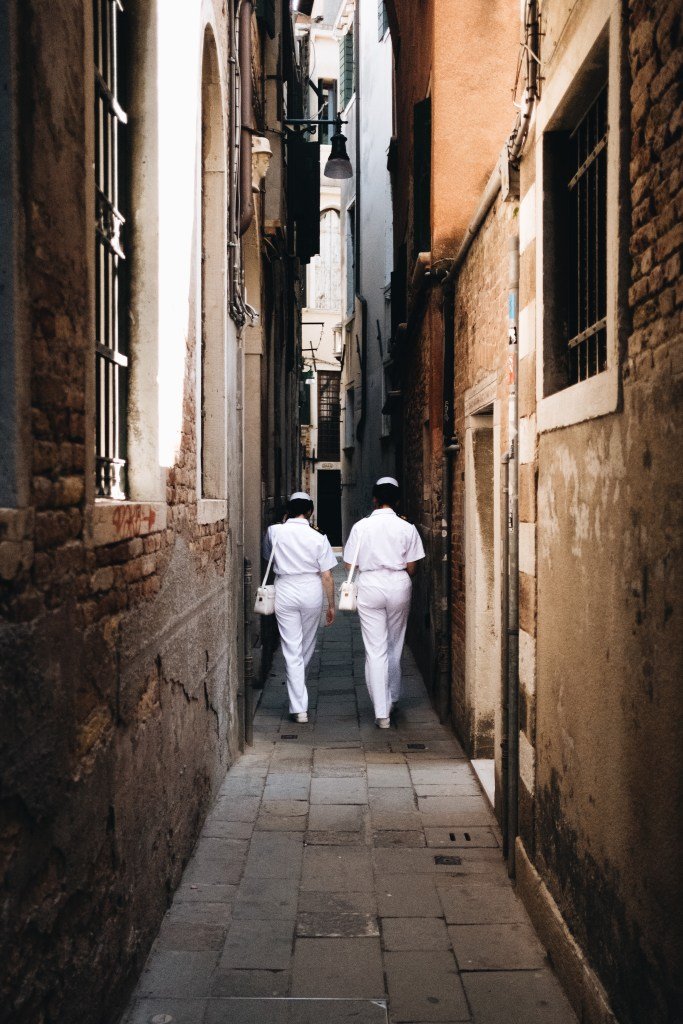
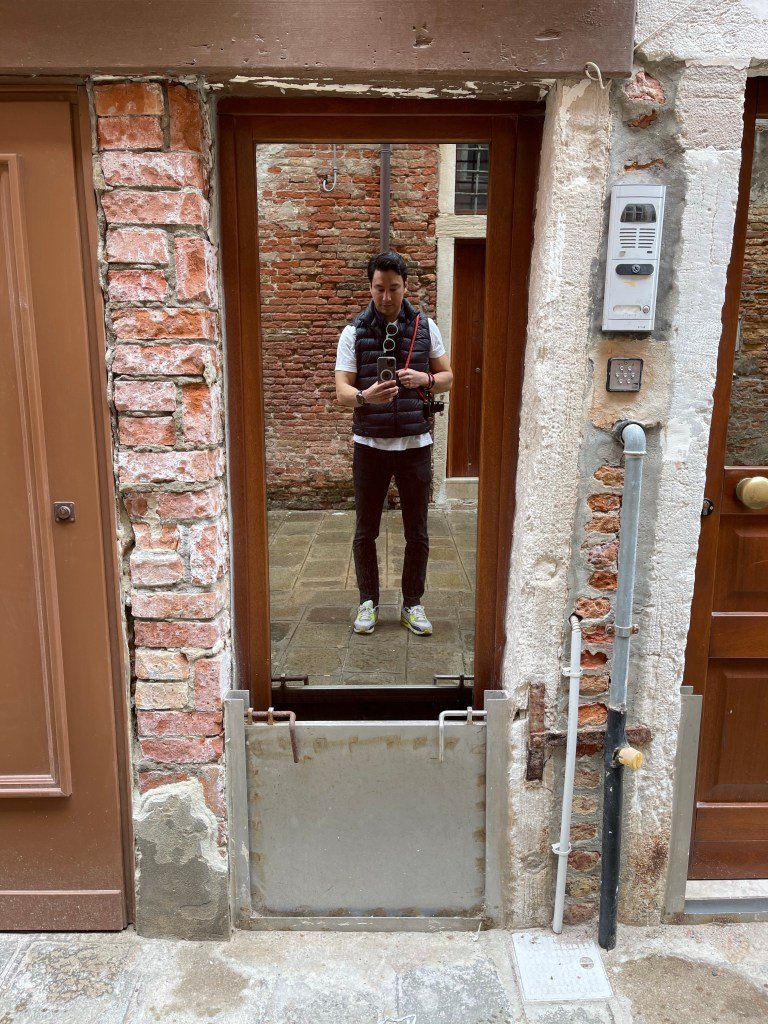
    • Venice has some of the most compact streets I have ever walked in. I didn’t have my laser distance measurer on me, but in many cases, you can barely fit two people side-by-side. I certainly couldn’t extend my arms fully outward. (See above photo.)
    • Wonderful doorbells. Virtually every apartment in Venice, has an array of doorbells at its front door. They are beautiful, typically in metal, and almost always round. But in addition to looking nice, there is also something very personal and about seeing people’s names right on the street. This probably tells you something about how differently privacy and security are viewed in the city.
    • That said, Venice isn’t a place where I would want a pied-à-terre. (I like to think about this sort of thing when I travel because it speaks to impressions of a place.) I mean, I love it, but: Too many tourists and the whole “we are sinking and have regular floods” thing seems like a bit of a problem. For me, it’s a city that I’d like to regularly visit. We spent much of our 2 days at the Venice Biennale, and there’s obviously a lot more to see.
    • Finally, and this also goes without saying, but Venice is a city that is necessarily preoccupied with controlling water. Our hotel room had big rain boots in it, just in case. The base of every building is generally solid up to knee height. Interiors have tall tile baseboards. Front doors have removable flood dams. And there are markings across the city indicating some of its historic flood levels. As I understand it, this was always a problem for Venice; however, it is getting worse. I think it tells you just how economically valuable it was for Venice to be located where it is, in a shallow lagoon at the top of the Adriatic Sea.
  • Harnessing air conditioning condensate

    We spent yesterday and today at the Venice Biennale (both the Giardini and the Arsenale). I really enjoyed it and I’m glad that I was finally able to attend. One of my favorite exhibits was Bahrain’s. It is called “Sweating Assets”, and it’s a demonstration of how air conditioning condensate might be harnessed from the country’s significant cooling infrastructure.

    Here’s a video of it in action:

    In the middle of the exhibit is a big glass box. This is meant to represent a ubiquitous conditioned space. And as the humid Venice air hits this glass box, condensation is created. This water is then channeled to various soil deposits, where greenery is already starting to grow. And presumably it will continue to grow over the life of the exhibit.

    They were careful not to come across as encouraging excessive air conditioning. This was not the point. Instead, the message was: Air conditioning is already an omnipresent necessity in the country, and here is how something that is mostly ignored today — AC condensate — could be turned into a meaningful asset.

    I thought it was clever. And they also gave out a nice book for free.

  • Streets of Venice

    This entire city is centered around controlling water. Omnipresent front-door flood dam:

    Venice has great doorbell game. If it hasn’t already been done, I think someone should make a coffee table book of these:

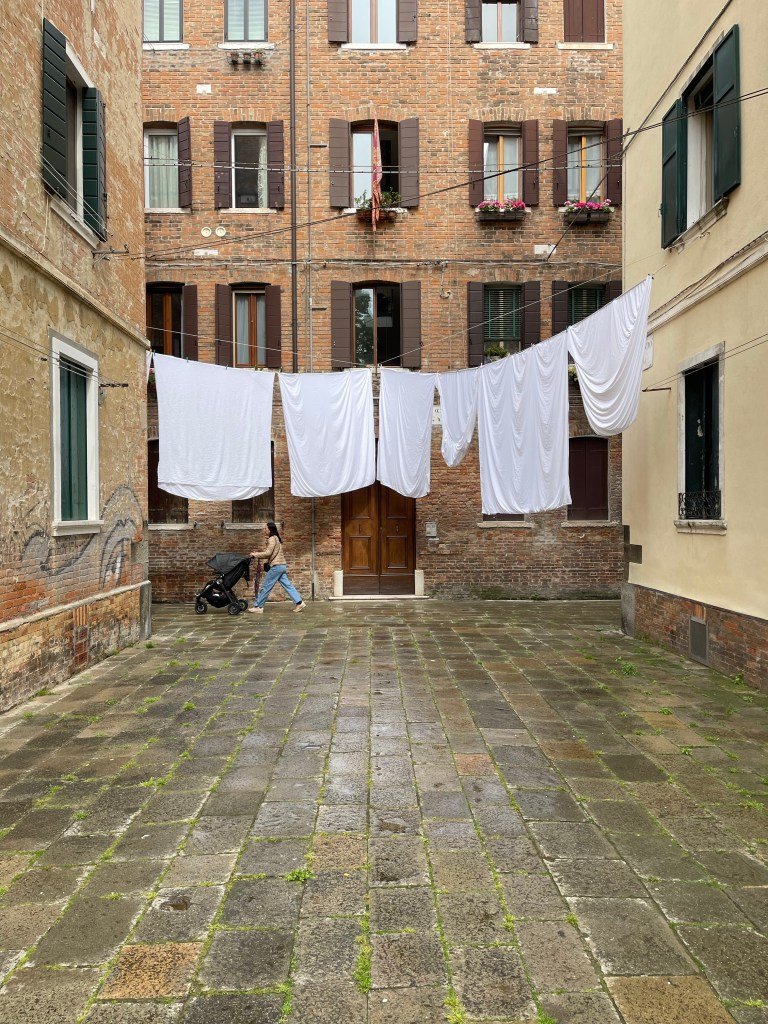
    This city is also quite prolific when it comes to urban laundry:

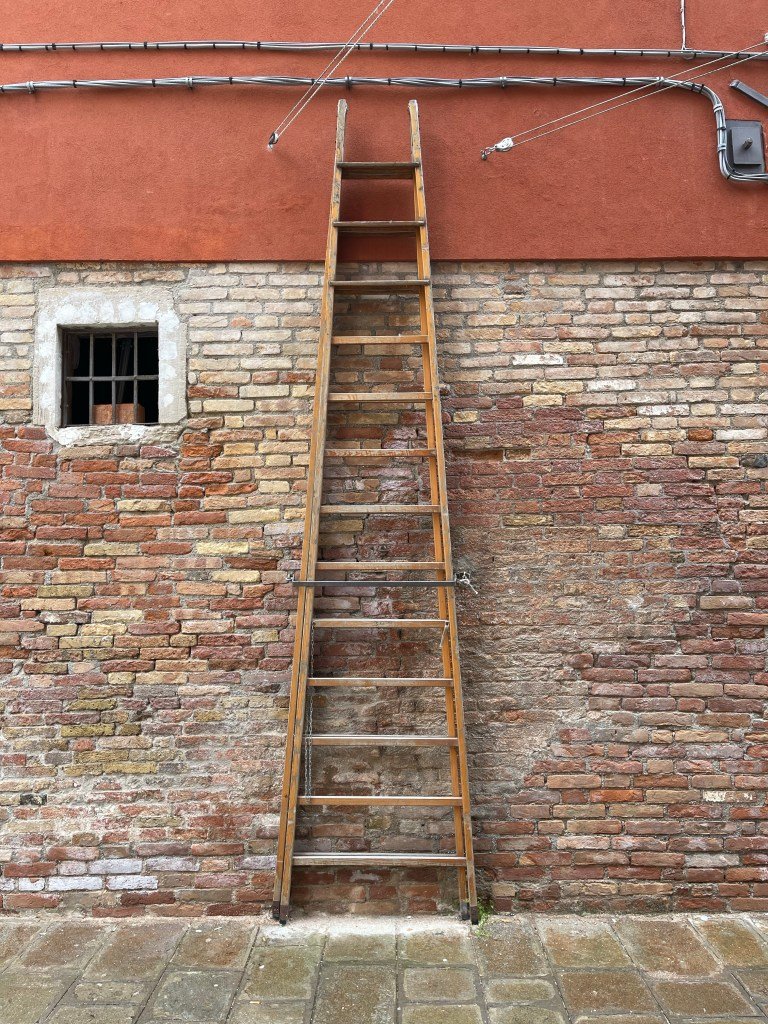
    We found a number of these street ladders. Presumably laundry related:

    Religion in the streets:

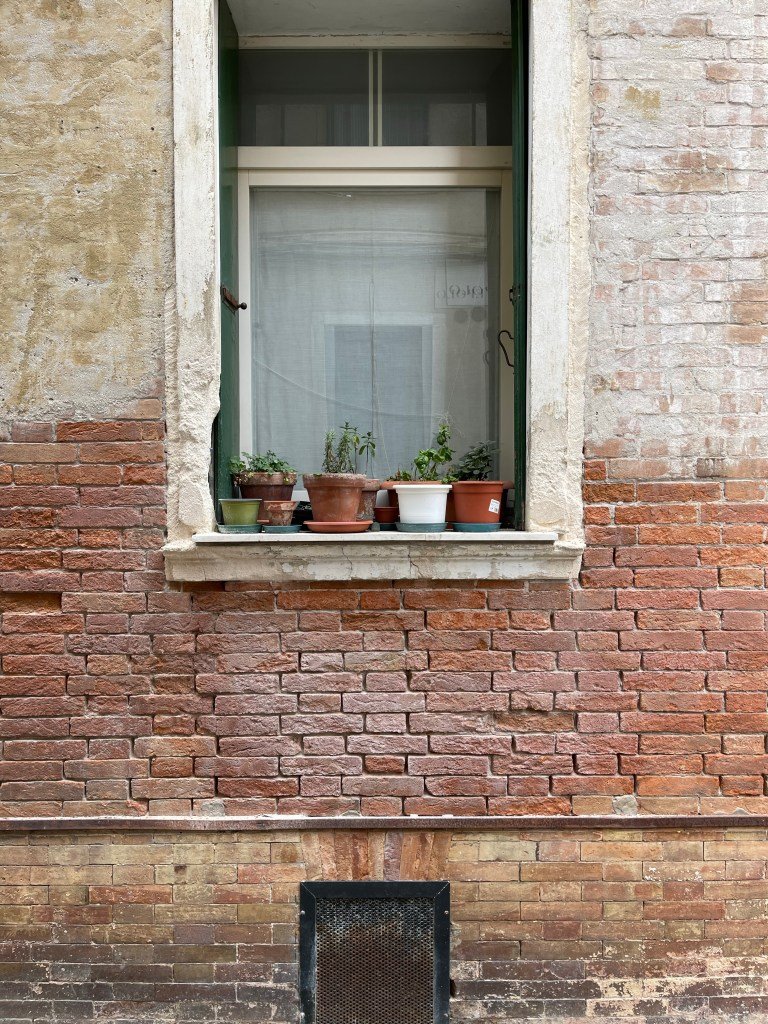
    Window garden:

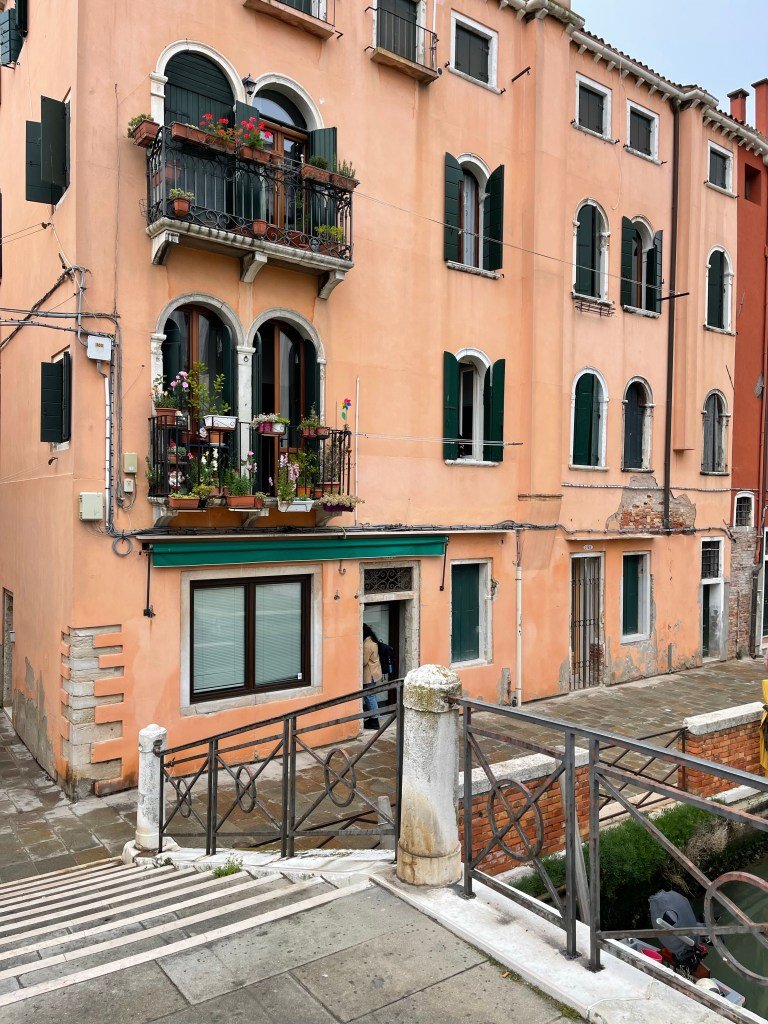
    Balcony gardens. Your reminder that (1) small balconies can still be impactful and that (2) balconies with a relationship to the street are used differently:

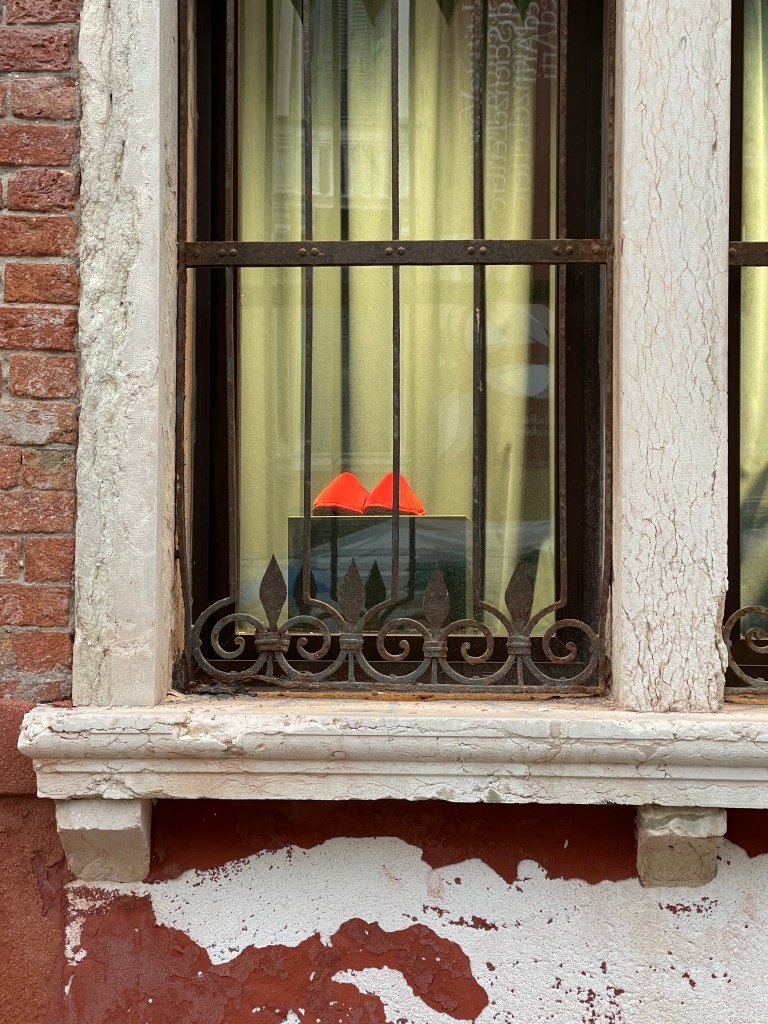
    Colorful shoes and green curtains:

    Grand Canal:

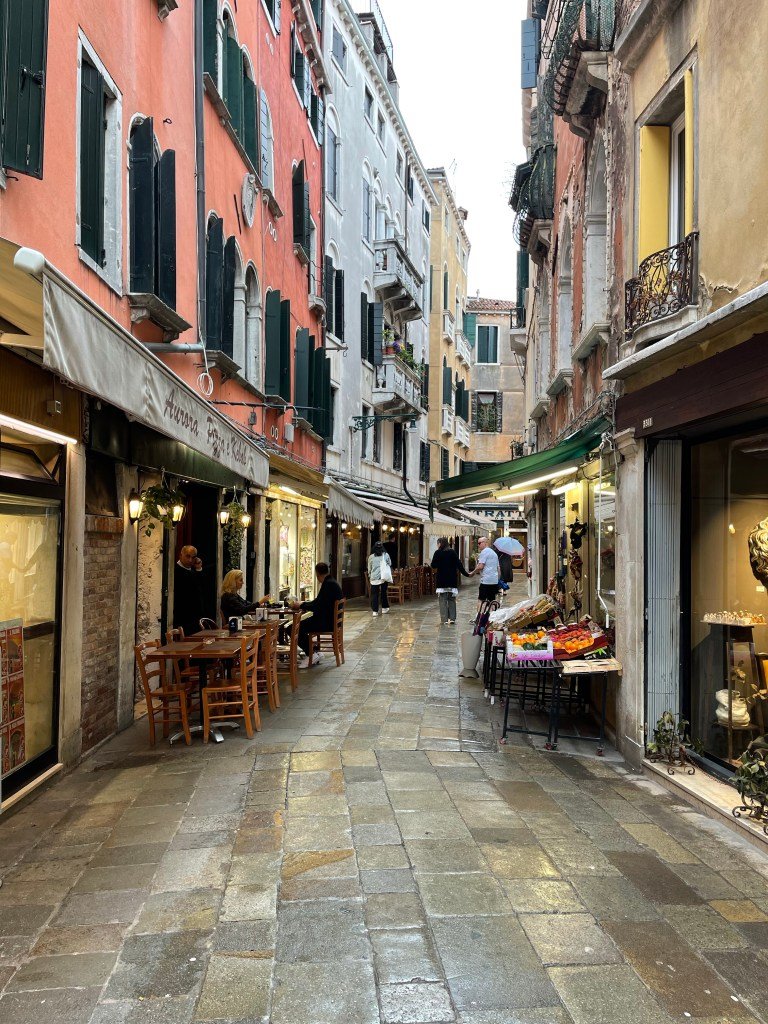
    The kind of street we should allow in North American cities:

  • Sam Zell dies at 81

    Sam Zell, the billionaire real estate investor, died this week at the age of 81. That seems young to me. Or maybe I’m just being overly optimistic about life expectancy. This is around the US average.

    Whatever the case, if you work in real estate, you likely know/knew of Sam. In my case, he spent a lot of time at Penn after he permanently endowed the real estate center (under both his name and his late business partner’s name).

    I used to go and listen to him speak at least twice a year, and I would hang off his every word as a young student of real estate. “So wait, how does this all work?”

    It was also at this time that he sold Equity Office to Blackstone for $39 billion (back in 2007, it was the largest private equity deal in history). Sam’s explanation for doing this deal was that Blackstone offered him more than what he thought the portfolio was worth, so he sold it. He took no credit for good market timing.

    If you’ve ever heard Sam speak, you know that he’s incredibly direct. Generally, he also didn’t seem to give a fuck, and was happy being the only person in a Hawaiian shirt among a sea of blue and black suits.

    In fact, he’s largely the reason that, as students, we used to all joke that the richer the speaker, the more funny and honest they would be. “Come on, let’s go to this one. She’s rich.” I guess this is just what happens when you no longer have anything to prove.

    But none of this is to say that he didn’t care. He cared a great deal about the school and about helping young students. And for that, I say: thank you Sam. Thank you for being generous with your time.

  • Toronto’s next best photo-op is in the Junction

    Today is a travel day, so I don’t have a whole lot to say. But BlogTO did just publish a story about our Junction placemaking sign: “This intersection is set to become Toronto’s next best photo-op.” I am also happy to report that the sign’s timer has now been installed, which means that, starting today, it will get illuminated each night from sunset to 11PM. (We’re required to shut it off at this time because, you know.)

    So far the response has been overwhelmingly positive. And I truly hope that this installation will become a symbol for the Junction neighborhood. This was our sole purpose for pursuing it. It would also be ironic if something that was so difficult to get approval for ends up being loved by city. Perhaps it’s a lesson that stubbornness can be a good thing when you believe in something.

  • Corktown Condos just launched!

    Today was the official launch of Corktown Condos. (In case you missed it, I wrote about Corktown last month, over here.) So what does this actually mean? What it means is that we got a small group of 500+ agents and brokers together to tell them about the project. We talked about our love of Hamilton and provided an overview of the project’s amenities, suite pricing, deposit structures, and so on. Everyone who attended now also has access to our broker portal, where all of this information is stored.

    However, no actual purchase agreements were signed today. That’s for later. The first signing event will take place on Saturday, May 27th starting at 12PM, at 30 St. Clair Avenue West, Suite 103, in Toronto. So if you’re interested in Corktown, I would encourage you to attend on this date. Feel free to also reach out to our sales team if you have any questions (sales@corktown.condos). The people you want to connect with are Shannon Glas, Daniella Commisso, and/or Hansen Chu. Hopefully I’ll see you there next weekend!

  • World’s largest asset manager now wants people in the office 4 days a week

    The trend continues. BlackRock — the world’s largest asset manager with about 20,000 employees in more than 30 countries — announced today that employees need to be in the office at least 4 days a week starting this September. This is an increase from the current 3 days a week.

    You can’t read the news today without seeing some sort of headline about the demise of downtowns. But what is clear from announcements like these is that we still have yet to reach an equilibrium. And it’s probably just taking a lot longer than most people initially anticipated.

    I know that this is a very divisive topic and that many of you think I’m old school for continuing to say this. But I fundamentally believe that there are irreplaceable benefits to in-person interactions among teams. I don’t know, maybe it’s because of my architecture background.

    In architecture school you’re expected to spend all of your time “working in studio.” And even though you’re often working and producing things on your own, you do it so that you can be around your peers, shout out questions when you need help, learn from their work, and go for burritos and beers together.

    And it was such a fun and creative experience for me that I can’t imagine what it would have been like had I been forced to work from my apartment. I probably would have had an equal number of burritos, but maybe a lot less beer?

  • How disruptive is AI really going to be?

    AI is going to be very disruptive, right? At this point, I think it is pretty clear to most that the answer is yes, almost regardless of what industry you’re in. But is it going to be really disruptive? Like disruptive in the Clayton Christensen sense of the word. (Christensen is known for coining the term “disruptive innovation“, which he contrasted against “sustaining innovation.”)

    This is a good question, and I like how Ben Thompson thought about it in his newsletter this morning:

    I tend to believe that disruptive innovations are actually quite rare, but when they come, they are basically impossible for the incumbent company to respond to: their business models, shareholders, and most important customers make it impossible for management to respond. If that is true, though, then an incumbent responding is in fact evidence that an innovation is actually not disruptive, but sustaining.

    The point he is making is that given that the big tech companies (and of course everyone else) are all now responding to AI by incorporating it into their businesses, it, by definition, must not be a disruptive innovation. It’s a sustaining one. This doesn’t mean that AI won’t have significant impacts on our economy; it just means that maybe it won’t put a company like Alphabet out of business.

    I thought this was an interesting way of looking at things because it is a reminder that “disruptive innovations” often start out at the bottom of the market. They start in a way that can feel innocuous to incumbents; that is, until they move upmarket. But this is not at all how AI feels. As soon as you play around with ChatGPT you immediately think to yourself, “holy shit, this thing can do my job.”

    That is obviously something very meaningful. But is it going to shake up the big tech world order? I don’t know, if you follow Christensen’s definition, crypto sounds like the more disruptive innovation.

  • Project Profile: Montréal is really good at missing middle housing

    We often talk about the challenges associated with smaller scale developments on this blog. They are difficult to underwrite, there are diseconomies of scale and, after a certain point, developers typically start to require a certain minimum size. In other words, if you have a big development machine with a lot of fixed costs, you probably don’t want to build even 100-150 homes at a time. You want something like 250-300 homes as a starting point.

    But there is something so great about small infill projects, which is another topic that we like to talk about on this blog. Take, for example, the above 10,940 square foot project at 6001-6009 Rue St-Hubert in Montréal. Designed by L. McComber, the project includes 2 commercial spaces and 8 homes (specifically, 2 studios and 4 multi-level “townhouses”).

    Using rough measurement approximations from Google Maps, the lot looks to be about 15m wide x 26m deep. So the lot itself is somewhere around 4,200 sf, which is effectively a double lot based on the prevailing frontages in the area. According to this rough math, I’m guessing the FSI (floor space index) of this development is somewhere around 2.5x.

    It is certainly a beautiful project, but in my mind the two most noteworthy aspects of this development — at least for this audience — are the following:

    1. The architect essentially acted as the developer. They wanted to build and then own their own office space, and so they now occupy the ground floor of this project. As a partial end-user of the development, this likely means that they underwrote it slightly differently compared to if they were a pure developer.
    2. The project’s circulation space is outside and is largely housed in a central open-air courtyard.

    Here’s what #2 looks like:

    This second point about circulation is an important one because it’s an effective way to reduce hard costs, improve overall efficiency (rentable/saleable divided by gross construction area), and lower long-term operating costs. Of course, exterior stairs/circulation are quite common across Montréal’s walkups. So maybe this isn’t all that novel for them.

    But I still think it’s a perfect reminder that we shouldn’t use climate as an excuse. Montréal is both colder and snowier than Toronto. And just look how they’re building. I would happily live here. Would you?

    Photos: Raphaël Thibodeau via L. McComber