
Immigration is an exciting topic (to put it one way). Over the last few years, public sentiment around it has shifted significantly in Canada from viewing it as a positive thing to thinking there’s too much of it.
But as John Burn-Murdoch points out in this recent FT article about the real fiscal costs of immigration, it’s important to be precise about what’s going on. Our decisions and policies guide assimilation and affect whether an immigrant becomes a net cost or net contributor.
Here, for example, is an interesting chart showing what pay percentile a primary earner needs to reach in order to become a net contributor to the country:
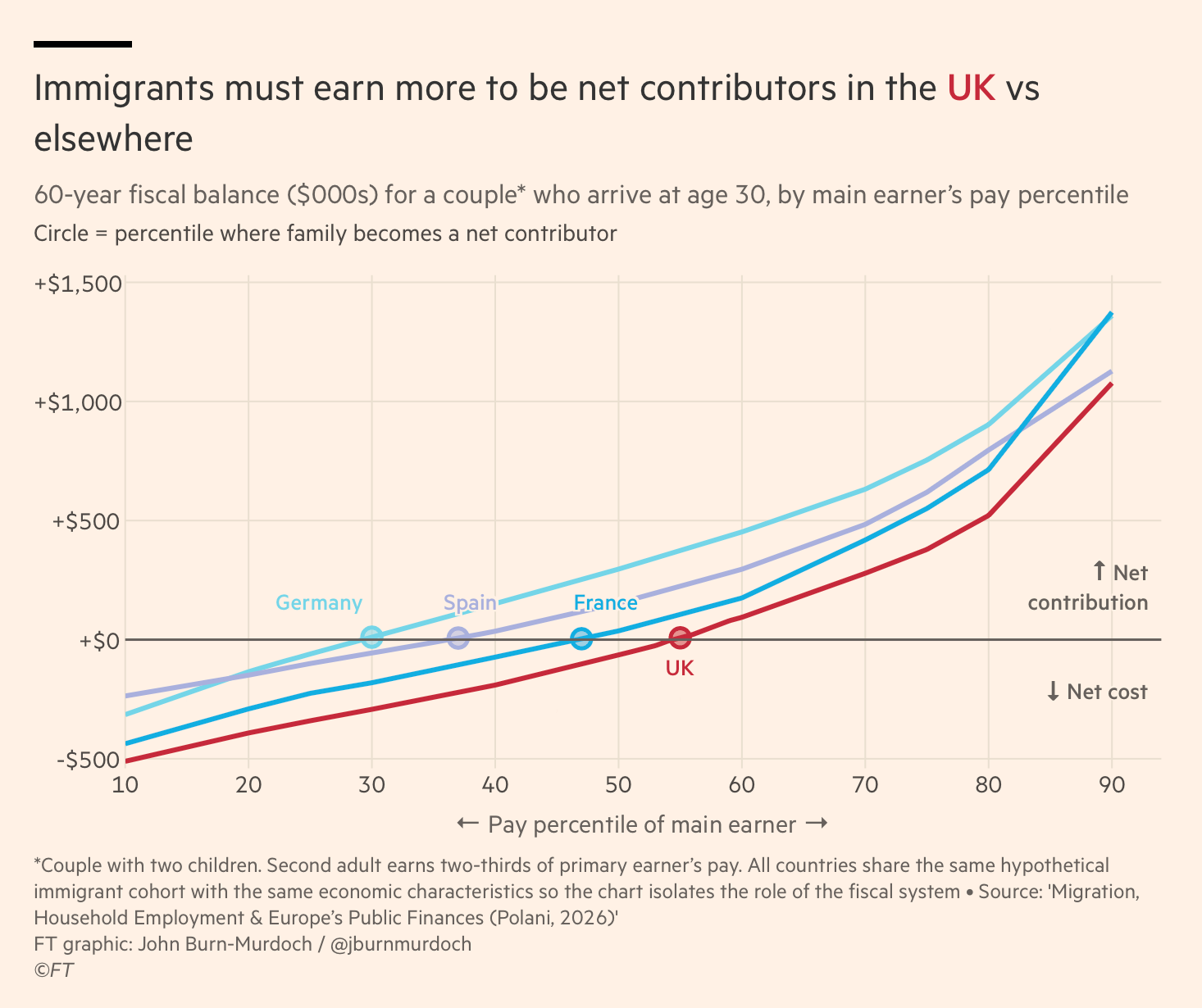
In the UK, the average couple arriving at age 30 needs the primary earner to have a salary at the 55th percentile, compared to only the 28th percentile in Germany. This is because of the relatively low tax rates for low-income workers in the UK, and flatter tax regimes in the other countries in the chart.
This is just one example demonstrating that “immigration,” to use the words of Burn-Murdoch, is “not a fixed thing across time and place.” Who are we attracting? And what policies do we have in place to ensure people economically assimilate and become net contributors?
Leave a Reply