Daily insights for city builders, delivered every morning at 6 AM ET. I’m Brandon Donnelly — a Toronto-based real estate developer and founder of Globizen. I’ve been writing here since 2013.

Month: June 2024

  • Where 3+ bedroom homes are getting built in Ontario (Hint: It’s not Toronto)

    Here’s an interesting, though not shocking, chart from a recent Globe and Mail article talking about “Canada’s dysfunctional housing market.” What is noteworthy is that Toronto is dead last when it comes to the number of new 3+ bedroom homes built between 2016 and 2011.

    Peterborough, for example, is a census metropolitan area with somewhere around 130,000 people. And yet, based on this data, it is building more family-sized homes than Toronto.

    Why this is not surprising is that the vast majority of new homes now built in Toronto are high-density and built out of reinforced concrete. This means that they are relatively expensive on a per square foot basis.

    In fact, you could argue that mid-rise housing — the exact high-density type that is supposed to be most attractive to families — is the most expensive to build. What this means is that if you’re building a 3+ bedroom home in this way, it’s not going to be affordable to most.

    It also means that people are going to go shopping elsewhere: Ottawa, York, Simcoe, Durham, and so on. The expected market outcome is decentralization. But in my mind, this raises an important question: Is this what people really want?

    This is a great debate. And many will argue that grade-related suburban housing is exactly what people want. What we are seeing is a result of raw consumer preference.

    However, the costs are so skewed in favor of low-rise housing, that I think it’s hard to say with absolute certainty the degree in which this is true. What if higher-density 3+ bedroom homes were the cheaper option? My bet is that we would see a lot more centralization.

    The development charge rate for a 2+ bedroom apartment in the City of Toronto is currently $80,690 per unit (effective June 6, 2024). As development charges work, this is supposed to pay for the growth-related impacts of adding a 2+ bedroom apartment in the city.

    However, the above chart suggests that there are also impacts to not building that 2 or 3 bedroom apartment in an already developed area next to existing infrastructure. It means the home goes somewhere else (further away) or doesn’t get built at all.

    Both of these outcomes also have costs.

  • Toronto approves new Rental Housing Supply Program

    This past week, Toronto City Council approved the launch of a new affordable housing initiative called the Rental Housing Supply Program. Here’s the agenda item if you’d like to dive into the details and read some of the supporting reports. There are a number of components to the program, and one of them is a subsidy that will be administered by way of a forgivable interest-free loan:

    Subject to the adoption of the Rental Housing Supply Program, the City will continue to support RGI and affordable rental homes through the allocation of up to $260,000 per eligible affordable rental and RGI home. This is the maximum allowable funding allocation under the Rental Housing Supply Program. Actual funding per project will be determined based on the evaluation of applications on a site-by-site basis, in consultation with the Chief Financial Officer & Treasurer, and based on project parameters and additional sources of funding that can be leveraged to support the project’s financial viability. These funds will be provided as interest free forgivable loans to eligible and approved projects and will be tied to milestones and requirements in agreements with housing providers.

    Total funding for the program is $351 million. And the intent is that these funds will be distributed in the near term to 18 affordable housing projects in the city, all of which are expected to start construction sometime between now and the end of 2025. In total, this is anticipated to create about 6,000 new affordable rental homes. That’s a good thing.

    Now, I don’t know anything about these projects. I don’t know if $260k is the right figure. And I don’t know if a forgivable interest-free loan is the exact right mechanism to deliver these funds. But what the program does do is recognize this: Deeply affordable housing cannot be built without some form of subsidy.

    Developers are often criticized for only building expensive housing. But the reality is that developers are, for the most part, takers of market pricing. In other words, we can’t just decide to build for less. We can reduce build and finish quality to get costs down, but at a certain point, the cost to build is the cost to build.

    And if that cost to build isn’t what the market would view as affordable, then you’re not going to get there without a subsidy. No developer is going to build if their expected revenues are less than their costs. Directionally, that’s what this new program appears to recognize.

  • Apple’s next best thing is on the road

    I hate driving (specifically in the city), but I am fascinated by the next generation of Apple’s CarPlay, which I recently wrote about, here.

    One of the reasons why I’m fascinated is because so much of our built environment is built around the car. And since the built environment tends to be very sticky, I think one can safely assume that — for better or for worse, it’s actually worse — we’re going to need a lot of cars for the foreseeable future.

    According to Apple, 98% of new cars in the US come with CarPlay already installed. So, all cars. And the obvious reason for this is that many or most people want it. According to this survey, about 1/3 of new car buyers say that they wouldn’t buy a new car if it didn’t have Apple CarPlay or Android Auto.

    Apple believes this number is much higher at 79% of US buyers. I don’t know what the right number is, but I do believe the number is substantial and probably closer to Apple’s than the 1/3 figure. I certainly wouldn’t buy a new car without CarPlay.

    The result is a suboptimal situation for carmakers. Apple is still going to do whatever it takes to make carmakers want to use CarPlay. My recent post was largely about the design efforts that they have undertaken. But in the end, I’m not sure the auto industry has much of a choice.

    There’s likely no way they’re going to be able to compete with Apple (and Alphabet) from a software perspective and, in the end, consumers are going to want whatever pairs perfectly with their existing phone, since that’s where their entire life already lives.

    No wonder Apple killed their car project. They can just use everyone else’s cars. Even if this is a departure from their typical approach of controlling both the hardware and software.

  • Community open house for Project Bench

    This afternoon, the team, including the Town of Lincoln, hosted a community open house for Project Bench. This is our upcoming development project in the Niagara Benchlands.

    This was a follow-up to the pre-application community meeting that we held last November, and it is a precursor to the statutory public meeting that will be held in two weeks on July 8th at 6 PM.

    If any of you would like to attend, this upcoming meeting will be held in the Council Chambers of the Town of Lincoln at 4800 South Service Road in Beamsville, Ontario.

    Overall, the team feels that today went very well. We’re looking forward to continuing the dialogue with the community and further refining our development application.

    Community meetings are a critical part of the development process and, over the years, I have come to learn the following:

    • Open houses, like the one that was held today, are a good format for encouraging dialogue. The typical setup includes presentation boards, representatives walking the floor, and some sort of mechanism for people to provide feedback (post-it notes on a site plan can work well).
    • Part of why this is a good format (compared to a straight presentation followed by a Q&A) is that it humanizes the team and it gives the community an opportunity to ask all of their questions. A lot of concerns can be addressed through clear explanations.
    • The most common concerns are usually (1) height, (2) density, and (3) traffic. There are obviously others, but this is a good high-level list.
    • Many/most people tend to conflate height and density. But as we have talked about many times before on this blog, they are not one and the same. Density tends to be harder to grasp, which is why you’ll often hear people criticize tall buildings, but not cities like Paris and Barcelona, despite being two of the densest cities in the world.
    • A developer’s job is to be creative. You have to manage a myriad of competing interests and then thread the needle as best you can. Community meetings are about listening, learning, and then trying to figure out where the needle might go.
    • The objective should be to make as many people as possible excited about the development. In other words, do great work.

    What else would you add to this list?

  • Railway architecture and design

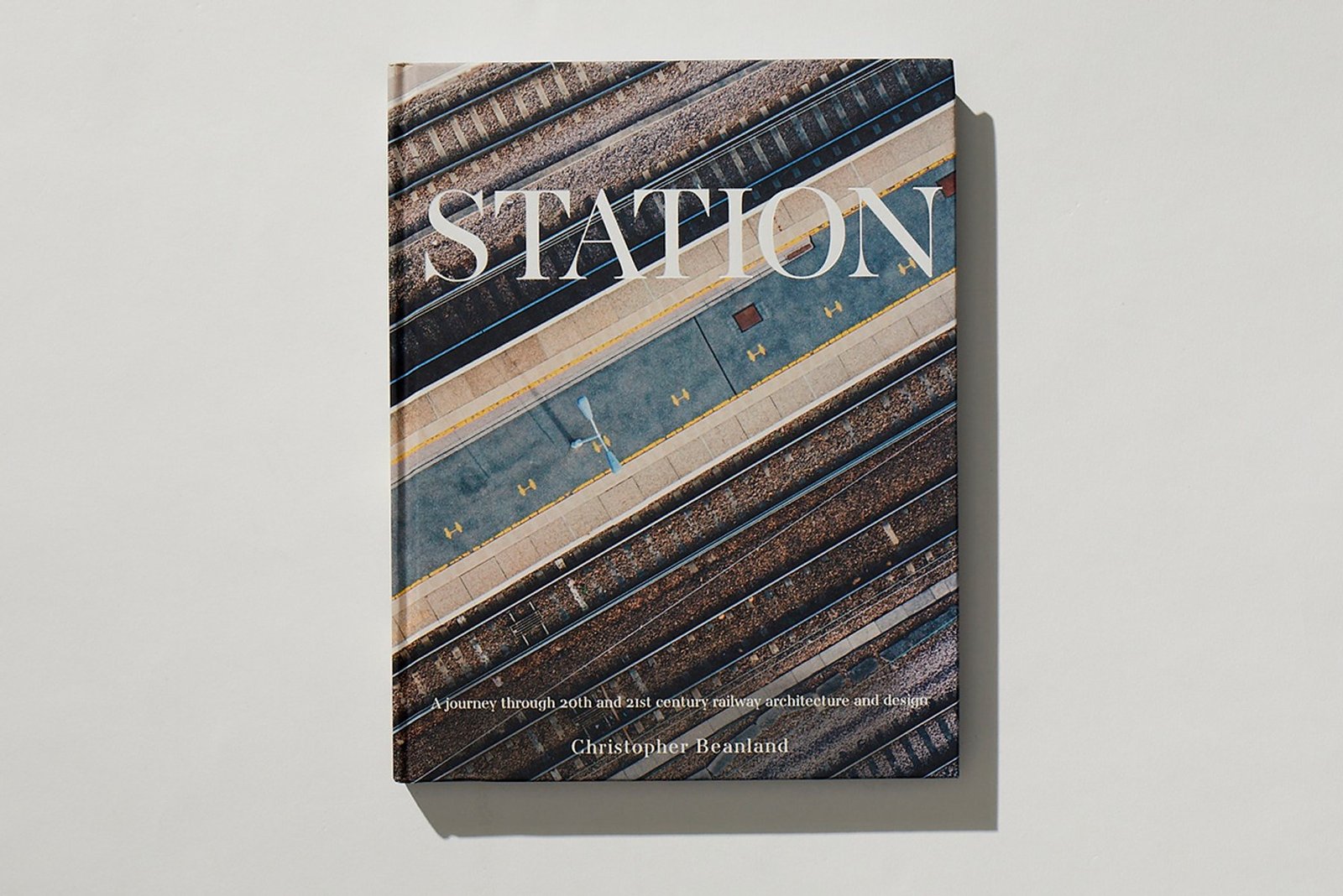
    I would rather take a train to the office than drive. And given reasonable options, I would rather take a train than get on a plane. I like trains. So by default, it means that I’m interested in Christopher Beanland’s new book, Station. In it, he profiles some of the best railway architecture from the 20th and 21st centuries. Places like Union Station in Los Angeles, Hauptbanhof in Berlin, and Byappanahalli in Bengaluru. But as cool as these places are on their own, I think it’s important to keep in mind that trains exist as part of a network. And like all transport, they promote time-space convergence. This is part of what makes these spaces so interesting — they’re like a portal to somewhere else.

  • Britain is missing 4.3 million homes

    According to this report (2023) from the Centre for Cities, the UK has a backlog of about 4.3 million homes. This is in comparison to other Western European countries for the period from 1955 to 2015.

    Said differently, these 4.3 million homes are effectively missing from the UK’s national housing market because it failed to build and deliver at the same rate as some other rich countries.

    The report also argues that this housing shortage started not at the end of the post-war period, but at the beginning of it in the 1940s.

    So what do they propose? The following:

    Increase housing supply where new homes are needed. More homes are built in Wakefield than Oxford. Building in places with fewer jobs won’t fix prosperous cities’ housing crises.

    Planning reform to introduce a new flexible zoning system that would allow builders to build if they follow the rules, while maintaining special protections for National Parks, Conservation Areas etc.

    Zoning of land in walkable distances around train stations in the green belt for suburban living and with protected green space, which would provide 1.8 to 2.1 million homes.

    Increase the use of permitted development rights to cut the red tape that makes it hard to build upward extensions or infill developments.

    Stop subsidising home ownership. Despite Right to Buy, home ownership as a share of private housing has fallen in every city since 1981. The Government should stop subsidising ownership, tax housing wealth increases by abolishing the Capital Gains Tax exemption for primary residences and treat owning and renting equally.

    None of these proposed solutions should come as a surprise. We know that housing follows money/jobs. And we know that if we want more of it, we need to remove the barriers to building it, especially around higher-order transit.

    Image: Bloomberg

  • This slash that

    Maison Kitsuné is a French-Japanese lifestyle brand that was founded in 2002 as both a record label and a fashion house. Apparently, the founders — Gildas Loaëc and Masaya Kuroki — started out by DJ’ing in order to promote their brand and clothes.

    In 2005, they released a full ready-to-wear collection and, according to Wikipedia, fashion has come to represent about 90% of the company’s revenue (2020 figure).

    In 2013, Kitsuné opened their first coffee shop in Tokyo. And since then, they have expanded around the world, opening cafes in Paris, Vancouver, Shanghai, and many other cities. As of today, I think they have 35 around the world.

    Their latest venture is something a bit new though. It’s called Desa Kitsuné, it’s located in Canggu, Bali, and it’s their first ever clothing shop/restaurant/club. It also comes with a pool and the idea is that you can do lots of different things here: shop, lounge during the day, and/or party at night.

    I always find it interesting when different ideas and approaches are combined. And that’s what Kitsuné continues to do. They also plan to do more of it. According to Monocle, the company wants to reach 100 cafes/restaurants around the world in the next 5 years.

    So keep an eye out for more foxes in your city.

  • ❤️

  • Massive transfer slabs

    Sometime next month we’re going to be pouring a large concrete transfer slab at the second floor of One Delisle. Its function is to take the loads coming down from the entire tower above it and “transfer” them onto new structural elements, before being brought down to our mat foundation at the bottom of the parking garage.

    Put differently — and, as always, I should warn you that I’m not a structural engineer — a transfer is used whenever you have a change in your structural grid and the loads don’t have a straight path down to your foundations. Because whenever this happens, you’re now introducing moment forces and those need to be dealt with structurally.

    Transfer slabs are relatively common here in Toronto (which isn’t the case in every market), but they are expensive and they consume a lot of depth. In the case of One Delisle, our level two transfer slab is 1.8 meters deep and it’s going to contain about 1,200 m3 of concrete. (Some of you might also recall that One Delisle’s mat foundation is over 4m deep.)

    We were reviewing this with the team today and we think that we’ll be able to pour about 100 m3 of concrete per hour. That means that this slab will take about 12 hours to pour! This requires a lot of coordination. Neighbors need to be notified, pumps need to be on standby in case of a breakdown, and so on.

    Another major consideration is heat. When concrete cures it generates a lot of it. And with a thick slab like this one, I am told that we run the risk of the middle starting to overheat (especially with the hot weather that we’ve been having lately). The guideline limit is 60 degrees Celsius, so we’ll be monitoring it for probably about 1-2 weeks following the pour.

    I find these details fascinating. Maybe some of you do too. So once it’s poured, I’ll share a few photos.

  • NYC’s congestion relief zone is now on indefinite pause

    Boy, congestion charges are a pain to implement. Back in 2018, I wrote that New York City was considering a congestion charge for drivers entering Manhattan below 60th Street. Then in 2019, about a year later, I followed up with this post saying that the plan could be adopted as early as April of that year!

    That didn’t exactly happen. But I followed up again with a post in 2022 saying that New York City was still considering a congestion charge. And ultimately, it did finally get approved, even if it did take much longer than expected. It was rebranded a congestion relief zone (“relief” sounds a lot less offensive than “pricing”), and it was set to come into effect on June 30, 2024.

    This remained the situation until the first week of this month, which is when NY Governor Kathy Hochul held a surprise press conference and announced that the congestion relief zone would be placed on “indefinite pause.” I think that means cancelled. And it happened less than a month before the state was finally set to start collecting money.

    There is a legal question around whether she actually had the authority to intervene in this way, but let’s put that aside for now. Irrespective of that, this is a disappointing outcome precisely because we know that road pricing works. If you have a traffic congestion problem, price it, and then you will have less of it.

    What’s even more disappointing about this particular instance, though, is that many of us were looking to New York City to show us the way. We were looking for the most walkable and transit-rich city in the US to show people that, hey, road pricing works, and it won’t decimate your CBD.

    It is shocking to me that traffic congestion is allowed persist in the way that it does in our cities, and that there remains zero political will to actually address it. Instead of action, we like to preoccupy ourselves with red herrings. If only we didn’t have streetcars, Ubers, and so many bike lanes, then there wouldn’t be congestion.

    So what hope do we have now that even New York won’t do what is bold and right? Lots, as always. Cities, now is your chance to do what New York was too scared to do. Who will lead?