Daily insights for city builders, delivered every morning at 6 AM ET. I’m Brandon Donnelly — a Toronto-based real estate developer and founder of Globizen. I’ve been writing here since 2013.

Tag: waterfront toronto

  • Sidewalk Toronto releases draft site plan for Quayside

    Yesterday Sidewalk Toronto released its draft site plan for Quayside. Here’s what it looks like:

    There’s a big emphasis on people-first streets and on the public realm. I like the idea of a waterfront plaza at the tip of the Parliament slip and of a floating walkway bridge to Promontory Park (bottom right hand corner of the above image).

    There are also a number of more enclosed pedestrian laneways and courtyards, which I am sure will result in more favorable microclimate conditions. That matters, especially on the water.

    Here are some high level project stats:

    • All mass timber construction
    • Five “sites”
    • Buildings ranging from 3 to 30 storeys
    • 68% residential (40% of the residential will be below-market, with 20% being affordable and 5% being deeply affordable)
    • 20% commercial
    • 15% flex space (retail, production, arts, community)
    • ~2,500 residential units

    A full copy of the draft site plan can be downloaded, here.

    Image: Sidewalk Toronto

  • Red streetcar tracks

    A few months ago when I wrote about “Toronto’s great streets” I mentioned that Queens Quay West – while magnificent – has had its share of issues. Cyclists and pedestrians often find themselves battling for space. And drivers are consistently driving in the wrong places.

    Part of the problem, I think, is that the turning radii (among other things) are a bit atypical and unusual compared to the rest of the city. And so if you’re at all in mental autopilot, it can be fairly easy to make a wrong turn. You really have to be paying attention.

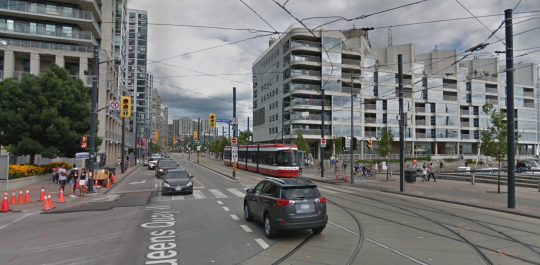
    Below is a screenshot from Google Street View showing the foot of Lower Spadina, looking east on Queens Quay West. If you’re making a left turn from the former onto the latter, you need to end up on the left (north) of the streetcar tracks (even though the tracks themselves might be directing you elsewhere).

    There’s lots of signage telling you not to drive onto the tracks, but that hasn’t really been working. So the tracks were recently painted in bright red. You can see what that looks like here. Some people are still getting mixed up, but it’s certainly more noticeable.

    What I am wondering today is whether all of this signage and paint should be considered a symptom of poor design. In other words: Should good design require few instructions? Or, is this simply a normal part of iterative city building?

    What do you think?

  • Preliminary design ideas for Toronto’s Quayside

    Last week Sidewalk Toronto held a roundtable discussion here in the city and released some preliminary design ideas and strategies for Quayside. (That’s why Dan Doctoroff was talking on BNN Bloomberg.) 

    I went through the full presentation this morning and below are a bunch of slides that I thought you all might find interesting.

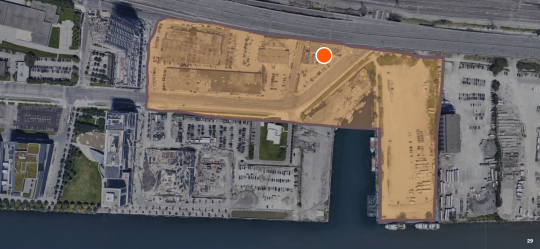
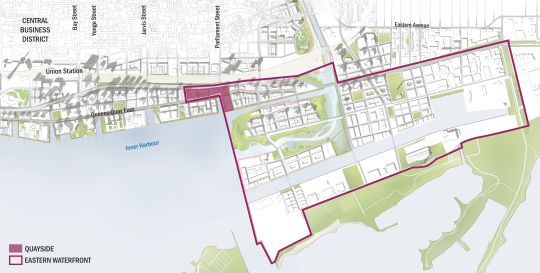
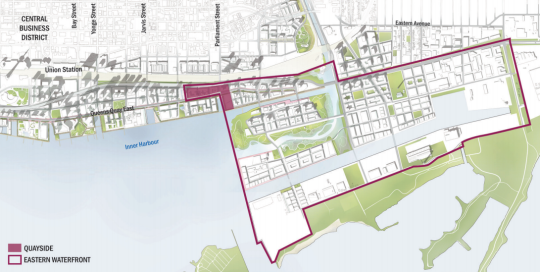
    Here is the extent of “Quayside” along the waterfront. The current land use permissions allow for about 3 million square feet of space and towers as tall as 50 storeys.

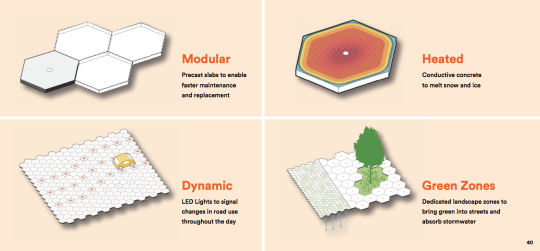
    Here is a paving system being explored for the area. It is modular. It may melt snow. And perhaps most interestingly, it would allow for dynamic changes in road use throughout the day. This sort of thing already happens to a lesser degree on streets like Jarvis. This technology could take that much further.

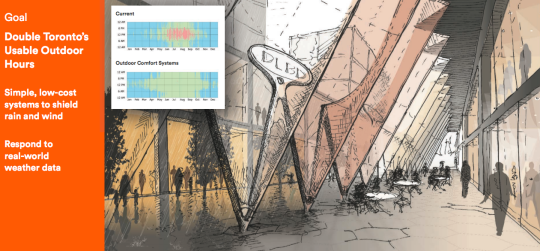
    One of their primary goals is to double Toronto’s usable outdoor hours. To do that, they are proposing simple weather shields (pictured below) and weather-responsive systems.

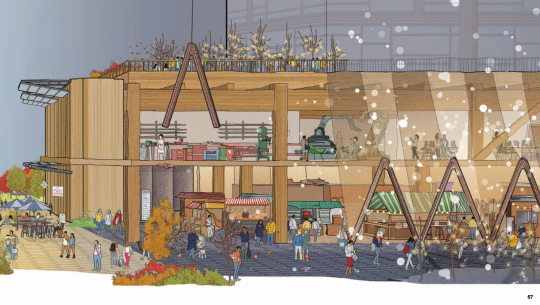
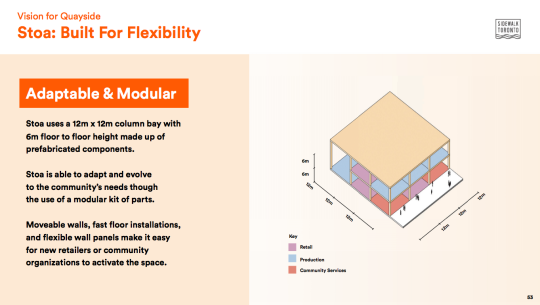
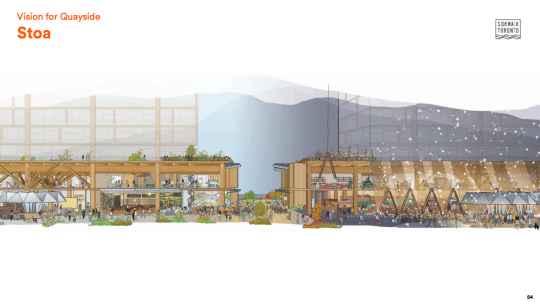
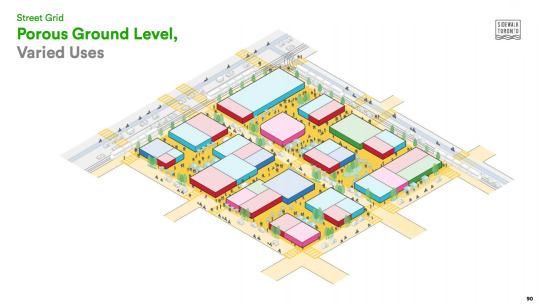
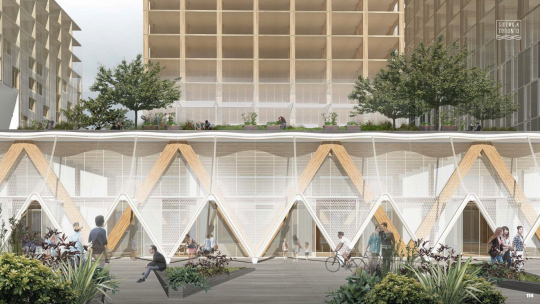
    They are spending a lot of time thinking about the ground floor of buildings, which they are calling Stoa. The idea is to create flexible and porous spaces that respond quickly to changing needs and that integrate more seamlessly with the surrounding public realm.

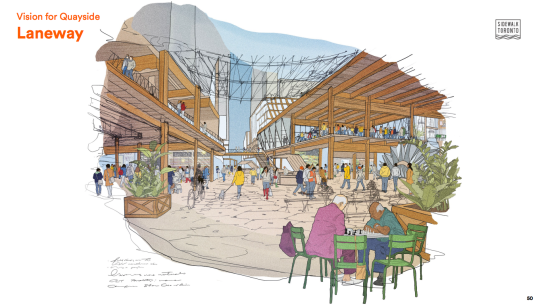
    There’s a lot on the potential hierarchy of the street network and how each will function for transit, conventional cars, AVs, cyclists, pedestrians, and so on. I was happy to see “laneways” as a core part of the pedestrian network. They are designed for walking speeds. Access would be restricted for things that move too quickly.

    This image ties in the street grid and Stoa.

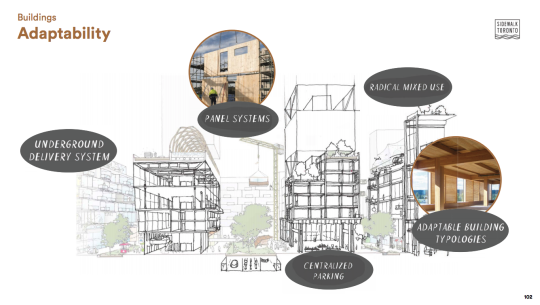
    Finally, the goal is to build the neighborhood entirely out of timber, and more specifically, Canadian timber. If they follow through on this, I think it would really push adoption of this material forward in the city.

    I would encourage you to check out the full package, which you can do here. I can’t wait for these projects to get underway along Toronto’s waterfront.

  • A global hub for urban innovation

    Dan Doctoroff, the CEO of Sidewalk Labs (and the former deputy mayor of New York City), was recently interviewed by BNN Bloomberg about the company’s plans and ambitions for Quayside here in Toronto. 

    He talks about the project; their interest in timber construction; how the company, Sidewalk Labs, might ultimately make money; and how their mission is to create a global hub for urban innovation.

    This last point is, of course, the most exciting opportunity – both for Sidewalk Labs/Alphabet and for Toronto. And it’s why many people believe that Quayside will end up a far greater (economic development) coup compared to HQ2.

    The interview is only 10 minutes. If you can’t see it embedded below, click here.

    https://webapps.9c9media.com/vidi-player/1.5.1/share/iframe.html?currentId=1461888&config=bnn/share.json&kruxId=InSaVlLc&cid=%5B%7B%22contentId%22%3A1461888%2C%22ad%22%3A%7B%22adsite%22%3A%22ctv.bnn%22%2C%22adzone%22%3A%22ctv.bnn%22%7D%7D%5D

  • Toronto’s great streets

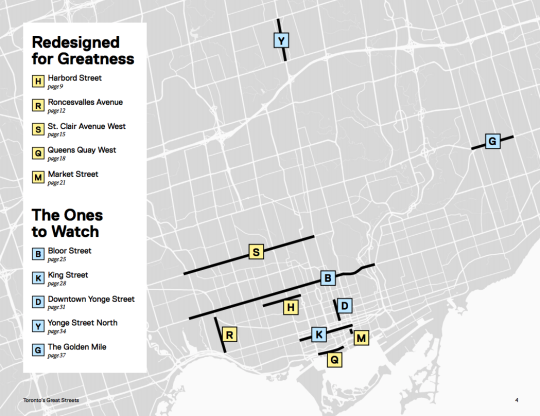
    Last week the Ryerson City Building Institute published a terrific report on Toronto’s Great Streets. It profiles five streets in the city that have been “redesigned for greatness.” They are:

    • Harbord Street (continuous bike lanes)
    • Roncesvalles Avenue (placemaking and people)
    • St. Clair Avenue West (dedicated streetcar lane)
    • Queens Quay West (public waterfront promenade)
    • Market Street (prioritized for people and patios)

    But what exactly makes a street a great one? The report describes it in this way: “They all play a key role in making the surrounding neighborhood a great place to live, work, and visit.”

    This relates closely to what the City of Toronto calls a “complete street”, which is an approach to accommodating multiple kinds of users, enhancing the local context, and determining which trade-offs to make.

    And there will always be trade-offs. I am fairly certain that all of these street redesigns were contentious at the time when they were proposed. Because at the end of the day they will never be all things to everyone.

    I remember the St. Clair West fight vividly because I moved to the neighborhood in 2009 and the dedicated streetcar lane didn’t fully open until 2010. From 2005 to 2017, streetcar ridership grew 23%. But drivers have remained grouchy.

    I now walk Market Street every single day and I agree that it’s one of the most beautiful and functional streets in the city. But the bollards are constantly getting beat up by drivers attempting to parallel park and the retail vacancy rate has not been 0% like is suggested in the report.

    Queens Quay West is also a magnificent street. It was a giant step forward in terms of the quality of the public realm in this region and I spend a lot of time there. But it’s of course not perfect. All of us have seen the reports of cars ending up in odd locations, including underground, along the waterfront.

    Riding your bike there can also feel like a challenging game of Frogger with all of the pedestrians that now obliviously meander back and forth across the cycling trail. I suggest riding with a good blow horn. The report rightly mentions the lack of delineation between these users.

    But cities are a living laboratory and none of these streets should now be considered static. We are fortunate to be in a position to critique levels of greatness. If anything, the map at the top of this post tells me that we need to create more greatness across the other areas of this city.

  • The Cherry Street Lakefilling project

    It’s going to take a generation to build it out, but one of the most exciting revitalization projects in Toronto is going to be the Port Lands area. However, before that can really start happening and new communities can be built, the entire area needs to be flood protected. Currently about 290 hectares (717 acres) in this part of the city are prone to flooding.

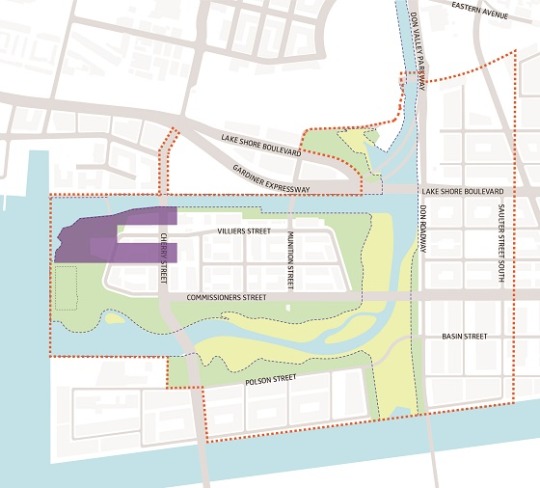
    One component of the flood protection program is the Cherry Street Lakefilling Project. Below is a plan of what that means (from Waterfront Toronto). The area in purple is new land that will be created as part of the process. Supposedly this is important for a few reasons. For one, it will allow the Cherry Street bridge to be relocated, which, in its current location, is creating a pinch point during floods.

    image

    I am mentioning all of this today because I am personally excited about this revitalization project. Hopefully I’ll see it complete in my lifetime. And maybe I’ll be fortunate enough to work on some of the buildings when that time comes. I also really wanted to share the below video with you all, showing the lakefilling in action. I bet many of you aren’t aware that this is happening.

    If you can’t see the video below, click here.

    [youtube https://www.youtube.com/watch?v=C0q_Wvn91zE?rel=0&w=560&h=315]

  • The neighborhood of the future (part 2)

    I have been traveling since the weekend and so I am behind on my reading. One of the benefits of writing this blog every day is that I am forced to read as much as I can. I have to be a sponge.

    Right now, I am still reeling in excitement over the Sidewalk Toronto announcement and getting caught up on that reading. 

    This week Sidewalk Labs published the entire vision section of their RFP response to Waterfront Toronto. This is the response that won them the Quayside partnership. It’s 196 pages and can be downloaded here.

    I’m still making my way through the package, which I am obviously going to do, but I thought this was a great diagram:

    image

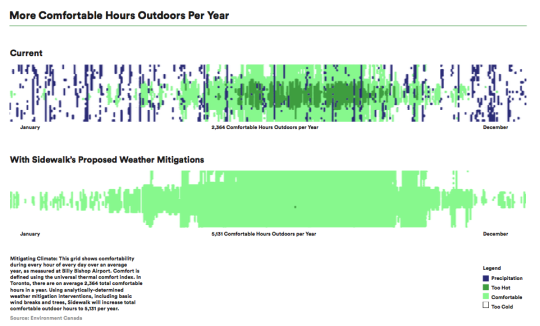
    As is stated in their RFP response, inclement weather affects pedestrians and cyclists more than drivers. Toronto’s most notable response has been our PATH system, which pulls both people and retail below grade, away from the elements.

    But Sidewalk’s research suggests that with the right wind, sun, and precipitation strategies, they may be able to 2x the number of comfortable outside hours per year here in Toronto. That’s what the above diagram shows.

    Of course, there is so much more in their RFP response. But I need more time to digest it all. I’ll be sure to report back to all of you once I have done that. If you don’t feel like going through all 196 pages yourself, you can watch this 4 minute YouTube video instead.

  • Sidewalk Labs, Amazon HQ2, and the Milanese Leonardo

    Earlier this week the WSJ announced that Sidewalk Labs (Alphabet Inc.’s urban innovation organization) is close to a deal with Waterfront Toronto to develop a new 12-acre section of the eastern waterfront. Sidewalk Labs would be their innovation and funding partner. It’s not final yet and it’s still subject to board approval, but the sentiment is that it should go.

    There aren’t a lot of details about the project – other than the fact that it will be fairly big, up to 3 million square feet – but the overall intent is digital city building. It’s about imagining what a city could be if you built it today “from the internet up.” More info about Sidewalk Labs, here.

    I thought of this project as I read Seth Godin’s daily blog post this morning in bed. Here are two snippets from that post:

    When a new technology arrives, it’s often the nerds and the neophiliacs who embrace it. People who see themselves as busy and important often dismiss the new medium or tool as a bit of a gimmick and then “go back to work.”

    There’s never a guarantee that the next technology is going to be the one that moves to the center of the conversation. But it’s certain that a new technology will. It always has.

    Openness matters.

    I’m anxious to learn more details about the project, but this is obviously very exciting. It also creates momentum and strengthens the case for Amazon HQ2 in Toronto. The above 12-acre Quayside area is only the tip of the iceberg. There’s the rest of the eastern waterfront and also East Harbour.
    image

    Some people have been critical of this city’s push for Amazon HQ2. Anthony Lacavera, chairman of Globalive Capital, called this “the biggest Trojan Horse of all time.” His view is that Amazon would simply use HQ2 Toronto as a mechanism for cheaper labor (USD > CAD) and to siphon the best and brightest down to the US.

    Now, I agree that it would be more impactful to create the next Amazon then to simply lure in its second headquarters. Big entrepreneurial successes are what fuel the darwinian evolution of startup hubs. The founders, early employees and investors make boatloads of money and then they start reinvesting that back into the ecosystem by, among other things, backing the next generation of entrepreneurs.

    But does this necessarily mean that an Amazon HQ2 would be detrimental to Toronto by acting as a conduit to the US? Will it discourage entrepreneurship? Should we eschew all US firms out of fear that this may in fact happen? I don’t think so.

    There’s tremendous value in concentrating smart people in one place – ideas build on ideas. And I don’t think technology has been able to disrupt that, at least not yet. One example of this is a theory that Paul Graham calls the Milanese Leonardo:

    You can see how powerful cities are from something I wrote about earlier: the case of the Milanese Leonardo. Practically every fifteenth century Italian painter you’ve heard of was from Florence, even though Milan was just as big. People in Florence weren’t genetically different, so you have to assume there was someone born in Milan with as much natural ability as Leonardo. What happened to him?

    And his reasoning is as follows:

    Nothing is more powerful than a community of talented people working on related problems. Genes count for little by comparison: being a genetic Leonardo was not enough to compensate for having been born near Milan instead of Florence. Today we move around more, but great work still comes disproportionately from a few hotspots: the Bauhaus, the Manhattan Project, the New Yorker, Lockheed’s Skunk Works, Xerox Parc.

    Xerox Parc (Palo Alto Research Company) is a great example of the kind of positive externalities that can happen as a result of smart people being in close proximity to each other while they wrestle with similar problems. It has been well documented that it was Steve Jobs’ visit to Xerox Parc that inspired many of Apple’s early innovations.

    So my view: let’s increase Toronto’s urban metabolism and make it the Florence of 1450.

    Ed Clark – who is leading the charge for HQ2 in Toronto – has been clear that large taxpayer subsidies are not on the table for Amazon. That would not be fair to the existing companies in this city. If that is what it is going to take, then we are not going to win. We will win based on our city, our human capital, and our openness to the rest of the world. That feels right.

    Welcome Sidewalk Labs. Welcome Amazon. This city is open for business and to new ideas. 

    Image: Waterfront Toronto

  • Building a city from the internet up

    There has been a lot of exciting tech + urbanism news this week in Toronto. Uber announced that it’s building a new artificial intelligence team in the city and it came out that Sidewalk Labs (Alphabet company) had responded to an RFP put out by Waterfront Toronto. 

    The RFP, which closed at the end of last month, was to find an “innovation and funding partner” for the 12-acre Quayside precinct shown above in purple. It’s the first parcel of the “eastern waterfront.” (Click here if you’d like to download a copy of the actual Request for Proposal.)

    These days, it’s easy to be cynical about these sorts of announcements. Every day you hear about some new innovation center or tech hub. But what’s perhaps unique about this one is that Sidewalk Labs is thinking crazier than most and they have the financial backing that crazy sometimes needs.

    If you’re not at all familiar with Sidewalk Labs, I suggest you read this post about how the company wants to build cities “from the internet up.” It’s by their CEO, Daniel L. Doctoroff. 

    Not surprisingly, they are thinking about everything from automated trash systems and autonomous vehicles (including their impact on built form, cost of living, productivity, etc.) to exchange-based thermal grids and more cost effective construction methods. And it’s not just about the technology. It’s about marrying tech + urbanism.

    Also interesting is their model of setting up a “hyper-focused labs”, which are each run by entrepreneurs-in-residence. These internal labs are focused on things like housing affordability, the health challenges faced by low-income city residents, and so on. 

    It’s all very exciting. So let’s ensure this moves forward and let’s hope Sidewalk Labs keeps thinking crazy. Toronto is ready to lead and show the world how a city built from the internet up should perform.

  • Gray on gray on gray

    This past weekend was gorgeous in Toronto. I always love seeing the city come to life after the winter and last weekend was the first sign of that this year.

    Being the fair-weather cyclist that I am, I had the flat fixed on my single speed bike and I was ready to go by the weekend. I managed to test out the GoPro handlebar mount that I mentioned last week but, quite honestly, the footage was so jittery and bouncy that it made me nauseous to watch it. So I need to rethink my city geek filming strategy. 

    (Sidebar: GoPro needs to make it easier to turn their raw footage into content that is actually worth sharing.)

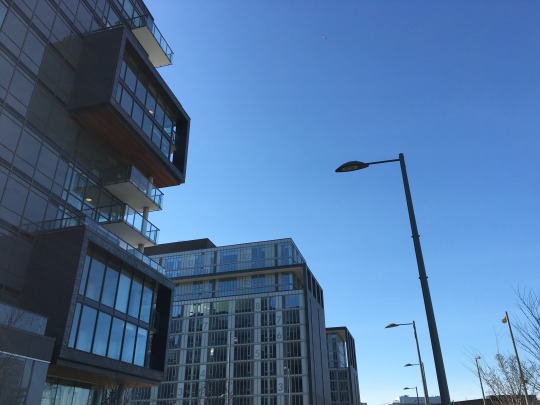
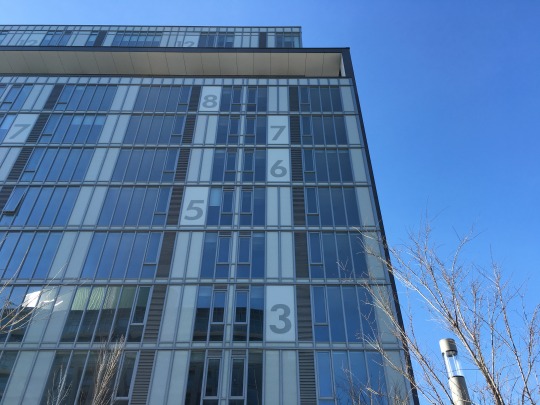
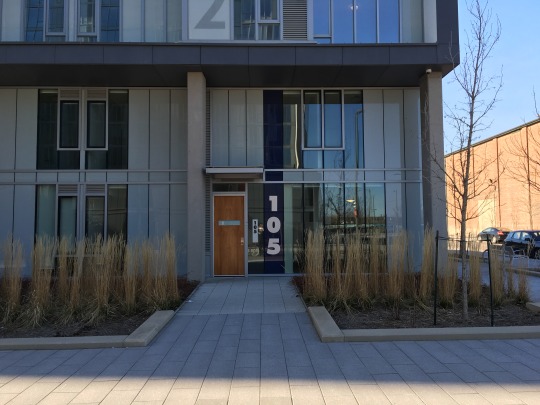
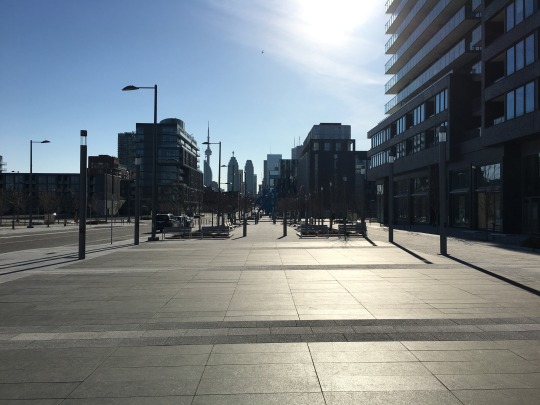
    Still, I had a good ride over to the new Canary District on the east side of downtown. The gates just recently game down, so I was itching to take a look at it. Here are a couple of photos to give you some context for the rest of this post:

    None of the retailers have moved in, so the area currently feels like Toronto post zombie apocalypse (to use a friend’s description of the neighborhood). But all of the bones are in place for an incredible downtown neighborhood.

    Here are some of my thoughts as I was riding around:

    The opening of this neighborhood repositions the Distillery District. Initially, the Distillery District struggled as a kind of island on the edge of downtown. But thankfully they stuck to their initial vision for the community and now they get the benefit of this new mixed-use anchor to the east of it.

    Trinity Street to the north of the Distillery District proper is a fantastic opportunity to not only extend the magic of the Distillery northward, but also “plug” the area into Front Street East, which is the primary east-west spine that connects the Canary District back to the downtown core. I hope we (the city, developers, and so on) take advantage of this.

    The Front Street Promenade running through the Canary District and connecting into Corktown Common (park) is going to be an absolutely magical urban space once the restaurants, cafes, and retailers open up. I can’t wait for this to happen. Live Work Learn Play has been orchestrating the retail component.

    Finally, why are all of the buildings gray? 

    Gray brick. Gray window wall. Gray spandrel panel. It’s gray on gray on gray. We’re playing into that boring Canadian stereotype here. I hope the subsequent developments introduce some wild colors. Although some red brick to tie into the Distillery District would work well too. The best nearby architecture (just to the north) is the River City complex by Saucier + Perrotte.

    Notwithstanding the gray, I’m super excited about the Canary District and I am generally bullish on the east side of downtown. If you’ve had a chance to visit, I’d love to also hear your thoughts in the comment section below.