
Daily insights for city builders, delivered every morning at 6 AM ET. I’m Brandon Donnelly — a Toronto-based real estate developer and founder of Globizen. I’ve been writing here since 2013.

Tag: video

  • Video: New York 1911

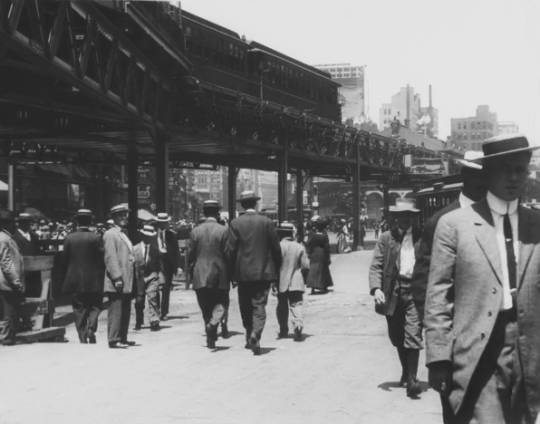
    The Museum of Modern Art (MoMA) recently restored and published a “documentary travelogue” of New York City from 1911. 

    It was originally filmed by a Swedish company, called Svenska Biografteatern, that went around the world filming noteworthy places such as Niagara Falls, Paris, Monte Carlo, and Venice.
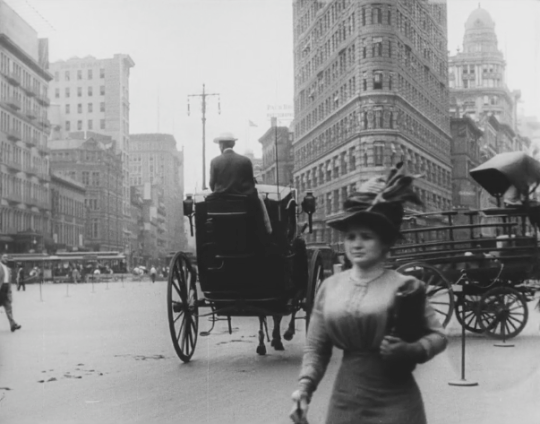
    Not surprisingly, New York City is a vibrant and bustling place at the beginning of the 20th century. But it somehow feels serene. Maybe it’s the soundtrack. It’s also interesting to think that this was filmed only 3 years before World War I broke out.
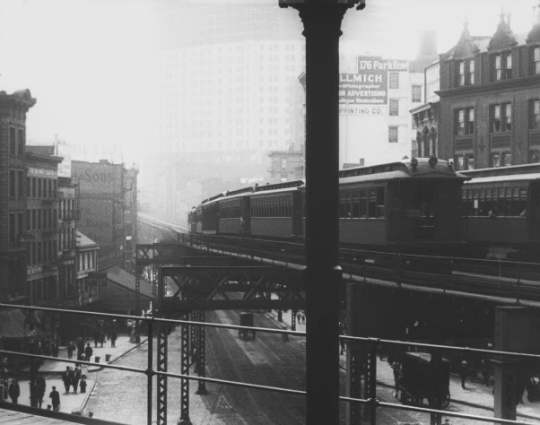
    I particularly enjoyed seeing all of the streetcars (trams) and elevated rail running through the streets.

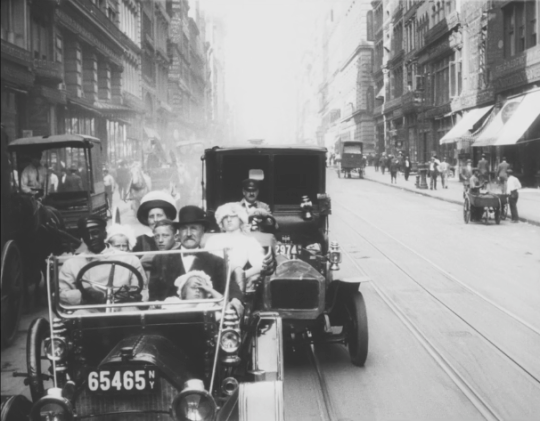
    Below is a screenshot of a young girl – clearly bored and/or disinterested – being chauffeured down Fifth Avenue in what was almost certainly a fancy convertible at the time.
    MoMA doesn’t allow you to embed the video, but you can watch it here through July 14. It’s 9 minutes and, if you’re a city nerd like me, I think you’ll really enjoy it. The street life footage kicks in around the 3 minute mark.

    Screenshot Images: MoMA

  • Neon rooftops of LA

    I am absolutely obsessed with the below video by Drew Ganyer called Neon Rooftops of LA. If you can’t see the embedded video, click here.

    [vimeo 158929583 w=640 h=360]

    The story is that Gayner was playing around with his new drone at a friend’s apartment next to “The Embassy” sign. This peaked his interest and so he went searching for more of these signs. This brought him to PublicArtInLA.com, which provides a comprehensive list of “buildings with historic neon signs” in the Los Angeles area.

    And so a movie was born.

    I’ll end with the below snippet from the opening paragraph of Public Art In LA. I don’t know about you, but I love these signs. I think they really do give rise to the magic of the night.

    “Sometimes, urban renewal can be as simple as the relighting of a neon sign on Wilshire, Hollywood or Sunset boulevard, lights that recover the past and point to an equally bright urban future. Remnants of a lost Los Angeles, city of the mind, remembered and yearned for, the neon lights of L.A.–celestial fires of another sort, green, gold, ruby red, electric blue–guide us down the Wilshire corridor, up through Hollywood and out along Sunset Boulevard west. If Paris is the City of Lights, L.A. is the City of Neon, possessed of a comparable (yet antithetical) beauty and capable as well, like all great cities, of giving rise in the magic of the night to hungers of body, mind and spirit.” (Kevin Starr, “Landscape Electric; A program that renews the city’s urban spirit by relighting Philip Marlowe’s neon L.A.” Los Angeles Times, July 4, 1999. 

  • Mass timber tower time lapse

    Over the past few years there’s been growing interest in using mass timber for high-rise buildings (now colloquially referred to as “plyscrapers”).

    One project that got a lot of attention last year is Brock Commons (student residence) at the University of British Columbia. It is an 18-storey hybrid mass timber tower.

    The first and second floor (slab) and the two cores are poured-in-place concrete. After that, the other 16 floors of the tower consist of 5-ply cross laminated timber (CLT) panels and glue laminated timber (glulam) columns running every 10 feet. The roof is steel and metal decking.

    Below is a great time lapse video of the building under construction once it had switched over to timber. The wood construction portion started on June 6, 2016 and finished on August 10, 2016. So 2 floors per week.

    The video is well-annotated so that you know what week of construction it is, how many wood installers are on-site, which structural members are going in (along with their dimensions), and so on. The CLT panels are only 169mm thick.

    Click here if you can’t see the video below.

    [youtube https://www.youtube.com/watch?v=GHtdnY_gnmE?rel=0&w=560&h=315]

  • Episode 15: The Master Builder

    My friend Ben Stevens runs a blog called Skyline where he interviews people involved in the built environment (architecture, real estate, planning, and so on). You might remember that I did an episode with him about a year ago where we talked about the overlap between architecture and development.

    His most recent episode is with San Diego-based architect-developer Jonathan Segal. I’ve mentioned Segal before on this blog and that’s because he is well known and admired in certain circles for (re)creating a process that places the architect in the position of “master builder.”

    He is singularly driven by one goal: to have ultimate control over the architecture that he creates. Making money is secondary. It is a byproduct of goal number one.

    To achieve this, he has worked to cut out every conceivable middle person. Design is in-house. Construction management is in-house. Property/asset management is in-house. He even avoids bringing on investors for his projects, out of fear that they will start to dictate what he can and can’t do.

    If this approach resonates with you, I definitely recommend you watch the interview. Click here if you can’t see it below.

    [youtube https://www.youtube.com/watch?v=r7UT–CAS1g?rel=0&w=560&h=315]

  • A 50′s gas station in Berlin

    I have written about the Berlin-based publication Freunde von Freunden (FvF) before. I love the content that they put out – particularly their interviews. They’re personal and genuine. Pretty much the opposite of traditional marketing, though you could call some of it content marketing.

    One series that they do – called Home Stories – is done in collaboration with Siemens Home Appliances. What they do is explore innovative urban living solutions through the lenses of global city inhabitants. 

    There’s everyone from a marketing consultant who built a house boat to an architect who converted an old lingerie factory into an “antivilla” along the water.

    Below is a video of Juerg Judin explaining how and why he decided to convert an old 50′s gas station in Berlin into a home and gallery. Click here if you can’t see the video below.

    [youtube https://www.youtube.com/watch?v=lPsbOT2dG9A?rel=0&w=560&h=315]

    In this case, he bought the gas station in 2005. But he first saw the for sale sign in 1992. And that was a good seven years after it was originally listed. So this property had been sitting for a while

    It’s hard to imagine a central property like this sitting for so long in a place like Toronto. But I think it’s partly opportunities such as these that have made Berlin the city that it is today. New ideas require old buildings.

  • Kanju (and the future of cities)

    There is so much interest in cities right now and I think that is absolutely wonderful. Earlier today my friend Derek shared a video with me on Twitter called, The Future of Cities. It’s by YouTuber Oscar Boyson, who I recognize from some of Casey Neistat’s videos, but whose own videos I have never watched before.

    I highly recommend you watch this video. It’s just over 18 minutes. If you can’t see the video below, click here.

    [youtube https://www.youtube.com/watch?v=xOOWk5yCMMs?rel=0&w=560&h=315]

    It’s well-executed, a joy to watch, and packed full of information and ideas. There are soundbites from lots of well known urbanists (both living and dead). And I also love how Oscar crowdsourced ideas and content from cities all around the world.

    The title of this blog post will make sense once you’ve watched the video.

  • Flynn in the city

    I very much enjoy the branding and marketing side of the development business. It’s probably an architect / designer thing. So I’m always looking out for interesting case studies.

    Recently I came across The Flynn in Chelsea, New York. The developer is IGI and the agency is Winkreative.

    What they did was create a namesake character named Flynn. Everything then became about a day in the life of. 

    The Instagram account is flynninthecity. They made colorful animations. And they even partnered with the Spring Street Social Society to host in-person performance art pieces. The Being Flynn series was a bunch of vignettes that combined “dance and physical comedy” and highlighted a cast of fictional characters who all, of course, reside at The Flynn.

    As you all know, selling condos is typically about selling a lifestyle. A dream. In this case, they created a character to show you exactly what that dream should be.

    Real estate marketing can sometimes often be cheesy. But I thought this was a clever and overall creative approach. Winkreative does great work.

    What do you think of the approach?

    Image: Winkreative

  • Sign me up for Spectacles

    image

    Snapchat just changed their company name to Snap Inc. and announced a new product called Spectacles. They are sunglasses with an integrated video camera that captures a 115 degree field of view. Compared to the camera on your phone, this is more similar to what our eyes see.

    Here’s their announcement video:

    [youtube https://www.youtube.com/watch?v=XqkOFLBSJR8?rel=0&w=560&h=315]

    Some of you are probably thinking that Google already tried something like this and failed. But that doesn’t mean that Snap won’t be successful. I think Spectacles will be a huge success. 

    Evan Spiegel is calling them a fun toy right now, but lots of meaningful products start out that way (including Snapchat itself). Regardless, it strikes me as absolutely the right move for a company like Snap.

    What differentiates Snapchat is that, relative to other social platforms, the content that gets shared is far more natural and unfiltered. It empowers a different kind of conversation and a different kind of content creation.

    Still, there is something about pulling out your phone that takes you out of the moment. And Snapchat is all about sharing that moment. That’s where Spectacles come on. They are further minimizing the barriers to sharing.

    But here’s the other thing: Snap made them look cool. Google Glass looked positively dorky. I already want to take a pair of Spectacles snowboarding and on tours around different cities. I can think of so many interesting/entertaining use cases. If I were GoPro, I’d be anxious right now.

    Snap, if you’d like to send me a pair to test out, please shoot me an email. Thanks 🙂

  • The Silicon Valley of hardware

    I generally dislike derivative city monikers – such as the title of this blog post. But I appreciate that it quickly gets the point across.

    Fusion recently published an interesting article talking about how Shenzhen, China is quickly rising as the hardware innovation capital of the world. Rather than simply serve as the place of production for companies such as Apple, the Chinese government would like to see it serve as a place of creation. In fact, some organizations are suggesting a terminology change from  “Made in China” to “Created in China.”

    A big part of the reason for all of this is that Silicon Valley long ago moved “up the stack.” It focused itself on software and internet services, because hardware wasn’t where the margins were. It wasn’t sexy. And so production got moved over to a low cost market. But now, with the rise of IoT, drones, and many other physical products, one could argue that Shenzhen has become highly relevant in the innovation ecosystem.

    It’s also important to think about how Shenzhen fits in to the larger Pearl River Delta region. Here is an excerpt from the Fusion article:

    “Shenzhen has the geographical footprint of Los Angeles, but a population three times its size at 12 million people. It’s part of the Pearl River Delta, which also includes Hong Kong, the global financial capital and port city; Macau, the world’s largest gambling city; Guangzhou, home to one of China’s major ports, trading centers, and factories; and Dongguan, a manufacturing hub. It’s as if the tech talents of Silicon Valley, the big banks of New York, the manufacturing plants of Detroit and Pittsburgh, the casinos of Las Vegas and the shipping ports of Long Beach were all in one small part of the US, and a two hour drive from one another.”

    If you’re interested in this topic – both hardware innovation and the rapidly growing city of Shenzhen – take an hour and watch this documentary from Wired. Embedded below.

    [youtube https://www.youtube.com/watch?v=SGJ5cZnoodY?rel=0&w=560&h=315]

  • The Lofts at SoDoSoPa

    Introducing The Lofts at SoDoSoPa and The Residences at The Lofts at SoDoSoPa (South of Downtown South Park).

    The following South Park video is a great parody of every real estate marketing video you’ve ever seen. Real estate marketing can be so terrible.

    [youtube https://www.youtube.com/watch?v=pAPmjcBnxIs?rel=0&w=560&h=315]

    This video is probably old news, but I never watch TV and so it’s the first time I’m seeing it.

    If you can’t see the embedded video, click here.