Daily insights for city builders, delivered every morning at 6 AM ET. I’m Brandon Donnelly — a Toronto-based real estate developer and founder of Globizen. I’ve been writing here since 2013.

Tag: video

  • How drones will change cities

    Dezeen, the architecture and design magazine, has a documentary out called Elevation – How Drones Will Change Cities. It premiered in Hong Kong in March and is supposed to be widely available this month. I’m not exactly sure when that is happening, but below is a trailer. If you can’t see it below click here.

    [youtube https://www.youtube.com/watch?v=YSlep5XCpaw&w=560&h=315]

    Included in the trailer is footage of a delivery drone concept by design consultancy PriestmanGoode called Dragonfly. Norman Foster also talks about the development of “aerial highways.” It’s 2018 and we were promised flying cars by this point. But flying drones, similar to what’s in the above trailer, seem more probable right now.

  • Skater’s Paradise: On/Off

    This skateboarding video is incredibly well done. I particularly like the 42 second mark. If you can’t see it below, click here.

    [vimeo 227394921 w=640 h=280]

    It’s incredible from a filmmaking standpoint, but – as I have said many times before on this blog – it also showcases the deep relationship between skateboarding and the urban environment.

    I can’t think of many other sports with that kind of relationship.

  • Drone footage of Chicago’s riverfront

    Dezeen just published the below video of Chicago’s revitalized riverfront. The Chicago Riverwalk extension and renovation was completed in 2016 by Boston-based Sasaki Associates and Ross Barney Architects, and the video is by Chang Kim. It does a great job showcasing the city’s enviable connection to the water. If you can’t see it below, click here.

    [youtube https://www.youtube.com/watch?v=7T9xH2C-Ggk?rel=0&w=560&h=315]

    On a separate but somewhat related note, I am continually impressed by the work that is coming from filmmakers, vloggers and YouTubers like Casey Neistat and Sam Kolder (who, by the way, is from Toronto). Individual content creators continue to change the way we all consume content and, consequently, the way companies now need to market.

  • Multi-Unit Housing in Urban Cities: From 1800 to Present Day

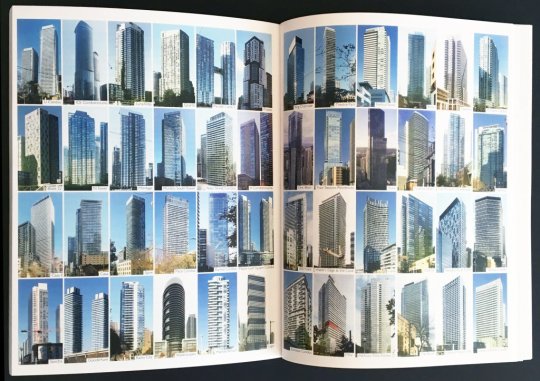
    I just ordered a copy of Multi-Unit Housing in Urban Cities: From 1800 to Present Day by Katy Chey. I figured this was a book that we should have hanging around our office. I also like to support the Daniels Faculty.

    The book covers the following multi-unit housing typologies:

    • Back-to-backs in Birmingham
    • Tenements in London
    • Haussmann apartments in Paris
    • Tenements in New York
    • Tong lau in Hong Kong
    • Perimeter block, linear block and block-edge in Berlin
    • Perimeter block and solitaire in Amsterdam
    • Space-enclosing structures in Beijing
    • Kyosho jutaku in Tokyo
    • High-rises in Toronto

    In addition to each typology, the book analyzes the connection between the housing type and the city. Why did certain typologies flourish where they did and how have they helped to define their city?

    It reminds me of what I was trying to do with some of my recent posts about Hong Kong’s typical tower plan, albeit with far less rigor than what I am sure has been applied to this book.

    I am also curious to read what has been written about high-rises in Toronto. It goes to show you just how defining the current real estate cycle has been for this city. That’s our multi-unit housing typology.

    Image: Daniels Faculty. My multi-unit home made the book.

  • A cohousing case study

    There’s a lot of interest right now in micro apartments. Here is a recent example from New York City. Generally speaking the model is driven by a need to increase housing affordability: shrink the apartments; lower the prices. 

    To compensate for these smaller units, the buildings are often equipped with larger shared spaces and a desire to create a sense of community.

    The below TED talk by architect Grace Kim is an interesting case study of a project that started, first, with a desire for cohabitation. Her thesis is that cohousing can make us happier, less lonely, and more socially connected.

    The cohousing community that she profiles is one that she both designed and developed and one that she now lives in and practices architecture out of.

    If you can’t see the video below, click here. It’s only 10 minutes. After you’ve watched it, let us know in the comment section below if this is a community you could see yourself being a part of.

  • How to revive the American Heartland

    “Every unemployed American is a failure of entrepreneurial imagination.” -Edward Glaeser

    At the end of September, economist Edward Glaeser returned to the Manhattan Institute to deliver the 2017 James Q. Wilson Lecture. If you’re a regular reader of this blog, you may remember that he was there in 2016 and delivered a presentation called “The End of Work.” 

    This year’s talk continues that theme, but focuses on joblessness and economic stagnation in the US Heartland. 

    The solutions he puts forward are based on a very simple economic model for growth that he refers to as “rules and schools.” Simply put: The rules of a place need to support business and entrepreneurship and the people need to be educated.

    One example he gives is of a woman in Detroit who was trying to start a food truck business but had to wait 18 months for a permit. There’s no reason that should happen. He blames the insider restaurant lobby for working to keep competition at bay. The rules are bad. We have similar problems here in Toronto with our food trucks. I think it’s wrong.

    He also pokes fun at the Bilbao effect. Yes, Frank Gehry created a beautiful piece of architecture. But did it lower the unemployment rate?

    The last thing I’ll mention are his comments regarding Amazon HQ2 because I like how he frames it. 

    Firstly, Amazon is going select a city that doesn’t need Amazon. It’s going to go where there’s already abundant human capital. 

    Secondly, “smokestack chasing” is not the right economic development strategy. The key questions should be: How will this benefit our human capital and how many new firms could it create?

    If you have an hour, check out Ed Glaeser’s talk. If you can’t see it below, click here.

    [youtube https://www.youtube.com/watch?v=e8LvHpRCUYk?rel=0&w=560&h=315]

  • Houston, the global city

    Houston doesn’t often get a lot of love in urbanist circles.

    Though since Ed Glaeser published Triumph of the City and declared Houston’s unfettered sprawl the secret sauce for housing affordability, it is now frequently held up as the shining example of why housing supply matters.

    But this is a hotly debated topic. 

    Ed Glaeser would argue that increased supply is the key to housing affordability. But Richard Florida would likely be quick to point out that Houston is also one of the most unequal and segregated cities in America. It is not the model we should be following.

    But let’s be positive today on the blog.

    At the bottom of this post is a great talk by Stephen Klineberg called: Houston, The Global City. Klineberg is a Professor of Sociology at Rice University and the founder of the Kinder Institute for Urban Research.

    In this hour long talk, he outlines, among other things, the remarkable transformation of Houston from a one-industry town (oil) comprised predominantly of white people to a mixed economy where every major ethnicity is now a minority.

    He also argues that Houston is at the forefront of the demographic shifts happening all across the country and that, without this inflow of immigrants over the past couple of decades, Houston today would probably look a lot like a decaying rustbelt city.

    It’s a good watch.

    If you can’t see the video below, click here.

    [youtube https://www.youtube.com/watch?v=SJdWYXIr_qE?rel=0&w=560&h=315]

  • The Life-Sized City

    I just discovered a new video series by TVO called, The Life-Sized City. It’s all about the “anatomy of the modern metropolis.” The first episode – which was released on Sep 13 – is on Medellin and is just under an hour long. I have a feeling that many of you will like this video series.

    Whenever I watch videos like this, it makes me think that I should be starting a city building-focused vlog. I am a big fan of this format. I follow a handful of vloggers. And I think it could be a lot of fun. But sometimes you just have to say no.

    For those of you who aren’t longtime readers, I would also like to point out that my good friend Alex Feldman wrote a guest post on this blog over 3 years ago following a trip to Medellin. It’s about what cities could learn from Medellin’s extraordinary turnaround. If you missed it, click here.

  • Motivation and coordination

    Albert Wenger of Union Square Ventures recently gave a talk at the 2017 Blockstack Summit about “Decentralization and the Knowledge Age.”

    He starts by talking about motivation and coordination.

    The state, he argues, is good at coordination, but not so good at motivation. The market, on the other hand, is good at motivation, but not so good at coordination. Money and self-interest are powerful incentives.

    He then talks about how networks have improved the market, the firm, and the state. When the cost of sharing information drops, everything gets better.

    But there are downsides to networks. For one, they form monopolies. Consider Facebook in social. Google in search. Amazon in ecommerce.

    They also create environments ripe for censorship and “algorithmic abuse.” Everything you see in your feeds is optimized to make you respond and/or feel a certain way. The line between delivering you relevant content and deliberate manipulation is perhaps a fine one.

    So what’s the solution? Decentralized blockchain networks are one exciting possibility. But they also have their own limits and drawbacks. Albert touches on those in his talk.

    The video is about 24 minutes. If you can’t see it below, click here.

    [youtube https://www.youtube.com/watch?v=LgQT874KHuw?rel=0&w=560&h=315]

  • Video: Brooklyn Navy Yard

    image

    Monocle recently published a short 4 minute video tour of the Brooklyn Navy Yard. It covers a bit of the area’s history and the kind of businesses that are flocking to the area today.

    One of the reoccurring themes in the video is a feeling of stability. The local businesses feel secure in their space and some even believe that the area is somehow immune to gentrification.

    Monocle doesn’t allow embedded videos, so you’ll have to click here to watch.