Daily insights for city builders, delivered every morning at 6 AM ET. I’m Brandon Donnelly — a Toronto-based real estate developer and founder of Globizen. I’ve been writing here since 2013.

Tag: vancouver

  • Some thoughts on how we plan cities

    I came across this discussion on Twitter yesterday about how so many of the spaces we love in cities would not conform to today’s modern city planning practices:

    //platform.twitter.com/widgets.js

    This is a topic I’ve been thinking about lately and so it’s a timely discussion. In fact, I’ll often come across spaces in Toronto where I’ll think to myself: This is a really great space. But it’s highly unlikely that it could be built this way today. Naturally the question then becomes: What does this say about modern city planning?

    City planning is obviously important. But at the same time, we are almost certainly making mistakes and doing things that we will later regret. I say this not because I’m particularly critical of planning today, but because cities are enormously complex entities and it’s difficult to believe that we’ve figured everything out at this point.

    One thing I wonder about is if we aren’t over-planning and being too prescriptive about our cities. Some of you will probably argue the exact opposite. But hear me out.

    Vancouver is a city that has long been considered to be the gold standard in modern city planning. We talk about its podium + tower building typology. We talk about its “gentle density.” And we talk about its great public and recreational spaces, among many other things.

    But when I was there last month having dinner with a friend of mine, she said something to me that stood out. She said: “Brandon, Vancouver is a boring city. If it weren’t for my family being here, I would happily move to Toronto, New York, or somewhere else.”

    Cities are amazing places because they unleash human ingenuity. They allow new and unforeseen things to emerge. The challenge, I think, is to not sterilize that away when we plan and build. And all of us involved in the building of cities are probably guilty of doing that to an extent.

  • Vancouver-Seattle

    The New York Times has an interesting article up talking about how Vancouver and Seattle are trying to more closely align themselves and create a unified tech corridor. 

    BC premier Christy Clark and Washington governor Jay Inslee recently signed an agreement to that effect, which included more research collaboration between the University of British Columbia and the University of Washington.

    Seattle wants this because its companies need talent (read: foreign workers) and Vancouver’s borders are more open. Vancouver wants this because its tech industry is relatively small (go Hootsuite!) and it could benefit greatly from being more proximal to Seattle.

    On a side note, Seattle is an interesting case study. In terms of venture capital dollars invested, it is below top tier cities such as San Francisco, New York, Boston, and so on. But in terms of the companies it has birthed (Microsoft, Amazon, Zillow, Expedia…) it is certainly a heavy hitter.

    One of the key factors will be physical connectivity. There’s talk of high speed rail and/or a dedicated lane for autonomous vehicles. However it’s done, I think bringing this trip to < 1 hour would be the ideal scenario. There’s a psychological barrier beyond that.

    If any of you live/work in either of these cities today, I would be curious to hear your thoughts.

  • Urban migration, household type, and housing supply

    Here is an interesting discussion paper on the Toronto region’s economy, demographic outlook, and its land use. It was recently published by IBI Group and Hemson Consulting to support the 10-year review of our regional transportation plan.

    I wanted to share a couple of charts from the report that I thought were interesting. If you’re not in the Toronto region, I would be very curious to hear how your city might compare in terms of the way it is trending.

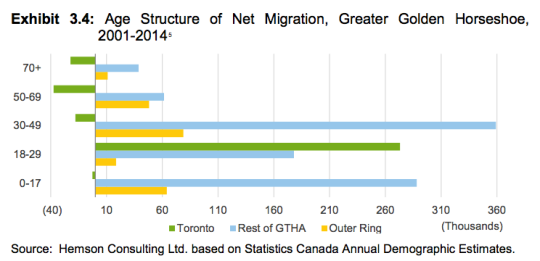
    The first chart is net migration by age group. Like Vancouver – similar chart posted here – people have been moving into the city/Toronto when they’re young and then moving out to the suburbs once they start having families. 

    Will that continue? The oldest Millennials are now hitting their mid-30′s and I am very interested to see if there will be any reversal in this.

    image

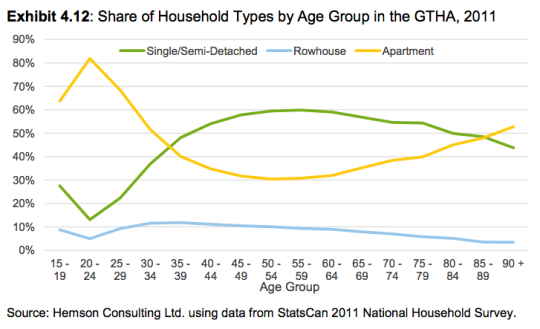
    Given the above trend, people in this region are not surprisingly also swapping apartments for ground-related housing as they get older. The crossover point seems to be (or at least has been) when people hit their mid-30′s. Again, I am curious how this may evolve as the city matures.

    image

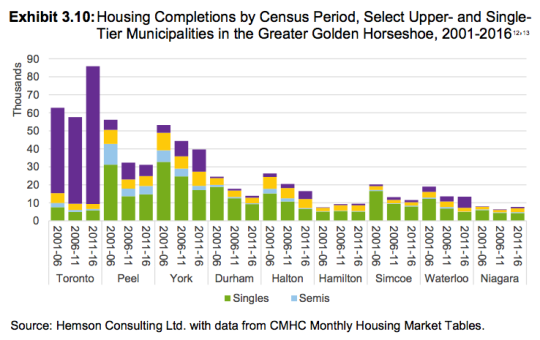
    Because if you look at housing completions from 2001 to 2016 (chart below), the only municipality that was able to meaningfully increase its housing supply was Toronto. 

    Every other municipality – except for Hamilton, which posted modest gains – experienced significant declines in the number of new homes delivered to the market over the last census periods. 

    Of course, the only reason Toronto was able to increase its housing supply was by building up – in other words by building condos and apartments. (Shown in the purple below. For some reason the legend is incomplete in the report.) 

    image

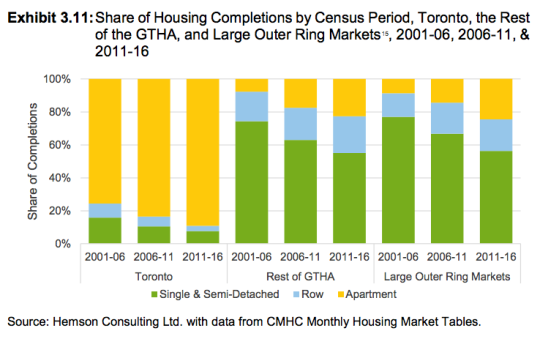
    If you look at the share of housing completions, over 80% of new homes in Toronto are now in apartment form. 

    image

    Intensification is a deliberate policy choice. And we can certainly debate whether it’s a good or bad thing (I believe it’s a good thing). 

    But putting that aside, the above charts are a great answer to the perennial question: “How is it that Toronto is building so many condos?” This is why.

  • LED neon lighting by Electric Confetti

    image

    Ever since I attended Art Basel Miami Beach last year, I’ve been determined to get a neon piece for my condo. I got inspired by all of the neon I saw at the show and so I told myself that I was going to get something made.

    I found a company in Vancouver called Endeavour Neon, but I never ended up pulling the trigger. It turns out that traditional neon lighting is pretty expensive. 

    However, I recently discovered a Melbourne-based company called Electric Confetti. Founded by designer Natalie Jarvis, the company makes LED neon lighting using flex tubes. Supposedly, this makes them more durable and more energy efficient. They’re also less expensive.

    I am trying to figure out shipping to Canada, but it looks like I might be finally getting my neon. I really like the banana (pictured above), but that might be an odd reference for a bedroom. I’ll sleep on it.

    I thought I would share with all of you in case you have a home, an office, or a project that could use some neon lighting.

  • Knowledge is more important than space

    I don’t always agree with economist Edward Glaeser, but I really enjoyed the talk that he gave at the Vancouver Urban Forum back in 2012 (at least part 2 of it). I came across it on Twitter today and, since it only has about 300 views, I figured that some of you also haven’t seen it.

    The argument he makes is that knowledge and education are the bedrock of cities. And since we continue to cluster in cities, despite all of our technological advances, knowledge is clearly more important than space. One of the ways he defines cities is by their lack of space and the closeness of the people.

    Of course, this isn’t anything new. If you’ve read his book Triumph of the City, you’ve heard all of this before. But that didn’t stop me from enjoying his talk. It’s a great overview of declining transportation costs, locational advantages, agglomeration economies, the importance of urban density, the impact of small and large firms in a city, and so on.

    I also really liked this idea that knowledge is worth more than space. So if you have 20 minutes and you want to get geared up about cities, have a watch.

    Click here if you can’t see the video below.

    [youtube https://www.youtube.com/watch?v=zg7aITkTNe8?rel=0&w=560&h=315]

  • Should we love bubbles?

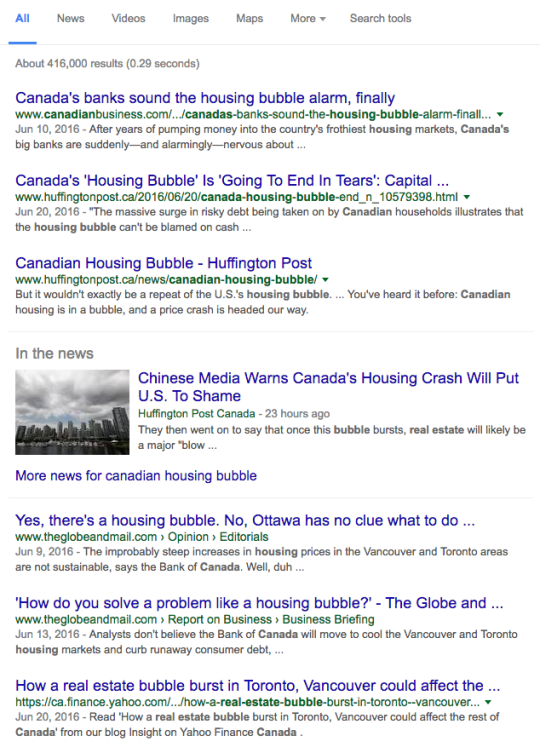
    There’s no shortage of talk about a Canadian housing bubble:

    image

    In Vancouver, the price of a single-family home (as of June of this year) increased 39% to C$1.6 million from the year prior. Does that constitute bubble territory?

    In an effort to stop prices from running away even further, I am sure you all know that the BC government has recently imposed an additional 15% transfer tax on Metro Vancouver homes purchased by foreign buyers (people who are not Canadian citizens or permanent residents).

    The data that I have seen (here and here) suggests that foreign buyers could make up somewhere around 5-10% of the market. Given that many will now get creative in terms of hiding their foreignness, I am not so sure this new tax will have a dramatic impact on affordability. But it certainly sounds nice if you’ve been grouchy about home prices and thinking “those damn foreigners.” We’ll have to see how it plays out.

    Having said all of this, if Vancouver is in fact in bubble territory, would that be so bad? Are we thinking about this the right way?

    Here’s an alternative viewpoint.

    I recently stumbled upon an old blog post by Tom Evslin (2005) called: Why we need bubbles. I discovered it via it Fred Wilson. Tom’s argument is that we need irrational exuberance because it provides the capital that allows for dramatic overbuilding. The overbuilding of things like rail infrastructure, internet infrastructure and – I’m adding this – housing infrastructure. And once this happens, it dethrones the incumbents and paves the way for future economic progress.

    Tom’s focus is on technology, but I couldn’t help but think of the parallels with city building. Is the proposed Rail Deck Park in Toronto so bold that it’s only possible during a period of irrational exuberance? Should Vancouver instead be working to dramatically expand its housing supply instead of trying to tax away a portion of demand? Is a period of irrational exuberance precisely the moment where we lay the ground work for our future successes?

    I’m not saying we’re in a bubble. I don’t believe in or know how to time markets. But I am asking whether the bubble headlines are missing the greater opportunity.

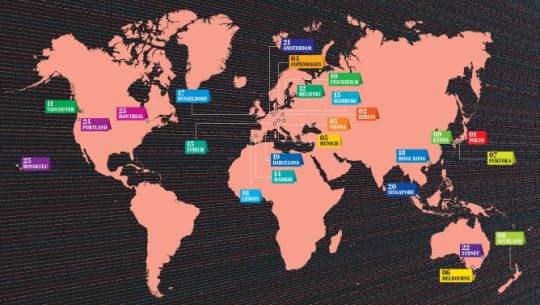
  • Monocle’s Top 25 Liveable Cities — 2016 Edition

    Monocle’s annual survey of the top 25 most liveable cities in the world was just released. It’s now in its 10th year. I found it in my inbox this morning and it was a good reminder that it was about time I renewed my subscription. I’ve been a regular reader of Monocle since 2007, but I let my membership lapse last year.

    Of course, any sort of list like this is going to be subjective. It all depends on the methodology you use. Still, their annual survey is an interesting way to see what each city is up to and where the tides are going. This year Monocle put extra weighting on each city’s nightlife. If you’re not a subscriber, here’s a short video you can watch. It will give you a rundown of all the cities. (I was happy to see Montréal creep onto the list. Incredible city.)

    This focus on the night is something that I’ve been writing about a lot both on this blog and elsewhere. It’s an idea that’s picking up momentum around the world as an economic development strategy. But for whatever reason, uptake seems to be slower here in North America.

    I like how architect Anna Dietzsch puts it in this video. She says that Rio may have the beaches, but Sao Paulo (where she’s based) has the night. That’s exactly how cities should be thinking about this opportunity. It used to be that cities thrived almost entirely because of location, waterways, transport, and other natural features (example: Buffalo). But increasingly, it’s becoming about things like nightlife.

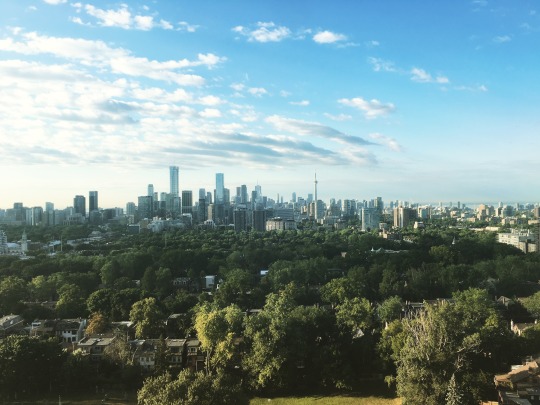
    Vancouver may have the mountains, but Toronto has…

    Image: Monocle

  • What I’m doing next

    image

    A number of you have asked if I’m moving to New York. I can see why that was inferred from some of my posts, but that was actually not my intention. I am not moving to New York. (Sorry New York friends. I’ll visit soon.)

    Toronto is home base. I hope it’s clear how much I love this city. Sure, I’m a big fan of New York and Miami and Vancouver and Berlin and Tokyo and Jackson (to name some of the places I have on my phone’s weather app), but I made a deliberate choice to station myself here.

    Because unlike some of the other industries I write about on this blog, city building is hyper local. What I do involves the built environment. And that doesn’t generally happen via a laptop on a beach in Bali (at least not for extended periods of time).

    It happens by being on the ground, interfacing with local communities, meeting face-to-face with the city, and poring over drawings with smart people who know far more about their respective disciplines than I ever will. It is a collaborative and local effort. It’s about getting into the details.

    And so to be successful in this business, I think it helps to find a home and take long bets. I’m not saying that I will never work on projects in other cities (I have and I would), but I am saying that I’m not moving to New York right now and that home remains Toronto.

    On that note, here’s what I have to tell you. Later this year I’ll be joining Slate Asset Management as VP of Development.

    A bit about Slate:

    Slate is one of the most active acquirers, owners, and managers of real estate in Canada right now. Founded in 2005 by two brothers (Blair and Brady), Slate has over $3 billion of assets under management across over 16 million square feet and over 130 properties.

    All of this is done through four main investment vehicles: 

    1) The first is Slate Advisors. It acts on behalf of and alongside private institutional investors — such as Greystone.

    2) The second is Slate Office REIT (TSE:SOT.UN). It is a pure play Canadian office REIT focused on downtown and suburban properties all across the country.

    3) The third is Slate Retail REIT (TSX:SRT.U). It is a pure play REIT entirely focused on grocery-anchored U.S. retail properties. (Remember how many times I’ve written on this blog about how grocery has one of the lowest online shopping penetrations?)

    4) And the fourth: Slate is also starting a grocery-anchored retail platform in Germany. It is similar to #3, except that it’s in Germany.

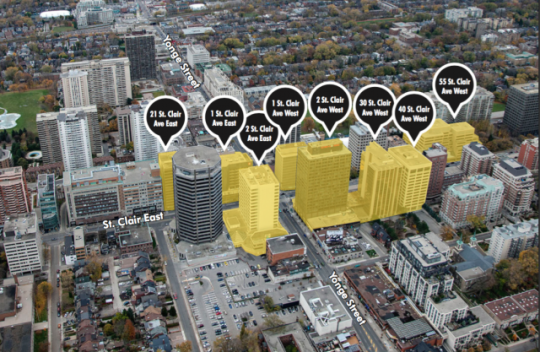
    Most recently, Slate has been in the news because of the position it has taken at Yonge + St Clair in midtown Toronto — a perfect example of “finding a home and taking long bets.” Slate, in partnership with Greystone, owns all 4 corners of the intersection and about 60% of the properties along the St. Clair corridor.

    Here’s a diagram of those Slate buildings:
    image

    In case you didn’t put two and two together, the 8-storey mural I wrote about two weeks ago is going up (right now) on the side of a Slate building (1 St Clair Avenue West — shown above). The British street artist known as Phlegm is doing it.

    Up until today, the focus of Slate has largely been on acquiring undervalued / overlooked real estate and creating value through re-leasing and overall repositioning. That will certainly continue. But given what I do, I am sure you can posit what’s also next.

    I’m genuinely excited to be joining such a talented group of real estate professionals. As I mentioned last week, I wasn’t in the market for anything new. I was heads down working on cool projects. But life happens. And Slate quickly demonstrated to me that the incredible success they have seen to date is precisely because of how progressive, nimble, and entrepreneurial they are.

    On that note, I have “one more thing” to share today.

    In parallel to all of this, and with the support of Slate, I am also starting a boutique city building company called Globizen. The name is derived from Global + Citizen.

    The objective is to build a company that embodies everything I write about on this blog. I want it to be lifestyle and design-driven. I want it to leverage technology to improve the way that cities and the building industry operate. And I want it to function as a vertically integrated real state + design firm, focused on sustainable urban infill development. Think of it as city building by and for the responsible global citizen.

    It’s still early days, but the thinking is that this new platform could compliment the larger Slate platform in some way. It’s too early to say how exactly, but everyone is open to having those discussions. And that’s what matters at this stage.

    I am going to end with a quote. It’s by Partner and Co-Founder, Blair Welch:

    “On all of our deals we have had people say ‘can’t’ to us. They say ‘Can’t be done, can’t do that, can’t raise money, etcetera.’ At Slate, we don’t do ‘can’t’ well.”

    I like that a lot. So here’s to finding a home, taking long bets, and not saying can’t. Onward my friends. 

  • Positivity at a public meeting

    I’ve been reading the blog 5 Kids 1 Condo for, I think, about a year now. It’s written by Adrian Crook who is a single dad of 5 kids, living in a 2 bedroom condo in downtown Vancouver. And his blog is about just that.

    A few days ago he posted a video of himself speaking at a public meeting in support of a new purpose-built rental building at 18th and Commercial Drive in Vancouver. The proposal includes 110 secured market rental units; 37% of which will be 2 or 3 bedroom apartments. (More information on the project, here.)

    It’s rare to see people come out in support of a project at a public meeting. Usually people only show up when they’re grouchy and upset. So today I’d like to share his speech (click here if you can’t see the video below).

    [youtube https://www.youtube.com/watch?v=q-ENWu__HdM?rel=0&w=560&h=315]

    I’m curious to know what was shouted right at the beginning after he said that he was in favor of the proposal. I listened a few times but couldn’t figure it out. 

    In any event, Adrian’s speech touches on a number of important points that transcend this specific development proposal and that are relevant to many of the topics that we discuss here on this blog.

  • It sold for what?

    Today I spent the day at the Land & Development conference here in Toronto. If there was one running theme throughout the day, it was: “Holy shit, I can’t believe that X piece of land sold for $Y million. How will they (the developer) ever make the numbers work?”

    Outside of the real estate development community, there’s often the perception that developers are building everywhere and that there’s lots of land left in cities, like Toronto. When you see all the cranes in the skyline, it naturally seems like we’re building a lot. Things seem easy.

    But the reality is that it’s extremely difficult to find “land” in markets like Toronto and Vancouver. And by “land”, I mean properties that can be feasibly acquired/assembled, entitled, developed, and then brought to market. The way the speakers today spoke about land it’s as if it were a rare precious commodity.

    I say all this, not to complain about how tough things are, but simply to shed light on the process. A developer’s job is to take a piece of property and figure out a way to create additional value. But to do that, they need to find a suitable piece of real estate. “Land” is an input.

    This has implications for consumers, because inputs turn into outputs. And if one of the inputs is becoming scarcer, then it’s pretty safe to assume that the outputs, such as new housing, are also becoming scarcer.