Daily insights for city builders, delivered every morning at 6 AM ET. I’m Brandon Donnelly — a Toronto-based real estate developer and founder of Globizen. I’ve been writing here since 2013.

Tag: university of pennsylvania

  • ULI Hines Student Competition comes to Toronto

    I was speaking with a Penn (my alma mater) student this evening about career options in development and he mentioned to me that he recently participated in the 2018 ULI Hines Student Competition. He also mentioned that this year’s “study site” is in Toronto. (It’s the BMW Toronto dealership between the West Don Lands and East Harbor.)

    For those of you unfamiliar with the ULI Hines Competition, it’s an annual student competition (now in its 16th year) that encourages collaboration among “future real estate developers and the many allied professions, such as architecture, landscape architecture, historic preservation, engineering, finance, and others.” 

    Each year there is a real life study site and multi-disciplinary teams compete for $50,000. I participated in my 2nd year of graduate architecture school and we received honorable mention. So no $50,000, sadly. But it was a valuable experience and I would recommend it to any student who plans to be involved in the built environment after graduation.

    I am looking forward to seeing what the finalists come up with for this site. I think that the study site being in Toronto – and in particular this location – speaks to the momentum that has developed in this part of the city as a result of the West Don Lands, East Harbor, Sidewalk Toronto, and the various planned infrastructure investments. 

    Here is a copy of this year’s briefing materials.
    Good luck to all of the teams that participated.

  • What’s happening in Melbourne?

    image

    I’ve never been to Australia, so take everything I’m about to say in this post for what it’s worth. I also don’t know much about Sydney and Melbourne, other than the fact that I’ve studied the latter’s laneways and the tremendous impact they’ve had on revitalizing the CBD.

    However, recently I’ve had a few close friends visit these cities for the first time and, since then, I have started noticing a trend. All of them come back and tell me the same thing, that they prefer Melbourne to Sydney. They say: “Yeah, Sydney is nice and beautiful and all, but it’s not all that exciting. Melbourne feels way more dynamic. Oh, and have you seen their laneways? You would love them.” That’s what they tell me.

    So that’s what I have in my head when I read that Melbourne is now the fastest growing city in Australia; that it’s one of the most liveable cities in the world; and that by as early as 2031 it could take Sydney’s place as the biggest city in the country. Below is a chart from The Australian. If you can’t see it, click here.

    //platform.twitter.com/widgets.js

    Some argue that this is happening because housing is cheaper in Melbourne (median dwelling price of ~$700,000 versus ~$1 million). And some argue it’s because the jobs are there and the city has become a cultural and sporting destination. Whatever the case may be, net migration is estimated to be somewhere around 100,000 people per year.

    My own view – and I’ve made this argument before on the blog – is that we shouldn’t underestimate the importance of cool shit when it comes to cities. People vote with their feet more than ever today. And for a growing segment of the population, cities are a consumer good.

    Indeed, in 2001, Edward Glaeser, Jed Kolko, and Albert Saiz penned a research paper called the Consumer city, where they argued precisely that. The premise was that historically we have tended to think of cities as being centers of production, but we should also be thinking about them as places of consumption.

    Here’s an excerpt:

    “But we believe that too little attention has been paid to the role of cities as centers of consumption. In the next century, as human beings continue to get richer, quality of life will become increasingly critical in determining the attractiveness of particular areas. After all, choosing a pleasant place to live is among the most natural ways to spend one’s money.”

    This is why those coffee shops and cool laneways matter. Some cities have unfair natural advantages. Los Angeles has weather. Vancouver has mountains. Montreal has poutine. But for the rest of us, the amenities typically form part of the built environment. They are a product of our choices.

  • We are all biased against creativity

    image

    I would like to do a follow-up to yesterday’s post about innovators and creators, because I recently stumbled up the following quote:

    “We think of creative people in a heroic manner, and we celebrate them, but the thing we celebrate is the after-effect,” says Barry Staw, a researcher at the University of California–Berkeley business school who specializes in creativity.

    It is taken from a Slate article called: Inside the Box – People don’t actually like creativity. And it’s supported by a bunch of research, including a 2010 study conducted by professors at Cornell University, the University of Pennsylvania, and the University of North Carolina.

    The key finding was that people generally hold a bias against creativity, and it’s activated when we become motivated to reduce uncertainty. This might be because we fear rejection or because we’ve come to learn that reducing uncertainty and promoting the status quo is often better for career advancement. 

    There’s less perceived risk.

    But here’s the thing: celebrating creativity after the fact is meaningless. There’s no genius in that. Everyone now knows this truth. The heroics come into play when you’re both willing to be misunderstood and willing to be dead wrong.

    Of course, talk is cheap. 

    Here are 5 suggestions for promoting greater creativity at your company taken from Tom Tunguz’s blog, who himself is borrowing from Barry Staw (author quoted above):

    1. Hire people who’s skills aren’t precise matches for the needs of the company.
    2. Encourage employees not to listen blindly to corporate policy and conventional wisdom; not all to speak with the same voice.
    3. Those in power should go as far as possible to encourage active opposition to ideas. (Similar to Drucker’s obligation to dissent).
    4. Optimize for adaptiveness. Have extra labor capacity and explore side projects. (How many creative companies started or were reinvigorated by side projects? Twitter and Slack are two that immediately come to mind).
    5. Lead rather than follow. Take risks.

  • How to achieve peak productivity

    image

    Lately I’ve been finding that I need to divide my time between multitasking and blocks of uninterrupted time. The multitasking phase is doing calls, responding to emails in 3 seconds, going from meeting to meeting, and so on. It’s a mode that many of us probably exist in virtually all of the time.

    But I can’t stay in this mode all of the time. I think of it as short attention span mode. There are times when I need blocks of uninterrupted time so that I can “go deep.” One example would be to review drawings. I really need to focus so that I can think of all of the externalities associated with the decisions being made.

    This is related to my post about managers and makers, but it’s also the focus of a recent book by Cal Newport called, Deep Work: The Secret to Achieving Peak Productivity. You can read more about the book here at Knowledge@Wharton, but I wanted to highlight two concepts. The first is this equation:

    High-Quality Work Produced = (Time Spent) x (Intensity of Focus).

    Obviously the argument here is that if you want to maximize your output, you need to increase the intensity of your focus. Minimize distractions. Ratchet up the intensity. There’s only so much time in the day.

    Newport gives the example of Adam Grant. He is a New York Times bestselling author and the youngest tenured professor at the Wharton School at the University of Pennsylvania. 

    He is so committed to intensity of focus that he batches all of this teaching into the fall semester, allowing him to truly focus on the students. He’s the highest rated teacher at Wharton. At the same time, this lets him focus on research and writing during the spring and summer semesters. He’s also known to regularly use auto-of-office responders when he’s in the office, but needs to focus.

    The second concept is that of “attention residue.” The idea here is that when we switch from some Task A to some other Task B, our attention doesn’t immediately snap over. A portion of our attention remains on the original task and distracts us from fully focusing. There’s residue.

    An example of this would be when you’re working on something and you see an email come in. As soon as you turn your attention to that notification, your attention gets divided. And even if you don’t immediately respond to that email, a portion of your attention now remains with that uncompleted task. It lingers in the mind.

    The above probably makes intuitive sense to a lot of you, but in many ways our work culture today does not encourage intensity of focus.

    Thanks for reading today. There’s lots of evidence to suggest that the best way to learn new things is to not simply read about it, but to share it with others. That’s one of the reasons I blog and hopefully you find that valuable.

  • America’s urban infrastructure — what to do?

    The Penn Institute for Urban Research recently asked a dozen experts to weigh in on the topic of urban infrastructure in the United States. More specifically: What should the US do? It is a direct response to President Trump’s inauguration speech, where he described America’s infrastructure in terms of “disrepair and decay.”

    The urban experts include Eugénie L. Birch, Saskia Sassen, Susan Wachter, Richard P. Voith, and many others. Richard Voith’s piece is called, Historical Patterns of Infrastructure Funding. (I was his teaching assistant while I was at Penn and I still follow his work.) 

    I found it interesting how infrastructure funding has shifted from the federal level to the local municipal level – especially in the realm of public transit. Given the rise of urban centers, this makes intuitive sense. But Voith also argues that “relying only on local funding of transportation will almost certainly result in an under supply of infrastructure.”

    For the full Expert Voices series, click here. I think many of you will like it.

  • Getting older

    Yesterday I promised that today’s post would be less sad. I am sticking to that promise, but I am also sticking with a somewhat similar theme: getting older.

    Fast Company recently published an interview with New York-based architect Matthias Hollwich. The topic is aging and the kinds of spaces that we have created for people as they age: retirement communities, nursing homes, and so on.

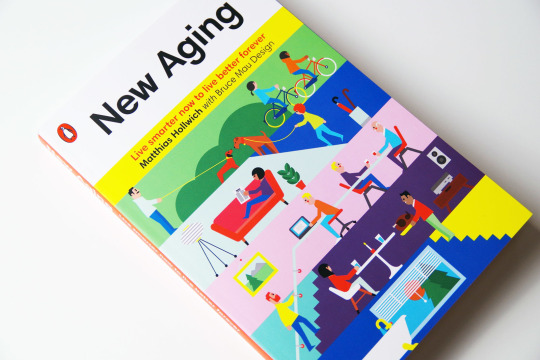
    The reason this is getting airtime right now is because Matthias has just published a book on the topic called, New Aging: Live smarter now to live better forever

    image

    But this isn’t a new focus. Matthias actually taught at the University of Pennsylvania while I was there and I remember his design studio being focused on this topic. (I wasn’t in his studio, unfortunately.)

    The sound bite that I really like from the interview is this one:

    “I think the biggest flaw is that it’s age segregation. You take all of the people who are above 75, 85, or 95, depending on what type of environment it is, and put them into one place. And then you’re just surrounded by old people, people who have social and physical challenges, and you’re not around the vibrancy of a multi-age environment, which is something that we experience all life long. I think that is something that society really has to rethink.”

    Not only do I agree with him, but I think it exemplifies one of the things that I love about architecture. The idea that the way things are done today is usually not some sort of universal truth. Instead, everything can be questioned, rethought, and reinvented for the better. It’s a very entrepreneurial way of operating and I don’t think that parallel, between entrepreneurs and architects, is drawn or leveraged nearly enough.

    I also don’t think we’ve given enough design consideration to this topic of aging. I mean, why can’t the spaces that people end their lives in be as (or more) sexy and enjoyable as (or than) the spaces they live the rest of their lives in? That’s what I want when I’m 95.

    So kudos to Mattias and the rest of the team at Hollwich Kushner (his firm) for caring about and working on this

    Book image from Matthias Hollwich’s Facebook.

  • A short history of redlining

    In 1933, the United States Congress created the Home Owners’ Loan Corporation (HOLC). With foreclosures rising as a result of The Great Depression, the task of the agency was to provide new low-interest mortgages to both homeowners and private mortgage lenders. Between 1993 and 1936, the agency served about one million households.

    By 1935, the parent company of the agency (the Federal Home Loan Bank Board) decided to initiate something called the “City Survey Program.” The idea was to look at local real estate trends – including the racial and ethnic composition of the country’s largest cities – in order to get a better understanding of how to manage all of these outstanding loans.

    One outcome of this program was the creation of the HOLC’s infamous “residential security maps.” (Philadelphia’s is shown at the top of this post.)

    These were maps that categorized city neighborhoods according to 4 grades. Grade A neighborhoods (green) were the best ones. They were ethnically homogenous and had room to be further developed. Grade B neighborhoods (blue) were the second-best ones. They were already completely developed, but were still considered desirable. Grade C neighborhoods (yellow) were starting to decline and showed an “infiltration of a lower grade population.” And finally, grade D neighborhoods were considered “hazardous” and colored in red. These neighborhoods had low homeownership rates, old crappy housing, and an “undesirable population”, which, at the time, largely referred to Jews and African Americans.

    Some have argued that the HOLC and their “residential security maps” are what kicked off systematic mortgage discrimination in America’s inner city neighborhoods – later referred to as “redlining.” This was the practice of denying credit to people who lived in these undesirable neighborhoods (and even to real estate developers who wanted to build in these undesirable neighborhoods).

    But University of Pennsylvania professor Amy Hillier has argued that these maps simply reflected the ethos of the time period. Using a sampling of HOLC mortgages, she found that 62% of them were issued to grade D (red) neighborhoods. The agency, itself, was not actually redlining in practice.

    Furthermore, she also looked at private mortgages issued in Philadelphia between 1937 and 1950 and found that security grade rating actually had no impact on the total number of loans issued. She did, however, discover slightly higher interest rates for properties located near and in the bottom security grades.

    All of this is to say that “redlining” is likely not the only culprit for inner city decay. There are other factors at play.

    To that end, the National Bureau of Economic Research recently published a working paper, which I discovered through CityLab, called, “Racial Sorting and the Emergence of Segregation in American Cities.” The key finding here is as follows:

    “Our preferred estimates suggest that white flight was responsible for 34 percent of the increase in segregation over the 1910s and 50 percent over the 1920s. Our analysis suggests that segregation would likely have arisen in American cities even without the presence of discriminatory institutions as a direct consequence of the widespread and decentralized relocation decisions of white urban residents.”

    In other words, it wasn’t just mortgage discrimination; it was also just general discrimination. That actually makes a lot of sense, because, if you think about it, the former couldn’t have occurred without the latter being present.

    Here’s how the research paper puts it (via CityLab):

    “Policies that reduce barriers faced by blacks in the housing market may thus not prevent or reverse segregation as long as white households have the ability and desire to avoid black neighbors.”

    (Note: Most of the information and data used in this post was sourced from the work and research of Amy Hillier.)


  • Why creativity requires freedom

    Brazil colors by bruno Gueroult on 500px.com

    https://500px.com/embed.js

    In a knowledge and innovation economy, new ideas matter a great deal. But it seems to be a lot easier for existing companies to come up with sustaining, incremental innovations, than it is for them to come up with new, disruptive innovations. 

    New can be hard.

    That’s why I was interested in a recent New York Times article by Wharton professor Adam Grant called, How to Raise a Creative Child. Step One: Back Off.

    The article starts by arguing that many “child prodigies” rarely become adult creators who go on to the change the world:

    The gifted learn to play magnificent Mozart melodies, but rarely compose their own original scores. They focus their energy on consuming existing scientific knowledge, not producing new insights. They conform to codified rules, rather than inventing their own. Research suggests that the most creative children are the least likely to become the teacher’s pet, and in response, many learn to keep their original ideas to themselves. In the language of the critic William Deresiewicz, they become the excellent sheep.

    To become creators Adam argues that children need to be given the freedom and independence to develop their own sense of self:

    When psychologists compared America’s most creative architects with a group of highly skilled but unoriginal peers, there was something unique about the parents of the creative architects: “Emphasis was placed on the development of one’s own ethical code.”

    Yes, parents encouraged their children to pursue excellence and success — but they also encouraged them to find “joy in work.” Their children had freedom to sort out their own values and discover their own interests. And that set them up to flourish as creative adults.

    I firmly believe in this approach. But of course, this doesn’t just apply to children; though that is certainly an important takeaway. I also think that if you want the best work out of people in the workplace, you also need to: back off.

    Creativity needs freedom.

  • The democratization of real estate

    In 1960, real estate investment trusts were created in the U.S. with the goal of democratizing real estate ownership. Here’s how Yale professor Robert Schiller described it:

    “REITs were created by law in 1960 to democratize the real estate market and make it possible for a broad base of investors to participate in this huge asset class. That was absolutely the right thing to do, because portfolio theory tells us people should diversify across major asset classes, and real estate is one of them.”

    But a lot of things have changed since 1960. We now have the internet. 

    And one of the things that the internet is very good at is creating peer-to-peer networks that connect supply and demand without the same kind of intermediaries. This could be people who have MP3s with people who want MP3s or it could be people who have real estate with people who are looking to invest in real estate.

    So with the advent of crowdfunding in both the U.S. and Canada, I think we are at the dawn of another era of real estate democratization. Already we have seen the first crowdfunded real estate development project and it happened at a much smaller and local scale than is usually the case with REITs.

    Similarly, we are also seeing companies emerge – such as HomeUnion in the U.S. – that allow people to build their own rental portfolios by directly investing, either fully or partially, in real estate. Again, there are differences here compared to how REITs typically operate.

    When I was in grad school at Penn and Sam Zell used to come in and talk to the students, he used always mention how when he started out in real estate (1960s) the industry was disproportionately controlled by a small number of players. That’s been changing ever since and it looks like that trend will only continue.

  • The Philadelphia (real estate) story

    Real estate is a local business. And this weekend in Philadelphia really reminded me of that.

    Here’s what I mean.

    The real estate story in Toronto is condos. We’re buildings lots and lots of condos. When my friend from Chicago recently visited Toronto for the first time, he told me that it feels very similar to Chicago, except that we have modern glass condo towers going up everywhere and they don’t. That’s our story right now.

    Low-rise housing in Toronto is becoming increasingly unaffordable (the average price of a detached home is well north of $1M) and so high-rise condos are now what many people can afford. When young people in Toronto talk about buying their first place, that now usually means a condo.

    But that’s not the story in Philadelphia.

    In Philadelphia, you can buy a 1,600 square foot, 2 storey, 2 bedroom rowhouse in a respectable neighborhood for sub US$400,000. And in speaking with my friends in Philly this weekend, that’s what young people are buying.

    This doesn’t mean that Philadelphia isn’t building new high-rise condos and apartments. It is. Obviously nowhere near as many as Toronto. But it is building. Far more than when I lived there before the Great Recession.

    However, the condo market is typically more upmarket. The target market isn’t so much first time buyers and the mass market; it’s more people who want full floor apartments in Rittenhouse Square. (I’m exaggerating only slightly.)

    Philadelphia is also building more rental towers than condo towers. (Rental has only recently become fashionable again in Toronto.)

    I’m guessing that a lot of this has to do with the fact that Philadelphia draws in a lot of transient students and academics each year. In fact, the most noticeably changed area from when I lived in Philly was University City. That’s the area that houses the University of Pennsylvania and Drexel University.

    So there seems to be strong demand for new rental housing in the city. I’m told vacancies are very low. But when it comes time to buy, young people don’t look to condos like they do in Toronto. They are looking mostly to rowhouses.

    This is interesting to me because it’s the exact opposite of Toronto. In Toronto, low-rise is expensive and so lots more people are buying high-rise. In Philadelphia, high-rise is expensive and so people are buying low-rise.

    I guess that’s why they say real estate is a local business. What works in one city may not work in another.