Daily insights for city builders, delivered every morning at 6 AM ET. I’m Brandon Donnelly — a Toronto-based real estate developer and founder of Globizen. I’ve been writing here since 2013.
One of the most interesting talks that I attended while I was in graduate school at Penn was by John Maeda.
John operates at the intersection of design, technology, and business, and I find his work fascinating. He’s probably best described as a graphic designer, visual artist, computer scientist, academic, and author. And when I heard him speak in 2008, he was also President of the Rhode Island School of Design.
More recently though, John has entered the world of venture capital by becoming a “Design Partner” at Kleiner Perkins Caufield & Byers (KPCB) in Silicon Valley. But what’s really interesting about this move is that when he joined KPCB in January 2014, he was the first designer to arrive on Silicon Valley’s legendary Sand Hill Road. No other VC firm had a designer in-house.
So that’s changing. As of this month (March 2015), there are now 6 other designers on Sand Hill Road. The venture capital community has seemingly woken up to the value of great design.
John Maeda has branded this shift, #DesignInTech. And he recently gave a presentation on the topic at SXSW. It’s a great read, particularly if you’re somebody who cares about design. Click here if you can’t see it below.
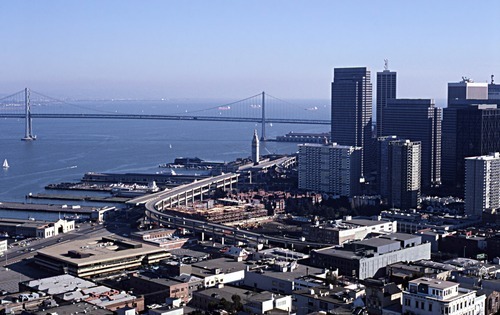
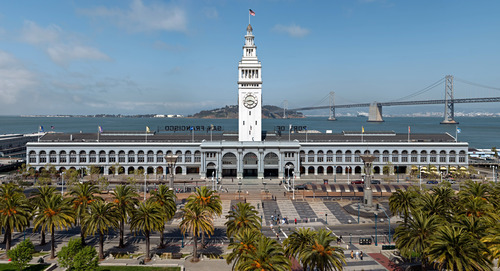
A few days ago I wrote a post talking about what happens when you demolish an urban highway. It was a link to an article giving 5 examples of cities that have removed their urban highways and benefited.
After I wrote the post, a number of people responded on Twitter. Some thought it was a great idea and gave examples of other cities, such as Detroit, that are thinking about doing the same. But others responded and said that I was out of line. And that while it might work in some cities, it simply isn’t a viable option in cities like Toronto.
So as somebody who believes we should be taking down the Gardiner Expressway, I thought it would be worthwhile to revisit the topic and provide a bit more information.
To be clear, I’m not suggesting we remove the Gardiner and replace it with nothing. My belief is that we should replace it with a broad surface street that would still move lots of cars, but that would make our waterfront much more open and accessible to everyone.
So how is this feasible?
Again it comes back to the concept of induced demand. Back in 2009, two economists from the University of Toronto and University of Pennsylvania – which are actually both of my alma maters – published a study called The Fundamental Law of Road Congestion.
In it they discovered something really fascinating: there’s a near perfect relationship between new roads and highways built and the total number of miles driven. In other words, as cities increased road capacities (during their study period of 1980 to 2000), the amount of driving went up just as much.
What this should tell you is that trying to build your way of out road congestion is usually a losing proposition. That’s why every large city has a traffic problem. Try and think of one that has solved this. And as much as it might seem intuitive to tell people at cocktail parties that your city simply needs to build more roads and highways, it’s typically not that simple. (In my view, the solution is road pricing.)
The other really interesting thing that this study revealed is that it works both ways. When you reduce road capacity, drivers start to disappear. People choose to live closer to where they work. People choose transit. People go into the office at different times. People make all sorts of different decisions in response to this road change, just as they do when there are more free roads available to them.
So within a reasonable band (obviously you can’t remove all roads), there is no perfect amount of road capacity. If you added another lane to your highway, it would be full. If you took away a lane, it would end up equally full. That’s why removing the Gardiner Expressway isn’t lunacy.
Instead, it actually makes a lot of sense:
It’s the cheapest solution (compared to repairing it or burying it)
It would free up money for transit and other mobility solutions
It would make our waterfront more open and accessible
It would beautify our downtown
It would increase land values all along the waterfront
And since we’re still in the early days of developing our eastern waterfront, now is the time to do it. The longer we wait, the harder it’ll get and the more expensive it’ll get.
So I hope that the leaders in this city will think long and hard about this as opposed to immediately assuming we need an elevated highway to keep this city moving. The last time I checked, it doesn’t work so well in its current state.
Images: Before and After the Embarcadero Freeway in San Francisco (via Gizmodo)
As a recent graduate of Rotman’s Morning MBA program (and presumably because somebody over there reads Architect This City), I was asked to write a guest post for their MBA blog. More specifically, I was asked to share my thoughts on the real estate industry and on my time at Rotman. And since I haven’t really done a post like this before, I thought it would be worthwhile to do.
But before I begin, I think it’s important to explain a bit about my background and my motivations for doing an MBA in the first place. Before going to Rotman, my first master’s degree was in architecture and real estate from the University of Pennsylvania. Basically it was a Master of Architecture combined with their MBA real estate concentration. So it included everything from real estate finance to real estate development.
Having already done this 3-year program, there were a couple of things I wanted out of an MBA program. First of all, I wasn’t prepared to go full-time. Five years out of the workforce was simply too high of an opportunity cost for me and so part-time was all I considered. I also only applied to Rotman because I didn’t want to waste any time traveling outside of the city (or to other parts of the city). I also saw Rotman as a rising star and one of, if not the, best option in Canada.
At the same time, I didn’t give much thought to the real estate curriculum being offered even though I fully planned to stay working in the real estate industry. I felt like I already had that sort of formal training and so, unlike some of my classmates who were looking to switch into real estate, I was after something else. I ended up majoring in Innovation & Entrepreneurship.
What I was trying to do was really round out my skillset and fill in some of the missing holes: accounting, marketing, and so on. But even more importantly, I had drunk the kool-aid around Rotman’s focus on integrative thinking (renamed “business problem solving”) and “design thinking”. And since there will always be a part of me that thinks of itself as a designer, it seemed like the perfect program for me.
Because at the end of the day, it’s not that hard to learn how to create a real estate development pro forma or calculate your expected exit cap rate on some piece of real estate. That stuff is all fairly mechanical. It might seem quite mythical when you don’t know how to do it, but once you do, you quickly realize that a financial model is only as good as the assumptions you put in. As we’re told in school, garbage in = garbage out.
The real value gets created in the assumptions. It’s created in the way you think about the market, your product, and your customers. And a lot of the time, the most value is created when you know or believe something that nobody else believes to be true. If you’re a lemming, you’re going to get lemming like returns and outcomes. So in a lot of ways, I went to Rotman to help me think better and think differently.
In some industries, resting on your laurels can kill you in a relatively short period of time. See Blackberry. Real estate, on the other hand, is generally a bit slower moving. But that doesn’t mean that change doesn’t happen and that there isn’t room for loads of innovation.
Just look at the Toronto of today versus the Toronto of 10-15 years ago. We’ve transformed ourselves into a city of high-rises where more and more people now want to live in the core of the city. This has brought commercial landlords back to the city center so that employers have downtown office space to attract the best human capital (see South Core) and it’s brought suburban retailers into the core to sell to these same urbanites. We’re seeing a complete reversal of the trends experienced with the last generation.
Amidst all of this, I’ve been noticing a growing awareness and passion around cities. My blog Architect This City started as a forum for architects, planners, and developers, but it has grown into a community of thousands of people who simply love cities. They’re passionate about everything from architecture to grade-separated bike lanes (as geeky as that probably sounds).
So I think that it’s not only the real estate market that’s changing, but also the professions involved with it. I’ve written a lot about the future of the architecture profession because I think we’re starting to see the emergence of new business models. Architects are becoming developers and developers are starting to become much more heavily involved in the shaping of the communities in which they build. Which is why in many ways, I think of my self as a city builder more than anything else.
Finally, to make matters even more complicated, technology is starting to have a huge impact on the business. Zillow.com just bought Trulia.com for $3.5 billion to form a portal that will now serve around ¼ of the online US residential market. And Opendoor.com is getting ready to launch a product that seems entirely poised to disrupt the way homes are bought and sold in America.
So what I’m getting at is that there’s absolutely no guarantee that the way we used to do something, is the way we’re going to continue doing it. In fact, I operate under the assumption that everything can and will be changed by somebody at some point. And if this is the way you approach things, then it should become abundantly clear to you that being able think critically is going to be one of your most important assets.
When I was just starting at Rotman, I met for lunch with an upper year classmate who told me that one of the best things he’s taken away from the program is the ability to think about the way he thinks. That may sound silly to some, but in our uncertain world, it’s actually a great skill to have.
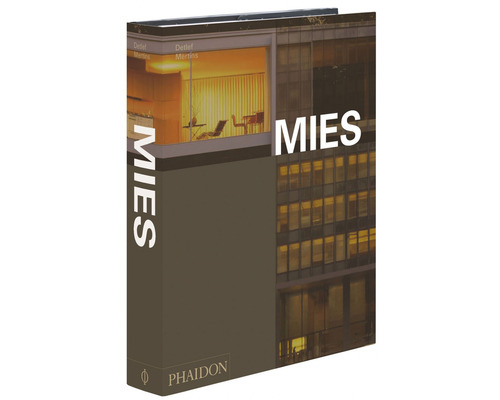
If you’re into architecture, specifically epic modernism, then I would encourage you to pick up this new monograph on Mies van der Rohe–simply called Mies. It was written by the late Detlef Mertins, who was the Chair of the Department of Architecture at the University of Pennsylvania from 2002 to 2007, but is originally from Toronto.
Detlef was one of the most brilliant, but also nicest, people I’ve ever met and unquestionably the leading scholar on all things Mies. He passed away in the midst of working on this publication, but it was completed by his partner Keller Easterling–another powerful architecture mind–and a few other contributors.
For those of you unfamiliar with the work of Mies, here’s a brief description from the book publisher:
Ludwig Mies van der Rohe is one of the twentieth century’s most influential architects. His most well-known projects include the Barcelona Pavilion in Spain (1929); the Seagram Building in New York (1954-56); the Farnsworth House (1945-50), 860 and 880 Lakeshore Drive (1945-51) and the IIT Campus (1939-58), all in and around Chicago, and the New National Gallery in Berlin (1962-68). These are only a few of Mies’s pavilions, houses, skyscrapers and campuses, which all epitomized a radically new structural and spatial clarity.
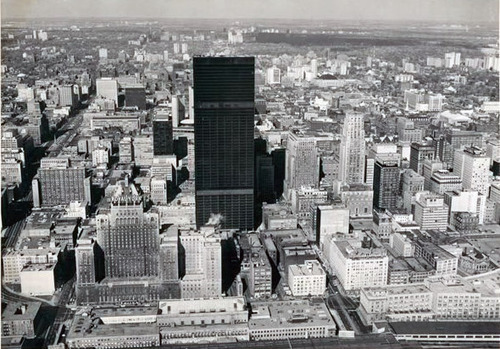
For readers in Toronto, Mies’s biggest contribution is the Toronto Dominion Centre, which is a beautiful example of the International Style. The complex was designated under the Ontario Heritage Act in 2003. But in addition to it being great architecture, its construction in the late 60s really coincided with Toronto’s rise as a modern metropolis. Here’s a photo of the first tower from blogTO.
The TD Centre introduced not only a new architectural language into Toronto’s urban fabric, it also introduced a new and bolder way of how we thought of ourselves as a city. Remember this was a moment in time where Toronto was just about to overtake Montreal as the most populous city in Canada.
I am back from Jackson Hole, but missing it. I fell in love with that town this past week. It’s a small one, but a special one. It’s filled with great food and 10,000 of some of the friendliest (and most fit) people I’ve ever met. Everyone seems to be living for the next big snow storm.
I read somewhere before that all cities speak to us in some way. Each one has a pervasive belief system that influences us.
Boston tells us to be smarter. New York tell us to make more money. And D.C. tells us to be more powerful. If Jackson Hole were to have a message for us, it would most certainly be to get out there and shred more powder. And there’s something to be said about that.
It was sad to leave that kind of place, especially with 24”of snow expected this weekend. But I’m sure I’ll be back. Here’s the video we made of the trip. I hope you like it. We had far too much fun making it.
In case you like the music, the first song is “There’s A Beast And We All Feed It” by Jake Bugg. And the second is “Fitzpleasure” by alt-J. We loved these songs so much that we played them in our gondola rides up the mountain.
After almost four years at Morguard Investments, I’ve made the move back to TAS. The first time I was here was in 2008, while I was still completing my master’s in architecture and real estate development at the University of Pennsylvania.
I was then, as I am obviously now, a big supporter of TAS’s commitment to “Shaping Beautiful Cities™”; however, I decided to spend some time on the commercial and more institutional side of real estate. During that time I was fortunate enough to work under someone I consider to be one of the best in the business. She taught me a ton and I’m hugely grateful for that opportunity.
So why did I make the switch? I did it for one simple reason: alignment.
I love cities. That’s why I blog about them daily. I’m also a big believer in the power of design to make them more beautiful, livable, prosperous and environmentally sustainable. I see the vitality of our cities as the key to Canada’s overall economic competitiveness and I see this vitality as starting with each individual neighbourhood. Every building matters. As a trained architect, I don’t think I’ll ever be able to shake this belief. Real estate is, and will always be, something more to me than just bricks and mortar.
So when I say alignment, I mean a shared sense of purpose. A belief that, as real estate developers, we have the opportunity (and responsibility) to shape cities and, hopefully, improve the way people live, work and play. It’s no easy task, but I think half the battle is knowing that we’re all in this business for the same reason.
Over the past five years I’ve watched TAS evolve as an organization. From its roots in the custom home business to a company in transition, it has grown to become–in my humble, and now biased, opinion–one of the best builders in the city.
TAS is now laser-focused on developing urban mixed-use buildings and is committed to doing so using its Four Pillars of Sustainability™. This means that everything TAS does is considered in terms of its impact on (1) the social fabric of communities, (2) the environment, (3) culture and (4) local economies.
It’s an admirable ambition and it really resonated with me.
I was born and raised in Toronto and I can say with all honesty that I care deeply about this city and its future. It pains me when I see buildings go up that clearly privilege economics over experience–not only because it makes for poor city building, but because I think it’s pretty clear that good design also pays (to put on my MBA hat for a second). So on a more basic level, I could also say that we’re aligned around one simple goal: To build really great urban buildings. It doesn’t need to be more complicated than that.
But this distinction around urban buildings is an important one because I believe that our world is entering a decidedly urban era. In 1900, only 13% of the world’s population was urban. Today, 75% of the developed world’s population is urban and by 2025 that number is expected to rise to 84%. At the same time, cities all around the world are witnessing what author Alan Ehrenhalt calls “The Great Inversion.” Census figures show that there’s a growing preference for more compact and walkable communities – people are returning to city centres.
Having said all this, I truly mean it when I say that I’m thrilled to be joining a team of ambitious people, passionate about cities and design. I’m honoured by the opportunity and I look forward to collectively working towards making Toronto an even greater city.