Daily insights for city builders, delivered every morning at 6 AM ET. I’m Brandon Donnelly — a Toronto-based real estate developer and founder of Globizen. I’ve been writing here since 2013.
Summer time starts this weekend, at least in this part of the world. Africa and Asia generally don’t observe daylight savings time (DST), so if you just switched your clocks forward an hour, know that you are in the global minority.
The whole point of DST is that it gives us an extra hour of sunlight in the evenings during the summer months. The trade-off is a later sunrise, but since the days are longer to begin with, it’s something we have clearly come to accept.
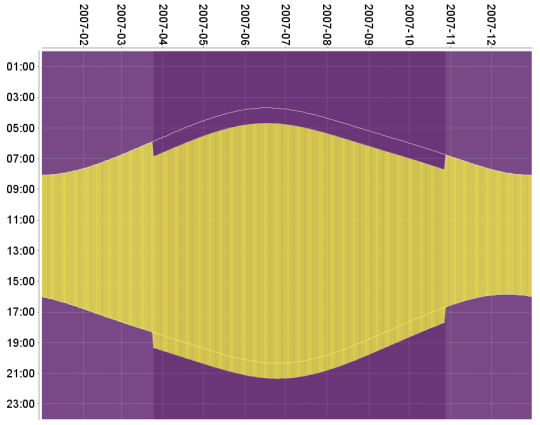
Here is a graph showing the impact of daylight savings time on sunrise and sunset times in Greenwich. It’s from Wikipedia and it’s the clearest diagram I could find that quickly explains the change.
There’s a lot of debate around whether or not DST should be abolished or if we should simply adopt summer time, permanently. A bill is currently being reviewed that would allow Florida to observe DST year-round.
Some groups, like retailers, seem to benefit from daylight savings time. More evening sunshine hours means we’re more likely to shop. But it has a negative impact on other things such as drive-ins. (Do people still go to drive-ins?)
There are also arguments that it causes a decrease in economic output and an increase in traffic accidents – apparently we’re all groggy and accident-prone after having our sleep routines disrupted.
I have been very vocal on this blog about the importance “nighttime economies” for cities and for its creative industries. So I continue to be encouraged by all of the attention that this topic is getting over the last year or so.
Creative industries in the UK have been growing faster than any other sector since 2008. CIF estimates that 1/11 people now work in this space, with the number being much higher in London: 1/6.
The value of restaurants, clubs, bars, pubs, live music venues, and theaters, is that they are places to connect, showcase talent, develop ideas, and so on. They are also critical in attracting top talent because, well, people not surprisingly like to have fun.
In the span of one decade (2005 to 2015), it is estimated that the UK lost roughly half of its nightclubs. The total went from 3,144 to 1,733. From 2007 to 2015, London lost 35% of its “grassroots music venues”, which, historically, have served to support emerging artists.
Arguably, some of this may be due to changes in consumer preference and broader shifts in terms of the way people discover/consume music. But it’s also thought to be because of rising urban rents, concerns around noise and revelry, and so on.
Still, the nighttime economy in the UK is thought to be worth £66 billion per year and to employ some 1.3 million people. It’s an integral part of our urban economies and so it’s time we acknowledged and celebrated it as such.
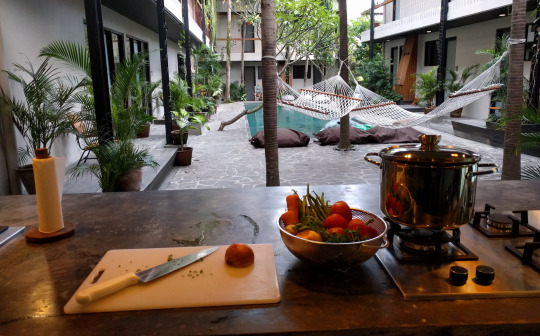
If you’re looking for more evidence that the way we live and work is changing, then check out a new startup called Roam. They describe themselves as an international network of communal spaces. So far, they have locations in Ubud (Bali), Miami, and Madrid. Buenos Aires and London are coming soon.
The way it works is that you start by signing a lease for either a week or a month. You get a private room and bathroom, but everything else, from the co-working spaces to the kitchens, are shared amongst the community. Like other co-working and co-living environments, the community they build is critical.
However, what really differentiates Roam is that you can sign one lease and then live all over the world, freely traveling across their properties. All of the locations are offered up at the same price and you can stay for as long as you’d like.
In my line of work, I don’t have the flexibility of living like a global nomad. But today, there are many people who can. And I also know that there are many people who would prefer to live like this. It’s liberating in so many ways.
My friend and I actually had a similar idea to this back in University and we spent some time working on it. At the time, and this was over a decade ago, we felt that there was a segment of people who increasingly wanted to live like global citizens. I still believe that to be true and, clearly, so do others.
I don’t agree with everything in the essay – or maybe I just despise being called boring, steady, and predictable – but there are a number of great gems that I would like to reblog today. Here are the 5 that stood out for me.
1. Chicago vs. Toronto:
“What Chicago was to the 20th century, Toronto will be to the 21st. Chicago was the great city of industry; Toronto will be the great city of post-industry. Chicago is grit, top-quality butchers, glorious modernist buildings and government blight; Toronto is clean jobs and artisanal ice-creameries, identical condos, excellent public schools and free healthcare for all. Chicago is a decaying factory where Americans used to make stuff. Toronto is a new bank where the tellers can speak two dozen languages.”
2. London vs. New York vs. Toronto Bankers:
“In London and New York, the worst stereotype of a banker is somebody who enjoys cocaine, Claret and vast megalomaniac schemes. In Toronto, a banker handles teachers’ pension portfolios and spends weekends at the cottage.”
3. Montreal vs. Toronto:
“I was 19 when he said that, and I knew even then that for the rest of my life, Canada’s future would be built on money and immigrants. I wasn’t wrong. Most Canadian business headquarters had already taken the five-hour drive west. After 95, the rest followed. Montreal decided to become a French-Canadian city. Toronto decided to become a global city.”
“On any given morning on the Sheppard subway line in the north of the city, you can sit down in perfect peace and order, although you will find little evidence of good government. As the latest addition to Toronto’s fraying infrastructure, the Sheppard subway is largely untroubled by urban bustle. The stations possess the discreet majesty of abandoned cathedrals, designed for vastly more people than currently use them, like ruins that have never been inhabited. Meanwhile, in the overcrowded downtown lines, passengers are stacked up the stairs. The streetcars along a single main street, Spadina, carry more people on a daily basis than the whole of the Sheppard line, whose expenses run to roughly $10 a passenger, according to one estimate. A critic has suggested that sending cabs for everybody would be cheaper.”
5. On Mayor Tory:
“The current mayor, John Tory, is not an idiot, although he is hardly a figure of the “new Toronto”. He represents, more than any other conceivable human being, the antique white anglo-saxon protestant (Wasp) elite of Toronto, his father being one of the most important lawyers in the city’s history. The old Wasps had their virtues, it has to be said – it wasn’t all inedible cucumber sandwiches and not crying at funerals.”
I recently started reading the blog of Michael Mortensen. Michael is a real estate developer and urban planner based in the UK. And if you like my blog, I think you’ll also like his.
Last week he published a post talking about a UK development company called Pocket and a recent design competition that they organized called “Pocket two bedroom.”
Historically the firm has been focused on well-designed and compact one bedroom apartments (38 square meters) that they deliver at a minimum 20% discount relative to typical market rate housing in London.
But over time, they found that they had to turn people away because they were looking for larger – yet still affordable – two bedroom apartments. So the firm decided to figure out how to scale their model to larger units.
To do this, they went out and asked 19 architects to come up with ideas for a two bedroom Pocket apartment. They then published all of the ideas online.
Firstly, I applaud them for making their competition results public. Most real estate companies wouldn’t do this.
Secondly, it’s interesting to take note of the recurring design themes, as they have on page 24-25 of their competition book.
Some of the themes include “deep thresholds” that blur private and communal spaces; “thick walls” that allow for storage and servicing; flexible spaces and fewer dedicated spaces; and dual entry apartments.
This last item was particularly interesting to me. It’s a simple idea – two separate doors leading into one apartment – but it can allow for a number of flexible sharing scenarios. I am already imagining somebody creating an Airbnb rental out of their second bedroom.
I may never do another “Tweet of the Week” on ATC, but I couldn’t resist sharing this one of New Year’s Eve on Well Street in Manchester’s city centre.
So much going on this pic of New Year in Manchester by the Evening News. Like a beautiful painting. pic.twitter.com/szKKRM4U4i
But then Roland Hughes of the BBC remarked that its composition was similar to a Renaissance painting and that the guy in blue laying in the middle of the street, reaching for his beer, could be thought of as a parody of the reaching God in Michelangelo’s The Creation of Adam. So he tweeted it out. Since then it has gone viral.
For those of us who weren’t in Manchester on New Year’s Eve, we clearly missed one epic party.
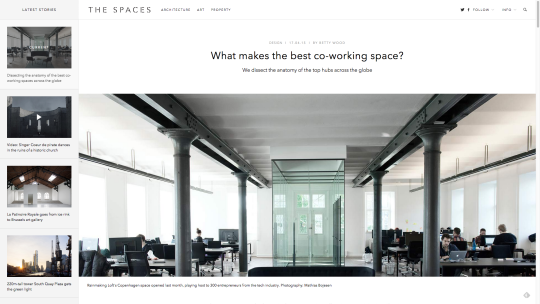
At some point in the past, I preregistered for a site called The Spaces. I don’t remember doing it, but I’m sure that the site seemed promising when I landed on it and so I gladly handed over my email address. I’m always on the lookout for new and interesting things.
Today that site has (soft) launched. And if you like architecture, design, art, and/or property, I am certain you will love it. I am already a fan.
Based in London, The Spaces is about exploring the new ways in which are we living and working. Spaces ranging from residences to coworking spaces and everything in between. It’s about unique and progressive spaces and the people behind them. I love the concept.
Since this is still a soft launch, I am sure the team is looking for feedback from the market. So if you have some, please share it in the comment section below. I will make sure they read it.
Click here to check out The Spaces. Happy Friday all 🙂
Google wants to build a new campus in Mountain View, California. Their objective is to create a space where “people, nature and ideas” can thrive. The architects on the project are Bjarke Ingels and Thomas Heatherwick.
Last week Google released a video talking about the ambitious project. It is a good watch and only 10 minutes. Click here if you can’t see the video below.
A close friend of mine (from Urban Capital) sent me the above video this morning. It’s of the “Sliding House” in Suffolk, UK. If you can’t see it above, click here. You have to watch the video to fully appreciate the house.
Built as a place to retire, the Sliding House consists of a building envelope with fairly typical punched windows that physically slides overtop of a minimal glass structure. This allows the building to adapt to the changing seasons (or to the moods of its occupants).
This concept of adaptable architecture is incredibly interesting to me. Because for a lot of climates — where the temperatures can swing dramatically from hot to cold and vice versa — it can actually be incredibly difficult to design an efficient building.
When it’s cold, you’re trying to trap heat inside the house. And when it’s hot, you’re trying to exhaust heat to the outside. So by default, the building has to be adaptable.
In its simplest form, this could mean an operable window. But in a more elaborate form — like in the case of the Sliding House — the entire skin of the building might adapt.
And if it means having to rely less on active mechanical systems then I think it’s a step in the right direction.
A few weeks ago I wrote about showcasing the Architect This City community. The idea was that there are lots of interesting and talented people who subscribe to this blog, but that there’s no scalable way for me to connect with everyone.
So I wanted to provide an opportunity for you to share a bit about yourself on this blog. I could selfishly learn more about the kinds of people who read ATC; you and/or your company could benefit from a bit of exposure; and you all could get the opportunity to connect with one another.
I didn’t get quite as many responses as I thought I would — which is partially why it has taken me so long to write this post — but I did get a lot of positive feedback on the idea. So I’m excited to share 5 of the people and companies that did respond.
Darren Davis @ Auckland Transport (Auckland, New Zealand)
Proudly car-free Principal Public Transport Planner, and arch transit nerd, at Auckland Transport. Auckland Transport is in the midst of the biggest redesign of the city’s public transport system since the introduction of electric trams in 1902. We are taking a once-in-a-generation opportunity to reimagine public transport by going back to first principles, in an exercise inspired by Human Transit and strongly influenced by its author, Jarrett Walker.
We are a consulting engineering practise — structural, building envelope, restoration, and special projects & renovations — bringing together engineering and intuition to enhance building performance. Entuitive is creative, collaborative, and advanced.
Taya Cook, Development Director @ Urban Capital (Toronto, Canada)
We develop forward thinking condominiums with a focus on urban location, fantastic design and superior customer experience. I work there. Really B, do you need more reasons for awesomeness?
Currently managing a Europe-wide €4m ERDF funded project, ‘Stimulating Enterprising Environments for Development and Sustainability’ (SEEDS). SEEDS is working with 8 partners across 6 countries towards establishing acceptance of the temporary use of abandoned places and spaces as an integral part of longer term planning.
Urbanspace Gallery is a unique venue, dedicated to diverse exhibitions and events that explore how cities work and how we might improve them. Our purpose is to present issues related to community, public space, housing, transportation, planning, governance, and sustainability (among others) in order to further the discussion about our own city and others around the world, while fostering a space of learning and reflection.
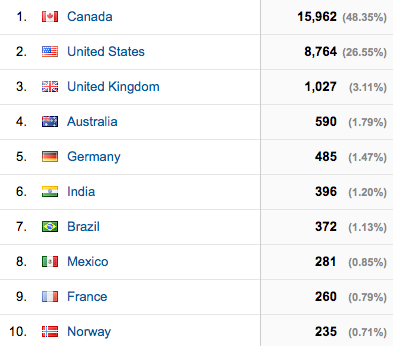
Most of the people who responded were from Toronto and Canada. And that’s not surprising given how local a lot of my content is. Half of the ATC reader base is currently from Canada.
But I did also get emails from many other places all around the world. It always amazes me to see where people are reading from. My only wish is that I could learn more from them (you). So drop me a line. I hope to do another community profile sometime soon.