Daily insights for city builders, delivered every morning at 6 AM ET. I’m Brandon Donnelly — a Toronto-based real estate developer and founder of Globizen. I’ve been writing here since 2013.

Tag: $uber

  • Towards a cashless society

    I increasingly never carry cash on me. I just never think to take out money and, when I do, I hate paying for things and getting change back. That change just ends up in a “change jar” in my apartment and then never comes out ever again. I keep telling myself that I need to buy coin rolls but that never seems to happen.

    Lucky for me, it’s pretty clear that many cities and countries are quickly headed towards a cashless society. It’s pretty easy to get by in most cities today without cash. Here in Toronto, I use Uber and my PRESTO card to get around. I can use my phone for many purchases like coffee. And I can use my credit/debit cards for everything else. I never really thought about it until recently, but I have unintentionally gone almost completely cashless.

    But of course it’s not just cash that is going to disappear; it’s also our physical wallets. Just this week Fred Wilson wrote a post on his blog about how he forgot his wallet at home and how Apple Pay came to the rescue at Whole Foods. I can’t wait until more banks roll this out in Canada. It’s also encouraging to see that under “coming soon” on the Apple Pay website, the Toronto Transit Commission is listed. I guess that means it will be integrated with PRESTO.

    However, this transition is not happening in the same way everywhere. There are many countries that still prefer cash. According to CNN (November 2015), only about 10% of people in Indonesia and the Philippines would prefer to pay with a credit card. And it’s for this reason that Uber now accepts cash in a number of countries. It’s what those customers wanted. I find this interesting though, because not having to carry cash is one of the main reasons I use Uber.

    Of course, there’s also the question of what happens to people who are currently not connected in anyway to electronic forms of money. I get asked by people on the street for change at least every day when I walk around Toronto. But there is actually no way for me to transmit the money I have to them. I don’t carry cash and I certainly don’t carry change.

    I would be curious how many of you have gone or are close to going cashless. And if you are operating cashless, did you even notice the transition happening?
  • 10 city building predictions for 2016

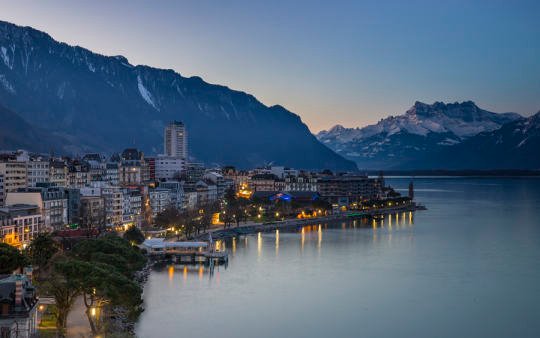
    Dawn by Adrian Popan on 500px.com

    https://500px.com/embed.js

    Few things are better than waking up in the mountains and seeing a notification on your phone that 9″ of fresh snow have fallen overnight, bringing the 48 hour snowfall total to 16″.

    This is what people in mountain towns live for. They ski in the morning and then head to work in the afternoon. I heard a number of people on the mountain today saying that they, “want to be in the office after lunch.” It’s a lifestyle thing.

    On that note, today I’d like to focus on 10 city building predictions for 2016. I’ve been assembling this list over the past few weeks and now that I have had my fill of Utah powder for the day, I’m dedicating the rest of the afternoon to writing.

    These are never easy to put together. But here are my thoughts:

    1. We will see increased migration to secondary cities – outside of the alpha global cities – which offer a higher quality of life, more affordable housing, and the ability to live a particular lifestyle. This includes cities like Austin (creative startup hub) and Denver (outdoor recreation).
    2. As more and more cities wake up to the importance of lifestyle in attracting top talent, I think we will see a lot of cities follow the lead of Amsterdam and create “night mayors” or some other equivalent. These cities will begin to see nightlife as a competitive urban advantage.
    3. Global cities will start experimenting with different land use and property tax reform strategies to try and deal with rising income inequality and eroding housing affordability.
    4. We will see a barbell of residential unit sizes. We’ll see more well-designed small units as a way to try and promote housing affordability and we’ll see larger urban infill units for families and baby boomers who want to live/remain in walkable urban communities.
    5. In line with above, I think we will see a further rethinking of urban spaces. Flexible spaces, unique program mixes, and a continued blurring of public/private spaces. One example of this is the trend towards small private spaces surrounded by generous public/communal spaces.
    6. The Toronto and Vancouver real estate markets will continue to chug along because of low interest rates, a weak Canadian dollar, and increased foreign investment. That said, I think we will see more restraint when it comes to over-the-top luxury product.
    7. We will finally see a disruptive technology product that starts to get people in the real estate industry thinking that change is on the way. This will not be a product that ports an offline experience online; it will a new way of thinking about the industry.
    8. This will be the year that cities stop fighting Uber (and other similar marketplaces). Cities (and lobbyists) will finally accept that this is a new reality and then work to figure out the best way to create policy around it. Edmonton, Alberta has already become the first Canadian city to regulate Uber.
    9. Road pricing will get the attention it deserves in North America. Things will start out slow, but we will finally get ourselves on a path which recognizes that we can’t build our way out of traffic congestion in most major cities.
    10. I will publish a book on becoming a real estate developer.

    Many city building trends and shifts seem to happen in a global way. But I think it’s worth noting that a lot of these predictions were likely written with my North American lens on, and in some cases my Toronto lens on.

    It’s not easy sitting down and thinking about what will happen in the future. But it’s a worthwhile exercise. It forces you to take a stance and then, when the future does come, you can see how well you did. I saw Fred Wilson do this on his blog and I thought it was a great idea.

    Now I would love to hear what you think about my predictions and what yours are for this year. Please let us know in the comment section below.

  • UberPOOL is the new networking tool

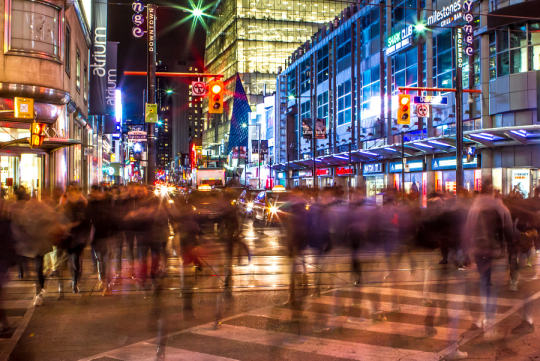
    crossing by Milan Kalkan on 500px.com

    https://500px.com/embed.js

    UberPOOL launched in Toronto last week. It was tested in Toronto last summer and it’s been available in other cities for awhile, but now it’s officially here.

    If you’re not yet familiar with UberPOOL, it basically allows you to share your ride with other people who are headed in the same direction. I’ve heard some people on Twitter complain about route inefficiencies, but I’ve had only positive experiences with it so far.

    The disadvantage of this system is that it’s a bit slower. You’re stopping to pick up other people on the way. But the advantages of this system are twofold. First, it’s cheaper, which means it’s already starting to eat into my transit usage. And second, you get to meet new people everywhere you go.

    This second piece is really interesting to me, because I place a lot of emphasis on getting to know as many people as I can. That’s one of the reasons I blog every day and one of the reasons I spend a lot of time on Twitter. I get exposed to people that I might otherwise not meet. And I believe there’s huge value in that. I want to sit down and have a coffee with everyone. (Time doesn’t always allow that to happen.)

    Because since the beginning of cities, personal connections is one of the things that has made urban life so valuable. Here’s an excerpt from a CityLab article published back in 2013:

    “If you look at the interaction patterns of cities,” Pan says, “You will see that they grow super-linearly with population with the same growth rate as productivity, as innovation, as crime, as HIV, as STDs.”

    All of those facets of urban life have appeared until now to share a somewhat mysterious mathematical relationship. But this research suggests that this particular super-linear growth rate is directly tied to how dense cities enable us to connect to each other. As cities grow, our connections to each other grow by an exponential factor. And those connections are the root of productivity.

    “What really happens when you move to a big city is you get to know a lot of different people, although they are not necessarily your ‘friends,’” Pan says. “These are the people who bring different ideas, bring different opportunities, and meetings with other great people that may help you.”

    Clearly there can also be some negative externalities associated with urban life – such as crime and disease. But it’s also clear that for a many people, the benefits far outweigh the potential negatives. Big cities tend to make us more productive. And as we’ve discussed here before, they can also bring us happiness in ways not associated with economic success.

    If you’ve used UberPOOL before, I would be curious to hear about your experiences in the comment section below.

  • Should you buy a car or just take Uber?

    Urban dawn by Raymond  on 500px.com

    https://500px.com/embed.js

    My friend Evgeny published a great blog post today called, On Car Ownership And The Future Of Transportation

    And in it he made the argument that instead of buying a car and an expensive downtown Toronto parking spot (average price: $40,000 – 60,000), most of us urbanites would be better of just taking a taxi or Uber.

    This got me thinking: At what point does it really make sense to completely forgo owning a car? (Full disclosure: I own both a car and a downtown parking spot.) So I decided to dig into the numbers a bit more and compare 4 mobility options:

    • Owning a car ($25,000 upfront) + downtown parking spot ($40,000 upfront) and driving yourself everywhere
    • Taking a regular taxi exclusively ($3.25 base + $1.75 per km)
    • Taking an UberX exclusively ($2.50 base + $1 per km)
    • Or, taking a futuristic driverless car everywhere (here I assumed $1.50 base + $0.25 per km)

    With the above numbers, I then assumed 15,000 km traveled per year and an average trip length of 15 km (so 1,000 trips per year). The trip length and number of trips per year matter because of the “base fare” that is charged when you take a taxi or Uber.

    I also assumed that the cost of owning a car is $0.60 per km (estimated from this Globe and Mail article) and that there is an opportunity cost to NOT renting out your downtown parking spot ($200/month). That is, every month that you spend driving yourself around and parking your car, you are forfeiting parking revenue.

    Finally, I looked at a 10 year time horizon and then “discounted” all the costs back to today’s dollars so that I could compare each mobility option.

    So what did I find?

    image

    What this says is that if you’re driving 15,000 km per year (average trip length 15km), then you’re better off taking UberX everywhere, as opposed to going out, buying a car and parking spot, and driving yourself around.

    But does this hold true at different travel distances?

    Based on my model, once you hit around 18,000 km per year, then you’re better of with option 1 (owning a car). That’s because the per km savings associated with driving yourself around are enough to offset the upfront costs of the car and parking spot.

    On the flip side, when you drop below 7,500 km traveled per year, even a regular taxi starts to make sense. That’s because you’re simply not traveling enough to reap the benefits of owning a car/parking spot. Again, high upfront costs; lower per km operating costs.

    Of course, there are a number of things I didn’t consider in my model. For one, most people finance their car and parking spot (it is bundled into their home mortgage). So I’m sure there are ways that you could change the above outcomes using leverage.

    At the same time, I didn’t account for the fact that when you’re being driven around (as opposed to driving around) you have the flexibility of doing work, responding to emails, and so on. If you want to attach a value to your time, then the scale would tip back in favor of taxis and Uber.

    But all of this was really just to make one point: look how cheap it could be to ride around in a driverless car. When that becomes the reality in our cities, which it will, it’s going to completely transform our current beliefs around cars, parking, and many other things.

    I guess that’s why General Motors just invested $500 million in the peer-to-peer ridesharing company, Lyft. They know the shit is coming.

  • The independent worker

    There’s a lot of discussion about what the “online gig economy” will mean for traditional forms of employment. And seeing how we’re on the topic of Uber right now, I thought it would make for an interesting discussion.

    Should Uber drivers, to use one example, be classified as independent contractors or should they be classified as traditional employees? There are arguments for both sides.

    Seth Harris and Alan Krueger recently published a discussion paper where they argue for a solution somewhere in between the two. They call it “the independent worker.”

    Here’s a snippet that illustrates the tension that currently exists for people working in this new emerging grey area:

    “Independent workers typically work with intermediaries who match workers to customers. The independent worker and the intermediary have some elements of the arms-length independent business relationships that characterize “independent contractor” status, and some elements of a traditional employee-employer relationship. On the one hand, independent workers have the ability to choose when to work, and whether to work at all. They may work with multiple intermediaries simultaneously, or conduct personal tasks while they are working with an intermediary. It is thus impossible in many circumstances to attribute independent workers’ work hours to any employer. In this critical respect, independent workers are similar to independent businesses. On the other hand, the intermediary retains some control over the way independent workers perform their work, such as by setting their fees or fee caps, and they may “fire” workers by prohibiting them from using their service. In these respects, independent workers are similar to traditional employees.”

    I haven’t read the full paper, but I like the idea of remaining adaptable in the face of innovation.

  • Protect me from what I want

    The title of this post is a line from one of the works of Jenny Holzer. It feels appropriate right now.

    On Wednesday, Toronto saw a large scale anti-Uber protest involving as many as 2,000 taxis. It involved a bunch of taxis driving real slow around downtown, some altercations, and lots of people who want to see Uber completely shut down.

    This, of course, isn’t a new thing for cities. 

    Many cities around the world have seen similar kinds of protests. But many of you will probably also agree that this is not the most effective response from the taxi industry. It casts a negative light on them at a time when people are already switching to Uber for better service. It also ignores the fact that – in my view – Uber ain’t going anywhere.

    I’ve been a vocal supporter of Uber on this blog and I continue to believe that it will continue to prove to be a good thing for both consumers and for cities. In fact, famed startup investor Paul Graham once tweeted that because Uber is so clearly a good thing, you can tell how corrupt a city is by how hard it fights against it. This has become the truism among today’s urbanites.

    At the same time though, I am trying to take a balanced view on this issue, which is what got me thinking about the work of Jenny Holzer. Protect me from what I want. Today, I want Uber. But I am trying to think of where that want might lead me.

    Like a lot of private companies, the goal of Uber is monopoly profits. They would love to control the market. And that’s not a knock against them. It is just business. But I am imagining a market where only Uber exists.

    When I was in Miami last week I switched back and forth between UberX and regular taxis. Because Art Basel was going on, Uber was frequently in surge pricing. Sometimes as high as 4x. So in those cases, I just hailed a regular cab. Thankfully the cabs there are pretty reasonably priced and easily to hail. The driver didn’t ask me if I liked the electronic music playing on the satellite radio, but that’s not a big deal.

    But what if I didn’t have the option of hailing a regular cab? What if Uber was my only option and I had to put up or shut up when prices were 4x? That would be suboptimal in my books.

    So what does this all mean? 

    I am an Uber customer. I do not want and I do not believe it will go away. But I also believe that our public policy should encourage competition in the taxi marketplace. Competition holds people and companies accountable. It means that if you stop creating value, you will go out of business.

    It’s for that reason that I think the taxi lobby is wrong in trying to force Uber to shut down. And it’s for that reason that cities are going to have to work very hard at crafting the right kind of public policy. I am optimistic that Toronto will make that happen. But as we’ve seen today, there will be bumps along the way.

  • Ridesharing could help solve the last mile problem

    X by Keith Mokris on 500px.com

    https://500px.com/embed.js

    A few months ago I wrote a post about Uber’s new “Smart Routes” feature and ended by saying that it’s not just taxis who need to be thinking about platforms like Uber, it’s also public transit authorities.

    I said that because I think that multi-modal is already the new reality in terms of how we get around cities and because the line between different modalities is becoming greyer all the time.

    That’s why I was interested when I stumbled upon this NextCity article talking about how Lyft is starting – it’s still early days – to collaborate with transit authorities in order to make it easier for people to switch between public transit and its peer-to-peer ridesharing marketplace.

    Why might this matter? Here’s an excerpt from the article:

    “According to the company’s data, 25 percent of Lyft riders say they use the service to connect to public transit. In Boston, 33 percent of those rides start or end near a T station. And transit hubs like Chicago’s Union Station, D.C.‘s Union Station and Boston’s South Station are among the most popular destinations for its users, Lyft finds. So riders already see on-demand rides as a solution to the first mile/last mile problem. Lyft thinks it can do more.”

    These last 2 sentences are interesting. Public transit can often suffer from what is known as the first mile/last mile problem. This is a problem where riders find it difficult to get to the nearest transit route from their departing point or to their ultimate destination once they exit transit.

    Bikesharing can be used to solve this. But, clearly, so can ridesharing.

    The other important aspect of this emerging collaboration is that ridesharing apps can offer a lot of incredibly valuable data to transit authorities. If 25% of users are indeed using it to connect to public transit, then all of a sudden cities are getting a more complete picture of point A to B travel. (Among many other things.)

    But the question in my mind is now, who is going to and who should act as the overall steward in this multi-modal urban mobility network? 

    There are lots of different players involved. Some are public and some are private. But they all play a role in how we are going to continue moving around our cities.

  • A guide to digital marketplaces

    Version One Ventures – which is an early-stage venture capital fund based in Vancouver – recently published a free handbook called, A Guide to Marketplaces.

    Online marketplaces are really fascinating because they are perhaps broader in scope than you might initially think. For example, Uber is a marketplace. There’s a supply-side (drivers with cars) and a demand-side (people needing rides). Uber connects these two groups together and acts as a kind of digital middle person. Uber does not own any of the cars.

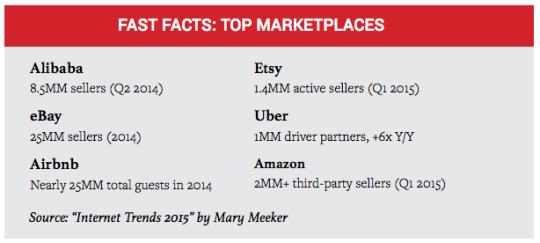
    This is an incredibly power business model and it can and is being applied in many different ways. Here are the top internet marketplaces (via the handbook):

    I have been interested in this space for years because I have been very curious as to why we haven’t seen more innovation when it comes to online real estate marketplaces. Yes, there are platforms like Zillow.com. But Zillow has not done to real estate what Uber is doing to urban mobility.

    My thinking is that it comes down to supply-side aggregation. Online marketplaces in general are hard to get started, which is why investors love them. They have defensibility. But real estate, in particular, is even harder to jumpstart compared to the incumbent models because of what I see as constraints on the supply-side.

    That’s why I am so excited about what BuzzBuzzHome.com is doing on the new construction side of the business. They are aggregating supply.

    If you’d like to download the guide to marketplaces in PDF, click here. It’s a great read and I’m glad that Boris and Angela took the time to assemble. Thank you 🙂

  • Will parking spaces in cities become more, or less, valuable in the future?

    Parking Garage by Nuno Silva on 500px.com

    https://500px.com/embed.js

    Lately I’ve been having discussions around the future value of parking spaces in urban centers. So yesterday I tweeted out this poll:

    //platform.twitter.com/widgets.js

    The sample size is very small, but for what it’s worth, there are some/many people who believe that urban parking spaces will become more valuable in the future.

    This is a reasonable assumption. 

    Over the last couple of decades here in Toronto, I would guess that parking ratios for new multi-family developments have probably fallen by more than half. It used to be that you had to build 1 to 1.5 parking stalls for each unit and now we seem to be sitting somewhere close to 0.5. Although, there are also exceptions and some projects today are getting built with no parking.

    So given that the supply side of urban parking spaces seems to be getting constrained and many cities are actively trying to encourage other forms of mobility, it’s not unreasonable to believe that parking stalls will only become more valuable. That’s why a new underground spot in Toronto might cost you $60,000 today and why some spots in New York can even fetch a $1 million

    But this assumes that the demand for parking will remain more or less the same. What if it doesn’t stay the same? What if we were to experience a tipping point that rearranged urban mobility? What if the cost of driving became so high that people stopped driving at scale? In these scenarios, the demand side of the equation would change.

    If you’re a regular of this blog, you probably know what I’m going to say next. But already I can think of two innovations that would contribute to the above scenarios: Uber and driverless cars.

    Uber’s goal is to continually drive down the cost of transportation and eventually get you to no longer own a car. They know very clearly that the demand for transportation services is highly elastic and that the cheaper they get the more you will use them. And the way they get cheaper is by continually increasing the utilization rate of their drivers/cars. An idle driver/car is the enemy.

    Of course, the other way to drive down fares is to remove the driver all together. And once you’ve done that, there is, in theory, no reason that a car should ever sit idle – like they do today. (The utilization rate for my car is around 2%.) And if a car is never sitting idle, then why would you ever need to park it? Certainly you wouldn’t need to park it as often as you do today.

    All of this isn’t going to happen tomorrow, but I believe – despite the supply constraints – that we are going to end up with excess parking spaces in our cities. And that will mean that they are going to be perceived as less valuable than they are today. I also believe that it will eventually seem silly to drive your own car. 

    What do you think?

  • Uber, commuting, car ownership, and the future of urban mobility

    Earlier this week I wrote a “Tech Tuesday” post talking about Uber’s new Smart Routes functionality, which it is currently testing out in San Francisco. At the end of the post I ended by saying that it’s not just the taxi industry that should be thinking about Uber, it’s also public transit authorities. 

    And that’s because many people in cities rely on multi-modal forms of transportation (I know I do) and in my mind it is clear that Uber is trending away from just “Everyone’s Private Driver” to a service that is starting to look and feel a lot like urban mass transit.

    Then today my good friend Evgeny sent me a post called, “Public Transit Should Be Uber’s New Best Friend.” And it’s one of the best pieces I’ve read on Uber and its impact on urban mobility. I highly recommend you give it a read, particularly if you’re in the city building arena.

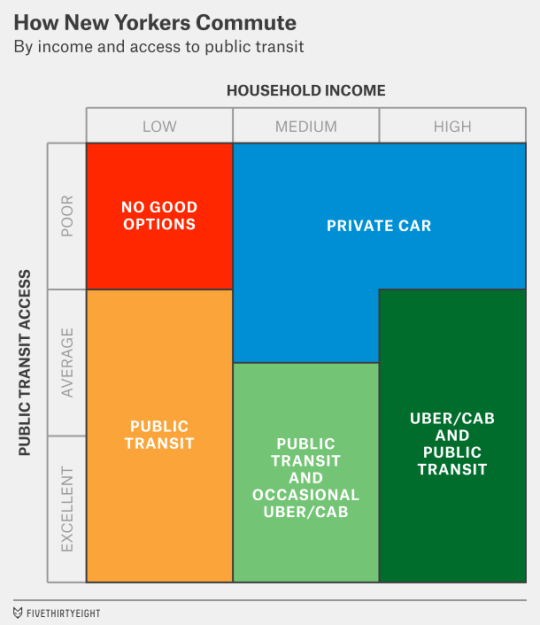
    The article does a deep dive into how New Yorkers commute. Here’s how they broke it down.

    image

    It then talks about what it will take for a company like Uber to make a meaningful dent in car ownership (which is one of the company’s goals) and how the truly big opportunity for Uber is to go more mass market and tap into the public transit market – either by interfacing with or by building its own version of it.

    Here’s their concluding paragraph:

    But there’s a much wider potential audience if Uber can also reach middle-class customers who want to save money. Perhaps in the distant (or even the not-so-distant) future, Uber can build its own version of “public” transit, making rides so cheap that they cost less than the $4 or $5 that Americans now pay, on average, to make a trip in their personal cars. In the meantime, it might have more success among “car-cutting” customers who can use Uber along with public transit. That might mean Uber’s growth is concentrated more in cities like New York, San Francisco and Chicago — and in Europe and Asia — that already have reasonably strong public transit networks.

    It’s definitely worth a full read. Thanks again for sending this over Evgeny.