Daily insights for city builders, delivered every morning at 6 AM ET. I’m Brandon Donnelly — a Toronto-based real estate developer and founder of Globizen. I’ve been writing here since 2013.

Tag: travel

  • 13th annual+

    It’s that time of year again: the annual ski and snowboard trip.

    Regular readers of this blog will know that this happens each and every year, provided a global pandemic isn’t currently underway. Last year we went to Park City and this year we’re off to Lyon and Les 3 Vallées. Is there anything better than urban + mountain? I don’t think so.

    This year’s is also unique in that I selfishly upgraded it into a slash bachelor party for myself. And that’s why I’m calling it the 13th annual, plus.

    So what should you expect on this blog for the next 10 days or so?

    You should expect more travel, food, and snowboarding-related content, as well as more photos. I generally never travel without my Fujifilm. I’m also thinking about experimenting with more real-time posts, and possibly even multiple posts per day. Basically something more akin to a social feed. We’ll see if that happens.

    Regardless, if beautiful European cities and sublime mountains aren’t your thing, you may want to check back in early February for our regularly scheduled city building programming.

    Photo by Inés Álvarez Fdez on Unsplash

  • Airbnb still has a lot of accommodations

    There are a lot of headwinds facing Airbnb. Cities around the world seem to be systematically making it more difficult to be a host. New York City, as many of you know, recently made it so that you need to be physically present while the dwelling is being rented. That is pretty limiting. Similar things are happening in non-urban markets too. North of Toronto in Muskoka, there’s a draft by-law that will, among other things, limit short-term rentals to 50% of the total number of days within certain time periods. That eliminates the possibility of doing this as a business. So in many ways, it’s easy to be pessimistic about the future of Airbnb.

    But at the same time, if you step back and look at the bigger picture, there are over 7 million active listings on Airbnb. This effectively makes it the largest hospitality brand in the world. There are more accommodations on Airbnb than with Marriott, Hilton, Intercontinental, Wyndham, and Hyatt combined. (The below chart is from Scott Galloway.) It’s also important to point out that while Airbnb doesn’t own any of its own supply, the same is true of most hotel brands. They are, brands. The difference is that Airbnb created a more scalable platform and a more decentralized approach to aggregating supply.

    The numbers also don’t suggest that things are slowing down for Airbnb. (Here’s their Q3 2023 shareholder letter.) Active listings on the platform grew 19% YoY in Q3 2023 (or by almost 1 million listings). Revenue is up. Free cash flow is up. And in Q3 of last year, the company repurchased $500 million of stock, bringing their one year total to somewhere around $3 billion. So despite all of the efforts to curb short-term rentals within our cities, the company, at least for now, seems to be holding up just fine. And if they can successfully diversify beyond their core business, there could even be reason to be bullish on the world’s largest hospitality brand.

    Full disclosure: I am long $ABNB.

  • What happened in 2023

    As per tradition around here, I like to bookend the new year with two posts: a post that revisits my random predictions for the year and a post that talks about what might happen in the year to follow. Today’s post is the former. So let’s see how I did:

    • I thought the interest rate hikes would come to an end in Q1-2023. But that didn’t happen until the summer. I also thought this would lead to a mild recession in Canada. Technically, we are not actually in one, but according to some, we kind of are.
    • I thought the real estate sector would start seeing some distress in the first half of the year, and that a new equilibrium would be found in the second half. This proved to be overly optimistic in terms of timing. A lot ended up being on pause for the entire year, and I now think that my forecast was at least a year too early. The sea change is still underway.
    • Given the overall slowdown in real estate, I felt that construction costs had to see some softening. This did, in fact, happen with some of the “earlier trades”, such as shoring and excavation, and we did see some specific trade pricing, such as concrete formwork, come down by as much as 30%. The smart cost consultants we work with now expect to see overall hard costs come down by a further 5-6% next year in Toronto. This makes sense given construction starts are way down.
    • With me expecting the interest rate increases to stop in Q1, I thought that pre-construction condominium sales would return in a meaningful way by the spring. While we did see some buoyancy around that time, it was short lived. Sales remained nearly shutoff for the entire year, but for maybe a handful of projects. The more successful projects tended to be outside of the Toronto core and at lower price points.
    • With respect to home prices in more tertiary/fringe markets, my sense then, as it is now, was that these prices would remain below the peaks for many years. In addition to the upward momentum created by low rates, my view was/is that some of this pricing was the result of a bet on urban decentralization. I don’t think that has played out as many expected it to, so that’s why I think it will be many years before the pricing we saw in early 2022 returns.
    • The momentum around “expanding housing options” in our low-rise neighborhoods is many years in the making. And a lot of progress was made in 2023. Here in Toronto, we adopted new multiplex policies that now allow fourplexes plus an accessory dwelling (so 5 homes in total) on an as-of-right basis. I continue to believe that this momentum is only going to grow. I also think we will see the arrival of more mixed-use opportunities.
    • I believed that, broadly speaking, urban transit ridership would remain below pre-pandemic levels for all of 2023. This proved to be the case for most US and Canadian cities. But things are improving. For Canada as a whole, it looks like we’ll see full recovery sometime in 2024 based on this trend line.
    • I thought 2023 was going to be the year I took my inaugural ride in an autonomous vehicle. Sadly, this didn’t happen. The sector as a whole also saw some setbacks. Hopefully I’ll get a chance next year.
    • I assumed that Apple would finally release its augmented reality device. And though they didn’t technically release Vision Pro, they did announce it. So I guess that counts for something. I also thought that 2023 would be a big year for “phygital” goods. Maybe it was. Or maybe it was more of a building year. A lot of people are curious to see how Vision Pro does in 2024. It’s not set up for the mass market, just yet, but I think it will do exactly what it is supposed to once it’s out in the wild.
    • Finally, crypto. I know that a lot of you like to skip over these posts, but it is something that I feel strongly about. A year ago, though, I was pretty bearish on Solana. Boy was I wrong. Solana ended the year as the best performing major crypto asset — up 933% at the time of writing this. Oops! However, Ether is also +91%, and I continued to dollar-cost average in all throughout the year.

    Next up: What will, or more accurately, what might happen in 2024.

  • The Boxing Day move

    We moved into our new apartment today, so I don’t have a lot to say other than that moving is a good way to remind yourself that you have too much stuff. I was in my last place accumulating for over a decade.

    I try my best to live minimally and there is certainly something liberating about this mindset. But there is also a part of me that is a collector at heart. (A great number of our boxes are filled with things like books.)

    It also turns out that Boxing Day, or some other time over the holidays, can be an excellent time to move. Streets are calm. Buildings are quiet. The email firehose is off. And nobody else wants to move at this time.

    Most importantly, though, it affords you some time to get your life back together. And that’s exactly what I’ll be doing for the rest of this week.

  • Busiest airports in the world

    There were nearly 7 billion global flight passengers last year, and these were the busiest airports:

    Overall, volumes are up 54% compared to 2021 (not surprising). But we are still down about 26% compared to pre-pandemic levels (2019). The one exception — at least when it comes to this top 10 list — is Denver. It’s right back to where it was in 2019. I wonder why.

    I find this list interesting because, one the one hand, airports are what connect global cities to the rest of the world. If you’re a big and important city, you need a big and important airport. But on the other hand, having a busy airport could also mean that you’re a hub in the hub-and-spoke airline model.

    And that’s what Atlanta is. It is the world’s largest airline hub and the primary hub for Delta Air Lines. Apparently, it was also the first airport to adopt the hub-and-spoke model following deregulation of the industry in the 1970s. Which could be why it’s still number one on this list.

  • Calm down, Dubai

    Knight Frank just published the 17th edition of its annual “The Wealth Report.” I have spoken about this report many times before on the blog because I generally find them really interesting. So today I’d like to share two items from this latest one.

    The first item is their most recent Prime International Residential Index (PIRI). What this does is track prime residential prices across 100 key city, sun, and ski locations. “Prime”, in case you are wondering, is defined as the most desirable and most expensive properties in each market — generally the top 5%.

    Look at Dubai go:

    When I see a chart like this I usually start at the top and then immediately start scanning for Toronto. Here, it’s more or less in the middle with a 4.1% increase. Totally reasonable. Prime property in Auckland and Wellington, on the other hand, didn’t fair as well in 2022.

    The second item is this very wonderful diagram showing flight connectivity before Covid (12 months to March 2020) and then post-Covid (12 months to December 2022):

    The way to read this diagram is that the most connected cities — ranked by the number and quality of flight connections — get pushed toward the center. They also get bigger. Less connected cities, on the other hand, slide toward the edges. All of the cities also generally gravitate toward their main regional connections.

    The most obvious change is the greatly weakened connectivity of Chinese cities. This is not surprising given their zero-Covid approach. Moscow also seems to get rightly pushed out to the side.

    Another story is the continued rise of both Singapore (to the likely detriment of Hong Kong) and Dubai. I have only been to Dubai once, and I couldn’t figure out how to navigate its sea of roads and highways, or how to locate an actual city center where humans walk around (though the historic Bur Dubai area was interesting).

    But there is no denying that Dubai has become a pretty important global city.

  • Laser distance metering Le Panier in Marseille

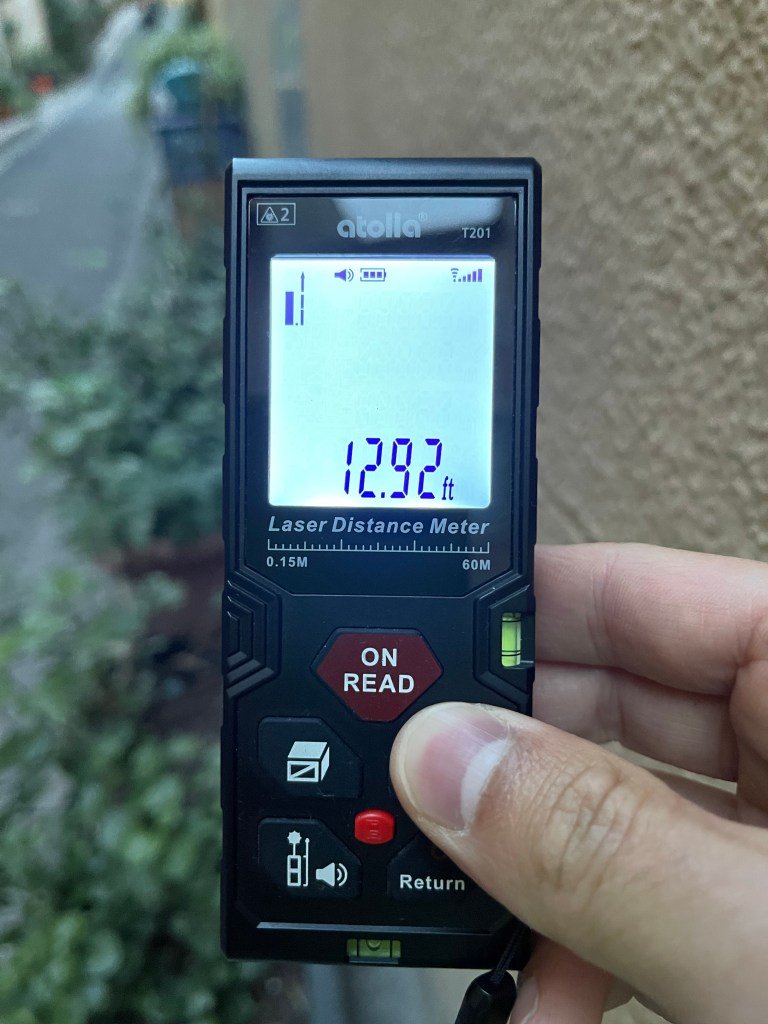
    I usually always have a laser distance meter in my bag. I use it when I’m on construction sites and I need to confirm important dimensions. But they can also be useful when you’re traveling and you want to appear as nerdy as humanly possible to the locals.

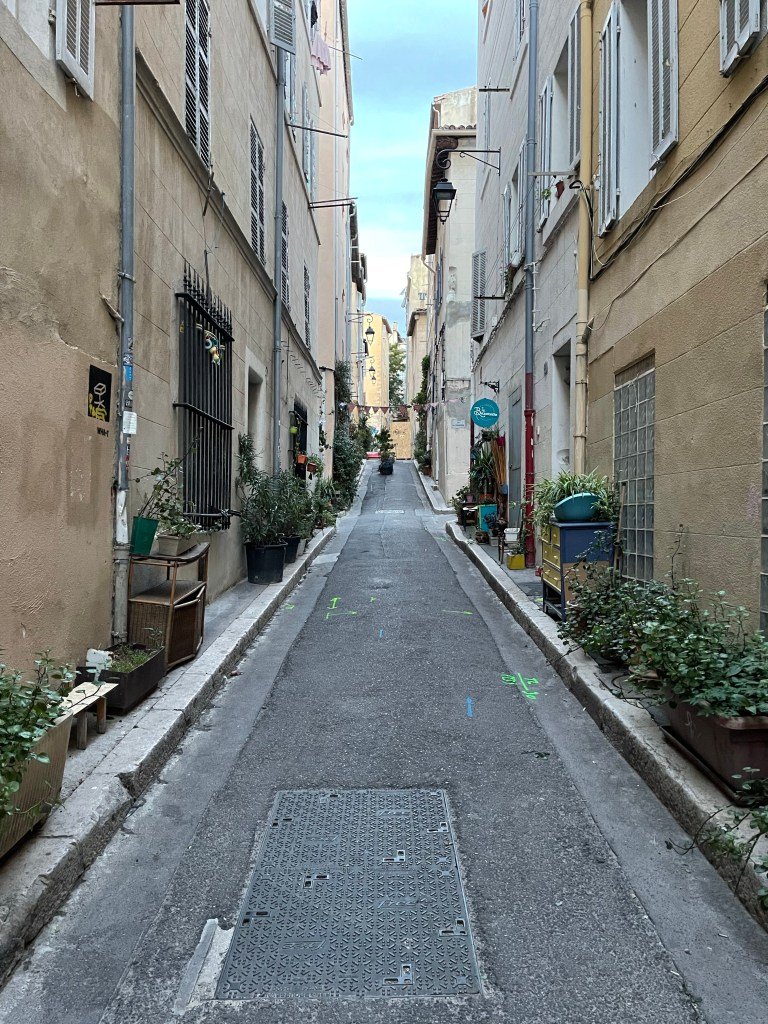
    This is a typical older street in Le Panier area of Marseille, which is the oldest part of the city in probably the oldest city in France. Greek settlers colonized this area around 600, and at that time it was called Massalia.

    There is one major street in Le Panier — la rue de la République — which will make you feel like you’re in Paris. It was pierced through in the late 19th century, around the same time that Paris was doing its large-scale urban renewal things.

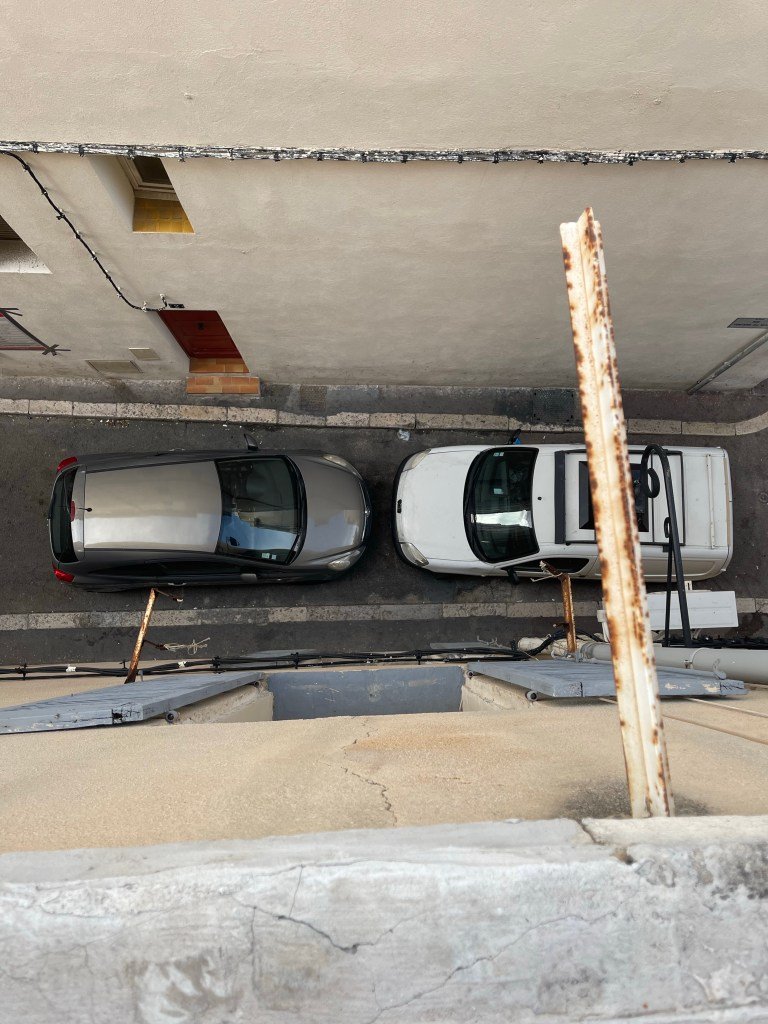
    But there remains lots of examples of what you see here: streets that are 12 to 13 feet wide from building face to building face. This is wider than your typical Toronto condo living room, but not by much.

    There are, I guess, sidewalks on these streets. But most of them tend to be taken over by potted plants and other urban accessories. Everyone who uses these streets really just has to figure out how to share them.

    It would be illegal to build this close and compact in most modern cities. Part of this is, of course, because modernity used to view this kind of urban form as being unhealthy and generally undesirable. Humans needed light, air, and space.

    This is true. But we also like intimate urban spaces that put people first.

  • Out of office

    I have been fortunate to be able to travel a fair bit this year. But the vast majority of that travel has been me working remotely. In my mind, that means a few things: (1) I remain committed to staying on top of and clearing out my inbox each day; (2) I still take all meetings as if I were 100% in the office (which is my preferred way to work); and (3) I don’t put on an out-of-office reply. That’s the signal that you should expect a response. Today, however, is not one of those days. I just finished putting on my out-of-office reply and that is me capitulating against the looming email torrent.

    On past vacations I have done things like turn this blog into more of a photoblog. I will probably do a bit of that, but my plan this time around is to concoct some combination of a photoblog, travel blog, and foreign city building blog. Travel is a great way to learn from other cities, and I will endeavor to share some of what I find in France and Sicily. (Sicily is in Italy, but not really, right?) Some of you seem to get a little grouchy when I stray from our regularly scheduled programming on this free and personal blog. So if this doesn’t sound all that appealing, you may want to check back in October.

  • Coolest boutique hotels in the world

    Today’s post is a question for all of you: What would you say are the coolest and most remarkable boutique hotels in the world right now?

    What is clear to me is that travel (and flexible work) will continue to be a growing market and that there is demand for a variety of different hospitality offerings.

    Sometimes people might want to stay in an Airbnb (which is usually a property owned by an individual or individuals).

    Sometimes people might want to stay in a branded and/or membership-based rental such as a Sonder or a Wander (which, in the case of Wander, is a collection of properties owned by the same company).

    And sometimes people might want to stay in a tried-and-true hotel.

    I think that all of these offerings serve different needs. And at the end of the day, I don’t believe that Airbnbs, or whatever permutation they take, will ever replace the best hotels. There are things you can get in a hotel that you can’t get elsewhere.

    So today I am hoping to crowdsource some of the best examples from all of you. Thanks in advance for any ideas you might send over.

  • Mid-year consumer trends update

    The New Consumer has just published its 2022 mid-year update. Some of you might remember that I wrote about their inaugural consumer trends report at the end of last year.

    It’s interesting, but not surprising, to see a lot of things returning to their means. Spending on home furnishings, for example, is coming down, whereas luggage and bag sales are up. Home fitness has also come way down as people return to gyms. It’s time to leave home.

    At the same time, it has become a lot more expensive to leave home, assuming you need to drive. Motor fuel increased 49% year-over-year as of May 2022. It’s the CPI category with the biggest change. But even with this, transit ridership has yet to fully rebound. NYC is sitting at around 60%.

    To download a free copy of the full presentation, click here.