Daily insights for city builders, delivered every morning at 6 AM ET. I’m Brandon Donnelly — a Toronto-based real estate developer and founder of Globizen. I’ve been writing here since 2013.

Tag: travel

  • Density vs. infrastructure in Liberty Village

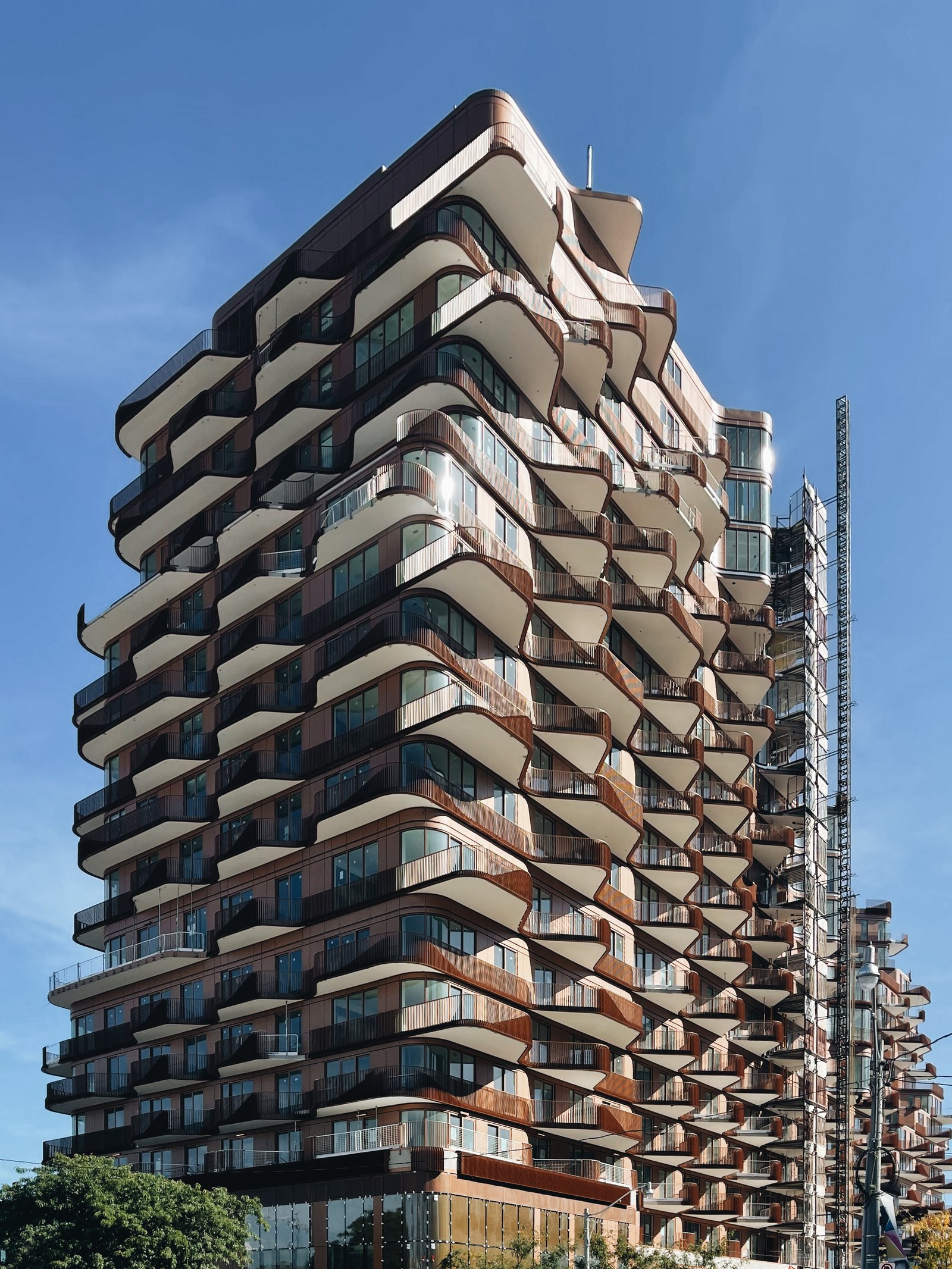
    A beautiful new 43-storey rental building was just approved in Toronto’s Liberty Village neighborhood. More info about the project can be found, here. Not surprisingly, some people in the community were against it. Here is a recent article that blogTO published talking about people who live in high-rises not wanting a new high-rise next to them.

    One argument that is being made is that the neighborhood is already full. It has reached its density limit. We also hear this about the City of Toronto as a whole. But we know this isn’t true. Architect Naama Blonder recently did a study that found we could fit another 12 million people within our boundaries with more efficient land use policies.

    This particular site in Liberty Village is also about 400 meters from a future subway stop on the Ontario Line. So it is exactly where we should be putting more density. The problem today is that the area is suffering from a massive infrastructure deficit. The road network is inadequate and the King streetcar hasn’t been prioritized.

    It’s no wonder the area feels full. But the reality is that there are lots of examples of highly livable neighborhoods from around the world with much higher population densities. The difference is that they have the right infrastructure, the right public realms, and the right modal splits.

    Liberty Village will get there as well and it’s already underway. For a preview of the future, check out the City of Toronto’s Public Realm Strategy for the area. It was published in April 2024 and it includes things like new streets, new mid-block connections, and new parks. It is what the area needs and it’s exciting to see it happening.

  • Healing penny water

    We spent the last few days in Scuol, Switzerland. Scuol is a small mountain town with under 5,000 people (2018 figure) near the eastern border of the country. The town first achieved notoriety in the 1860s because of the various naturally-occurring mineral waters that can be found in the area. They were / are thought to have healing properties, and so a spa tourism destination was created. Skiing and snowboarding were later added to the town’s repertoire.

    We tried the water from this fountain — the Lischana source:

    The best way I can describe the taste is to say, imagine water that has had pennies soaking in it for the last 100 years. That’s what it tastes like, which is not good. But it is rich in magnesium and other things, which is why people (especially athletes) seek it out. It comes out clear from the source but if you let it sit in a bottle it will naturally become carbonated and turn brown. That’s why the embankment above has the color that it does.

    I had a handful of respectable sips. Hopefully that’s enough to make me strong. A big thank you to Klaus, Peter, and Jaimie for the invite to Scuol!

  • Out of office

    I just turned on my out of office. Neat B and I leave this evening for our honeymoon. Our first stop is Mallorca. Neither of us have been before and it has been on our list.

    One of our goals for this trip is to be active. So among lots of other things, the plan is to get on some bikes at some point. We hear that Mallorca is a pretty good island for that.

    As always, I’ll be continuing to write. I love writing when I’m on vacation and experiencing new things. The laser distance meter is also in my bag, so expect some of this and this.

  • Barcelona’s short-term rental ban

    Our growing desire — and ability — to live, work, and/or play in other places is, in my opinion, a powerful macro trend. We spoke about that here, here, and here. And one of the things that has obviously empowered this trend is the growth of short-term rentals.

    But right now, the winds are not in favor of this model.

    In September 2023, nearly a year ago, New York City enacted one of the strictest short-term rental laws to date, requiring hosts to be physically present while a dwelling is being rented. Yeah, that eliminates the majority of use cases.

    Then in June of this year, Barcelona mayor Jaume Collboni announced a complete ban of short-term rentals starting November 2028. This is expected to return some 10,000 apartments to the long-term housing market.

    Regardless of whether it will be effective, it is obvious why this is being done: housing unaffordability and too many annoying tourists. (We are flying to Barcelona next week and will endeavor to not be annoying.)

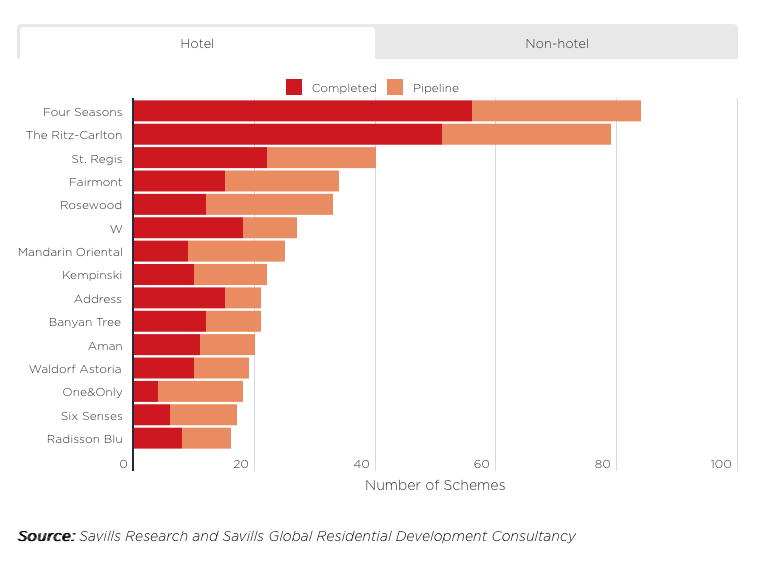
    But at the end of the day, this is not going to extinguish our underlying desire to live, work, and play around the world. So I think these restrictions will create new opportunities to service this demand. It also strengthens the bull case for the tried-and-true formula of purpose-built hotels.

  • Detroit is back!

    Fascinatingly, buildings are always a product of their time.

    Detroit’s Book Tower, for example, started construction in 1916. This is right around the time that Detroit became the 4th largest city in the US (after New York, Chicago, and Philadelphia). From 1910 to 1920, the city’s population grew by about 113% to nearly a million people (more people than the city has today).

    Because this was the time, the tower was obviously grand. It totalled almost half a million square feet of office space (483,973 sf to be exact, according to Wikipedia). It had a large 3-story atrium with an ornate glass dome. And up until the 1970s, it seems that it remained a desirable office address on Washington Boulevard.

    But as we all know, things changed for Detroit. Grand and ornate no longe made economic sense. And so the owners at the time, whoever they were, covered up the ornate dome, filled in the floors of the atrium, and presumably did whatever they could to eek out as much leasable square footage as possible. Necessity trumped grandeur.

    Then in 2007, the then-landlord filed for Chapter 11 protection. And in 2009, the last tenant left the building, leaving it 100% vacant — or “unencumbered by tenants” as we like to say in the business.

    Thankfully in 2015, Dan Gilbert of Bedrock came along to do what he does, and acquired the building for a reported $30 million. This works out to about $61 psf for what was once the tallest building in Detroit and one of its most prestigious office addresses. Things change.

    But what Bedrock has done since is work to return the building to what architect Louis Kamper had originally created nearly a century ago. The atrium is back. The ornate glass dome is back. And there are now 229 apartments, 117 extended-stay hotel rooms, 3 food and beverage concepts, and about 40,000 sf of office space. Official website, here.

    What an awesome way to say, “Detroit is back!”

    Photos: Rebekah Witt via Fast Company

  • Elevators in North America are broken

    It was not my intention to make this building code week on the blog, but for some reason that has happened. So let’s continue. Here is an interesting guest essay — about elevators — written by Stephen Smith for the New York Times.

    Stephen is the founder and executive director of a Brooklyn-based non-profit called the Center for Building in North America. And what they do is conduct research on building codes, specifically in the United States and Canada, and then advocate for reforms.

    Here’s what he thinks about elevators (taken from the above essay):

    Elevators in North America have become over-engineered, bespoke, handcrafted and expensive pieces of equipment that are unaffordable in all the places where they are most needed. Special interests here have run wild with an outdated, inefficient, overregulated system. Accessibility rules miss the forest for the trees. Our broken immigration system cannot supply the labor that the construction industry desperately needs. Regulators distrust global best practices and our construction rules are so heavily oriented toward single-family housing that we’ve forgotten the basics of how a city should work.

    Here’s how the US compares to a few European countries:

    Nobody is marveling at American elevators anymore. With around one million of them, the United States is tied for total installed devices with Italy and Spain. (Spain has one-seventh our population, 6 percent of our gross domestic product and fewer than half as many apartments.) Switzerland and New York City have roughly the same population, but the lower-rise alpine country has three times as many single-family houses as Gotham — and twice as many passenger elevators.

    And here’s a set of cost comparisons:

    Behind the dearth of elevators in the country that birthed the skyscraper are eye-watering costs. A basic four-stop elevator costs about $158,000 in New York City, compared with about $36,000 in Switzerland. A six-stop model will set you back more than three times as much in Pennsylvania as in Belgium. Maintenance, repairs and inspections all cost more in America, too.

    If you’re interested in this topic, I would encourage you to give the full article a read. It’s highly relevant to our ongoing discussions around missing middle housing. If cities, like Toronto, hope to build a lot more apartment buildings (especially smaller-scale ones), they are going to need affordable and plentiful elevator options.

    (Thanks to Michael Visser for sharing this article me.)

  • Using maps on a bike

    I have started using Apple Maps when I cycle. I’ve been using Apple instead Google because it automatically pairs with my watch and tells me (through vibrations) when I need to turn somewhere, but I’m not here to argue that one is better at navigating than the other.

    What’s great about using either Apple or Google Maps is that it will take you on routes that have bike lanes or, at the very least, routes that have less vehicular traffic.

    Toronto’s cycling network is far from complete. But I have been impressed by how far I can go on dedicated lanes and by how many lanes/trails exist that I didn’t know about. Here is the city’s 2024 map showing only dedicated bikeways:

    It is not fun riding a bike when you have to fight with city traffic. And so this is a great way to try and avoid that, and not think too much about which routes you should be taking. It’s also a great way to test the completeness of your city’s biking network.

    I’m glad that Toronto is becoming a much better place to ride a bike.

  • Manhattan’s sticky street

    Street networks tend to be pretty sticky. Meaning, they tend not to change very much, or at all, over time. We have spoken about this before, over the years.

    A good example of this is Broadway in Manhattan. Broadway is a world-famous street. And it’s perhaps no coincidence that it’s also the only street that runs the full length of Manhattan and breaks across the city’s regular street grid.

    The exact reasons for this are somewhat nuanced. And for a more fulsome backstory, I recommend you watch Daniel Steiner’s recent video on the topic (embedded above).

    It is alleged that Broadway started out as the Wickquasgeck trail. Meaning it pre-dates the arrival of Europeans to the island. But regardless, we know that it came before New York’s famed Commissioners’ Plan of 1811, which is the plan that gave the city its grid.

    So it would appear that, sometimes, even the most rational of plans can be no match for something even stronger: a street that already exists.

  • Don’t serve coffee

    For the last few weeks, a small corner store/cafe at 42 Dewson Street has been in the news here in Toronto. It has been in the news because, despite the fact that Toronto is actively working to allow more uses like these in residential neighborhoods, it is my understanding that it currently remains a legal non-conforming use. Meaning, it’s allowed to operate only because it’s been there for a long time.

    The specific fight right now, though, is around whether this corner store is allowed to serve people coffee. It can sell groceries and stuff, but can it serve coffee? (Also, self-serve coffee is apparently an entirely different thing and acceptable behavior.) The store owner thinks the answer is yes. But then somebody called in an anonymous tip and the city came knocking:

    CityNews reached out to the City of Toronto for a response. They said “the building at 42 Dewson St. is in a Residential Zone, and a non-residential/commercial use is not permitted. Any change of use from a Retail Grocery/Variety Store is not permitted; and that includes store staff preparing food or drinks (or coffees) for sale to patrons. A change of use, requires zoning relief from the Committee of Adjustment.”

    Okay, so serving coffee to people is potentially problematic. But why? Here are three possible reasons that immediately come to mind:

    • Somebody else in the neighborhood is serving coffee and they’re ruthlessly trying to eliminate all competition.
    • Serving coffee encourages people to linger and lingering people make more noise relative to people who don’t linger.
    • The neighborhood is filled with pedants who like to read zoning by-laws in their spare time and they just can’t stand seeing such a blatant disregard for refreshment rules.

    There are, of course, other possible reasons. And according to Twitter/Reddit, the real reason is that the property is owned by a rich developer and the neighborhood is, for a variety of reasons, pissed off at said rich developer. I don’t know that this is true, but maybe it is. Because fighting over served versus self-served coffee seems like an insane thing to argue about.

    If you happen to agree, Dan Seljak has a petition you can sign, here.

    Photo: CityNews

  • Infinity and beyond

    Earlier this week, Oklahoma City Council approved plans for the 1,907-foot-tall Legends Tower. If built according to these plans, it would become the 5th tallest building in the world and the tallest building in the Western Hemisphere.

    Currently, the tallest building in the US is One World Trade Center at 1,776 feet (581 meters). This is a symbolic height meant to reference the date of the Declaration of Independence.

    To be even more specific, though, the Legends Tower wasn’t approved at 1,907 feet. As I understand it, it was approved with with an unlimited height. Meaning, if the developers wanted to go even taller in the future, they could.

    This is sort of unique. Usually when a new by-law/ordinance is passed, it includes a maximum height in feet/meters. In this case, I guess they’ll just use an infinity symbol and call it a day.

    Here are some quotes from Dezeen:

    “AO is delighted that the Oklahoma City Council has approved the development team’s request for unlimited height for the Boardwalk at Bricktown,” said AO.

    “We are grateful that the City Council has embraced the vision of Matteson Capital and the entire design team to transform the city into a global destination.”

    The obvious question is “will this get built?” And I don’t know the answer to that. But I do think that infinity is just as symbolic as 1,776 feet.