Daily insights for city builders, delivered every morning at 6 AM ET. I’m Brandon Donnelly — a Toronto-based real estate developer and founder of Globizen. I’ve been writing here since 2013.

Tag: transportation

  • Mapping auto emissions in America

    This morning the New York Times published what they are calling the most detailed map of auto emissions in America. In it, they remind us that transportation is the largest source of greenhouse gases in the US today and that most of it comes from our driving habits within metro areas. See below charts.

    Not surprisingly, if you look at total on-road emissions, the biggest cities — New York and Los Angeles — are at the top of the list. But you also have car-dependant regions like Dallas-Fort Worth that punch above their (population) weight in terms of total emissions.

    Now, here’s where it gets interesting. The story flips as soon as you adjust for population.

    On a per capita basis, New York is pretty much at the bottom of the list. It is yet another reminder that one of the most sustainable ways to live is in a dense urban environment where it is possible to get around without the use of a car. New York is, of course, one of the best places in the US to do exactly that.

    Charts: New York Times

  • Uber Movement introduces new Speeds product

    Since we’re on the topic of large-scale data collection, I thought some of you may be interested in Uber Movement‘s new “Speeds” product.

    First launched in 2017, Uber Movement aggregates anonymized data from their ride-sharing business to create data sets and tools that can help cities make better transportation decisions.

    Below is a (hex cluster) map of Toronto showing average travel times from downtown. I dropped the pin at Toronto City Hall. What is shown is the average for all days of the week during the month of January 2018.

    Uber Movement’s new Speeds product looks at how specific streets are performing relative to their “free-flow speed.” Uber defines this as “the average speed of traffic in the absence of congestion or other adverse conditions.” (The 85th percentile of all speed values.)

    As of right now, Speeds is only available in 5 cities: New York City, Seattle, Cincinnati, Nairobi, and London. Here is a snapshot of London during the same time period as above, January 2018:

    In comparison to what we were talking about yesterday, I have few concerns with the fact that my Uber rides around town have likely contributed to these mappings. With these use cases, the value really only emerges once you aggregate the data.

  • Uber’s seed investors made this much money

    $UBER went public on Friday. Notwithstanding the initial stumble, Uber will go down in history as one of the most lucrative venture capital investments of all time.

    The stock is down from its IPO price of $45 per share, but at that price, the initial seed investment of $510,000 that First Round Capital made back in 2010 was worth about $2.5 billion on Friday.

    Here is a list of some of the other notable investors from Uber’s seed round and what their initial investments grew to over the course of 9 years (chart from the WSJ):

    Of course, for every Uber, there are many more failed companies. And for every investor who turns $5,000 into nearly $25 million, there are many more who decided to pass on the opportunity.

    In the case of Uber, many early investors couldn’t see how the product could go mainstream. It initially started upmarket with limousines, which was actually a clever way to hack the chicken-and-egg problem that plagues marketplaces.

    Many also wondered how many metro areas outside of San Francisco had the kind of urban density and supply and demand drivers to support this kind of a service.

    Today, some nine years later and many billionaires later, lots of people — including myself — are still wondering: Will Uber turn out to be a great (i.e. profitable) business? Hindsight is always 20/20.

  • To invest or not invest

    We used Uber to get pretty much everywhere when we were in Rio de Janeiro. For reasons of convenience, cost, and safety, it just made the most sense. I can tell you that it felt a lot more valuable in place where you don’t speak the language and you’re acutely aware of being in the wrong place at the wrong time.

    And since Uber is going public later this year (along with Lyft), it got me thinking about whether or not it is a stock that I would want to own. Are they destined for monopoly profits? Do they have a defensible business model? How powerful are their network effects? Having first-mover advantage doesn’t guarantee anything.

    My initial thoughts are that the network effects for their core offering – single rides – don’t feel that strong. Sure you need a critical mass of drivers so you’re not waiting around too long, but at a certain point the response time is likely good enough. Rides are a commodity.

    This arguably changes as you get into services like Uber Pool and Uber Commute, because more users on the network in close proximity to you can mean lower costs and higher service levels. But is there any sort of lock-in effect?

    Many passengers and drivers seem to “multi-tenant.” In other words, many (or maybe most) people have multiple ridesharing apps installed on their phone and they will switch back and forth when it makes sense to do so. I do that when prices are surging. And drivers appear to be doing the same based on the Uber and Lyft emblems in their cars.

    For a long time, Uber was the only show in town here in Toronto. Hailo only lasted about two years or so. But as soon as Lyft entered the market, both companies moved to aggressively discount their rates, and that is still going on to this day. This suggests certain things to me.

    Among other things, it is a reminder that the demand for (commoditized) transportation services is highly elastic. We are price sensitive. We will use whatever is cheaper. So one way to win is to obviously create a cost structure advantage. Hence the current autonomous vehicles “arms race.” 

    Lyft is also trying to establish itself as a multimodal transportation solution. (When are scooters coming to Toronto?) Perhaps that will make them less of a commodity. But again, how defensible is that approach? I suppose the market will tell us what it thinks later this year.

  • Fixing the MTA

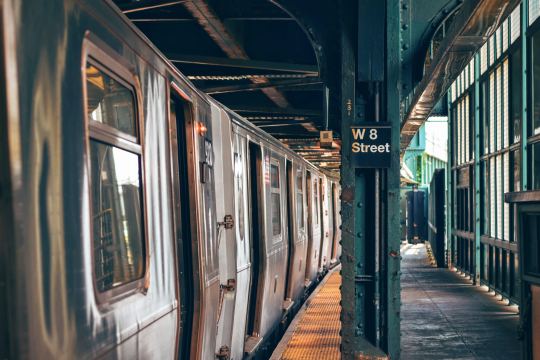
    Fred Wilson wrote a great post on his blog today about New York City’s “transit mess.” 

    In it he talks about congestion pricing (which, as you all know, I support); the mess that is the Metropolitan Transportation Authority (MTA); and this 37-page report on how to improve the MTA.

    Here is an excerpt from his post that I liked, but that won’t be popular with everyone:

    That is an idea [congestion pricing] that has been proposed a number of times over the years, most notably by Mayor Bloomberg during his tenure. It is a good idea and long overdue. A dense urban environment should have excellent mass transit and incentives to use it and should have disincentives to drive cars. Taxing cars in Manhattan and using the revenues to maintain and improve our subways seems like an obvious thing to do.

    I would encourage you to give his post a read. The New York Times also reported on this topic (and the above recommendations) this week. They called it, 7 ways to fix the MTA (which needs a $60 billion overhaul).

    Photo by Joren on Unsplash 

  • A decentralizing or centralizing force?

    I was on two panel discussions over the last week and, as is the case with all real estate panels, the topic of parking invariably came up, as did the impact of autonomous vehicles.

    There seems to be a general consensus that the advent of driverless cars will result in less demand for parking. Every developer I know is trying to build as little parking as possible and is thinking about how – when the time comes – they might convert their parking into something more productive. I have yet to speak to anyone who is building excess parking in order to prepare for autonomy.

    Where there’s a split, however, is whether autonomous vehicles will represent a decentralizing or a centralizing force for our cities. Historically, new technologies have lowered transportation costs and encouraged decentralization. Before the advent of rail, the US population hugged the coasts, because it was cheaper to navigate across the Atlantic than it was to move inland.

    A similar phenomenon also played out with our streetcar suburbs and with our car-oriented suburbs. These new technologies made it possible for people to travel further distances in order to get to work and other places. So it is not at all surprising that many people today are inferring that autonomous vehicles will produce this same outcome.

    But there is a counterargument. 

    We know that the demand for transportation services is highly elastic. Uber and other ride sharing apps have demonstrated this to us. Lower fares translate into dramatic increases in demand. So the opposing argument is that as the cost per kilometer drops – autonomous electric vehicles are going to be much more cost effective to operate – we’re going to see boatloads of induced demand.

    This induced demand will then force us to look toward road pricing and other demand management tools in order to cope, which then begs the question: How much cheaper and more convenient will autonomous vehicles really be? 

    At the same time, it is important to acknowledge that autonomous vehicles should correct many of the inefficiencies currently caused by humans acting like humans. There is also the opportunity to operate these autonomous vehicles more like public transit than as personal vehicles. And that will have a profound impact on urban mobility.

    Still, it is not yet clear, at least for me, that autonomous vehicles will be the decentralizing force that many assume they will be.

  • One year anniversary of the King Street Transit Pilot

    I had dinner tonight on King Street and I was reminded that this week marks the one year anniversary of the King Street Transit Pilot here in Toronto.

    The pilot has certainly had its share of controversy, but the improvements to both transit reliability and ridership are clear. Average travel times (in each direction) have increased by as much as 7 minutes on the route.

    Here’s the latest data from July and August of this year. Steve Munro can also tell you everything you ever wanted to know about the King streetcar.

    As our city continues to grow, many are naturally concerned about the ability of our infrastructure to handle the additional demands. Where will all the cars go?

    But the reality is that we will never be able to accommodate everybody driving around in their own car. Which is why we have to rely on transit and solutions like the King Street Transit Pilot.

    What’s your opinion of the pilot now that it has been in place for a year? I almost forget what it was like before we had it.

  • Transit tech lab launches in NYC

    image

    Earlier this month, the Metropolitan Transportation Authority (MTA) and the Partnership for New York City launched a new vertical accelerator dedicated to public transit. The mission is to make the city a global leader in this space.

    Applications are open until November 30, 2018 and they are looking for early and growth stage companies that address one or both of the following challenges:

    1. How can we better predict subway incident impacts and serve customers?
    2. How can we make buses faster and more efficient?

    Selected companies will go through an 8-week accelerator and, at the end of it, the most promising companies will partner with the MTA on a 12-month pilot. So it is an opportunity to potentially test your product(s) on the largest transit authority in the US.

    If you’d like to apply, you can do that here.

    Photo by Tim Gouw on Unsplash

  • Lyft announces subscription plan

    Last week, Lyft announced a new subscription plan

    It costs $299 every 30 days and you get 30 rides included (up to $15 each). So it represents a possible 1/3 discount on rides. If you go over the 30 rides per month or over $15 on any one ride, you simply pay the difference. Though as a subscriber, you get 5% off additional rides.

    Subscriptions are good for business. They can be like an annuity. And I suspect that with the above model, there will be unutilized rides every month that the company is just able to bank. You can’t carryover rides with this plan.

    But moreover, Lyft’s “All-Access Plan” is designed to help you ditch your car. Trade your car payment for a ride subscription plan. So if the numbers didn’t quite work for you before, maybe they do now. Depending on the situation, I can certainly see this plan being cost effective.

    But as ride hailing/sharing continues to nibble away at public transportation and personal vehicle ownership, what will this mean for cities?

  • Red streetcar tracks

    A few months ago when I wrote about “Toronto’s great streets” I mentioned that Queens Quay West – while magnificent – has had its share of issues. Cyclists and pedestrians often find themselves battling for space. And drivers are consistently driving in the wrong places.

    Part of the problem, I think, is that the turning radii (among other things) are a bit atypical and unusual compared to the rest of the city. And so if you’re at all in mental autopilot, it can be fairly easy to make a wrong turn. You really have to be paying attention.

    Below is a screenshot from Google Street View showing the foot of Lower Spadina, looking east on Queens Quay West. If you’re making a left turn from the former onto the latter, you need to end up on the left (north) of the streetcar tracks (even though the tracks themselves might be directing you elsewhere).

    There’s lots of signage telling you not to drive onto the tracks, but that hasn’t really been working. So the tracks were recently painted in bright red. You can see what that looks like here. Some people are still getting mixed up, but it’s certainly more noticeable.

    What I am wondering today is whether all of this signage and paint should be considered a symptom of poor design. In other words: Should good design require few instructions? Or, is this simply a normal part of iterative city building?

    What do you think?