Daily insights for city builders, delivered every morning at 6 AM ET. I’m Brandon Donnelly — a Toronto-based real estate developer and founder of Globizen. I’ve been writing here since 2013.

Tag: transit

  • Revisiting road pricing

    Following the Toronto Transit Commission’s approval of a 10-cent fare hike, Cherise Burda of the Ryerson City Building Institute penned an article titled: It’s time for Toronto to consider road tolls.

    I am a big supporter of road pricing and I have written a lot on this topic over the years. There’s even a guest post by Darren Davis on this blog – he is a transport planner with Auckland Transport. 

    I don’t have much to add right now, but I did want to help promote Cherise’s post and I did want to link back to all of my previous posts (including Darren’s). Click here for a list of posts tagged with “road pricing.”

    There’s a mental model in Toronto, and many other cities, that remains centered around subsidized roads and artificially low residential property taxes. Because, well, that’s the dream.

    Nobody wants to pay more for anything – I get it. But I think we can all agree that this region has not solved the traffic/mobility problem. In fact, it’s one of our biggest weaknesses. 

    So what are we going to do about it? I reckon the answer is something other than the status quo.

  • Uberpooling your way to cheap rides

    This morning on my way into the office I ran into a friend who lives in my building (downtown). She works in midtown and so I asked her how she gets into the office. She told me that she either takes the subway or an Uber, but that increasingly she has been taking Uber, particularly on the way home.

    We then started talking costs and she told me that what she does is carpool with a friend from work using UberPOOL. They live nearby and so what they do is leave from the same place at night (the office) and then select a midpoint location between their homes for the drop-off. After splitting their portion of the fare, the ride costs her about $3.25.

    As she was telling me this, I couldn’t help but think to myself: Wow, this is massively disruptive to transit. That is the same cost as taking the subway. So why take transit? With the subway, there may be a speed argument in certain instances, but that certainly wouldn’t be the case with some of Toronto’s streetcar lines (such as the King line). It’s faster to walk.

    However, there are obviously geographic limits to how far you can go in an UberPOOL before your costs greatly exceed taking transit. But as Uber and other similar services continue to bring down the price of a ride (eventually the labor cost component will disappear), how big does that area get?

    All of this – including my own mobility patterns – has got me thinking yet again about the role of transit in the city of tomorrow. 

    One segment that continues to be underserved is the regional scale. Here in the Greater Toronto Area, we are working on that by transforming our commuter rail service into a two-way all-day Regional Express Rail service. Today that strikes me as being hugely valuable. And unless driverless vehicles somehow solve our traffic problem, it will likely remain that way.

    I would love to get your thoughts in the comments below.

  • The master plan

    I’m going through and dissecting Elon Musk’s second “Master Plan” this morning. 

    I love how he drops earth-shattering news in such a casual and honest way. Two days ago he tweeted that he was planning to pull an all-nighter to complete the “master product plan.” And then yesterday, he outlined his vision in a simple – and at times personal – blog post for how Tesla is going to change the world. It all feels very genuine.

    //platform.twitter.com/widgets.js

    There are so many interesting snippets from the master plan, that I’m simply going to quote them all here. There’s lots to think about and discuss.

    A reminder of the broader vision:

    The point of all this was, and remains, accelerating the advent of sustainable energy, so that we can imagine far into the future and life is still good. That’s what “sustainable” means. It’s not some silly, hippy thing – it matters for everyone.

    By definition, we must at some point achieve a sustainable energy economy or we will run out of fossil fuels to burn and civilization will collapse. Given that we must get off fossil fuels anyway and that virtually all scientists agree that dramatically increasing atmospheric and oceanic carbon levels is insane, the faster we achieve sustainability, the better.

    The solar roof and other electric vehicles that Tesla has in the pipeline:

    Create a smoothly integrated and beautiful solar-roof-with-battery product that just works, empowering the individual as their own utility, and then scale that throughout the world. One ordering experience, one installation, one service contact, one phone app.

    In addition to consumer vehicles, there are two other types of electric vehicle needed: heavy-duty trucks and high passenger-density urban transport. Both are in the early stages of development at Tesla and should be ready for unveiling next year.

    Thoughts on self-driving vehicles:

    Even once the software is highly refined and far better than the average human driver, there will still be a significant time gap, varying widely by jurisdiction, before true self-driving is approved by regulators. We expect that worldwide regulatory approval will require something on the order of 6 billion miles (10 billion km). Current fleet learning is happening at just over 3 million miles (5 million km) per day.

    The most important reason is that, when used correctly, it is already significantly safer than a person driving by themselves and it would therefore be morally reprehensible to delay release simply for fear of bad press or some mercantile calculation of legal liability.

    Once we get to the point where Autopilot is approximately 10 times safer than the US vehicle average, the beta label will be removed.

    Why an even lower cost vehicle (compared to the Model 3) may never be necessary:

    You will also be able to add your car to the Tesla shared fleet just by tapping a button on the Tesla phone app and have it generate income for you while you’re at work or on vacation, significantly offsetting and at times potentially exceeding the monthly loan or lease cost. This dramatically lowers the true cost of ownership to the point where almost anyone could own a Tesla. Since most cars are only in use by their owner for 5% to 10% of the day, the fundamental economic utility of a true self-driving car is likely to be several times that of a car which is not.

    And finally, Uber has a new competitor (that, to me, is a good thing):

    In cities where demand exceeds the supply of customer-owned cars, Tesla will operate its own fleet, ensuring you can always hail a ride from us no matter where you are.

    I’ll provide my thoughts on all of the above in a subsequent post. I’m out of writing time for today.

  • Building new, better cities

    Earlier today my friend Saadat sent me the following tweet:

    //platform.twitter.com/widgets.js

    It’s a link to a new research project by Y Combinator – the famed Silicon Valley seed accelerator. They want to explore the possibility of building new and better cities.

    I don’t have the time for something like this, but if any of you are city experts (I know a lot of you are) and you’re based in or willing to be based in San Francisco (I think they are flexible on this), you should absolutely consider applying to be their full time “Cities Researcher.” The deadline is July 30, 2016.

    Here’s a taste of what they are thinking about…

    There are many high-level questions we want to think through, for example:

    – What should a city optimize for?

    – How should we measure the effectiveness of a city (what are its KPIs)?

    – What values should (or should not) be embedded in a city’s culture?

    – How can cities help more of their residents be happy and reach their potential?

    – How can we encourage a diverse range of people to live and work in the city?

    – How should citizens guide and participate in government?

    – How can we make sure a city is constantly evolving and always open to change?


    And there are tactical questions we want to dig into, for example:

    – How can we make and keep housing affordable? This is critical to us; the cost of housing affects everything else in a city.

    – How can we lay out the public and private spaces (and roads) to make a great place to live?

    – Can we figure out better zoning laws?

    – What is the right role for vehicles in a city?

    – Should we have human-driven cars at all?

    – How can we have affordable high-speed transit to and from other cities?

    – How can we make rules and regulations that are comprehensive while also being easily understandable?

    – Can we fit all rules for the city in 100 pages of text?

    – What effects will the new city have on the surrounding community?

    The convergence of city building and tech is something that I’m deeply interested in. I also think it’s inevitable. And I think that Toronto – thanks to our robust real estate industry – is in an ideal position to be a leader in this space. So I would love to see someone from here take on this job.

    But even if you’re not from Toronto, you should still apply because it’s an exciting initiative 🙂

  • The Scarborough Subway Extension is a mistake

    Last weekend over dinner, a friend of mine asked me what I thought about the Scarborough Subway Extension debate going on in Toronto right now. Costs are coming in higher than initially projected and the usual back and forth is taking place. Transit blogger Steve Munro has a good post on this called Spinning a Tale in Scarborough.

    I haven’t written much about the Scarborough Subway, but I do have a strong opinion. I believe it’s a mistake. I am not saying that we shouldn’t be building higher order transit in Scarborough – we absolutely should – but it does not need to be an expensive subway line. There are more sensible solutions.

    Here are a few things to consider:

    Light rail transit (LRT) does not equal streetcar. As an avid user of the King streetcar, I’ll be the first to admit that something needs to be done to address the city’s busiest streetcar routes. They are broken. But this is not what was being previously contemplated for Scarborough. True LRT – which Toronto does not yet have – is far more effective at moving people.

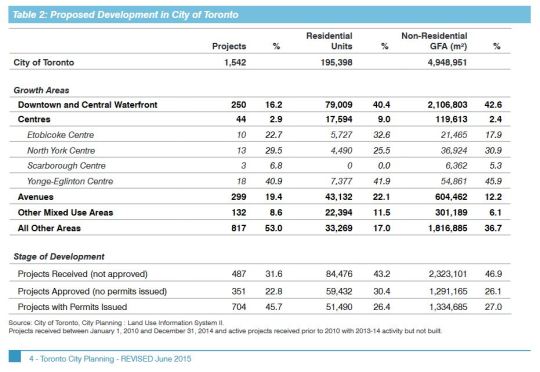
    Scarborough Centre is seeing almost no new residential and commercial development. In fact, the “Centres” in general are not seeing much development. The largest share is happening downtown, along the central waterfront, and along the “Avenues.” We shouldn’t ignore this when making our investment decisions. Transit and built form go hand in hand. 

    I also do not buy the argument that we are building this subway in anticipation of demand 50 or 100 years from now. We are not in a position to be proactive about our infrastructure. We are desperately playing catch up and there are already lots of high growth and high density areas in the city which today are completely underserved by higher order transit. 

    Finally, a new subway line with low ridership will mean higher operating cost subsidies to keep it afloat. And at the rate that Scarborough Centre is growing today, this would likely continue for many years into the future. Not only is this debate about spending money today, it is about spending money well in the future, month after month.

    So let’s be clear: the Scarborough Subway Extension debate is about politics. It is not about transportation planning.

  • Politics and bike lanes

    image

    Recently a good friend of mine told me that I had conflicting views in the world of politics.

    She more or less said to me: I know you’re a real estate developer and obviously a capitalist (read: right of center), but you also support what are often considered to be left of center issues. Issues like tearing down the Gardiner Expressway and building more bike lanes.

    I thought this was an interesting comment because, regardless of whether or not you agree with the categorization she was making, the unfortunate reality is that sometimes (oftentimes?) city building issues do become about left vs. right. Bike vs. cars. Urban vs. suburban. And the list goes on.

    My response to her was that I don’t care about what side of the political spectrum an issue supposedly falls on. That’s a distraction. When I think about something, I try and apply rationale thought and facts to the best that I can. 

    For instance, in the case of bike lanes, I have asked myself: would cities be better off if we had more, or less, people cycling? Simple question. And when I think about this and look at some of the numbers, I see a lot of benefits (this is a non-exhaustive list):

    – More people cycling means we’re moving people more efficiently, which you could argue improves urban productivity and overall quality of life. 

    – More people cycling means we will naturally start prioritizing more compact types of urban form, which in itself has a myriad of socioeconomic benefits. 

    – More people cycling means we’re actually taking action to try and fight climate change.

    – And more people cycling means we’re improving health outcomes. Given that public spending on health care is one of the largest government expenditures in OECD countries, I bet you could find measurable financial savings.

    With all of this, I am not naively suggesting that all cars should disappear from our cities and that everyone should only cycle. I think electric vehicles and self-driving vehicles are going to be an important part of the mobility equation in the future. But I am saying that more, not less, cycling strikes me as an obviously positive thing for our cities. 

    On that note…

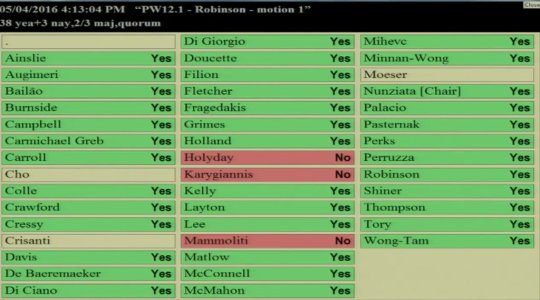
    Toronto City Council voted today in favor (38-3) of a pilot project that will bring separated bike lanes to Bloor Street. The image at the top of this post is how each Councillor voted. So today, we appear to have not fallen into the divide that my friend was talking about. And that makes me, as well as many others, quite happy.

    //platform.twitter.com/widgets.js

    I would be curious how all of you feel about this particular issue. And I would also be curious if you find yourself being more issued based rather than aligned across the political spectrum. That’s certainly how I feel these days.

    I bet we could have a great discussion on this topic in the comment section below 🙂

  • 100 years since Cincinnati tried to build a subway

    image

    I can get lost on Google Maps for hours on end. I love looking at maps and I love using Street View to virtually explore cities. This morning I’m honed in on Cincinnati, Ohio (a city I’ve never been to) while I listen to this podcast about their unfinished subway.

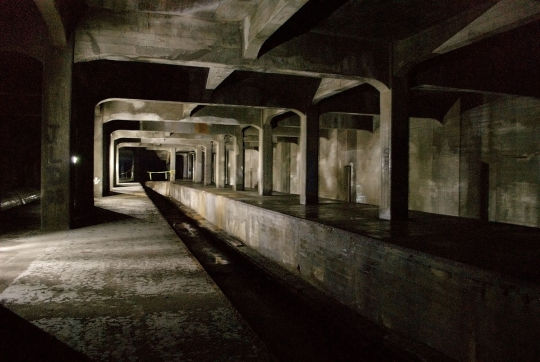
    In 1916, the city voted in favor of spending $6 million on a new subway. But it was never finished and so today – 100 years later – it has the dubious distinction of being the largest abandoned subway tunnel in the United States. 

    The podcast I’m listening to is with a fellow by the name of Jake Mecklenborg. He has written a book on the subway’s history and has emerged as the expert on this topic. And it all started with him just throwing up a website.

    One particularly interesting aspect of the subway is how it tied into the city’s flooding problems. At the time, the population density of the constrained downtown was surging and the subway was viewed as a way to stitch together desirable land and relieve some of those urban pressures.

    I’m also very interested in understanding how cities got founded in the locations that they did. As in, who was the person who dropped their bag and said: “yup, this, is the spot.” Somebody had to have made a decision.

    Oftentimes there were specific strategic, economic, and/or environmental reasons for a certain location. And this is something that Jake touches on. In the case of Cincinnati, flooding was again a major determining factor. 

    If you can’t see/listen to the podcast through the embed below, click here.

    //html5-player.libsyn.com/embed/episode/id/4210424/height/90/width/580/theme/custom/autoplay/no/autonext/no/thumbnail/yes/preload/no/no_addthis/no/direction/backward/render-playlist/no/custom-color/87A93A/

    Image: Jonathan Warren via Wikipedia

  • The ROI of cycling infrastructure

    Toronto can’t make up its mind right now as to whether it would like to invest in additional cycling infrastructure. 

    Of course, we have a history of vacillating on topics like this. And I think it’s because we’re at a tricky inflection point. We are weaning ourselves off of the car, but most parts of the city remain underserved by transit and heavily dependent on the car.

    So today I thought I would share some numbers from a research study that was published last year by Stefan Gössling of Lund University and Andy S. Choi of the University of Queensland. It’s called, Transport transitions in Copenhagen: Comparing the cost of cars and bicycles.

    Much of the focus of the paper is on the cost-benefit analysis that the City of Copenhagen uses to make its cycling investment decisions. Here is an excerpt from ScienceDaily:

    “If the costs to society and the costs to private individuals are added together, the impact of the car is EUR 0.50 per kilometre and the impact of the bicycle is EUR 0.08 per kilometre.

    The study by Stefan Gössling and his colleague also shows that if we only look at costs/benefits for society, one kilometre by car costs EUR 0.15, whereas society earns EUR 0.16 on every kilometre cycled.

    “The cost-benefit analysis in Copenhagen shows that investments in cycling infrastructure and bike-friendly policies are economically sustainable and give high returns,” says Stefan Gössling.”

    So there you have it. Now I thought we could debate this in the comment section. Your thoughts?

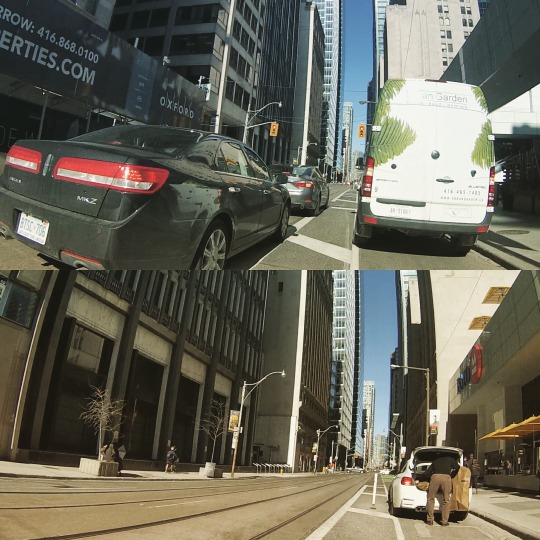
    P.S. The images at the top of this post were taken by me using my new GoPro bicycle handlebar mount.

  • Automobile vs. tram

    In grad school, I was fortunate enough to be a teaching assistant for a class called Urban Real Estate Economics, which was taught by Dr. Richard Voith. It was one of my favorite classes. So if you ever find yourself at the Wharton School, I would highly recommend it.

    Richard is also the President of a consulting firm in Philadelphia called Econsult Solutions. And I think a lot of what they focus on would be of interest to the audience of this blog. Their focus is on urban economics, real estate economics, transportation, public policy, and – you get the idea.

    Recently, he wrote a post called, Moving Cities: Berlin, where he outlines some of the transportation decisions that West and East Berlin made in the second half of the 20th century. 

    What I found most interesting was how the trams of East Berlin were stigmatized to represent communism and a centrally planned economy. On the other hand, West Berlin was all about the free market, and the symbol for that was none other than the automobile. That meant that the trams had to go. 

    Here is a quote that he shares from B.R. Shenoy, first published in August 15th, 1960:

    “The main thoroughfares of West Berlin are near jammed with prosperous looking automobile traffic, the German make of cars, big and small, being much in evidence. Buses and trams dominate the thoroughfares in East Berlin; other automobiles, generally old and small cars, are in much smaller numbers than in West Berlin. One notices cars parked in front of workers’ quarters in West Berlin… In contrast with what one sees in West Berlin, the buildings [in East Berlin] here are generally grey from neglect, the furnishings lack in brightness and quality, and the roads and pavements are shabby…”

    My favorite line: “…jammed with prosperous looking automobile traffic.”

    Of course, Berlin wasn’t the only city to eschew trams in the 20th century. Detroit and Los Angeles both did exactly the same thing. But in Berlin, this philosophy wasn’t applied equally across the urban fabric. And that’s what makes it a particularly interesting case study.

    I don’t know Berlin well enough to comment specifically, but Richard writes about how parts of East Berlin remained quite pedestrian friendly compared to West Berlin. That makes intuitive sense, given that it didn’t reorient itself towards the car in the same way that the West did. That being the case, I am curious to what extent those parts of the city may be benefiting today.

    In any event, you should also give Richard’s article a read. You can do that here.

  • Medellín wins 2016 Lee Kuan Yew World City Prize

    image

    Thanks to my friend Darren Davis, I just recently learned about something called The Lee Kuan Yew World City Prize.

    Named after Singapore’s first Prime Minister, the prize is a biennial award that honors cities who have made, “outstanding achievements and contributions to the creation of liveable, vibrant and sustainable urban communities around the world.” Along with the prize comes $300,000 (Singapore Dollars), which is about $287,000 Canadian as of today.

    The 2016 Prize Laureate is Medellín, Colombia.

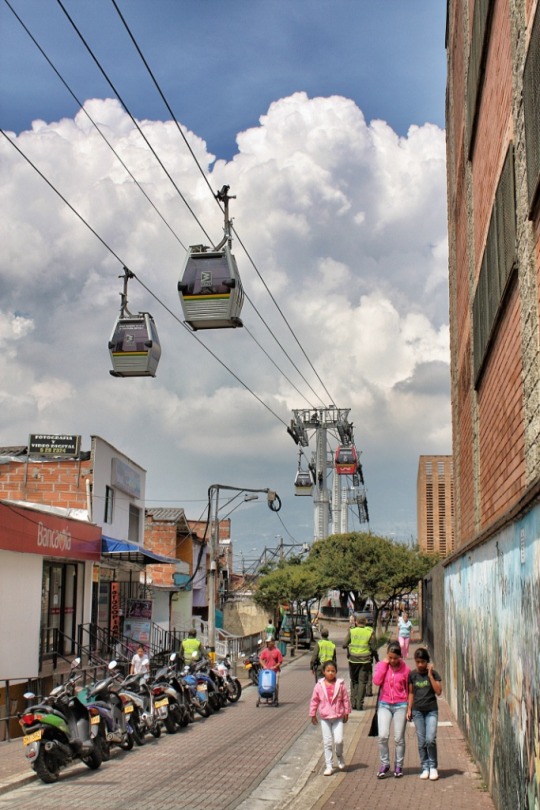
    Over the past two decades, the city has transformed itself from one of the most dangerous cities in the world to one that has become a model for social inclusion and urban innovation. Here is a video that talks about the transformation. It’s a bit cheesy, but it does provide a high-level overview of their urban initiatives. A lot of them will serve as a reminder about the importance of urban connectivity.

    If you’re a regular reader of this blog, you may also remember that my good friend Alex Feldman (VP at U3 Advisors) wrote a guest post about Medellín after he visited the city for the World Urban Forum almost two years ago. That post was called, What cities could learn from Medellín.

    It’s worth mentioning that the runners-up for this year’s World City Prize were Auckland, Sydney, Toronto, and Vienna. In the case of Toronto, our “far-from-ideal transit” was specifically called out as a negative. Thankfully we are now working on road pricing, which will provide additional funding for transit. 😉

    Image by Jorge Gobbi