Daily insights for city builders, delivered every morning at 6 AM ET. I’m Brandon Donnelly — a Toronto-based real estate developer and founder of Globizen. I’ve been writing here since 2013.

Tag: transit

  • Lyft reveals plans for bikes and scooters

    On Monday, John Zimmer and Logan Green, the co-founders of Lyft, published this Medium post announcing their “approach to partnering with cities to introduce bike and scooter sharing” to their platform. 

    “Approach to partnering with cities” is undoubtedly a carefully chosen set of words given all the backlash going on right now around dockless scooters.

    Nevertheless, this is an exciting announcement. I could have used a scooter this afternoon to get to a meeting. And this is all part of their larger goal of transforming Lyft into a multi-modal platform – one that will also support conventional public transit.

    Here is an excerpt from the Medium post:

    Transit, bikes, small electric vehicles, and infrastructure such as safe pedestrian paths and bike lanes, all play a large role in decoupling people’s right to mobility from car ownership. We know we can’t accomplish this alone, and we’re committed to working with cities and residents to bring these elements together in the most cohesive way to maximize a reduction in vehicle miles traveled.

    The company has also set the goal that 50% of all trips on the Lyft platform will be shared rides by 2020. It is yet another example of the lines between public transit and ride sharing apps becoming blurrier. 

    Full post can be found, here.

  • Below the surface

    Later this month the new 9.7 km North-South metro line in Amsterdam will start service. Like most large scale infrastructure projects, its opening has been delayed many times. 8 times according to this source. But this post is not about that. It’s about a byproduct of the line’s construction. 

    The excavations required for the line meant that two sections of the Amstel River – namely the Damrak and Rokin sites – had to be drained. This took place from 2003 to 2012 and gave archaeologists unprecedented access to the bottom of a river in the middle of a historic city center.

    Amsterdam started as a small trading port along the banks of the Amstel River some 800 years ago. So not surprisingly, they found a few things. Over 17,000 objects were found and all of them have been catalogued online according to time period, use, material, and location found.

    For the full catalogue of objects, click here. Screenshot of the catalogue shown above. And to learn more about the entire project, start here. There’s a lot of good stuff in there for city nerds.

  • The Korean Peninsula

    I just spent the last 7 minutes listening to this brief historical overview of Seoul by The Urbanist, while I bounced around the city on Google Street View, admiring the coverage of their transit network and the density of their low-rise neighborhoods. 

    I love Street View and I love using it to explore cities.

    One of the things I liked about The Urbanist episode –  beyond it being a good soundtrack while I explored – is that it talks, albeit briefly, about why Seoul is located where it is today. 

    I am always curious about this when it comes to cities. I mean, who was it that decided, yup, this is going to be the spot. Because it’s generally a pretty sticky decision once it is made.

    You may also find this 2014 NASA photograph of the Korean Peninsula interesting. The nighttime sky renders up a pretty stark contrast between North Korea and South Korea.

    According to NASA, per capita power consumption in North Korea and South Korea is 739 kilowatt hours and 10,161 kilowatt hours, respectively. That’s why the satellite photo looks the way it does.

  • 1 out of 5 commuters in Manila relies on ride-hailing

    Earlier this year Uber sold its Southeast Asia business to Grab. At the time, it was estimated that Grab had 95% of the ride-hailing market in Southeast Asia. That’s why Uber decided to sell. Instead of continuing to bleed, they figured it would be better to instead merge businesses in exchange for a “sizeable stake in Grab.” This is similar to the deal that it struck in China with Didi.

    It’s clear evidence of cultural advantage. Though maybe you could argue it’s first mover advantage. Either way, many, including Wired, have argued that while Uber has dominated in the West, it has often struggled in the developing world. Different markets. When Grab launched you could pay with cash because so many users didn’t have a credit card.

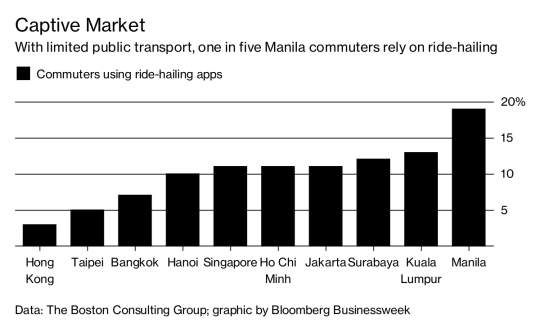
    Here is another interesting insight from Bloomberg (see above): Nearly 1 out of every 5 commuters in Manila relies on a ride-hailing service because the public transit situation is allegedly so dire. Grab controls 90% of the market with 35,000 vehicles receiving somewhere around 600,000 requests a day.

    When Uber launched it was positioned as “Everyone’s private driver.” It was expensive. It was luxurious. And it was done because they knew they weren’t going to be able to compete on speed and/or price in the early days. But now ride-hailing services are tackling the very opposite end of the spectrum.

  • The density delusion

    Joel Kotkin and Wendell Cox recently published a piece in the Orange County Register called, “California’s housing crisis and the density delusion.” I’m sure you can guess where this is going, even if you don’t follow the work of Joel Kotkin. But if you do, you will know that he is an ardent supporter of suburbia and the single-family home.

    Here is an excerpt from the article:

    In reality, the YIMBY’s suggestion that new, dense housing will improve affordability for all is patently absurd. Decades of densification in Los Angeles has seen ever higher rents, displacing low-income, especially minority households. Many former transit customers have been driven to lower-rent areas with less transit service, precipitating a massive decline in ridership, even as billions continue to be spent building new rail lines. The Wiener Bill [my link, not theirs] could exacerbate this trend, and likely increase the need for low-income housing, already well beyond the capability of public coffers.

    I fully appreciate the argument that high-density housing isn’t for everyone and that we shouldn’t be “forcing everyone back to the ‘glory’ days of the city of tenements.” But I disagree with many of their points, including the argument that density doesn’t encourage transit ridership. Density isn’t everything, but it’s an important something.

    The article is definitely worth a read, particularly if you disagree with their positions. That’s how you avoid confirmation bias. I was trying to keep that in mind as I read it. Maybe it worked.

  • Shenzhen has just electrified its entire bus fleet

    image

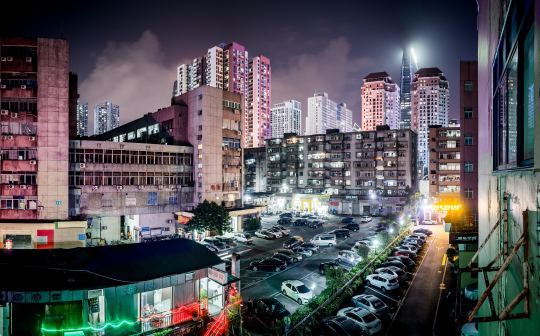
    This is impressive: Shenzhen recently finished converting its entire bus fleet to electric vehicles. That’s 16,359 buses and around 8,000 charging stations according to Electrek.

    It is estimated that this all-electric fleet saves 345,000 tons of fuel per year and reduces carbon emissions by 1.35 million tons.

    Shenzhen is now working on doing the same to its 12,518 taxis. Already 62.5% of them are electric-powered and the goal is 100% by 2020. 

    But let’s not forget that China still generates most of its electricity from coal. Coal represented 72% of its electricity generation in 2015. And in 2014, carbon emissions from China allegedly made up almost 30% of the world .

    Photo by Anton Strogonoff on Unsplash

  • Los Angeles Councilman says upzoning near transit is the worst idea he’s ever heard

    Earlier this month I wrote about California Senator Scott Wiener’s bill to increase housing supply and mandate greater land-use intensities adjacent to transit. Here is that post.

    Judging by the comments, many of you seemed to think this was a fairly sensible proposal. I know I certainly did. Senator Wiener called it a housing-first agenda, as opposed to a housing-last agenda.

    So I thought it would be interesting to share how some people have responded to the proposal. 

    Los Angeles City Councilman Paul Koretz called it both “devastating” and “the worst idea [he’s] ever heard.” He went on to tell the LA Times that, within 10 years, people should expect their neighborhoods to be transformed into Dubai. 

    His conclusion: “I don’t think people want to see significant rezoning around single-family neighborhoods whether they’re near transit or not.”

    I don’t agree with his first set of remarks, but I agree with his second one. And that, of course, is the challenge. If you own a single-family home down the street from transit, what great incentive do you have to support intensification?

    Paul is the messenger.

  • It doesn’t matter what Bitcoin is trading at right now

    Steven Johnson has a terrific piece in New York Times Magazine called: Beyond the Bitcoin Bubble. Here is a snippet:

    The only blockchain project that has crossed over into mainstream recognition so far is Bitcoin, which is in the middle of a speculative bubble that makes the 1990s internet I.P.O. frenzy look like a neighborhood garage sale. 

    But the point of the article, as its title suggests, is to talk about what all of this craziness could mean for the future of the internet and how, in some ways, it could be a return to what the internet was always intended to be.

    The real promise of these new technologies, many of their evangelists believe, lies not in displacing our currencies but in replacing much of what we now think of as the internet, while at the same time returning the online world to a more decentralized and egalitarian system. If you believe the evangelists, the blockchain is the future. But it is also a way of getting back to the internet’s roots.

    Some are calling this new, decentralized internet version 3.0. We are currently living with internet 2.0. Practically speaking though, what could this shift really mean for us?

    One example that is given in the article has to do with urban mobility – a topic that is particularly relevant to this audience. 

    Internet 2.0 has created a winner-take-most economic model. And in the case of mobility – at least in the world of apps – that winner is Uber. But with internet 3.0 and the blockchain, this could be possible:

    Just as GPS gave us a way of discovering and sharing our location, this new protocol would define a simple request: I am here and would like to go there. A distributed ledger might record all its users’ past trips, credit cards, favorite locations — all the metadata that services like Uber or Amazon use to encourage lock-in. Call it, for the sake of argument, the Transit protocol. The standards for sending a Transit request out onto the internet would be entirely open; anyone who wanted to build an app to respond to that request would be free to do so.

    Cities could build Transit apps that allowed taxi drivers to field requests. But so could bike-share collectives, or rickshaw drivers.

    I don’t know about you, but I find this perspective a lot more interesting. I recommend you read Steven’s article. It will help you cut through a lot of the Bitcoin noise.

  • Great things that happened on transit

    Elon Musk’s apparent distaste for public transit and random strangers prompted a Twitter battle last week. Though for the record, Musk later clarified that he loves trains, most subways and London buses.

    Transit planner Jarrett Walker retorted that Elon’s views are the “essence of elite projection”. What’s good for Elon Musk may not, in fact, be good for the broader society. Elon responded by calling him an idiot.

    All of this prompted Brent Toderian – city planner and former chief planner of Vancouver – to initiate the hashtag: #GreatThingsThatHappenedOnTransit. It then took off and the transit stories started pouring in.

    Not surprisingly, this has been getting a lot of attention. It’s Elon Musk after all. But billionaire celebrities aside, it does serve as a good example of the two sides of this debate.

    Some people seem to think that I am anti-car. I can see why some people might think that, but I am not anti-car. I love nice cars. And I love nice trains. What I value first and foremost is the city. 

    The kind of city you can build on the backbone of transit is very different than the kind of city that gets built around the car. And as a rule of thumb, I prefer the former over the latter.

    But this is not to say that the public transit model is perfect. It’s far from perfect for many reasons. And it can get even more imperfect when we don’t pair it with the right land use policies.

    Deploying heavy rail through low density areas – that are by design inhospitable to car-less humans – will not magically flip the modal split. Public transport alone cannot solve that problem.

    At the same time, if you’re a regular reader of this blog you’ll know that I am enamoured by the possibilities of autonomous electric vehicles. I am not assuming that the “car” of tomorrow will look and perform anything like the car of today.

    Mobility is such an exciting space right now.

  • New London Plan released today

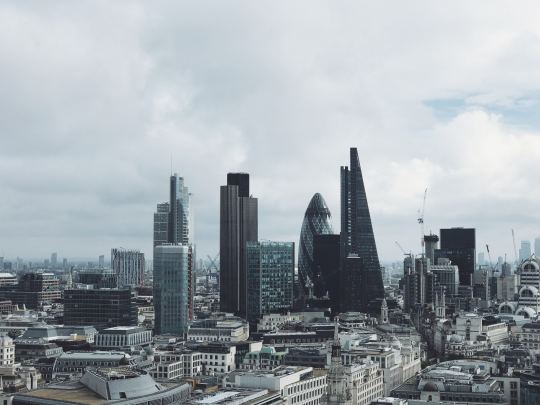
    A draft version of the new London Plan was released today for public consultation. It is “the spatial development strategy for Greater London”. And you can download all 524 pages of it, here. A final copy of the Plan is expected to be published by fall 2019.

    Here is what mayor Sadiq Khan had to say about the Plan (quote from The Guardian):

    “I am using all of the powers at my disposal to tackle the housing crisis head on, removing ineffective constraints on homebuilders so we make the most of precious land in our capital.”

    And that tone comes through in the document. Here is an excerpt from the “optimising housing density” policy section:

    “For London to accommodate growth in an inclusive and responsible way every new development needs to make the most efficient use of land. This will mean developing at densities above those of the surrounding area on most sites. The design of the development must optimise housing density.” (Section 3.6.1)

    The Plan also contains a set of clear performance indicators. They cover things like the supply of new homes, the supply of affordable homes, modal share in the capital, and so on.

    The ambition is 66,000 net additional homes each year. And by 2041, the goal is that 80% of all trips in London will be by foot, cycle, or public transport. There simply isn’t road the capacity.

    Which is why the plan also specifies parking maximums, as opposed to parking minimums. The Plan wants the starting point for any development that is well-connected to transit – or to future transit – to be “car-free”.

    If you have a chance, the new London Plan is worth a scan. Maybe you don’t want to print it though.

    Photo by Rob Bye on Unsplash