Daily insights for city builders, delivered every morning at 6 AM ET. I’m Brandon Donnelly — a Toronto-based real estate developer and founder of Globizen. I’ve been writing here since 2013.

Tag: toronto

  • Job Opportunity: London Night Czar

    The City of London is looking for a “Night Czar” to help shape and grow the city as a 24-hour destination. Here’s a snippet from the job posting:

    “The Night Czar will champion the value of London’s night time culture whilst developing and diversifying London’s night time economy.

    Working with the Mayor, the Night Time Commission, local authorities, businesses, the Metropolitan Police Service, Transport For London and other agencies, the Night Czar will create a vision for London as 24-hour city and a roadmap showing how the vision will be realised. The Night Czar will have proven leadership ability, public profile and convening power, plus a thorough understanding of the night time economy and the ability to work in a political environment.”

    I think 2016 will turn out to be the year of the “night mayor.” This trend is really picking up momentum in Europe, as more and more cities look to capitalize on their night time economies.

    The job will pay £35,000 per year for 2.5 days of work per week. The closing date for the application is Monday, September 12, 2016. If you’d like to apply, you can do that here.

    I’ve been writing about this trend all year. Hopefully a decision maker in Toronto is reading this.

  • Urban migration, household type, and housing supply

    Here is an interesting discussion paper on the Toronto region’s economy, demographic outlook, and its land use. It was recently published by IBI Group and Hemson Consulting to support the 10-year review of our regional transportation plan.

    I wanted to share a couple of charts from the report that I thought were interesting. If you’re not in the Toronto region, I would be very curious to hear how your city might compare in terms of the way it is trending.

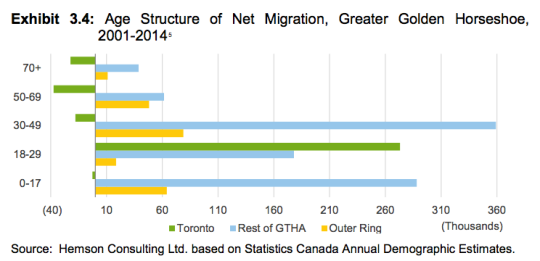
    The first chart is net migration by age group. Like Vancouver – similar chart posted here – people have been moving into the city/Toronto when they’re young and then moving out to the suburbs once they start having families. 

    Will that continue? The oldest Millennials are now hitting their mid-30′s and I am very interested to see if there will be any reversal in this.

    image

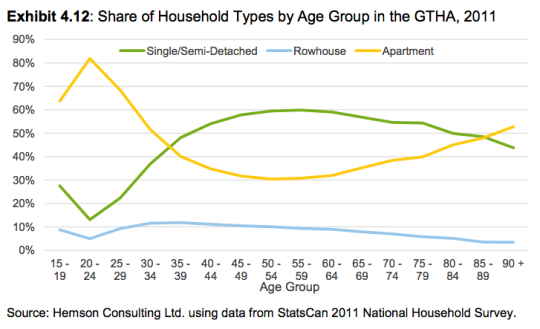
    Given the above trend, people in this region are not surprisingly also swapping apartments for ground-related housing as they get older. The crossover point seems to be (or at least has been) when people hit their mid-30′s. Again, I am curious how this may evolve as the city matures.

    image

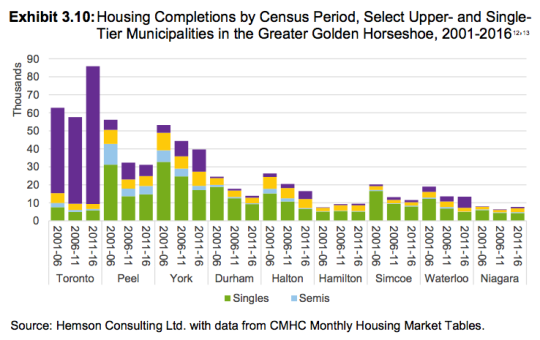
    Because if you look at housing completions from 2001 to 2016 (chart below), the only municipality that was able to meaningfully increase its housing supply was Toronto. 

    Every other municipality – except for Hamilton, which posted modest gains – experienced significant declines in the number of new homes delivered to the market over the last census periods. 

    Of course, the only reason Toronto was able to increase its housing supply was by building up – in other words by building condos and apartments. (Shown in the purple below. For some reason the legend is incomplete in the report.) 

    image

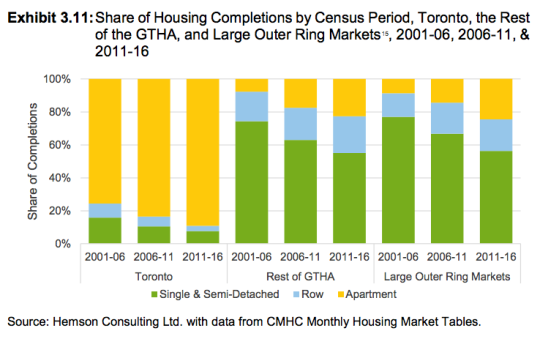
    If you look at the share of housing completions, over 80% of new homes in Toronto are now in apartment form. 

    image

    Intensification is a deliberate policy choice. And we can certainly debate whether it’s a good or bad thing (I believe it’s a good thing). 

    But putting that aside, the above charts are a great answer to the perennial question: “How is it that Toronto is building so many condos?” This is why.

  • LED neon lighting by Electric Confetti

    image

    Ever since I attended Art Basel Miami Beach last year, I’ve been determined to get a neon piece for my condo. I got inspired by all of the neon I saw at the show and so I told myself that I was going to get something made.

    I found a company in Vancouver called Endeavour Neon, but I never ended up pulling the trigger. It turns out that traditional neon lighting is pretty expensive. 

    However, I recently discovered a Melbourne-based company called Electric Confetti. Founded by designer Natalie Jarvis, the company makes LED neon lighting using flex tubes. Supposedly, this makes them more durable and more energy efficient. They’re also less expensive.

    I am trying to figure out shipping to Canada, but it looks like I might be finally getting my neon. I really like the banana (pictured above), but that might be an odd reference for a bedroom. I’ll sleep on it.

    I thought I would share with all of you in case you have a home, an office, or a project that could use some neon lighting.

  • BARED: David Wex, Urban Capital Property Group

    image

    David Wex started his career working for one of the big Seven Sister law firms in Toronto. But right from the outset, it was clear that he wasn’t in it for the long run.

    In fact, only a few days after he started, David had the clever idea of turning his desk around so that it faced the window, instead of the hall. That way, he could avoid eye contact with partners as they walked by his office, and reduce his chances of being assigned a file.

    Of course he couldn’t avoid being tracked down all the time. But whenever someone would try to assign him work, he would simply say: “I’m sorry, but I’m really busy working on something right now.” His nickname quickly became “One File Wex” and it was clear that he was headed towards the departure lounge and not a corner office.

    But already, David had his mind set on doing something related to cities. So while still working as a lawyer he decided to complete his Graduate Record Examination (GRE) in preparation for going to planning school. Ultimately, he decided not to go back to school, but instead leave the firm and just figure things out. He left in 1992.

    After leaving, he did in his words, “nothing” for a few years. He lived off his savings, spent some time working with a bunch of guys cleaning up the Don River, and tried to figure out a way to put together a development project.

    Eventually he met a friend of the Goodman family and this led to an introduction to the Dundee Corporation.

    It was the early 90’s and nothing was happening by way of development in Toronto. The real estate industry was in a deep recession. Ask anyone who was “active” during this time. It was a painful time to be in the business. But the Goodmans told David that he if could find a suitable site to develop, they would invest. Lesson: Developers are constantly leveraging other people’s money.

    So David went out and found a site on a sleepy street named Camden in Toronto’s Fashion District. This is not the Camden Street of today, which has an Ace Hotel currently in the works. It was a dead zone. By this point we are in 1995 and few people believed that anyone would want to live on a downtown street like Camden.

    Given the perceived undesirability of the site and the continued lull in the market, David tied up 29 Camden for C$700,000 with a 2 year option. What this means is that he had 2 years to figure out if he actually wanted to close on it. He could put very little money down and get the project going before having to worry about carrying the land. It wasn’t until midway through sales that he actually went firm.

    It’s hard to imagine being able to do this in today’s competitive real estate market, but that was the market at the time.

    Of course, the flip side to all of this is that it also took him 2 years to sell about 20 condominium units (out of a total of 55), at an average price per square foot of $195. Today you could sell those units in 2 hours at $800 psf.

    Brad Lamb – who was just starting out at the time – was the broker on the project. And activity at the sales office was so scant that everyone would get excited even when a car would drive down Camden Street. That’s how dead it was in the Fashion District.

    Eventually Dundee got impatient. Sales were slow. A lot of money had been spent on marketing. And the partners didn’t believe that “the bump and grind of Queen Street” (original marketing pitch) was the right way to position the product. David was also in the midst of rebranding his company from Red Rocket (named after our transit commission) to Scrappy Dog Real Estate Investments. By that point Dundee came in and said: “You’ve fucked up this project. You’re out.”

    David had felt like he had made it and become a developer with Camden Lofts. But just like that – before construction had even started – he was off the project.

    The deal that David struck with his partners was that he didn’t want any money out of the project (it didn’t end up making much money anyways). But he wanted to stay involved and be able to call Camden Lofts his project. And so to this day, Camden Lofts remains the first development project of his very successful real estate career.

    But Camden Lofts didn’t solidify David as a real estate developer. After the fumble, David took on the role of managing a loft conversion for what turned out to be some pretty dodgy landowners. The total management fee was a princely $5,000, but David wanted to complete his own project from beginning to end. And so he did just that with Century Lofts at 365 Dundas Street East. He also spent a great deal of time learning Illustrator, Photoshop, and other design tools so that he could do all of the marketing himself. This is an experience that would later manifest itself in his company’s business model.

    After tuning his craft for a couple of years, David met his current business partner, Mark Reeve. Mark was a corporate real estate developer and planner, and they talked about doing something together. So they did, and the result was Urban Capital Property Group. Mark was also able to planning consult on the side and that helped fund their fledgling business as they worked on breaking into the development game.

    The first project to come out of this relationship was The Sylvia, which was also on Camden Street (#50). However, you won’t find this project on their website because it was done in partnership with developer Intracorp. The relationship ended up not being a productive one and both David and Mark vowed never again to be involved in a project that they weren’t actively managing themselves. That vow continues to this day.

    The first project that Urban Capital did on their own was the 66-unit Charlotte Lofts. It’s the first project they completed from A to Z. They sourced the site, secured the financing, worked on the design, marketed it, and constructed it. It was a success.

    The partners did well but the learning curve remained so steep that neither felt that they had really “made it” with this project. Indeed, my interviews have uncovered that this is a common experience amongst new developers. It can take a few projects before they really hit their stride and, in some cases, even make any money.

    But who ever remembers the stumbles?

    Today, Urban Capital has completed over 4,000 urban condominiums and has another 2,500 in the works. They have developed over $2 billion worth of real estate to become one of Canada’s most influential urban infill developers.

    Unlike other Toronto-based condo developers, they have branched out beyond Toronto: east to Montreal, Ottawa and Halifax; and west to Winnipeg and Saskatoon, with other cities on the horizon. Their mission is to act as an urban regenerator by bringing high design urban living to new markets across the country.

    They have come a long way since the days of Scrappy Dog Real Estate Investments. Clearly David is the furthest thing from “One File Wex.”

    You can follow Urban Capital on Twitter and on Facebook.

    Image: River City 2, Toronto

    ———————————————————

    This is the first post in my new blog series called BARED (Becoming A Real Estate Developer). More posts to come in the following weeks. Subscribe to stay in the loop.

  • Where the world’s billionaires live

    The Martin Prosperity Institute here in Toronto recently published an interesting report called The Geography of the Global Super-Rich.

    What they did was use the Forbes 2015 Billionaire List to chart billionaires and billionaire wealth by location and by industry. They also looked at the wealth gap in each location and whether the wealth was self-made or inherited.

    A correlation analysis was also done to see what key variables – such as population, density, economic output, global city standing, VC investment, and so on – were positively correlated with a greater concentration of super rich people.

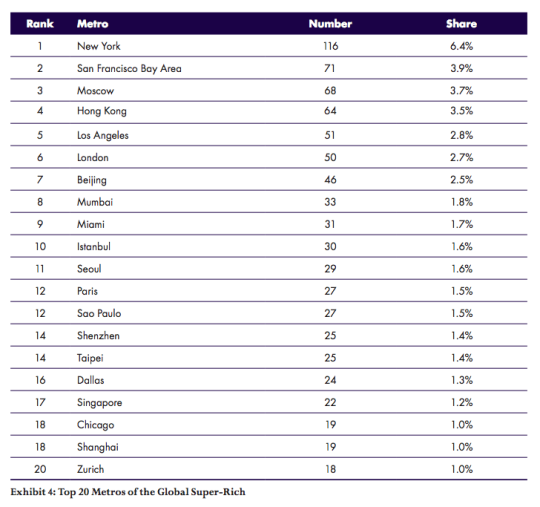
    There are 1,826 billionaires across the world according to Forbes. The researchers were able to match 99% of them to a specific metro area / primary residence.

    Here are the top 20 metro areas in terms of the number of billionaires:

    image

    Look at Miami at #9. 

    I suspect that this may surprise some of you. But Miami has grown into a significant global city. As one of my friends from Miami likes to tell me: “The best thing about Miami is that it’s a Latin American city that’s so close to the United States.”

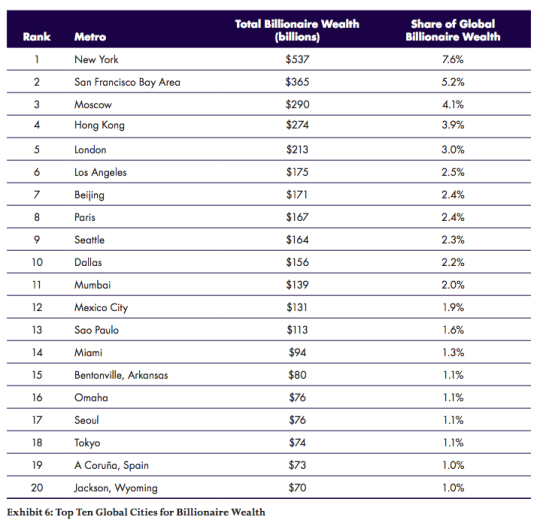
    Here are the top 20 metro areas in terms of total billionaire wealth: 

    image

    A bunch of changes on this list because of extremely wealthly people and families in places like Bentonville (Arkansas) and Omaha.

    One of the conclusions of the report is that the size of the city generally matters:

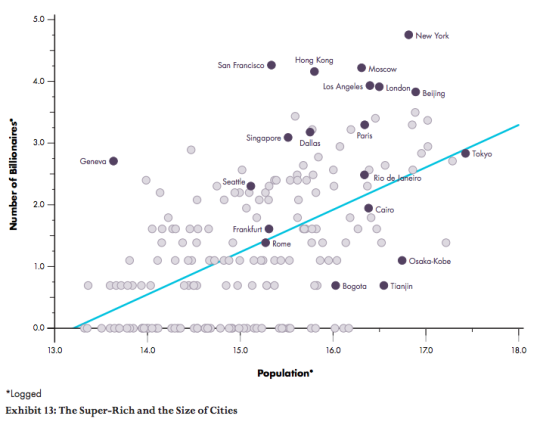
    “The geography of the super-rich is a function of larger cities. Both the number of billionaires and their net worth are positively associated with the population of global cities, with correlations of 0.56 for the number of billionaires and 0.44 to their net worth.”

    Here is a chart comparing population to the number of billionaires:

    image

    Cities such as New York, Moscow, and Hong kong, which sit far above the blue line, have more billionaires than their population size would predict.

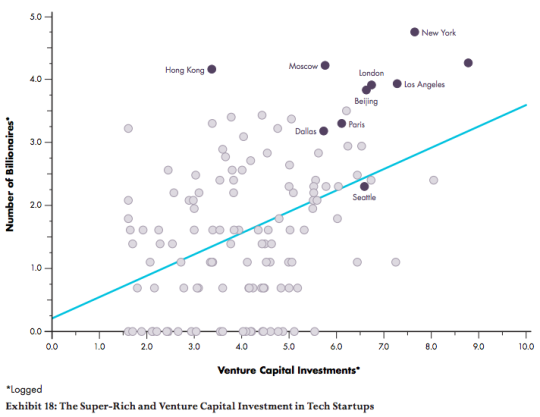
    Here is a similar chart comparing venture capital investment to the number of billionaires:

    image

    Once again, there is a positive association.

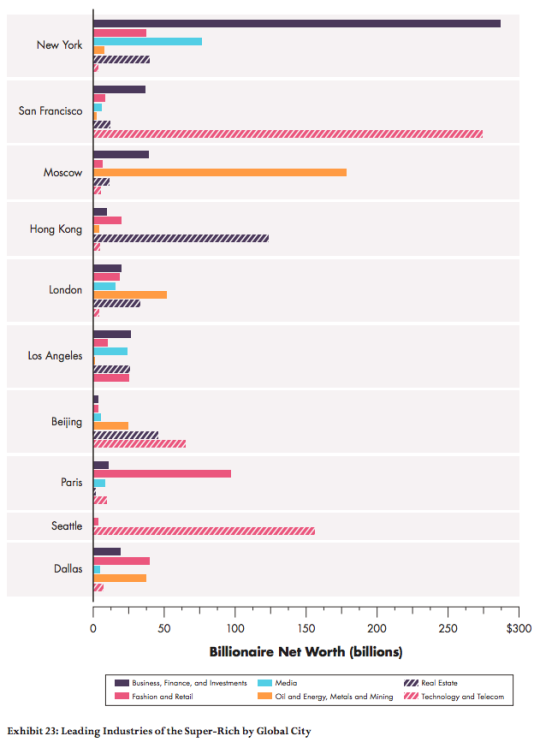
    Finally, here are a two charts that show which industries have produced the most billionaires:

    imageimage

    If you’re interested in this study, you can download the full report here. All of the charts were sourced from the report.

  • Should we love bubbles?

    There’s no shortage of talk about a Canadian housing bubble:

    image

    In Vancouver, the price of a single-family home (as of June of this year) increased 39% to C$1.6 million from the year prior. Does that constitute bubble territory?

    In an effort to stop prices from running away even further, I am sure you all know that the BC government has recently imposed an additional 15% transfer tax on Metro Vancouver homes purchased by foreign buyers (people who are not Canadian citizens or permanent residents).

    The data that I have seen (here and here) suggests that foreign buyers could make up somewhere around 5-10% of the market. Given that many will now get creative in terms of hiding their foreignness, I am not so sure this new tax will have a dramatic impact on affordability. But it certainly sounds nice if you’ve been grouchy about home prices and thinking “those damn foreigners.” We’ll have to see how it plays out.

    Having said all of this, if Vancouver is in fact in bubble territory, would that be so bad? Are we thinking about this the right way?

    Here’s an alternative viewpoint.

    I recently stumbled upon an old blog post by Tom Evslin (2005) called: Why we need bubbles. I discovered it via it Fred Wilson. Tom’s argument is that we need irrational exuberance because it provides the capital that allows for dramatic overbuilding. The overbuilding of things like rail infrastructure, internet infrastructure and – I’m adding this – housing infrastructure. And once this happens, it dethrones the incumbents and paves the way for future economic progress.

    Tom’s focus is on technology, but I couldn’t help but think of the parallels with city building. Is the proposed Rail Deck Park in Toronto so bold that it’s only possible during a period of irrational exuberance? Should Vancouver instead be working to dramatically expand its housing supply instead of trying to tax away a portion of demand? Is a period of irrational exuberance precisely the moment where we lay the ground work for our future successes?

    I’m not saying we’re in a bubble. I don’t believe in or know how to time markets. But I am asking whether the bubble headlines are missing the greater opportunity.

  • Rail Deck Park – will it happen?

    Everybody
    in Toronto is talking about one thing right now.

    This:

    image

    When I got into the office this morning, someone asked what I thought about Rail Deck Park and whether or not I thought it would happen.

    When I went for lunch this afternoon, someone asked what I thought about Rail Deck Park and whether or not I thought it would happen.

    And
    I’m fully expecting that somebody else will ask me these same questions before the day is done.

    For those of you who haven’t been following or aren’t from Toronto, it is a 21-acre park that is proposed to be built by decking over the rail corridor that runs from Bathurst Street in the west to the Rogers Centre in the east. See top image.

    Of course, the reason everyone is asking me these questions is because it’s a wonderful idea and everyone wants it to happen. But we’re all thinking the same thing: will it and who is going to pay for it?

    Here are my thoughts.

    Section 42 of the Ontario Planning Act stipulates that cities may ask developers for either land or cash in order to create new parkland. 

    To give you an example of how significant this can be, Spacing reported that 1 Bloor East alone – which is a single tower under construction right now – contributed $10 million into the city’s parkland reserves.

    Zooming out, between 2011 and 2014 alone, developers paid almost $300 million in park levies across
    the city
    . It’s worth noting that most of the funds collected
    were from development projects in the core of the city. During this same time period, wards 20, 27, and 28 alone produced over $140 million.

    Here is a chart from a Spacing investigation published last year that corresponds to the above stats:

    image

    The problem with all of this is that it’s becoming increasingly difficult to actually deploy this capital. I mean, think about how difficult it is to buy a single family home or find a development site in this city. Now go out and try and find a piece of land in which to build a park. And do it as a cash-starved public entity that can’t engage in a bidding war.

    As of September 30, 2013, the city’s uncommitted parkland reserve fund balance was $234,995,348. This includes Parkland Acquisition, Parkland Development, Alternative Parkland Dedication, and Other Reserve Funds. If anyone has a more recent figure, please share it in the comments below.

    Also, the irony of this situation is that the neighborhoods producing all of the
    parkland funds (i.e. downtown) are precisely the areas where it’s exceptionally difficult to actually create new parks. So what I think is happening is that Mayor Tory and the rest of the city see Rail Deck Park as a perfect opportunity to turn this reserve fund money into a meaningful urban park in the core of the city.

    We
    don’t yet know how much this park will cost and I don’t know what’s sitting in the reserve funds today. But this is my read on the situation. I doubt the reserve funds will be able to pay for it all, but that shouldn’t be a deal breaker. It’s worth getting creative and fighting for something as significant as Rail Deck Park. 

    This
    is an opportunity to reinforce Toronto’s status as one of the most liveable global cities in the world. This is an opportunity I believe we are going to take.

  • For the love of compactness

    I’m in Provincetown, Cape Cod right now. One of the things that is great about this town is the scale of it. It’s compact and many of the streets feel like laneways or alleys (I’m obsessed, I know). It’s all about pedestrians here. Even the main drag, Commercial Street, is effectively a pedestrian street – though it’s not technically closed to cars most of the time.

    There’s something liberating about being able to get where you need to go by walking or biking or skateboarding. And all of those things are done here. I enjoy the inherent efficiency that compactness brings. That’s why I was excited to learn this morning about the following proposal at 24 Mercer Street in Toronto (via Urban Toronto):

    image

    It’s a 12 unit, 17 storey building on a 195 square metre lot. The proposed FSI is 16.8. And it will have zero parking. I would be incredibly curious to know what the construction costs will be and how the overall project pencils out. But regardless, it’s exciting to see someone trying to make use of such a tight site. I would love to see more of this in Toronto and I am certain we will.

    What do you think about projects like this? Some of you may call this “poor planning,” but I see the efficient use of resources.

  • Hello Boston

    image

    I arrived in Boston early this morning. It has been about a decade since I was last here.

    I took the subway in from the airport, which is typically what I like to do when I visit a city. It’s such a great way to get a feel for a place. And in the case of Boston, Logan Airport is only a few stops away from downtown.

    image

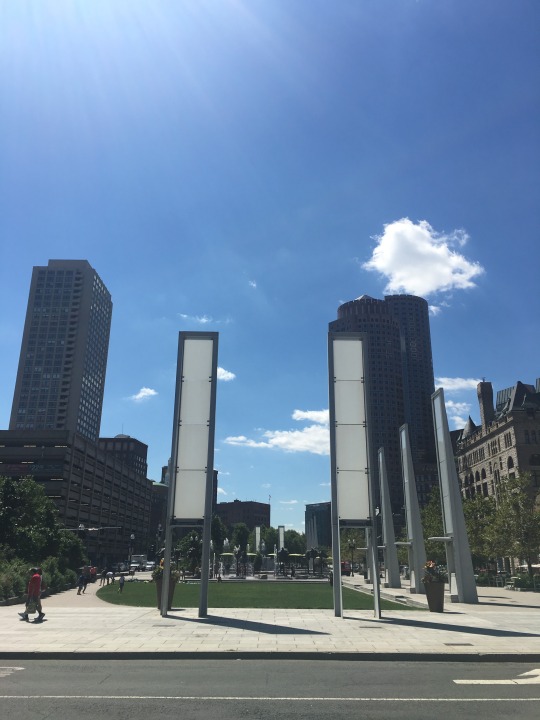
    As soon as I got in, I walked over to see the Rose Fitzgerald Kennedy Greenway (above image). It’s a linear park that was made possible by burying the city’s elevated waterfront expressway – the infamous “Big Dig.”

    image

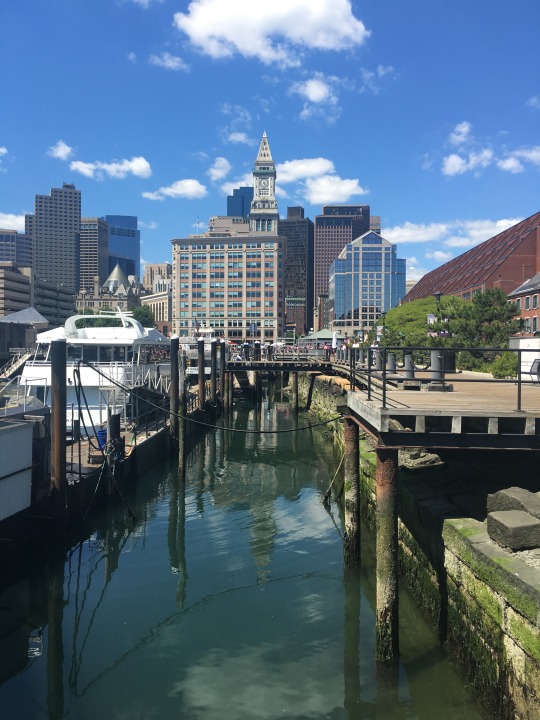
    I recognize that it was a lavishly expense infrastructure project that went many times over budget, but walking across the greenway to get to the water was rather pleasant. Will Toronto’s The Bentway achieve a similar result at a fraction of the cost?

    image

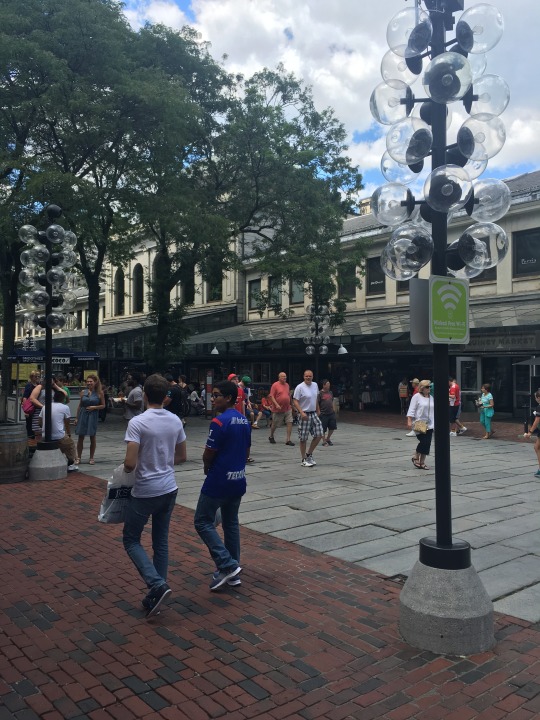
    With that out of the way, I went for a lobster roll. It had to happen. I then walked around Faneuil Hall and Quincy Market (above image). It felt a bit touristy, but what a remarkable pedestrian-only area. 

    image

    And now I’m on a boat heading over to Provincetown (Cape Cod) for a wedding. I’m writing this blog post over a spotty wifi connection, so out of fear that I may spontaneously lose it, I am going to end here. See you all tomorrow.

  • What system of measurement do you think in?

    A couple of years ago, an architect friend of mine from Chicago (who was in town for work) told me that when it comes to units of measurement the building industry in Toronto is schizophrenic. She basically said, sometimes you use the international system (metres) and sometimes you use customary units (feet).

    And this is absolutely the truth. We are constantly switching back and forth between the two. The drawings that go into the city are in metres and millimetres, but the drawings that get shown to prospective renters and buyers are in feet and inches. We’ll say that the Tall Building Design Guidelines stipulate that towers should be 25 metres apart, but then in the next sentence say that we’re going to need a 24 inch transfer slab. 

    This kind of measurement bilingualism is so common that I bet some of you have cheat sheets with common conversion factors posted up at your desk. It probably includes things like: 1 square metre = 10.76 square feet.

    Over the years though, I have found myself naturally drifting more and more towards metres and millimetres. So much so that when people throw out inches in a meeting, I’ll now sometimes ask them what it is in millimetres: “Wait, how thick does the slab need to be?” A lot of this has to do with the fact that all city planning documents are in metres. So it’s simply more efficient to stick with one system of measurement and avoid constantly converting back and forth.

    That said, there are still lots of people who prefer feet and inches (particularly in my industry) and many instances where I default to thinking in customary units. I’m 6 foot 3, not 1905 mm. But, I am ready to go all in with the international system. I think it would make life simpler and more efficient. After all, it is called the international system.

    What system of measurement do you think in?