Daily insights for city builders, delivered every morning at 6 AM ET. I’m Brandon Donnelly — a Toronto-based real estate developer and founder of Globizen. I’ve been writing here since 2013.

Tag: toronto

  • Inverted podium

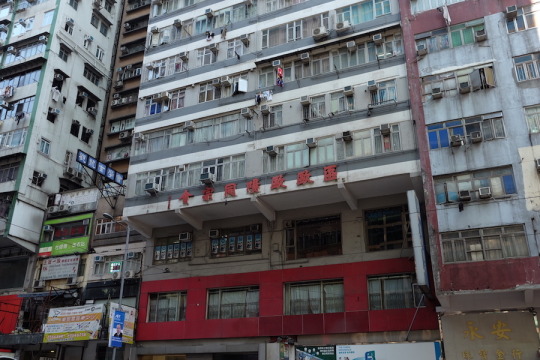
    One of the things that I noticed yesterday morning on my walkabout from Wan Chai to Causeway Bay is that some/many of the buildings in Hong Kong actually step-in, as opposed to step-back, once you get above the base or “podium.” In many cases the step-in comes out almost to the curb line.

    (Note how the reference point is the public realm. You step back from it or you step into it.)

    Here is an example:

    image

    Setbacks and step-backs are longstanding urban design tools because they can allow more light to reach the street and they can visually break-up the mass of a building and establish clear datum lines, among other things.

    We’re obsessed with them in Toronto because everyone is always trying to hide building height. But in Hong Kong, space is such a rare commodity that it seems to be about filling in every available inch.

    I posted this remark on Twitter yesterday and it was suggested that some of these step-ins may have been the result of additions made after the fact. They seemed original to me, but whatever the case may be, they are an existing condition that I have started calling the inverted podium.

  • Good morning Hong Kong

    image

    It’s about 6:30 am on new year’s eve day and I’ve been awake since around 4:00 am because of jet lag. I initially resisted, but now I am up and starting my day. 

    The coffee shop downstairs doesn’t open for another hour so this is coming to you live from my surprisingly spacious hotel room. (I’ve been in far smaller both here in Hong Kong and in New York.) There’s a wide array of teas available in this room, but sadly no coffee. I could go for a coffee right now.

    I took the express train in from the airport last night, which is what I did the last time I was in Hong Kong over a decade ago. It takes just over 20 minutes and it is a great way to get into Central. It immediately signals to you that this city thinks and cares about efficiency.

    The experience of landing and getting into a city is an important, but often neglected, consideration. For many people this is their first impression of a place and so it only makes sense to pay attention to it. 

    Think of it like fine dining. Most nice restaurants will greet you at the front, take your coat, and show you to your table. Few expect you to come in the backdoor and wander bewildered through the kitchen. But that’s what some cities ask you to do after you land.

    Come to think of it, I left Toronto aboard our own airport express train. That’s standard practice for me. And so I started and ended my 2-day journey on efficient rail. I’m good with that.

    Before signing off for today, I would like to apologize for missing yesterday’s post. I was in the air for over 19 hours without internet. I also didn’t have much to say. As always, you should expect me to show up here every day. But expect more travel-related posts over the next week to go along with my Instagram posts.

    I would also like to point you toward this tweet storm by Shawn Micallef (discovered during jet lag haze). Please do me a favor and check it out. It is a hilariously accurate satire about many of the city building challenges that cities face today, told by way of a miniature “Dickens Village.”

    https://platform.twitter.com/widgets.js

    And with that, I wish you all a happy new year. See you on the other side. Bring on 2018.

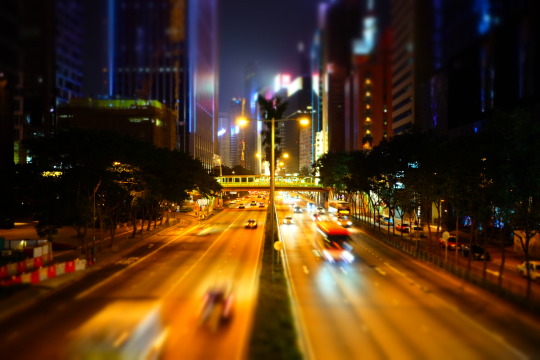
    Photo: Night shot of Gloucester Road from pedestrian overpass

  • 2017 year in review

    I just finished going through my list of 2017 goals. I didn’t accomplish everything I wanted to, but I did manage to check off a number of professional and personal goals.

    Some of the remaining goals have been pushed to 2018. But there are also items that I have since realized aren’t worth pursuing and so I have dropped them from the list.

    All that said, it was a great year. Here is a rapid-fire summary of 2017 told through posts from this blog.

    Thanks for reading. Onward my friends.

  • Waste and efficiency

    Here are a couple of cut-up snippets from a recent post by Seth Godin titled: “Waste and the new luxury.”

    Luxury goods are built on a foundation of waste.

    The front lawn is a luxury good, a sign that you don’t need to graze your cows on every square inch, and that you’re willing to waste the lawn.

    There’s a new luxury that’s occurring, though, one that’s based on efficiency.

    A luxury that’s based on investing in renewables, in resources that might be seen as endless, in smart design, in the satisfaction of knowing that others are benefitting, not paying, for the experience or the object you’re buying.

    Waste vs. efficiency.

    (Above is a photo I took this week in Dundas Square.)

  • Merry Christmas

    I took the above photo on Christmas Eve in Toronto’s Distillery District (one of my favorite neighborhoods in the city). It was before the snow had really started falling. We got a white Christmas this year – the best.

    This is one of the first photos with my new Fujinon 23mm f/2 (35mm equivalent) lens. I have come to realize that if I’m not photographing people, 35mm is the right focal length to have on my camera for the types of photos I seem to gravitate toward.

    And now back to eating. Merry Christmas everyone. If you’re reading this post in your inbox and it feels late, then: Happy Boxing Day 🙂

  • Inclusionary zoning is coming to Ontario

    On Monday the province of Ontario posted a draft regulation intended to establish a framework for inclusionary zoning. It builds on a bill that passed last year allowing municipalities – should they choose – to require affordable housing in new developments and redevelopments.

    Below are some, but not all, of the things that are being considered in the draft regulation. Some of these items were recommendations made by the development industry through the Ontario Home Builders’ Association (OHBA) and the Building Industry and Land Development Association (BILD).

    – The total number of affordable units or gross floor area dedicated to affordable housing units would not exceed 5% of the total units or 5% of the total gross floor area (excluding common areas). This number increase to 10% in high density transit station areas.

    – The affordable period would be a minimum of 20 years but no greater than 30 years.

    – There may be opportunities to provide the inclusionary zoning units off-site.

    – The policies would only apply to developments / redevelopments with 20 or more units.

    – The affordable component could not be used to determine community benefits under Section 37. Section 37 would also not apply if the proposed development (with IZ) is in a location where a development / community planning permit is used.

    – Municipalities would be required to offer incentives to help offset the IZ cost burden, but only if the development is not subject to a development / community planning permit. The incentives could include a waiver or reduction in application fees, parkland dedication fees, development charges, and so on. These offsets are very important to the industry and the affordability of the market rate units. But interestingly enough, increases in height and/or density are not being contemplated as a possible incentive or financial contribution.

    – The financial contribution would be based on the following formula: (A – B) x 0.4. A is the total sum of the average market price for all of the affordable housing units and B is the total sum of the affordable price for all of the IZ housing units. In other words, the intent is that municipalities would be required to offset 40% of the costs associated with providing the affordable units.

    Click here for the rest of the draft regulation. The OHBA also published this media release following the draft. They like the “partnership model” but were advocating for a 50/50 public/private cost share on all government-mandated units.

    If you’re looking for more reading on inclusionary zoning, check here, here, and here.

    Photo by Omair Khan on Unsplash

  • Bright reddish-orange triangulated LED-lit fins

    superkül (architects) recently added a new project to their website, namely the renovation and addition to Proper TV’s headquarters at Bloor and Dovercourt here in Toronto.

    The original single-storey building dates back to the middle of the 20th century and used to house a Canada Post Office and distribution facility.

    But why send letters when you can instead send emails and instant message that are immediately tracked for the purposes of later bombarding you with ads for things you may want to buy? 

    The post office closed in 2013.

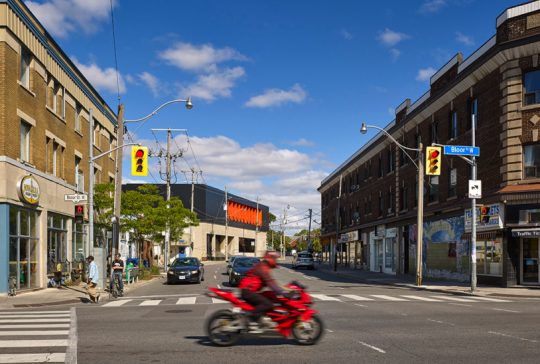
    The main facade along Dovercourt was constructed of limestone and that remains today. Here is photo of the building looking north on Dovercourt from Bloor:

    Notice how the road (Dovercourt) curves and the building becomes almost a view terminus.

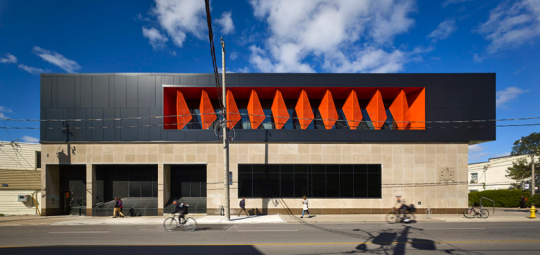
    Here is the east elevation:

    And here is a close-up of the bright reddish-orange powdered coated triangulated fins that adorn the second floor:

    Apparently the fins are also lit up at night with programmable LEDs. I don’t have a picture of that to show you, but I am sure they look very cool. I’ll have to do a drive-by one night.

    All images from superkül.

  • Aerial photographs of LA and NY

    I like the built form aerial photography of Jeffrey Milstein. Here is one of Stuyvesant Town in New York City:

    It shows a symmetrical plan view that followed a particular dogma at the time.  But it’s also a view that few people or residents would ever see or appreciate.

    The above image is from his exhibition at the Bau-Xi Gallery here in Toronto (340 Dundas Street West). It runs until December 16, 2017.

    On January 25, 2018, the exhibition moves to the Benrubi Gallery in New York City (521 W. 26th Street). Check them out if you’re interested.

  • Stockholm’s congestion charge reduced car traffic by 20%

    Stockholm has a congestion charge that is used to reduce traffic volumes in the center of the city. Toronto does not. We looked at it, actually fairly recently, but then we lost our nerve.

    Stockholm’s congestion charge was first implemented on a trial basis starting in January 2006. Trials and pilots have become a common way to actually create positive change. Otherwise the status quo bias may simply be too strong.

    When Stockholm started the trial back in 2006, public support was very low. Maybe 30%. But as soon as it was implemented, car trips dropped overnight by 20%. Once people saw the benefits, support grew – hitting around 70% by 2011.

    Here is a brief Street Films video with Stockholm’s Director of Transport, Jonas Eliasson, talking about their experience with congestion pricing. If you can’t see the video below, click here.

    [vimeo 244771087 w=640 h=360]

  • The worst on-time performance of any major transit system in the world

    I was recently with some New Yorkers and we got on to the topic of their subway system. I made a comment about how extensive their network is and how their express trains work so well for traveling further distances. 

    They responded by basically saying: “Yeah, it’s great, when it works.” They then went on to tell me that most of the time they just use Uber to get around the city because the subway has become so unreliable.

    Admittedly, I don’t use the NYC subway system enough to comment on its declining performance. But this recent New York Times article describes it as an utterly failing system.

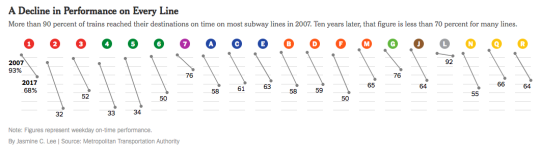
    Here is a diagram from the article that shows performance on every line (2007 to 2017), measured as a percentage of trains that reach their destinations on time (i.e. less than 5 minutes late):

    image

    In 2007, more than 90% of trains reached their destinations on time. Today, the weekday average is around 65% and some of the lines are in the 30s. This is the worst it has been since the 1970s when NYC was almost bankrupt.

    Apparently this also awards NYC’s subway the title of the worst on-time performance out of the world’s top 20 biggest systems.

    I suppose one of the lessons here is that subway lines on a map will always be far sexier than the nuts and bolts of maintenance, performance, and ridership. But we can’t forget the nuts and bolts. Maybe those are the most important parts.