Daily insights for city builders, delivered every morning at 6 AM ET. I’m Brandon Donnelly — a Toronto-based real estate developer and founder of Globizen. I’ve been writing here since 2013.

Tag: tokyo

  • The Japanese are renting cars but not driving them

    Lately it has been in the news that a growing number of people in Tokyo are using car-sharing services for reasons other than to drive places. It started when companies began noticing that “several percent of their rented vehicles” were not being driven at all. What they ended up discovering, largely through customer surveys, is that car-sharing services have become an affordable option for people looking to nap, work, eat, store things, charge their phone, practice rapping, and probably a bunch of other things.

    This immediately struck me as being quintessentially Japanese, partially because one of my experiences of Tokyo is that Tokyoites are often cool to sleep all throughout the city, including at the bar and on my shoulder on the metro. But I also think this finding tells you something about Tokyo’s urban fabric and, in particular, how much of a precious commodity that space is within the capital. This guy once rented a car because he couldn’t find a place to sit down and eat his boxed lunch.

    This may also be a case of mispriced private space. Cities should, of course, have well-designed public spaces that accommodate people wanting to eat their boxed lunches. But for those looking for a little quiet time, a few hundred yen for 30 minutes has proven to be a competitive, and in some cases a more affordable, offering compared to, say, internet cafes. From the sounds of it, none of the car share companies ever anticipated this use case. Pricing is interesting.

    Photo by Louie Martinez on Unsplash

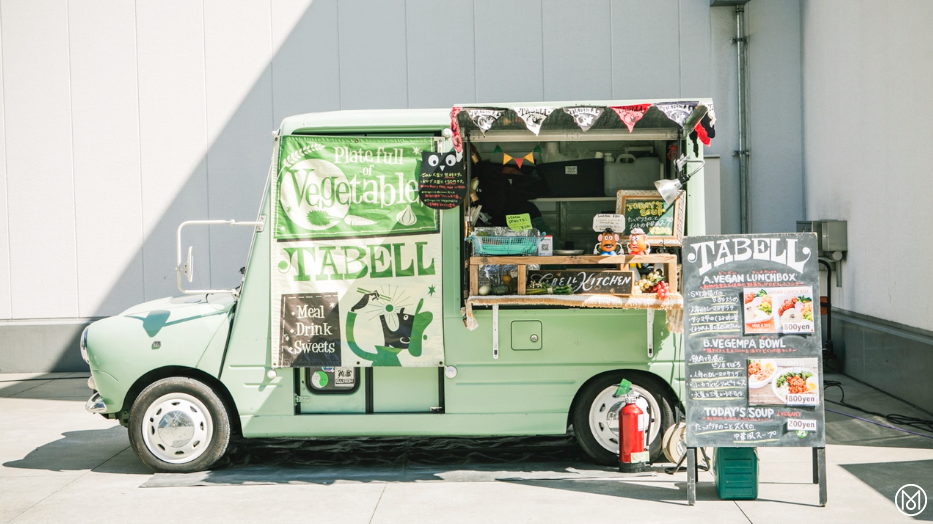
  • Tokyo’s kitchen cars (or food trucks)

    Click here for a short video (by Monocle) about Tokyo’s nascent “kitchen car”, or food truck, scene. (The soundtrack is fun.) Historically, street food stands, or “yatai,” have had a questionable reputation in Japan. They proliferated across the country following World War II when times were tough and food was being rationed. But as Tokyo prepared to host the 1964 Olympics, local governments began to clamp down on yatai. They were seen as unhygienic and a place for drunks to hang out. There may have also been a sense of shame around the country’s post-war struggles. Whatever the case may be, these new food trucks have — aided by technology — changed the way people eat on the street.

  • Skateboarding to debut at the Summer Olympics in Tokyo

    The 2020 Summer Olympics, which will be held in Tokyo, have added 5 new sports, one of which is skateboarding. As someone who grew up skateboarding as a teenager, and is all too familiar with being chased out of public spaces, this lends a great deal of legitimacy to the sport.

    It’s hard to think of a sport that is more closely connected with architecture and, more specifically, public architecture. Curbed’s recent long-form article about “the public spaces that shaped skateboarding” is a good reminder of that. Here is an excerpt (EMB refers to Embarcadero Plaza in San Francisco, which was previously known as Justin Herman Plaza):

    When skateboarding debuts at the Tokyo Olympics next summer, some three decades after the first polyurethane wheels hit the bricks at EMB, it will have completed the long, improbable trip from criminal act to social and institutional acceptance. But even as an Olympic sport, skateboarding will remain a direct physical response to the varied terrain of American public architecture.

    Interestingly enough, one could go on to argue that the history of skateboarding is really steeped in the adoption of public spaces that had, in many cases, failed to serve their intended purpose. In other words, skateboarders were often the only people using these urban spaces:

    “What made Justin Herman Plaza attractive to skateboarders and work for skateboarders was its inappropriateness to the traditional city scale and function,” King says. “You had all these planners and architects in the 1950s and ’60s saying cities need these grand, celebratory spaces—and they really didn’t.” But apparently skaters did.

    Welcome skateboarding to the 2020 Summer Olympics in Tokyo.

    Photo by Frans on Unsplash


  • The coldest and hottest global cities

    Below is a list of the 44 cities found in the 2018 Global Power City Index by the Mori Memorial Foundation’s Institute for Urban Strategies.

    The index ranks the major cities of the world according to their “magnetism”, which they generally define as a city’s ability to attract people, capital, and businesses from around the world.

    As with all rankings, the output depends entirely on the methodology that you use. The GPCI seems to have the right executive committee in place. It includes global city authorities like Saskia Sassen. But that’s not really the point of today’s post.

    Beside each city, I have added the average highs and lows (in celsius) for both the coldest and hottest months of the year. For cities in the northern hemisphere, these are typically January and July/August, respectively.

    I have also added the spread between the hottest and coldest months to get a sense of variability. I always find it interesting to see how cities like Singapore, Kuala Lumpur, Jakarta, and Mumbai basically stay the same temperature all year round.

    When you look at this list, remember that you can ski in Dubai.

    All weather data taken from the NOAA (National Oceanic and Atmospheric Administration).

  • How Japan increased its housing supply

    River Davis’ recent article in the Wall Street Journal about Tokyo’s generally flat home prices had me, again, wondering about demographics. I mean, aren’t their demographics working in reverse? They have an aging population, low immigration, and a low birthrate. But Tokyo, which represents about 11% of Japan’s total population, is still growing. And their home price index looks like this compared to San Francisco and New York:

    Davis’ argument, which of course has been made by others before, is that deregulation has allowed housing supply to actually keep up with demand. Land use policies were relaxed to allow taller and denser buildings to be built and some degree of decision making (I’m not sure how much) was moved to the central government in order to counteract the NIMBY problem that invariably attaches itself to local politics.

    The result is housing numbers that look and compare like this:

    In Tokyo last year, housing starts came in around 145,000, according to Japan’s land ministry. This figure is on par with the total number of new housing units authorized last year in New York, Los Angeles, Boston and Houston combined, based on the U.S. Census Bureau data. The same feat was achieved in 2017.

    If we are to normalize against New York, it looks like this:

    And the belief seems to be that it is working:

    “A reason why housing prices in Japan are not rising as fast as in New York, for example, is the large number of housing starts,” says Masahiro Kobayashi, a director general at the Japan Housing Finance Agency, a state-run entity which supports the housing market by purchasing home loans.

    One sentence that really stood out for me in the article is this one here: “Private consultants were given permission to issue building permits to speed up construction.” If any of you have tried to pull a building permit for a large project in Toronto, you’ll know that it can take a very long time (understatement). Maybe it is the same in your city. Should we be looking at this?

    Charts: WSJ

  • Blue lights on train platforms

    Sadly, Japan has one of the higher suicide rates in the world. According to the World Health Organization, the rate from 2000 to 2016 was about 18.5 deaths per 100,000. The only country in Asia with a higher rate is South Korea. They are at 26.9 deaths per 100,000 (an alarming figure). For comparison, Canada and the US are at 12.5 and 15.3, respectively, which also seem rather high to me.

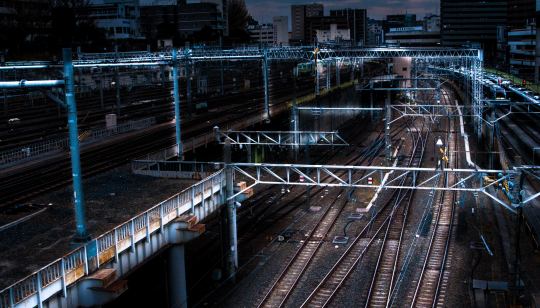
    I was intrigued to learn today that one of the ways that Japan has been trying to combat this high figure is by installing blue LED lamps on some of its railway platforms. Blue lights have been proven to have a calming effect (compared to white light). And since jumping in front of a train is unfortunately a common suicide method, blue lights were thought to maybe be a cost effective alternative to platform screen doors.

    The first blue station lights were installed on Tokyo’s Yamanote line in 2009. And according to this 2013 study – which looked at the possible impact across 71 train stations in Japan – the introduction of blue lights actually resulted in an 84% decrease in the number of suicides. Further studies also showed that there were no corresponding increases at other non-blue light stations. 

    It is an interesting example of “nudge theory”, but does it get at the root of the problem?

    Photo by Athena Lam on Unsplash

  • How Singapore fixed its housing problem

    There are a number of affordable housing plans being thrown around in Toronto right now given that we have a municipal election coming up this fall. 

    From what I have read, the plans are largely centered around surplus and/or available public land and possibly some subsidies. 

    These subsidies are very important because the money has to come from somewhere. This is often overlooked.

    In light of these debates, I thought I would share a short Bloomberg video that my friend Evgeny shared with me this morning all the way from Tokyo.

    The video is about how Singapore fixed its housing problem. If you can’t see it embedded below, click here.

    [youtube https://www.youtube.com/watch?v=2cjPgNBNeLU?rel=0&w=560&h=315]

    It strikes me as being very Singaporean.

  • Homes built in the past year

    I’m on a flight right now reading the latest issue of Monocle Magazine in a seat that barely accommodates the length of my femur. This month’s issue has their annual ranking of the top 25 cities in the world.

    Munich is first, which is not unusual for their ranking methodology. It generally scores well. Quality of life is high. Crime is low. The economy is strong. Beer gardens are fun. And you’re close to the Alps for snowboarding.

    One stat that caught my attention — and it’s not included for all of the cities — is the number of homes built in the past year. Presumably this is all housing units in the metro area — for sale, for rent, subsidized and so on.

    Here are their (clearly rounded) numbers. The order is as they appeared in the ranking, but again, not ever city included this stat.

    • Munich: 8,300
    • Tokyo: 150,000
    • Copenhagen: 5,000
    • Berlin: 11,000
    • Madrid: 1,600
    • Hamburg: 7,000
    • Melbourne: 5,100
    • Helsinki 4,400
    • Stockholm: 7,000 (18,000 in Greater Stockholm)
    • Sydney: 39,000
    • Hong Kong 17,000
    • Vancouver 22,600
    • Amsterdam 5,100
    • Kyoto 8,900
    • Dusseldorf 2,600
    • Barcelona 1,000

    Some of these numbers appear to stand out, such as the counts for Tokyo, Sydney and maybe Vancouver. But it’s hard to draw any conclusions around housing supply and housing affordability.

    Melbourne and Amsterdam allegedly have the same number of homes built over the past year, but according to Monocle the metro areas of Melbourne and Amsterdam have populations of 4.85 million and 2.4 million, respectively. This also says nothing about their growth rates.

    So which one is doing a better job of addressing housing demand? I’m not sure.

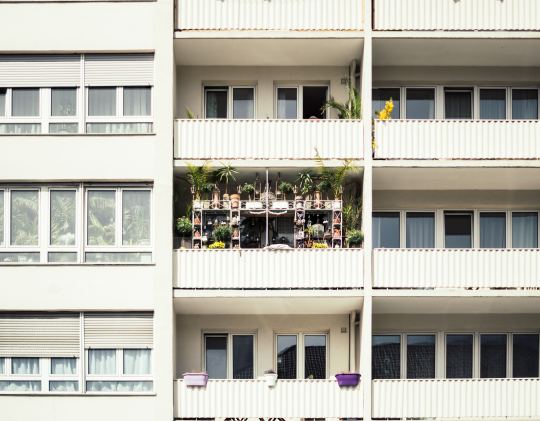
    But it was still interesting to see that Tokyo delivers somewhere around 150,000 homes a year. Tokyo is somewhat unique globally in that it’s a big city — one of the biggest — that somehow manages to gracefully balance both scale and quality of life.

    Photo by Elias Keilhauer on Unsplash

  • Firm Profile: APOLLO Architects & Associates

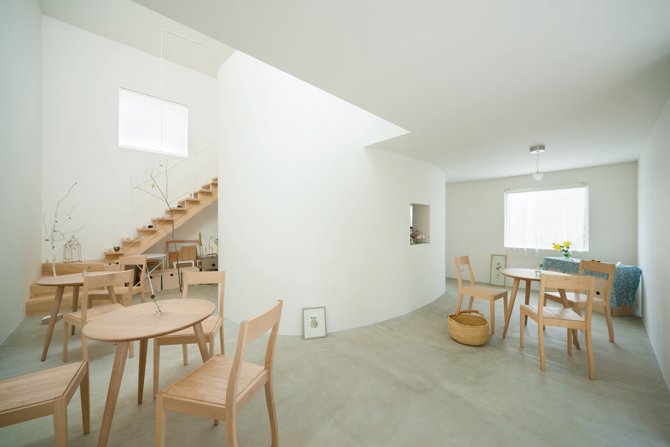
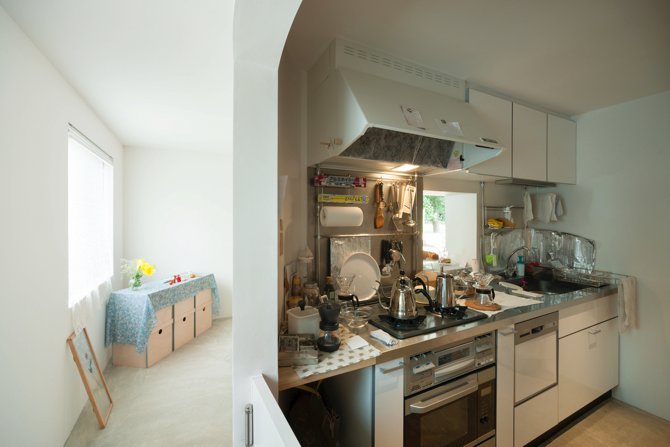
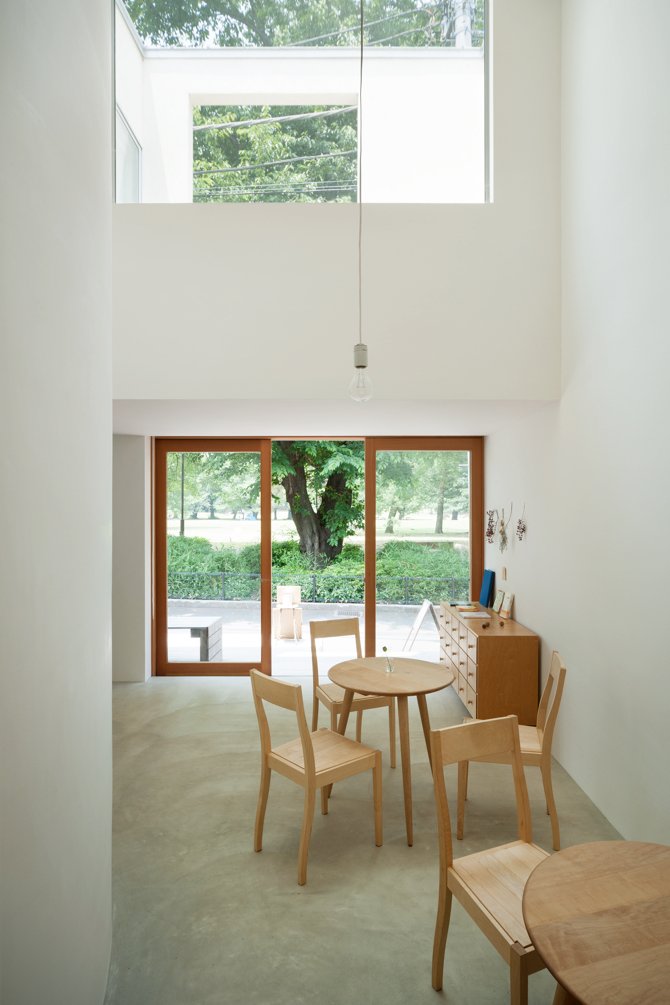
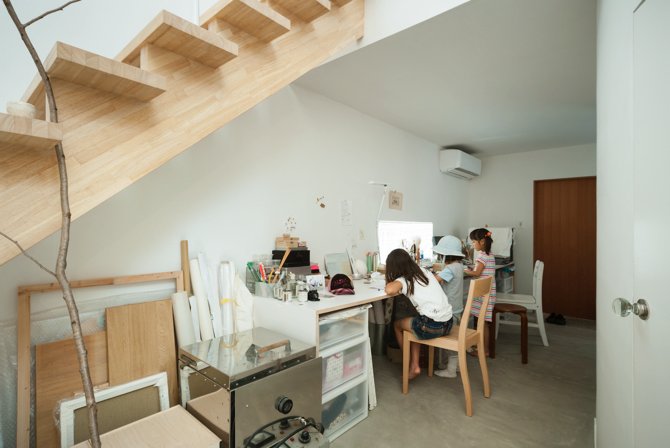
    This afternoon my friend Gabriel, of Gabriel Fain Architects, sent me the work of APOLLO Architects & Associates. They are based in Japan and South Korea. Here is a preview of some of their “private houses”:

    There is a lot that I love about these homes. 

    I love their simplicity. Look at this handrail detail. Nothing more than what is absolutely necessary.

    I love their modesty. Many of the above homes hover around 150 square meters and many of them are much much smaller. 

    I love that each project’s description starts by talking about the owners and the site conditions, signaling that each home represents an individual response tailored to both the occupants and the context.

    And I love that many of these homes have been built on unthinkably small parcels of land in dense urban settings; parcels that would be dismissed as entirely useless in other parts of the world. 

    The site area for this home is 46.53 square meters and the building’s footprint is 36.93 square meters.

    Of course the Japanese housing market is a unique place. It’s worth pointing that out

    But as I browsed through what are effectively custom single family homes, I couldn’t help but be reminded that there’s a fine line between need and want.

    Small can be very beautiful. But small is also subjective.

  • Multi-Unit Housing in Urban Cities: From 1800 to Present Day

    I just ordered a copy of Multi-Unit Housing in Urban Cities: From 1800 to Present Day by Katy Chey. I figured this was a book that we should have hanging around our office. I also like to support the Daniels Faculty.

    The book covers the following multi-unit housing typologies:

    • Back-to-backs in Birmingham
    • Tenements in London
    • Haussmann apartments in Paris
    • Tenements in New York
    • Tong lau in Hong Kong
    • Perimeter block, linear block and block-edge in Berlin
    • Perimeter block and solitaire in Amsterdam
    • Space-enclosing structures in Beijing
    • Kyosho jutaku in Tokyo
    • High-rises in Toronto

    In addition to each typology, the book analyzes the connection between the housing type and the city. Why did certain typologies flourish where they did and how have they helped to define their city?

    It reminds me of what I was trying to do with some of my recent posts about Hong Kong’s typical tower plan, albeit with far less rigor than what I am sure has been applied to this book.

    I am also curious to read what has been written about high-rises in Toronto. It goes to show you just how defining the current real estate cycle has been for this city. That’s our multi-unit housing typology.

    Image: Daniels Faculty. My multi-unit home made the book.