Daily insights for city builders, delivered every morning at 6 AM ET. I’m Brandon Donnelly — a Toronto-based real estate developer and founder of Globizen. I’ve been writing here since 2013.

Tag: tech

  • In defense of Instagrammable moments

    Surface Magazine – and more specifically the CEO of Surface Magazine – recently published this article criticizing the “trend” toward designing for Instagrammable moments.

    Here is an excerpt:

    We—and yes, this includes architects, too—have succumbed to the pressures of gaining followers, likes, and comments. High-priced, difficult-to-attain architecture degrees are now, incomprehensibly, being used to create “Instagrammable” installations for things like impromptu selfie fashion shoots and hotel lobby photo booths. The whole thing is, I must say, sad. It’s embarrassing enough that our team at Surface has received press releases from architects promoting their latest project with “Instagram-friendly interiors.” They can’t be serious.

    And here are his final words:

    If retail is dead, then its rebirth will depend on creating memorable atmospheres that don’t call for #✌💙👯🙋📷.

    I certainly appreciate the push for lasting and memorable spaces, but, at the same time, I can’t say I’m nearly as fussed about lobby selfies and the alleged timelessness of Instagram. 

    In fact, I think it would be an interesting exercise to study how social media may be impacting the way we design physical spaces.

    Maybe it is simply a fad being promulgated by “knucklehead junior marketers” or maybe 100 years from now nerdy architectural historians will look back on that quaint period of time when we designed spaces to service rudimentary 2D images shared amongst friends.

    Whatever the case may be, I think that architecture, like all art, should embody the milieu in which it was designed. 

    But often we have biases telling us that what is new is not as good as what’s existing and already accepted.
  • No is the second best answer

    image

    In addition to email, phone, and text, we live in a world where you can also easily and directly connect with people on LinkedIn, Facebook, Instagram, Twitter, Tumblr, Snapchat, Swarm, WhatsApp, Slack, as well as on many other platforms.

    As much as I love tech, I personally find this exhausting and far too distracting. So early last year I turned off all social media and messaging notifications – on both mobile and desktop – other than on the two platforms that I most commonly use. (Facebook and LinkedIn are not on this shortlist.)

    The result is that I am now missing (and consequently ignoring) a ton of direct messages. But as the saying goes, there’s no such thing as too much information, just poor filters. If you really want to reach me, I am not hard to find. You’re reading my public and daily journal right now.

    Zooming out from social media DMs, I am reminded of one of my all-time favorite Seth Godin posts where he talks about the value in saying no – which is, of course, just another kind of filter:

    No I can’t meet with you, no I can’t sell it to you at this price, no I can’t do this job justice, no I can’t come to your party, no I can’t help you. I’m sorry, but no, I can’t. Not if I want to do the very things that people value my work for.

    No is the foundation that we can build our yes on.

    And nobody should feel bad for saying no. A friend of mine likes to remind me that no is the second best answer. Yes is obviously the best, but a firm no is far better than an indecisive maybe that leaves everyone wondering what to do next.

    I should probably say no more often than I do. But I am working on it. Every now and then I remind myself that there’s huge value in saying no. Today’s post is that reminder and maybe it will be yours too.

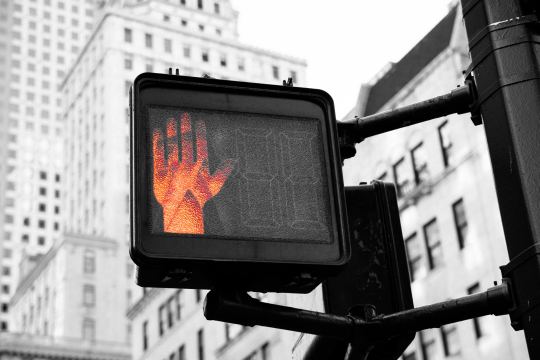
    Photo by Kai Pilger on Unsplash

  • Amazon’s cashier-less grocery store finally opens

    This morning the first Amazon Go store opened to the public in downtown Seattle. It’s more convenience store than grocery store, but the big deal is that there are no cashiers and no lines.

    You enter the store through a gate and with your phone and Amazon’s app. As you walk around the store and pick up items they get automatically added to your online cart on Amazon.

    So everything goes right into the offline bag you’ll be leaving the store with. Place an item back on the shelf and it is instantly removed from your “cart.” Walk out of the store and you’re automatically charged.

    It’s not yet clear how exactly the technology works, but Amazon says that all of this is accomplished through sophisticated computer vision (cameras), machine learning, and lots of sensors. 

    What’s really remarkable is that it doesn’t rely on every product having a special chip or sensor attached to it. I would think that was one of the biggest hurdles to overcome in order to remove the pain point of grocery store lines.

    Now that this is up and running, I can only imagine the customer behavior data that they must be collecting. Heat maps of every shelf showing conversion rates for every imaginable customer segment. (Are tall people more likely to buy products displayed higher up?) Correlating people’s food purchases to their broader Amazon shopping habits. And the list, I’m sure, goes on. 

    There is even speculation that Amazon will begin licensing this technology to other retailers, similar to what it does with Amazon Web Services. That seems like a reasonable assumption given the data play we just talked about. Assuming the tech works, it’ll get copied. So they may as well embed themselves.

    In case you were wondering, the Bureau of Labor Statistics pegs the number of cashiers in the US at about 3,555,500 (2016 number).

    And this number is projected to remain more or less flat until 2026.

    That doesn’t feel right to me.

  • The scale of Apple’s iOS economy

    This is an interesting post on the size of “the iOS economy.” 

    About 70% of customer spending on Apple’s App Store goes to developers. The remaining ~30% is kept by Apple. 

    In 2017, iOS developers earned $26.5 billion. This is up about 33% from the year prior and is higher than McDonald’s revenue in 2016. Cumulatively, Apple has paid out about $86.5 billion to developers.

    And this past new year’s day, a new record was set with $300 million in App Store purchases. According to Horace Dediu, this year should average closer to $100 million per day.

    Also, this year’s App Store revenue is expected to surpass the film industry in terms of global box office sales. And we’re only talking about Apple. This does not include Android revenues.

    Click here to check out the full post.

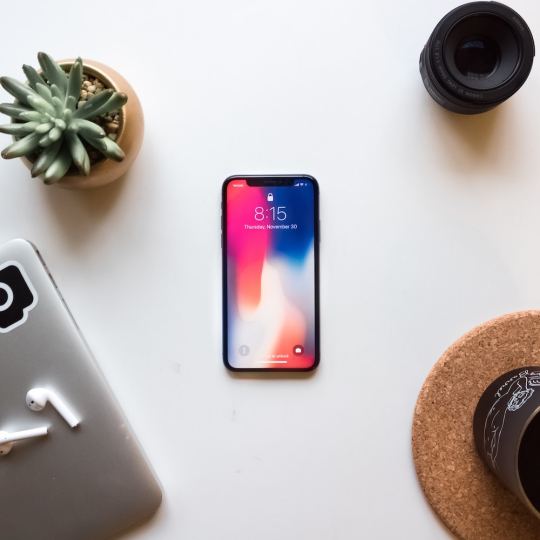
    Photo by Ben Kolde on Unsplash

  • Class action litigation filed against GoPro

    Snowboarding season is starting late for me this year. But that doesn’t mean it will be any less epic. So far this season Jackson Hole has had 221″ of snow.

    This year I’m introducing a GoPro gimbal stabilizer into the mix. Here is a good example video of the difference a stabilizer makes – buttery smooth video footage. I am a big nerd when it comes to gear and tech, and I guess many other things as well.

    But judging by GoPro’s stock right now and the cliff it fell off of at the beginning of this month, I may be in the minority when it comes to worrying about buttery smooth snowboarding videos.

    Sales over the holiday season were disappointing and they recently announced that they’re discontinuing the Karma drone. GoPro is now said to be shopping for a buyer.

    Part of the problem may be their narrow action sports use case. When I’m on a mountain, I love my GoPro gear. But when I’m not snowboarding, I struggle to find consistent value in it. We all just use our phones to capture photo and video.

    To make matters worse, class action litigation was recently filed against GoPro, and the company’s CEO and CFO. Investors are claiming that they failed to disclose, among other things, that demand for the GoPro brand had declined dramatically.

    Who do you think would be a good buyer for GoPro?

  • My even shorter Amazon HQ2 shortlist

    Amazon released its shortlist of HQ2 cities this morning. Below are the 20 metropolitan areas. They were selected from 238 bids, so this shortlist represents 8.4% of the original pool.

    • Atlanta, GA
    • Austin, TX
    • Boston, MA
    • Chicago, IL
    • Columbus, OH
    • Dallas, TX
    • Denver, CO
    • Indianapolis, IN
    • Los Angeles, CA
    • Miami, FL
    • Montgomery County, MD
    • Nashville, TN
    • Newark, NJ
    • New York City, NY
    • Northern Virginia, VA
    • Philadelphia, PA
    • Pittsburgh, PA
    • Raleigh, NC
    • Toronto, ON
    • Washington D.C.

    I saw some people on Twitter say that they were surprised to see Toronto and Miami on this list. I was not. If you remember, I publicly predicted on this blog that Toronto would be selected for Amazon HQ2.

    That said, I thought it would be fun to guess at an even shorter list from Amazon’s shortlist. I have no knowledge of Amazon’s actual selections process, but if I had to guess, here is who I would cross off the list:

    • Atlanta, GA
    • Austin, TX
    • Boston, MA
    • Chicago, IL
    • Columbus, OH
    • Dallas, TX
    • Denver, CO
    • Indianapolis, IN
    • Los Angeles, CA
    • Miami, FL
    • Montgomery County, MD
    • Nashville, TN
    • Newark, NJ
    • New York City, NY
    • Northern Virginia, VA
    • Philadelphia, PA
    • Pittsburgh, PA
    • Raleigh, NC
    • Toronto, ON
    • Washington D.C.

    That leaves us with a list that looks like this:

    1. Boston, MA
    2. Miami, FL
    3. Montgomery County, MD
    4. Newark, NJ
    5. Northern Virginia, VA
    6. Toronto, ON
    7. Washington D.C.

    So why this list? I’m probably wrong, but my reasons are as follows:

    – I think Amazon will opt for a metro area on eastern time.

    – There seems to be a predilection for areas around Washington D.C., so I left Montgomery County and Northern Virginia. 

    – As wonderful as it is, New York City feels too center ice for Amazon – at least in my view. But maybe Newark places them in the catchment area.

    – The area needs to be of a certain scale so Amazon doesn’t overpower it and they have enough human capital to draw from.

    – Miami is my sleeper bet. Most people think of it simply as a resort town, but there’s a huge percentage of foreign born residents and powerful arts/design scene.

    – Talent is number one, which is why I left Boston and Toronto and why I continue to believe in Toronto. Toronto is more dynamic than Boston.

    If I had to pick just three from the above shortlist, my bets would be, in alphabetical order: Boston, Toronto, and Washington D.C. What are yours?

  • What happened (in tech) in 2017

    I am still catching up on reading after being mostly offline last week, minus short windows where I would go online to upload these daily blog posts.

    Here is a post that Fred Wilson wrote on new year’s eve about “what happened in 2017.” It has become a tradition of his to write a “what happened” post on the last day of the year and a “what is going to happen” post on the first day of the new year. He then uses these posts to keep track of how well he does on his predictions for the year.

    His three headlines for 2017 were: (1) crypto; (2) the beginning of the end of white male dominance; and (3) the tech backlash (i.e. tech is the new Wall Street). It is worth a read. Crypto was an obvious one, but he has been writing about it – and investing in the space – for years. Of particular interest in this post is how he positions it as the basis for Internet 3.0 (the decentralized internet).

    What is also clear from the post is just how ingrained tech has become in our everyday lives and how much it reaches beyond simply the tech industry. I have been saying this for years, which is why I spend a lot of time writing about it on this blog.

  • Google and Facebook show

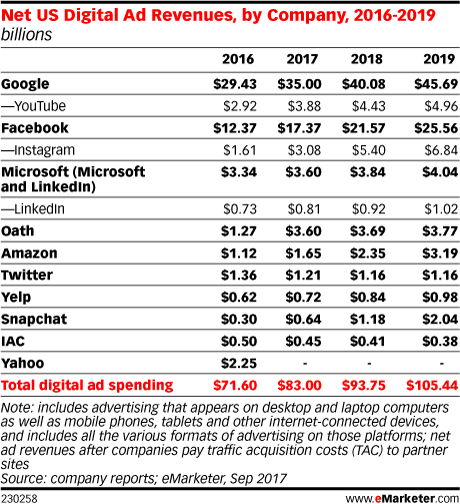
    This morning Fred Wilson posted this chart on his blog:

    image

    What is clear is that when it comes to US digital ad revenue, it’s the Google and Facebook show, followed by everyone else. Microsoft/LinkedIn is a distant third. Fred calls it “the digital advertising duopoly.” And his view is that the tech industry needs to figure out new approaches to monetization that still allow free content to be consumed. 

    I’ve said this before, but Facebook buying Instagram for $1 billion seems like a bargain when you look at a chart like this and you see what they were able to do with the platform. Instagram’s 2018 revenues are projected to be bigger than every other company on the list minus Google but including YouTube.

    Also notable are the flatlining of Twitter and the projected growth of Snapchat. 2017 was a rough year for $SNAP. But it appears that somebody believes they’ll be able to turn things around with their app redesign and reconstituted ad platform. Be that as it may, it’s still the Google and Facebook show – at least for the time being.

  • Is San Francisco losing its openness?

    Sam Altman has an interesting post up on his blog talking about what he feels is a changing cultural environment in San Francisco (which is where he is based). His argument is that heresies are good for innovation and for moving the world forward. We need people to question established norms. But for that to happen we need environments and cities that encourage it, or at the very least allow it.

    Here’s an excerpt:

    Restricting speech leads to restricting ideas and therefore restricted innovation—the most successful societies have generally been the most open ones.  Usually mainstream ideas are right and heterodox ideas are wrong, but the true and unpopular ideas are what drive the world forward.  Also, smart people tend to have an allergic reaction to the restriction of ideas, and I’m now seeing many of the smartest people I know move elsewhere.

    In San Francisco he is starting to feel that it is becoming increasingly difficult to have wacky ideas and to work on wacky startups. And for this reason, people are starting to leave the city in search of more open cultures. Openness used to be a hallmark of San Francisco. It was once the epicenter of counterculture. Has that changed?

    Here is a final excerpt:

    I don’t know who Satoshi is, but I’m skeptical that he, she, or they would have been able to come up with the idea for bitcoin immersed in the current culture of San Francisco—it would have seemed too crazy and too dangerous, with too many ways to go wrong.  If SpaceX started in San Francisco in 2017, I assume they would have been attacked for focusing on problems of the 1%, or for doing something the government had already decided was too hard.  I can picture Galileo looking up at the sky and whispering “E pur si muove” here today.

    Click here to read the full post.

  • So the tech works. What’s next?

    Below is a keynote talk by Benedict Evans about what’s going on in tech today and what may happen in the next ten years. It covers: the growth of mobile; S-curves; Google / Apple / Facebook / Amazon (who knew Amazon had so many employees?); machine learning; autonomous vehicles/impact to cities; mixed reality; crypto-currencies; and so on.

    For those of you interested in crypto-currencies – and that appears to be everyone these days – it’s interesting to hear how Evans describes their current position at the beginning of the curve: “The tech works, but what’s the use case?” This is not to say the potential isn’t huge. It is. Automated trust. Distributed and programmable money. But the future is still unclear.

    If you can’t see the video below, click here.

    [youtube https://www.youtube.com/watch?v=cVYDkPidXrU&w=560&h=315]