Daily insights for city builders, delivered every morning at 6 AM ET. I’m Brandon Donnelly — a Toronto-based real estate developer and founder of Globizen. I’ve been writing here since 2013.

Tag: snowbird

  • Utah just chose an urban gondola for Little Cottonwood Canyon

    Every now and then somebody comes forward and proposes an urban gondola. The most recent one that I have heard about here in Toronto was this one from 2016 called the “Don Valley Cable Car.” But like many gondola proposals, it sort of just disappeared. Probably because it wasn’t entirely necessary. (I just checked their website and it is now down.)

    However, there are rare instances where a gondola makes a lot of sense. Medellin, for example, has a very successful urban gondola system that my friend Alex Feldman wrote about, here on the blog, after a visit to the city back in 2014. In this case, the gondola was instrumental in connecting hill-side communities that were previously disconnected from the rest of the city.

    Another less urbanized example is the one that Utah (Salt Lake County) is planning to build in Little Cottonwood Canyon. I wrote about this project back in March when I was there and, today, the Utah Department of Transportation announced their preferred mobility option. It is called Gondola Alternative B and, as far as I can tell, it is still the longest and most expensive urban gondola ever proposed.

    Here are the details in graphic form:

    To summarize, though:

    • The system is being designed to carry 1,050 passengers per hour, with cabins departing every 2 minutes.
    • The gondola itself is expected to cost $370 million, but when you add in a new parking garage for 2,500 cars, tolling infrastructure on the existing State Route, and other improvements, the total all-in capital cost is projected to be $729 million. The route itself is somewhere around 10 miles, so let’s call it $73 million per mile.
    • At the same time, the projected operating costs are relatively low at $8 million per year, so this option actually has the lowest 30-year lifecycle cost out of all the ones that were studied. The other alternatives included widening the existing roadway, enhancing the bus service, and adding rail. There was also one other gondola option, which was presumably called Gondola Alternative A.

    If you’re wondering why this is likely a good idea, check out my post from this past winter.

  • Why Utah wants to build the world’s longest and most expensive urban gondola

    If you drive around the Cottonwood Heights neighborhood in Salt Lake City, which I have done multiple times over the last year, you will invariably see lawn signs shouting for “no gondola!” And the reason for this is that last summer, the Utah Department of Transportation (UDOT) came forward with its preferred solution to traffic congestion in Little Cottonwood Canyon: an eight-mile long gondola all the way up and into the mountains. If built, this would apparently be the longest and most expensive urban gondola in the world.

    To try and explain why this is being recommended, I’ll give the example of what happened to us when we were there last week. We drove into Little Cottonwood Canyon on Tuesday morning when it was not snowing. We left Park City around 8am, passed through the valley (Salt Lake City), and arrived at Snowbird (resort) in around 45 minutes. This is normally how long it takes. But on the way up it started snowing, and it didn’t stop all day. (Nice!) So our drive home took significantly longer and looked like this (we were going 8-10 miles per hour all the way down):

    This is what happens when it snows in the canyons. Which is why a wise bartender at one of the resorts advised us that, “on powder days, you need to leave the valley at 6AM. Because at some point, some asshole is going to think they can get up the canyon in a Tesla, and they will ruin it for everyone. It’s better to nap in your car at the resort than white knuckle for 2-3 hours.” During our drive home, we learned that he was not at all joking. This is what happens. And it is why UDOT wants to build one really long urban gondola.

    There are, however, some very good reasons why urban gondolas aren’t really that common. Portland has one. Medellín has one. And apparently both are quite successful. But other than these examples, they generally aren’t thought of as the most effective tool in the transportation arsenal:

    Gondolas are low-capacity vehicles that quickly get cramped if turned into high capacity ones. They don’t work well for multiple stops. As a result, they are a point-to-point transportation method with low capacity. They are also expensive, especially relative to how many people they might serve, making them financially unattractive options for most applications. At their best, gondolas work when traversing difficult terrain with a consistent but low ridership, which is why they’re most often deployed on ski resorts.

    But this situation is maybe a bit unique. It’s kind of urban transport, but really it’s for people to get up the canyon and shred deep powder. Here’s more on how it might work:

    The Cottonwood Canyon gondola would be a hybrid of sorts between urban transportation solution and resort-based gondola. The proposal is to build a massive 2,500-spot parking garage at the base of the canyon, about 20 miles from downtown and the airport, where people will park. They will then ride the gondola for 27 minutes to Snowbird or 37 minutes to Alta, a trip duration which has no parallel in the urban or resort gondola scene (the Snowbird tram, one of the most famous in the world, fits more than 100 people per tram but takes less than 10 minutes to ride). Even though the gondola would serve two ski resorts, it belongs more to the urban gondola concept because it is being proposed and recommended by the state’s transportation department as a solution to a recurring traffic problem.

    As a snowboarder, this sounds great. But it is, of course, complicated. Conservation groups are objecting, and some/many taxpayers don’t want to pay for a gondola that will largely benefit two ski resorts. Especially one that doesn’t permit snowboarders (I made this part up). So we’ll see. A final decision is expected by UDOT this summer. In the meantime, if you’re interested in urban gondolas, check out this recent article in Vice Magazine by Aaron Gordon (quoted above). He does a good job explaining both sides of this debate. And if you are interested in this topic, I’d be curious to hear whether you think this is a good idea or not.

  • A few observations about Salt Lake City

    Utah is beautiful. See here.

    People in SLC are really nice. Strangers greet you on the street. Motorists are also more polite and patient. I had no idea how to respond. I suspect it might have something to do with there being less traffic and, in turn, less frustration. But again, even if you ignore what happens on the road, people are nice.

    You will need a serious utility vehicle to navigate the topography of this region. Venturing into the surrounding canyons requires 4-wheel drive or chains during snowstorms. I was only there for a week and already I have visions of a classic Defender in my mind. Do they come in electric versions?

    The streets are too wide for proper enjoyment as a pedestrian. This is a challenging problem to fix, as I have mentioned before. That said — and this is going to be an unpopular opinion — the city felt void of any sort of real traffic. The distances travelled are great, but the highways actually flow freely. You also never really need to worry about parking.

    Electric scooters are popular in SLC. As is cycling — both for getting around and as a reason to wear tight-fitting bright clothes.

    SLC feels as if it is both under the radar and also rapidly emerging. My new favorite restaurant in SLC is a place called Post Office Place. We walked in without a reservation on a Friday night and they gladly took us. I couldn’t understand why the place wasn’t rammed. I mean, they have Marseille-style panisse on the menu!

    The Granary District is an area to watch. It is a former industrial area to the southwest of downtown. It is already home to breweries, food halls, and creative offices. But it needs some more time to properly fill in. We stayed at the Evo Hotel in Granary (highly recommend). The campus amenities include a rock climbing facility, an indoor skatepark, and plenty of places to work and Zoom.

    Most of the new infill housing appears to be mid-rise in scale and most of it is wood-frame construction on top of concrete.

    By my estimation (and by estimation I mean that I have a spreadsheet for this), the ski and snowboard communities surrounding SLC are some of the most accessible in North America. Land at SLC airport and you’re in the mountains in 20-30 minutes.

    Park City-Canyons is the most well-known ski destination. But if you’re a more aggressive skier — the kind that keeps your gloves together with duct tape and counts the number of ski days per season — you’ll want to head over to the Cottonwood canyons and places like Snowbird and Brighton.

    Snowbird remains one of my all-time favorite ski destinations for two reasons: the mountain itself and the brutalist architecture at the bottom of it. There’s none of that faux alpine crap over here — just exposed and unabashed concrete and wood. And who doesn’t love brutalism, right? (I haven’t been to Brighton yet but one of my local friends told me that it’s a great snowboarders mountain.)

    The Canyons Village at Park City is developing really nicely. As I understand it, it’s only about 30-40% built out at this stage. The Pendry Hotel just recently opened (announcement here) and I can tell you that the restaurants were generally busy every night of the week (summer experience). The project team did a wonderful job creating a place and a new anchor in the village.

    What did I miss in this list?

  • A truly modern ski and snowboard resort

    Today my friends and I spent the day at Snowbird.

    In terms of the skiing and snowboarding, it’s way up there for me alongside Jackson Hole.

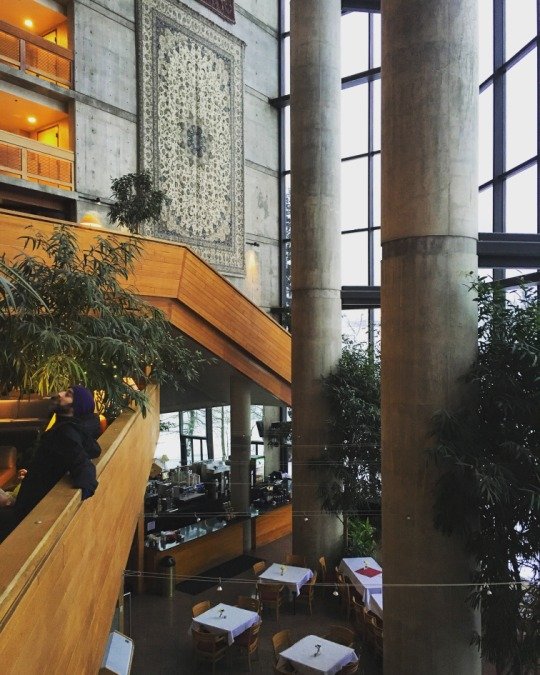
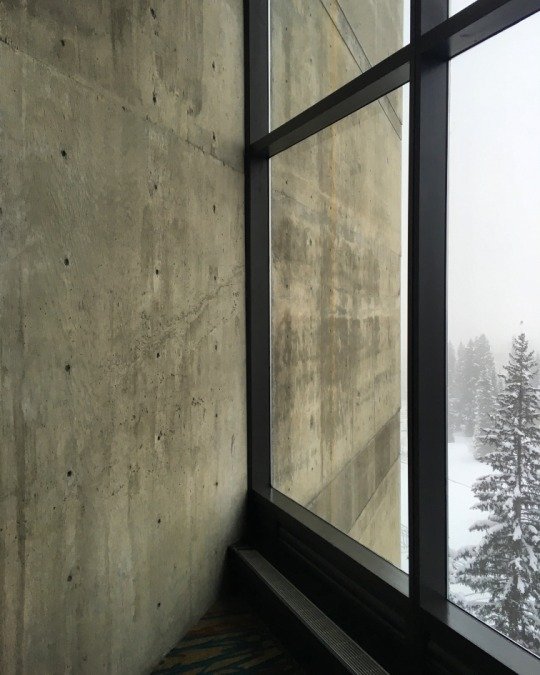
    But beyond the mountain, two things really stood out for me. Firstly, I really liked the overall brand and identity of the resort. Everything from the napkins in the cafeteria to the ski run signs were decidedly modern. Secondly, I loved the Brutalist architecture. And both of these elements combined to create what felt to me like a truly modern ski resort.

    Here are two photos that I took today:

    imageimage

    Developed in the mid-1960s by a man named Ted Johnson, the vision had always been to create a new kind of resort. In fact, Ted was insistent that they eschew the typical faux-alpine architecture that had come to characterize ski towns. 

    Here’s a brief summary of the parties involved and Ted’s design direction, via Salt Lake Modern:

    In 1965, the Snowbird Design Group was founded to create the first master plan. The original group was composed of Robert Bliss, Dean of the School of Architecture at the University of Utah, Jim Christopher, principal at Brixen & Christopher Architects, Dan Kiley, renowned landscape architect and site planning consultant based in Vermont, and architect Jack Smith. Johnson was adamant that the new resort not look “alpine lodgey” and based on the steep terrain and available land, the only choice for design would be to make it compact and dense. An aesthetic very unlike Alta, located just above Snowbird.

    For me, it’s the contrast between the rugged exposed concrete and the warm wood that I love. I left today thinking to myself that Snowbird is the most architecturally interesting ski resort I’ve ever visited.

    But as luck would have it and immediately after we left the resort, I discovered a community group called, “Save our Canyons.” And they don’t appear to be as smitten as I am with the Brutalist architecture. Here’s an excerpt from one of their articles talking about a new construction project at Snowbird:

    “Alas, more Snowbird droppings are fouling our Wasatch nest. Snowbird, already renowned for the hideous concrete bunkers at its base, has plopped another wad of architectural guano on top of Hidden Peak.”

    Of course, it is well known that Brutalist architecture isn’t often a crowd favorite. But when done well, it can be quite beautiful. Hopefully there are others who see what my friends and I saw today.