Daily insights for city builders, delivered every morning at 6 AM ET. I’m Brandon Donnelly — a Toronto-based real estate developer and founder of Globizen. I’ve been writing here since 2013.
Cities all around the world continue to create wealth and lift people out of poverty. But they also repulse people through traffic congestion, housing supply shortages, and overcrowding (which is distinct from density). Generally though, the forces of attraction have tended to outweigh the forces of repulsion, which is why the world continues to urbanize.
As Azeem points out, the first city believed to have reached 1 million inhabitants was Rome. It happened some 2,000 years ago. In the 1930s, New York then became the first city to reach 10 million inhabitants. And today, the 10 largest urban agglomerations in the world look something like this:
Outside of Japan, all of these city regions are expected to add many more people by 2030. Missing from this chart, however, are cities such as Lagos, Nigeria. Between 2018 and 2050, the UN estimates that 35% of the growth in the world’s urban population will come from just three countries: India (+416 million), China (+255 million), and Nigeria (+189 million).
I came across this stack of old Wallpaper city guides while reorganizing a few things over the weekend (because that’s what happens on the weekends now). They are pretty beat up and color faded from travel. It looks like these guides are still being published by Phaidon (along with an app), but it’s been well over a decade since I bought one.
I know the exact time period of the above books because I used to do really nerdy things like date and location stamp them when I got them. The Rome book was July 2007 and I picked it up in Dublin, while I was there working for a real estate developer before the global financial crisis. I also discovered old phone numbers and email addresses written inside of them. Usually it was a Hotmail address.
What I liked about these guides is that they were fairly condensed — good for a long weekend — and they were generally design-focused — perfect for architecture nerds like me. Their restaurant, bar, and club selections were also just fine as a jumping off point. After that it was up to you to make your own adventure.
I sent this photo to my friend Alex Feldman over the weekend — he also went without any sleep in Berlin — and he reminded me what it was like at this time. This was 2007. The first iPhone was just being released. Its map functionality was nowhere near what it is today (or didn’t exist). And I certainly didn’t have one. I had a Blackberry with a plastic wheel on the side. It was basically a giant pager.
To navigate a city at this time meant using a physical map. It also meant getting repeatedly lost and having to ask real people where to go. Alex also reminded me that I made him wander all around Berlin so that I could buy a new pair of glasses. What can I say, this was pre-laser Brandon and I needed cool architect glasses. They ended up being red.
As frustrating as this must have been at times, there’s something nice about traveling without knowing each and every step and without being able to summon an Uber at any point in time to take you exactly where you want to go. In fact, this is probably the central ingredient of all good travel: you need to allow yourself to be open to new experiences.
One of the great lessons of Anthony Bourdain was that you have to get out of your comfort zone. Cities have both highs and lows, but there’s real value and authenticity in the lows if you’re willing to engage beneath the surface. Perhaps that is the irony of old fashioned guide books in the pre-smartphone era. They were supposed to tell you exactly where to go, but they actually helped you find the opposite.
The only city that I never actually got around to visiting from the above stack is São Paulo. As you can tell, Brazil has been on my list for many years. I did make it to Rio de Janeiro a few years ago and São Paulo was supposed to be October 2020. But I’m pretty sure that trip will need to wait. Maybe I should leave my phone at home.
I would like to revisit the post that I wrote last week about the Brazil-based real estate startup, Loft. In it, I said that they are doing in Brazil what Opendoor, and others, are doing in the US. They are buying and flipping homes using algorithms. This has become known as “iBuying” and we’ve talked about it a lot here on the blog.
But we have also talked about how this is probably not the end game. These companies are seeding a marketplace, because in every new two-sided marketplace you are always faced with a chicken-and-egg problem. You can’t attract supply if you don’t have demand. And you can’t attract demand if you don’t have supply.
They [Loft] are building a transactional marketplace for the biggest asset class in the world, starting in the biggest market in Latin America, on a time horizon that makes it hard to believe it’s been less than a year since the PowerPoint. They buy homes, fix them (often according to formulaic specifications provided by active buyers), and sell them — what is now known as “i-buying,” with the vision of turning this into a transactional marketplace.
If successful, these companies will transform from just “iBuyers” to fully fledged marketplaces for the buying and selling of homes. And when that happens (I believe it’s a when), it is likely to mean dramatic changes to the commissions landscape. Today, over $100 billion in residential real estate commissions are paid out across the United States each year.
At the beginning of this year, a16z announced that they co-led a $175 million investment in the real estate company Loft. Based in São Paulo, Loft is doing in Brazil what Opendoor is doing in the US. They are bringing more liquidity to the residential real estate marketplace, and it turns out that the need for this is even greater in Brazil. That has apparently made Loft one of the fastest growing real estate companies in the world today. Here are some interesting facts about residential real estate in São Paulo. And here is a talk by Alex Rampell (general partner at a16z) on how software is going to eat the real estate world.
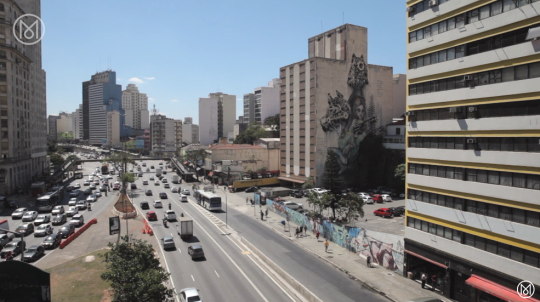
For all of us who are involved in the building of cities, it is important to remember that cities emerge and thrive as a result of economic purpose. Take, for example, Sao Paulo. Once one of the poorest of Portuguese colonies, it is today the largest city in the southern hemisphere and one of the largest and most diverse urban agglomerations in the world.
How did all of this happen? It was probably because of coffee.
Brazil is the largest producer of coffee in the world. And it has owned this title for some 150 years. The best areas to grow coffee (as a result of climate, I’m told) are in the southeast part of the country, in and around Sao Paulo and Rio de Janeiro. The inland state of Minas Gerais is the biggest producer.
But here’s the thing. Rio de Janeiro is along the coast and Sao Paulo is not, though as of 1869 it had been connected to the port of Santos by rail. This geographical feature made Sao Paulo a logical place for rail to converge as it made its way from the coffee plantations in the interior of the country to the coast, and then out to the rest of the world.
Coffee was the economic purpose. And it was facilitated by Brazil’s longstanding use of slave labor.
In 1888 that changed. Slavery was abolished, giving Brazil the dubious distinction of being the last country in the Western world to do so. The problem is that the coffee industry relied heavily on this labor. So to fill this void and keep the coffee industry happy, a deliberate effort was made to increase immigration.
From 1870 to 2010, about 2.3 million immigrants settled in the state of Sao Paulo, many from Italy and Japan. Today, about half of the city is thought to have at least some Italian ancestry. And it is generally believed that it was this significant influx of immigrants that helped the city to industrialize in the way that it did.
Big and diverse. And coffee probably had a lot to do with it.
This UN report (2018) on urbanization trends is a fascinating way to understand how our world is growing and changing. So today’s post is about some of my takeaways. If you have others, feel free to add them to the comment section below.
But first, some definitions.
The UN report considers 3 ways to measure the size of a city, all of which we have used before on this blog. The first is the “city proper.” That is the current administrative boundary of a city. The second is the “urban agglomeration” area, which is a city’s contiguous built-up area. And the third is the “metropolitan area,” which is the approximate area of economic and social interconnectedness.
Above is what these 3 boundaries might look like for Toronto (which is the example they use in their report). About the only one that isn’t debatable is the “city proper” boundary; but it really doesn’t capture the full extent of a city. Wherever possible, the UN report relies on the city’s urban agglomeration area. They also define a “megacity” as a city of over 10 million people.
The largest city in the world is currently Tokyo. However, from 2018 to 2030 it is expected to decline by almost 900,000 people. Whereas, the city in 2nd position — Delhi — is expected to add more than 10 million inhabitants during this same time period. By 2030, these are expected to be the largest cities in the world:
Most current megacities are located in what the UN refers to as the “Global South.” And 9 out of the 10 cities projected to become megacities by 2030 are located in developing countries. The one exception is London. Though all regions in the world are becoming more urban, the real population growth is happening in Asia and Africa.
Most cities — 59% of cities with 500,000 or more people — are at risk of at least one natural disaster. And 3 megacities — namely Manila, Osaka, and Tokyo — are high risk for 3 or more types of natural disaster.
Going through the report’s data charts, it’s also interesting to note that Toronto is not projected to become a megacity by 2030. However, the Toronto area already represents over 20% of Canada’s entire urban population.
In the United States, Chicago’s urban agglomeration is projected to continuing growing and does come close to megacity status by 2030. The Miami region is similarly expected to grow and is actually right on top of Toronto in terms of population. But the fastest growing regions are, of course, expected to be the city’s that can more easily sprawl (Las Vegas, Phoenix, and so on).
Bogotá, Colombia is already a megacity and is expected to add almost 2 million people by 2030. It currently represents about 26.5% of the country’s entire urban population. São Paulo remains one of the top 10 largest cities in the world and is similarly projected to add over 2 million people in the same time period, but to a much larger base.
In Europe, it’s London, Paris, and Moscow, with the latter two already in possession of megacity status.
Now quantity isn’t everything. Despite not ranking in the top 10 in terms of population, both New York and London are widely considered to be the world’s preeminent global cities. At the same time, we do know that the size of a city does create certain socioeconomic benefits. Urban agglomerations create agglomeration economies.
If you’d like to download a copy of the World’s Cities in 2018 (United Nations), click here.
Here’s a chart from Knight Frank’s 2019 Global Affordability Monitor that I think you’ll find interesting:
It compares real home price growth and real household income growth (after tax) over the last 5 years for 32 world cities. The bolded percentages represent the former and the non-bolded percentages represent the latter.
Consider the variations here.
Amsterdam saw a real home price change of 63.6%, but a household income change of only 4.4% (although the circle looks to be in the wrong spot if this number is correct).
Moscow, on the other hand, saw flat home prices (0.1%) and a 22.7% increase in household income.
Though San Francisco is the star in terms of income growth.
Sao Paulo, unfortunately, saw a dramatic decline in both home prices and incomes. It’s in the bottom left corner.
When I look at this chart, I don’t see a strong correlation between household incomes and home prices. And the proportions of the chart tell you that the y-axis is moving more than the x-axis.
But if the top number exceeds the bottom number, then you could come to the conclusion that housing affordability has gotten worse over the last 5 years.
Generally speaking, architects are the only people I know who like Brutalist architecture. In fact, architect, professor and author Witold Rybczynski once proposed the following litmus test to determine whether a building is indeed an example of Brutalism: “If people don’t hate it, it can’t be Brutalist.”
But as I have argued before, sometimes architectural styles take a bit of time to settle in and become fully appreciated. Consider how improbable it would seem to demolish a beautiful old Victorian home today. And yet Toronto, and countless other cities, did this on many occasions. Regent Park, Toronto was once Cabbagetown South.
Brutalism also took on different sensibilities around the world.
I love this recent piece in T (NY Times Style Magazine) by Michael Snyder called, “The Unexpectedly Tropical History of Brutalism.” In it he uses the term “Equatorial Brutalism” (a new one for me) and discusses the “surprising apotheosis” of Brutalism in equatorial countries (and in particular Brazil). It is a good follow-up to my recent post on Oscar Niemeyer’s work.
So here’s an excerpt from Michael’s article. If you don’t already like Brutalism, maybe it’ll get you a little bit closer.
What these buildings shared, beyond an aesthetic — though they shared that, too, with their radical porousness, their blunt geometric forms and their extensive use of raw concrete — was a commitment to architecture as an instigator of progress. But in the tropics, Brutalism reached an unexpected apotheosis: Infiltrated by lush plants and softened by humidity, buildings that looked cold and imposing against London’s constant drizzle or Boston’s icy slush were transformed into fecund, vital spaces. Concrete surfaces bloomed green with moss. The panels of glass necessary for sealing rooms against the northern chill either disappeared or receded from view, encouraging cross-ventilation while also protecting interior spaces from direct sun. The openness and transparency that the Smithsons had pronounced became a practical reality in these humid environments, both theoretically and literally: Built from inexpensive, readily available materials, equatorial Brutalism was as accessible and functional as it was symbolically potent, resulting in buildings that would define new societies growing around them like vines. Here, Brutalism wasn’t only an architecture that shaped the future or confronted the past — it was an architecture of freedom.
São Paulo, and Brazil more broadly, are near the top of my list of places that I want to visit.
Starting in the 1930s, Brazil became an early adopter of modern architecture with projects like the Ministry of Education and Health Building. It was one of the first countries outside of Europe to push modernism.
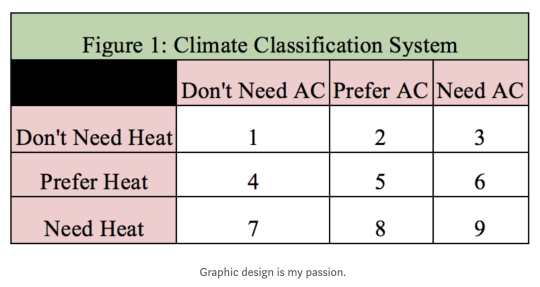
In his original study, Gray had 9 climatic categories, all of which were based on average high and low temperatures throughout the year. Category 1 was you definitely don’t need AC or heat. These cities are essentially perfect year round. And category 9 was you definitely need heat and AC. These cities are basically the worst places on earth to occupy from a climate perspective.
The climatic utopias ended up being places like Bogotá, Guatemala City, Lima, Mexico City, San Diego, São Paulo, and Sydney. The worst places were the southeastern United States, Central Asia, and northern East Asia.
But one factor that is not included in the study is humidity, which Gray rightly points out has a meaningful impact on comfort. Toronto, for example, is classified in his system as category 7. Heat needed. But AC definitely not needed. Personally, I would bump us up to category 8: AC preferred, but not needed.
Still, this is an interesting study. There are relatively few cities with so-called perfect climates. And I have always found these sorts of climates fascinating because they empower a very different kind of relationship to outside spaces.