Daily insights for city builders, delivered every morning at 6 AM ET. I’m Brandon Donnelly — a Toronto-based real estate developer and founder of Globizen. I’ve been writing here since 2013.

Tag: real estate

  • DSCRBD: Curating interesting minds through short video

    A good friend of mine recently launched a new project called DSCRBD (pronounced ‘described’). The goal is to “curate interesting minds” through short social video clips. Think Humans of New York but only creative types and only short videos.

    I think it’s a great idea. And I was fortunate enough to be one of the first test subjects. It was conducted as an interview between he and I, and we spoke for probably about 45 minutes on the sun deck of my building.

    He then took that entire interview and distilled it down to only a few seconds, extracting what he found most interesting. Perfect for social media consumption.

    image

    Click the image above for my video. What I’m talking about is my approach to architecture, and how I ended up not becoming an architect, but instead becoming a real estate developer.

    I think he’s on to something here and I would love to see it develop further. He’s using the right mediums and format to get the message out in today’s noisy social world. But there’s also no reason that it couldn’t grow to include more content or simply feed to other content, such as what he did with Architect This City.

    If you’re somebody that you think he should profile or know of someone that would be a good fit, drop him a line at hello@dscrbd.com.

  • Toronto approves 755 storeys of new development

    image

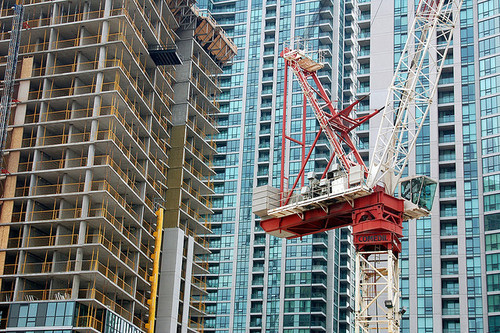
    Earlier this week, Toronto City Council approved the equivalent of 755 storeys of new development, a lot of which will end up in the downtown core. The translates into 6,887 new housing units and roughly 4 million square feet of new commercial space. The Globe and Mail called it the Manhattanization of downtown.

    If you’d like to go through the complete City Council meeting agenda, you can do that here. (I warn you though, it won’t be an exciting read.)

    One notable project that was approved is 50 Bloor Street West, which is a 71-storey mixed-use building in Yorkville adjacent to and on top of Holt Renfrew (It includes a $6 million Section 37 contribution). I mention this one because it’s impressively tall and because it’s a project that I was involved with when I was at Morguard. Watch for Yorkville in the coming years, there’s a lot in the pipeline.

    While I think this is all incredibly exciting, our chief planner, Jennifer Keesmaat, is entirely correct in pointing out that all of this highlights the desperate need for better infrastructure, the most critical of which is a relief subway line that cuts across downtown.

    But to be clear, this isn’t a question of just planning for growth. This is a question of planning for growth and making up for decades of infrastructure disinvestment. That’s the position we’re in today, which means we have a lot of hard work to do. Though I’m confident we’ll get it done.

    The other thing that this level of intensification should highlight for you is that public transit, and other forms of mobility such as biking and car sharing, have to be central to our goals. It’s simply infeasible for everybody to be driving around in a car. We’re currently demonstrating how efficient that ends up being.

    So as Toronto continues to intensify, I think we’ll quickly discover that traffic and private cars aren’t the answer or even the right question to be asking.

    Image: Flickr

  • #ATHISCITY

    One of the things that makes cities so exciting is the fact that they’re always changing. New restaurants open up. New buildings are built. Old buildings (with no heritage value, of course) are demolished. Bike lanes are added. New infill homes pop up in quiet residential neighborhoods. And the list goes on.

    For years I’ve wanted an app or some sort of product that would allow city builders to keep track of everything that’s going on in their city. In the same way that Foursquare helps you find cool restaurants around you, I would like to know about everything that’s going on, from rezoning applications to construction updates.

    One of the challenges, of course, is that I’m sure more people care about cool new restaurants than about esoteric planning applications. It’s definitely a niche market. But that doesn’t mean there isn’t a thriving group of people who do care. So I’ve decided to introduce an Architect This City hashtag on Twitter: #ATHISCITY.

    I’ll be using it for city building updates and, if some of you join in as well, I think it could become a great way to keep track all of the neat things that are happening in our city, as well as in others around the world.

  • An MBA post-mortem from a real estate guy

    image

    This post originally appeared on the Rotman Morning & Evening MBA blog

    As a recent graduate of Rotman’s Morning MBA program (and presumably because somebody over there reads Architect This City), I was asked to write a guest post for their MBA blog. More specifically, I was asked to share my thoughts on the real estate industry and on my time at Rotman. And since I haven’t really done a post like this before, I thought it would be worthwhile to do.

    But before I begin, I think it’s important to explain a bit about my background and my motivations for doing an MBA in the first place. Before going to Rotman, my first master’s degree was in architecture and real estate from the University of Pennsylvania. Basically it was a Master of Architecture combined with their MBA real estate concentration. So it included everything from real estate finance to real estate development.

    Having already done this 3-year program, there were a couple of things I wanted out of an MBA program. First of all, I wasn’t prepared to go full-time. Five years out of the workforce was simply too high of an opportunity cost for me and so part-time was all I considered. I also only applied to Rotman because I didn’t want to waste any time traveling outside of the city (or to other parts of the city). I also saw Rotman as a rising star and one of, if not the, best option in Canada.

    At the same time, I didn’t give much thought to the real estate curriculum being offered even though I fully planned to stay working in the real estate industry. I felt like I already had that sort of formal training and so, unlike some of my classmates who were looking to switch into real estate, I was after something else. I ended up majoring in Innovation & Entrepreneurship.

    What I was trying to do was really round out my skillset and fill in some of the missing holes: accounting, marketing, and so on. But even more importantly, I had drunk the kool-aid around Rotman’s focus on integrative thinking (renamed “business problem solving”) and “design thinking”. And since there will always be a part of me that thinks of itself as a designer, it seemed like the perfect program for me. 

    Because at the end of the day, it’s not that hard to learn how to create a real estate development pro forma or calculate your expected exit cap rate on some piece of real estate. That stuff is all fairly mechanical. It might seem quite mythical when you don’t know how to do it, but once you do, you quickly realize that a financial model is only as good as the assumptions you put in. As we’re told in school, garbage in = garbage out.

    The real value gets created in the assumptions. It’s created in the way you think about the market, your product, and your customers. And a lot of the time, the most value is created when you know or believe something that nobody else believes to be true. If you’re a lemming, you’re going to get lemming like returns and outcomes. So in a lot of ways, I went to Rotman to help me think better and think differently.

    In some industries, resting on your laurels can kill you in a relatively short period of time. See Blackberry. Real estate, on the other hand, is generally a bit slower moving. But that doesn’t mean that change doesn’t happen and that there isn’t room for loads of innovation.

    Just look at the Toronto of today versus the Toronto of 10-15 years ago. We’ve transformed ourselves into a city of high-rises where more and more people now want to live in the core of the city. This has brought commercial landlords back to the city center so that employers have downtown office space to attract the best human capital (see South Core) and it’s brought suburban retailers into the core to sell to these same urbanites. We’re seeing a complete reversal of the trends experienced with the last generation.

    Amidst all of this, I’ve been noticing a growing awareness and passion around cities. My blog Architect This City started as a forum for architects, planners, and developers, but it has grown into a community of thousands of people who simply love cities. They’re passionate about everything from architecture to grade-separated bike lanes (as geeky as that probably sounds).

    So I think that it’s not only the real estate market that’s changing, but also the professions involved with it. I’ve written a lot about the future of the architecture profession because I think we’re starting to see the emergence of new business models. Architects are becoming developers and developers are starting to become much more heavily involved in the shaping of the communities in which they build. Which is why in many ways, I think of my self as a city builder more than anything else.

    Finally, to make matters even more complicated, technology is starting to have a huge impact on the business. Zillow.com just bought Trulia.com for $3.5 billion to form a portal that will now serve around ¼ of the online US residential market. And Opendoor.com is getting ready to launch a product that seems entirely poised to disrupt the way homes are bought and sold in America.

    So what I’m getting at is that there’s absolutely no guarantee that the way we used to do something, is the way we’re going to continue doing it. In fact, I operate under the assumption that everything can and will be changed by somebody at some point. And if this is the way you approach things, then it should become abundantly clear to you that being able think critically is going to be one of your most important assets.

    When I was just starting at Rotman, I met for lunch with an upper year classmate who told me that one of the best things he’s taken away from the program is the ability to think about the way he thinks. That may sound silly to some, but in our uncertain world, it’s actually a great skill to have.

  • How many households in Canada live in a condominium?

    Click here to zoom in / download a copy

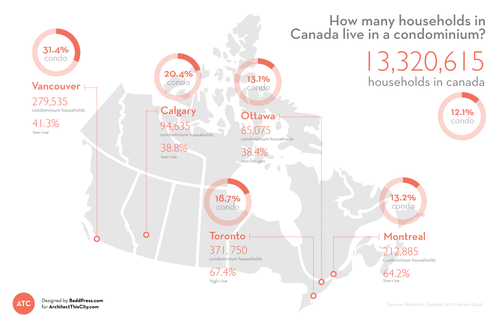
    I’ve been meaning to introduce infographics and diagrams into my posts at ATC for quite some time now, so I’m excited to introduce the first one: How many households in Canada live in a condominium? I hope to make this a regular feature.

    While a lot of the new development happening in Canada is condominium – particularly in cities like Toronto and Vancouver – the vast majority of households in Canada still live in non-condominium dwellings. Only 12.1% of households are condominium households, which could be high-rise, low-rise, row-housing, or other, according to Statistics Canada.

    Perhaps not surprisingly, the Vancouver CMA has the highest percentage of condominium households at 31.4%. I would have expected Toronto to come second, but Calgary (20.4%) actually takes that position (probably) due to an abundance of low-rise condominiums (38.8% of all condos in the CMA). However, Toronto has, by far, the highest percentage of high-rise condominium households at 67.4%. This isn’t surprising to me.

    All of the data for this infographic was taken from Statistics Canada and the total number of households in each Census Metropolitan Area (CMA) was assumed to be “occupied by usual residents.” StatsCan defines this as households that are permanent as opposed to ones that could be second homes and so on.

    I hope you like the first ATC infographic.

  • 5 ways in which you’ve got it wrong when it comes to cities

    About a month ago, a reader of ATC and friend of mine suggested that I write a post on some of the common misconceptions that people hold about cities. I immediately thought it was a good idea and so I started a draft post with some of my initial thoughts.

    Over the past couple of weeks I’ve been collecting fallacies as they came to me, waiting until I reached a nice round number like 5. Well today, I reached that number. So here are 5 misconceptions that I think people often hold about cities. If you have any others, or if you disagree, please share your thoughts in the comment section below.

    1. Adding more lanes will solve traffic congestion

    There’s a saying I read somewhere: Adding more lanes to solve traffic congestion is like loosening your belt to deal with obesity. I can’t remember where I read it, but I like it a lot because it gets at the heart of this fallacy: Trying to build our way out of traffic congestion has proven time and time again to be a losing battle. In fact, it has been shown to make traffic even worse as a result of “induced demand.” The more roads you build, the more people drive.

    2. A suburban home is always cheaper

    While it is true that the direct cost of a suburban home is usually less than one in the center of a city, many people often neglect to factor in the indirect costs of a home purchase – the biggest of which is usually transportation costs.

    As you move out from the center of a city and home prices start to fall, I like to think of it as transfer from housing costs to transportation costs. In other words, what you save on the price of your home, simply gets used to pay for a car (or perhaps a second car), as well as the additional time you’re going to spend traveling.

    So how much is an hour of your time worth? Have you ever attached a value to it and added it to the price of your home? Because if you factor in transportation costs and your time, you might find that your suburban home is actually more expensive.

    3. Opposing new development and advocating for affordable housing is a responsible way to build cities

    Community opposition is a big part of the development game. But what a lot of people don’t think about is that when you oppose or stop new development (let’s say it’s residential), the demand for that housing doesn’t go away. 

    In fact, all it does is create more pressure on the housing stock that does exist and foster an environment where the rich will starting outbidding the poor for housing. More simply, you end up creating a supply constrained market and that drives up home prices. Demand > supply. So in reality, opposing new development and, at the same time, advocating for more affordable housing is a contradiction.

    As a comparative example, let’s think about another basic human need: water.

    Imagine that you could only buy water from stores (it didn’t come out of taps). But that every time the delivery people were trying to bring more water to these stores, that there was a group of people who fought and opposed them. These opposers already had enough water for themselves and they didn’t want additional water being sold as it would bring new customers into their local grocery store and disrupt their way of life.

    This, of course, caused the price of water to rise as the rich people started offering more for the water. This in turn made it difficult for the poorer folk to afford any water at all. But instead of allowing the delivery people to simply deliver more water, it was decided that out of the water that they have, that some of it should be earmarked as “affordable water” and priced accordingly. That would guarantee that the poorer folk could still have some.

    Does that sound like a sensible solution to you?

    4. Developers don’t want to build big apartments

    Here in Toronto there’s a somewhat pervasive belief that developers don’t want to build big condo and apartment units. The thought is that small units are more profitable and so developers are doing everything they can to squeeze people into small units. But I’ve argued before that this isn’t the case. It’s far more nuanced than that.

    To illustrate this point, imagine you’re a developer debating between building two 500 square foot condo units or one 1,000 square foot condo unit. If you build the two 500 square foot condo units you’ll need 2 x kitchens, 2 x entry doors, 2 x separate color selection appointments, 2 x separate PDI appointments, and you’ll have to pay development charges on two 1 bedroom units (to name only a few things).

    On the other hand, if you build one 1,000 square foot condo unit you’re only going to need 1 of each of the items listed above and you’ll be paying development charges on only one 2 bedroom condo unit (which currently works out to be less than what you’d be paying for the two 1 bedroom units – it’s not quite double).

    Which one do you think would be cheaper to build?

    5. Technology is going to make cities irrelevant

    Lastly, during the dot com era there was a growing belief that technology and the internet were going to make cities and real estate irrelevant. Capital was flowing out of real estate and into tech companies, because that was seen as the future. Bricks and mortar were passé.

    But since then we’ve learned that it’s actually the opposite. Paradoxically, technology has made cities even more important. The returns to being smart and talented are huge in the right place. So much so that our biggest concern shouldn’t be whether cities are going to become irrelevant, but whether we’re concentrating too much wealth and talent in only a select few.

    So there you have it, 5 misconceptions about cities. I’m sure there are many others, so I’d love to hear from you in the comment section below.


  • Pools and gardens of New York

    Right now, I’m sitting on the sun deck at my friend’s cottage and looking out at the Georgian Bay. So this is going to be a short post. The New York Times just published a stunning photo series of hidden rooftop pools and gardens in New York. All of the photos were taken from a helicopter. If you’re as fascinated by cities as I am, I think you’ll really like them.

  • Pre-delivering new homes

    image

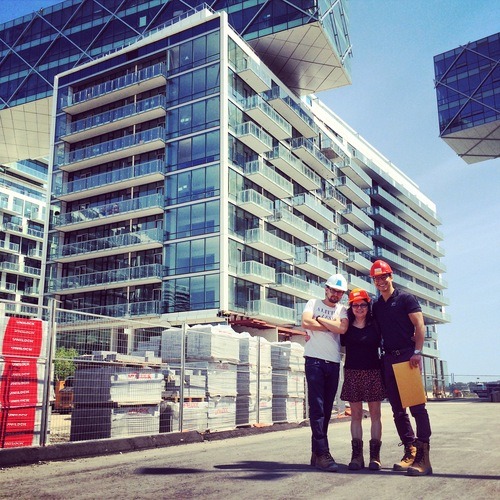
    Today was my mother’s PDI for her new condo. For those of you who aren’t in the industry, a PDI is a “pre-delivery inspection” that happens about a week or two before you take occupancy of a new home. It’s basically a time for you to identify all the mistakes that the construction team has made and have them (hopefully) correct them before you actually move in.

    But for someone like my mother who is making the move from a house that she’s lived in for decades, a PDI is actually something much more significant: It’s the first time she saw her new “home.” And a home is something much different than just a house or a condo – it has emotional significance.

    It’s going to be an adjustment for her. One of the first things she did was open up the oven to see if she could fit her Christmas turkey in it. But in the end, I have no doubt that she’s going to love her new home. As I’ve mentioned before, people often overestimate the potential risks of change. But never be afraid to give up the good to go for the great.

  • Kingston&Co at the Beaches Jazz Festival

    image

    One of the best things about Toronto in the summer is that it feels like there’s a special event happening almost every day of the week. It would be impossible to go to everything, but one of my favorites is StreetFest at the Beaches Jazz Festival, which is running this week from Thursday (July 24) to Saturday (July 26).

    If you’re from Toronto, then you’ve probably been. But if you haven’t been, StreetFest is basically a 2.5 km stretch of Queen Street East in the Beaches that gets closed to traffic so that hundreds of thousands of pedestrians can walk around and listen to jazz music on the street. It’s a lot of fun and I’m told there will be 40 bands this week.

    This year TAS has sponsored a tent and so the Kingston&Co Condominiums team will be there to talk to people about our project (and also listen to some jazz music!). I’ll be there on Thursday night (tomorrow) and so if you’re around, come by and say hello. If you can’t find us, send me a tweet.

    If you haven’t been to StreetFest before, here are two tips. It gets super busy and traffic is often bad heading in and out of the area. If you have the option of biking there (or riding on someone else’s handlebars), I would highly recommend that.

    Also, given how busy it is, I remember it being difficult to find a beer the last time I went – all the restaurants and patios were full. So you may want to consider investing in a CamelBak Pack. We wouldn’t want you getting dehydrated 🙂

    I hope to see some of you there.

    Image: JR Photography

  • Rules are made to be broken. So which one is next?

    Jevon MacDonald of StartupNorth published an interesting article today called, You are supposed to break the rules. It talks about entrepreneurship and how great companies are built by disregarding the way things are done today.

    And I think it’s for that reason that many stupid sounding ideas (think Airbnb and its initial idea of offering air mattresses) actually turn out to be great ideas. In reality, they weren’t stupid ideas. They just contravened the norm, and that made them sound stupid. It made people feel uncomfortable. And as humans, we tend to have a bias towards things that reinforce our existing view of the world.

    In any case, Jevon talks about some of the “big rules” that are being broken today. His list includes:

    But really he’s talking about Uber, Tesla, and Airbnb. They are the startups breaking those rules. However, that’s old news for most of us. What’s more interesting are the following two takeaways.

    The first is his prediction that startups are going to start running into more and more regulatory hurdles. In other words, we’re going to see more, not less, litigation. And I think he’s right. As technology starts to creep into other industries (like it has with the taxi industry, the car industry, and the hospitality industry), we’ll probably see a lot of incumbents fighting to hold on.

    The second interesting takeaway for me was that out of his list of “big rules”, the real estate industry (i.e. the MLS) is the only one that doesn’t have a formidable disruptor attached to it. Which makes me wonder: Is something like Opendoor.com inevitable?