Daily insights for city builders, delivered every morning at 6 AM ET. I’m Brandon Donnelly — a Toronto-based real estate developer and founder of Globizen. I’ve been writing here since 2013.

Tag: real estate

  • From self-storage to urban logistics

    image

    I have long told myself that if I ever needed to rent self-storage space, it would mean that I own too much stuff and that I need to get rid of some of my shit. But I recognize that there are many reasons why someone might need extra storage and I recognize that the storage market in the United States alone is something to the tune of $30 billion a year.

    Here is an interesting case study about the storage company MakeSpace, which to-date has raised almost $60 million in equity funding. Their model is likely one that you’ve heard of or used before. Instead of you yourself going to the “self-storage” facility, they do the pickup and delivery. So they call themselves a logistics business, like Amazon, except that it works in reverse. Instead of you receiving deliveries, they take your stuff from your home back out to their warehouses.

    Because of the route management software that they’ve been building over the last 4.5 years and because there’s enough density in the areas that they service, their pick-up and drop-off routes are apparently profitable. You no doubt need a certain amount of scale for that to happen, but they seem to have it. By the end of this year, they expect their reoccurring revenues to be in the $10′s of millions. That’s coming from the volumes of green boxes you see at the top of this post.

    What’s particularly relevant for this audience are the built form and real estate implications. Because their customers aren’t physically visiting their facilities, they’ve been able to locate all of their distribution centers on the outskirts of the cities in which they operate. And because of this, their physical real estate costs are said to be less than 50% of traditional self-storage firms and they believe this number will trend to around 20% as volumes continue to grow.

    All of this has me thinking about some of the other implications of the on-demand economy on cities and on real estate.

    Image via Both Sides of the Table

  • How permissive zoning created Toronto’s King-Spadina district

    image

    Over the weekend, Marcus Gee of the Globe and Mail published a terrific article about Toronto’s King-Spadina district and how “condos conquered a rundown district of the city.” (This post will argue that condos were not the catalyst, but an outcome of other changes.)

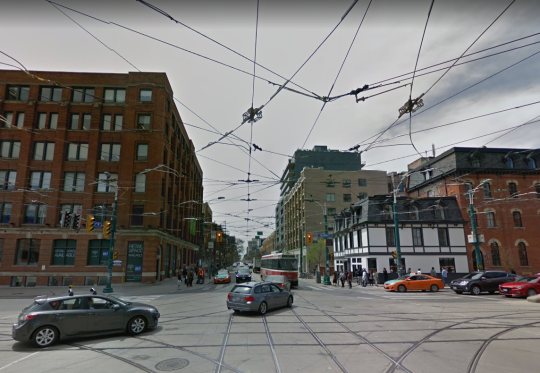
    The image at the top of this post (City of Toronto Archives) is the intersection of King Street and Spadina Avenue around the early 1900s. And here is roughly that same view from May 2016 (Google Streetview):
    image

    From this perspective, it may look like not much has changed. The buildings at the two corners are still there, although their uses have changed. The streetcars are still running, although we now have slightly newer machines. And there are overhead lines providing a canopy across the intersection.

    But as Gee points out, the reality is that in recent years King-Spadina has arguably seen more change and development than any other precinct in the city:

    No fewer than 99 projects have been built, approved or pitched since 2004. That’s one quarter of the total for the entire city and more than the count for two vast suburban districts – Scarborough and Etobicoke – combined. King-Spadina is overtaking even high-rise hubs such as Yonge and Eglinton in midtown Toronto and the Bay and Yonge corridors downtown.

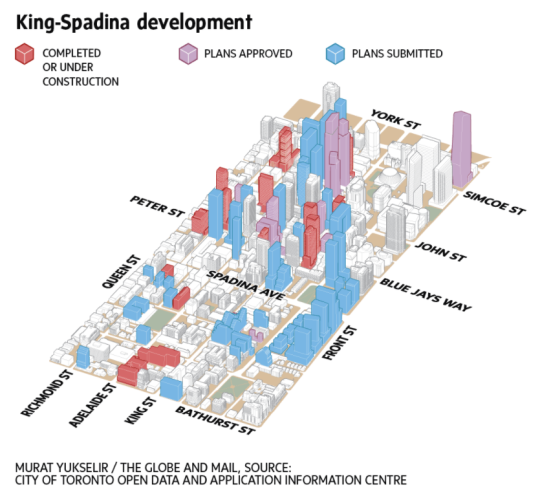
    Below is a diagram showing the built form of that change.
    image

    But as we talk about this massive change, I would argue that this didn’t happen by accident. 

    Gee starts his piece by saying that “cities have an endless ability to evolve, to rebound, to reinvent and regenerate themselves, sometimes in ways that would astonish generations past.” I would add one word: Successful cities have an endless ability to evolve.

    King-Spadina has indeed reinvented itself many times. Prior to its current iteration, it served as a manufacturing district and as the center of Toronto’s garment industry. But from the 1970s through to the early 1990s, the area fell into decline as its manufacturing base left.

    The game changing moment happened in 1996 when “The Kings” – which includes the areas around both King-Spadina and King-Parliament – were redesignated as “Regeneration Areas.” The overarching goal was to deregulate away from single-use industrial zoning and allow the area’s buildings, both old and new, to take on almost any use.

    Now all of a sudden it was possible to have light industrial, commercial, entertainment, retail, residential, and live/work uses all mixed together. And with the bones already in place, the market responded. 

    In my view, it is these earlier changes that laid the groundwork for what has become one of the most exciting neighborhoods in the country.

    However, today some are worried about whether or not this is too much of a good thing. And I am sure that many would like to blame developers for piling up in this neighborhood. Why continue to build here when there’s lots of land elsewhere?

    King-Spadina is a perfect example of what Richard Florida would call “winner-take-all urbanism.” There are powerful clustering forces at play both globally and locally in our cities. And so there are real economic reasons for why King-Spadina has seen more development than Etobicoke and Scarborough combined.

    Permissive land use policies and the right building stock may have kickstarted things, but now economies of agglomeration have taken over. Retailers, restaurants, clubs, tech companies and people, among many others, are now fighting for space in this area for the same reason that Toronto’s garment industry once felt the need to cluster here. There are tangible benefits to doing so.

    What people are effectively asking today is at what point do we start to see diseconomies of agglomeration. This is an important question and one that needs to be actively managed. 

    Without getting into any of the details, I believe that the King Street Pilot Study – which puts transit first along the King corridor – is one very appropriate answer to this question. It is a direct response to diseconomies of agglomeration, in this case traffic congestion.

    But there are important corollaries to this question that are also worth considering: How do we now create more King-Spadinas and how do we create more broad-based and inclusive urbanism in the face of these powerful clustering forces? These are questions that go well beyond King-Spadina, but there are lessons to be learned from the successes seen on the west side of downtown Toronto.

    Images via The Globe and Mail and Google Street View

  • Crazy girl down in Virginia Beach

    Last night I received an email from a 27 year old woman in Virginia Beach that really made my day. With her permission, I am sharing that email in full here on the blog, but redacting her identity. Here it is:

    Brandon,

    You don’t know me, but I just wanted to take a moment and say, thank you. I am a 27 year-old woman living and working in Virginia Beach, VA, with a Civil Engineering degree from Virginia Tech. Up until recently, I have been trying to “find myself” in my career with little success. I always had a feeling that I was “meant to do something” with my career. The problem was that I didn’t know what the hell I wanted to do. 

    Anyway, fast-forward to November 2016, and I decided to start applying to real estate development companies in the area. After all, it seemed like a pretty cool job. I began sending random emails to a few companies to see if they would hire me…. There wasn’t a real position open – I sort of just begged. Through all my random internet searches, I happened to find your blog one day… And to be honest, you have become a great inspiration to me.

    I began to love real estate development. Not just normal development, I want to make a difference. I began to feel excited and passionate about a science, a line of work, and an end vision and goal that several people share. I want to build these wonderful, competitive, beautiful, sustainable cities. I want to make our world better and more beautiful one place at a time. I was finally able to find myself through your work, so I thank you. You have helped me to commit to a career switch, be patient with my job hunt, and apply for an MBA program.

    Thank you for doing what inspires you because by doing it, you are also inspiring this crazy girl down in Virginia Beach! Keep it up.

    I wanted to share this email for two reasons.

    One, if you’re a firm in the Virginia Beach area, you should consider meeting her for a coffee. Send me an email and I’ll forward it along to her. It’s always challenging breaking into a new industry.

    And two, her email does a great job illustrating how important it is for people to feel fulfilled with their work. People want to make a difference. And some would argue that this desire is even more pronounced in the next generation coming up and entering the workforce.

    I feel lucky that I love what I do. And I know that many of my colleagues feel the same way. 

    Sometimes my friends in the development business will say to me that it’s hard not to become cynical and jaded over time. You start out wanting to change cities for the better and you think you’re doing the right thing, but then it feels like you’re getting punched in the gut every step of the way trying to do exactly that.

    That’s what life will do to you every now and then: It will punch you in the gut. If you want to accomplish great things, you have to take those. But it’s a hell of a lot easier to take them when you’re fulfilled by the work you do. 

    Trying to build better cities is pretty damn fulfilling. I am sure that many of you would agree, regardless of what side of the industry you happen to be on.

    Photo by Ravali Yan on Unsplash

  • Am I being too subtle?

    Billionaire Sam Zell has a (relatively) new book out called, Am I Being Too Subtle?: Straight Talk From a Business Rebel.

    I haven’t read it yet, but I’ve added it to my queue. I can, however, tell you that I always enjoyed listening to Zell speak candidly about business and real estate when I was in graduate school and he would come in. He was never one to mince his words.

    He’s making the rounds right now to promote this new book and he recently sat down with William D. Cohan of the New Yorker. Not surprisingly, the Chicago Tribute debacle formed a large part of the conversation – up until Zell got tired of talking about it.

    “That is the L.B.O. that drove this company into bankruptcy.” Zell said, of the Tribune experience, “I made a bet. I thought the bet was reasonable. I underwrote it appropriately. I was wrong.” He lost his entire investment.

    But this misstep did nothing to phase Zell’s contrarian approach to business and life:

    Zell attributes his wealth to a prescription articulated by any number of successful business people: zigging when everyone else is zagging. It’s a replicable formula, he says, and he has little patience for people who complain that it was somehow easier in the good old days, or that the moment for such opportunities has passed. (His earliest successes came from investing in real-estate assets that others shunned.)

    He refuses to listen when he’s told he can’t do something. “I spent my whole life listening to people explain to me that I don’t get it,” he says. “I look at the Forbes 400 list, and if I eliminate the people who inherited the money, everybody else went left when conventional wisdom said to go right. How did I do what I did? By not listening to anybody else.”

    It’s the Sam Zell way.

  • Lease vs. Life

    image

    When I was in graduate school in the U.S., I remember it being a pain having to always sign a 1 year lease. I only wanted 8 months so that I could take off during the summers. Too bad Flip wasn’t around back then.

    Flip is a startup that I just discovered, which is positioning itself as the “easiest way to sublet or get out of your lease.” It’s all about reconciling the conflict between lease and life, which don’t always match up.

    The platform is free to listers. So you don’t get charged to post a lease or to flip a lease. Renters get charged a service fee equal to 5% of one month’s rent.

    It’s interesting to think about the surge in short-term rentals and platforms such as Flip that are effectively helping to reduce lease terms by way of streamlining the “flipping” process. 

    Are millennials ushering in a new era of mobility and transience?

    One feature that I think is neat and that I would like to point out is “Bounties.” The platform allows listers to attach a bounty ($) to any listing. Users are then able to grab a unique URL that can be shared around online. If someone takes over a lease via one of your links, you get paid the bounty. Smart.

    In case you’re curious – I certainly was – here’s a ranking of all 50 U.S. states according to how friendly they are to subletters. It also summarizes how to legally sublet. On the friendly side is New York and on the less friendly side is Wyoming.

    Photo by Dan Gold on Unsplash

  • Laneway housing represents 19% of all new single family and two family dwellings in Vancouver

    One of the criticisms surrounding laneway housing is that – while great – there is no way for this housing typology to have a meaningful impact on the overall housing supply equation.

    I’ve previously written about the impact of laneway housing in Vancouver. But I wanted to revisit some of the data following this tweet by GRIDS Vancouver, where they link to a spreadsheet they prepared using the City of Vancouver’s building permit data.

    Laneway housing was first allowed in Vancouver in 2009. In that first year, only 18 building permits were issued. But since then the number has grown steadily. In 2014, they hit 377. And in 2015 (up to September), they hit 360. So for the full year, it is highly likely they will show yet another year-over-year increase.

    Since laneway houses became permissible (and up to September 2015), a total of 1,885 building permits have been issued. During this same time period, 8,239 permits were issued for other low-rise housing, up to and including duplexes. This includes single family dwellings, single family dwellings with a secondary suite, and two family dwellings.

    So for a period of almost 8 years, laneway houses have represented on average 19% of all new single family and two family dwellings in Vancouver. If you include low-rise multifamily product into this equation (more than 2 units, but 3 storeys or less ), the percentage is still slightly above 17%. This is something. It’s not everything, but it is certainly something. 

    More conventional low-rise housing still represents a greater number and, of course, most of the new supply is coming in the form of condos, apartments and other higher density housing. But 17-19% are still meaningful numbers when part of the affordability problem is clearly a lack of supply.

    It is for reasons such as these that I, along with many others, want to bring laneway housing Toronto. If you feel similarly, please consider supporting my prototype project by signing your name here.

    Update: A previous version of this post stated that 19% of all new low-rise housing in Vancouver had become laneway housing. This number was calculated on all low-rise housing up to and including duplexes, but excluded low-rise multifamily product. The above post has been updated to lend more precision to my understanding of the data.

  • The roots of the tree

    Yesterday morning I attended a CTBUH (Council on Tall Buildings and Urban Habitat) breakfast event called The Story of Marketing Tall Buildings.

    It consisted of a talk by William Murray, who is Group Director of the UK-based creative agency Wordsearch, and then a panel discussion with some of Toronto’s leading developers. (David Wex of Urban Capital was one of the panelists. Many of you will probably remember him from this BARED post.)

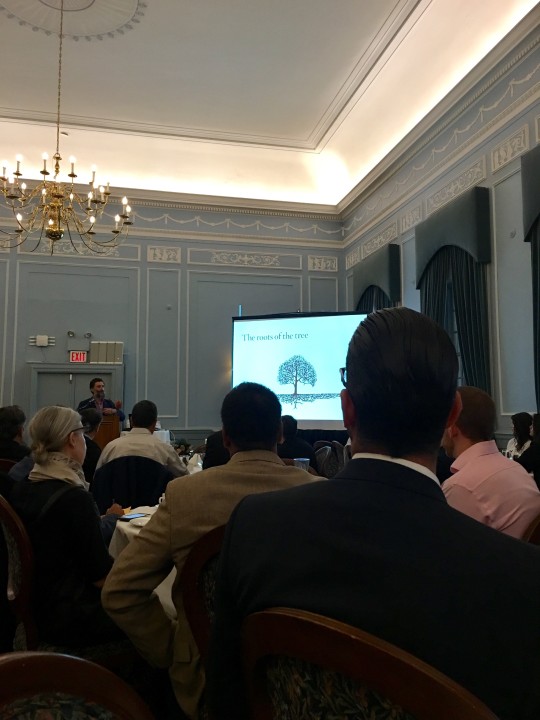
    Shown above is one of William’s slides. The title is: The roots of the tree. And I thought it was a great metaphor for what tall buildings, well really all buildings, should aspire to do.

    The tendency is to think of buildings as objects. Here, look at how beautiful this thing is. That’s obviously important, but what about its roots? What about the way in which it interfaces with its context and hopefully gives back? Is it a catalyst for positive change?

    I thought it was a good slide.

  • Toward larger condo units

    One of the things that I’ve been following over the years (and writing about a lot on this blog) is average condo/apartment sizes, specifically in Toronto. I’m interested in this topic because I think it tells you a lot about what’s going on in the market and who is buying/renting.

    Developers are often criticized here for building tiny “shoebox condos.” It wouldn’t be unusual to see a building with an average unit size somewhere in the range of 600-700 square feet.

    But it’s important to keep in mind that the pull toward smaller units is largely because of one important reason: affordability. All things being equal, I’m sure that most people would gladly take an expansive 2,000 sf apartment. But how many people can actually afford a place that large? And for those who can afford it, many seem to opt for ground-related housing instead. So for the most part, the market has said: not many.

    But I’ve suspected for awhile that it was only a matter of time before we saw unit sizes start to creep upward. And indeed today there seems to be a trend toward larger units. I can’t tell you the exact percentage increase for average unit sizes across the city, but you don’t have to look very hard to find a proposed project with average unit sizes in the range of 1,000 to 1,500 sf. I spent this morning looking many of them up and going through their data sheets. If any of you have a larger sample size, please share it in the comment section below.

    To me this feels like a maturation of the market. More of us are deciding to move up, instead of out, which is absolutely what we need to do. Affordability, perhaps more than ever, is still a concern. But the confluence of a couple of factors seem to be expanding the multi-family market in this direction.

    One, empty nesters are starting to cash out of their large houses and they still want/need space. Two, the price of low-rise housing has increased so dramatically that it’s now out of reach for many and/or it no longer feels cost competitive on a per square foot basis. Three, Toronto’s status as a global city continues to increase and this is making it more of a magnet for foreign capital. And four, central and transit-adjacent housing is incredibly desirable for a large segment of the population. Horrible traffic is probably helping this one.

    If there’s any truth to my logic, then I wonder if we won’t see a bit of a bifurcation in the market, if we aren’t already. On the one end, there will still be the pull to shrink unit sizes and maximize affordability. See micro-units. But on the other end, there will be a product segment that now acts as a substitute for low-rise housing.

    I’ve said this before, but I’ll say it again: I think more families in condos and apartments would be a positive thing for the city.

  • New Slate website

    Earlier this week, we (Slate Asset Management) launched our new website. You can check it out at slateam.com. It’s now much clearer who we are and what we do. (There’s also a neat drone video of the Toronto skyline.) 

    On the landing page and in the very first tab (What We Do) it shows our different business lines: Private Equity, Institutional Separate Accounts, and Public. This is all about matching the right capital to the right real estate.

    Lots of people in our office worked very hard on this website and so I’m excited to share it on the blog. Let me know what you think in the comment section below. You can also subscribe to the Slate newsletter here and follow on Twitter here.

  • Will Zillow’s new “Instant Offers” disrupt real estate agents?

    Last month Zillow.com launched a new feature called “Instant Offers.” Press real estate can be found here.

    It is:

    “…a way for homeowners to sell their homes quickly by providing them with offers from investors and a comparative market analysis (CMA) from a local real estate agent, as an estimate for what the home might fetch on the open market.

    Here is a bit more about how it works:

    “To participate in Zillow Instant Offers, verified homeowners interested in receiving investor offers confirm information about the home (number of bedrooms, square footage, etc.), highlight any updates and provide several photos of the home. From there, select investors who buy homes in the area can present their offers alongside the CMA from a local real estate agent. Any investor offers and the CMA will include an overview of fees associated with each option, to enable sellers to make an informed apples-to-apples comparison.”

    When I first saw the headline, I thought they were copying Opendoor. But it’s not the same model. They aren’t buying the homes, like Opendoor, they are simply working to coordinate an “instant” transaction. Still, I’m sure that Opendoor provided at least some of the impetus for this feature.

    Of course, the most interesting question with these online real estate platforms is: Will they disrupt real estate agents? Mike Delprete wrote a great post about this in the wake of Zillow’s announcement.

    But ultimately he concludes something that I have felt strongly for years:

    “So, while real estate sites are best positioned to disrupt the real estate industry by displacing agents, they’re also the least likely to do so, because agents are their biggest customers and source of revenue.”

    The irony.

    About 70% of Zillow’s revenue comes from real estate agents. So it seems unlikely that they – at least currently – will be the ones that turn the tables on agents. 

    Some real estate platforms have started diversifying their revenue streams for probably this exact reason. But who knows, it may be a new entrant, rather than an incumbent, who pulls this off.