Daily insights for city builders, delivered every morning at 6 AM ET. I’m Brandon Donnelly — a Toronto-based real estate developer and founder of Globizen. I’ve been writing here since 2013.

Tag: real estate development

  • Triple-glazed sliding doors (or walls?)

    After my post about “the great balcony debate”, there was a bit of discussion on Twitter. Ken Wilcox then responded with a video talking about the mixed-use Timmerhuis building in Rotterdam designed by OMA

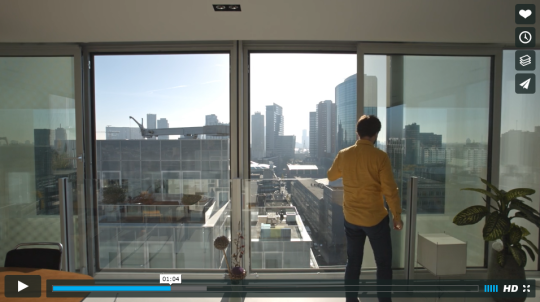
    At the 1 minute mark there’s a clip of one of the residents opening a large set of sliding doors. Here’s a screenshot of what that looks like:

    image

    I did a bit of digging on the project and found this fact sheet. The sliding doors in the residential units measure 1.8m x 2.6m. They go from floor-to-ceiling (~8′-6″). The windows are also triple-glazed! (3 glass panes + 2 air chambers.)

    I think this is a great way to open up a suite to the outdoors. It also looks like the glass balustrades sit inside, which keeps the building’s exterior envelope uninterrupted. Some of the other suites have large terraces where the building steps back.

    In case you’re wondering, the construction costs for the entire project was about €100 million and the total gross floor area (including all of the non-residential uses) is about 45,000 m² (~484,200 sf). Unit rate seems reasonable given that triple-glazing is virtually unheard of in Toronto.

    P.S. I am having some technical difficulties with Tumblr (my blogging platform) and Mailchimp (my email service provider). They both had problems and a few daily emails didn’t get sent out. Sorry about that. Hopefully it’s resolved now. If you missed the last couple of posts, you can read them online.

  • Ian Gillespie: It’s not about business

    The founder of Westbank, Ian Gillespie, recently sat down with Bloomberg TV to discuss the Toronto and Vancouver real estate markets; his Mirvish Village (Honest Ed’s) redevelopment project; affordable housing; and the markets he is and plans to be focused on (Vancouver, Toronto, Seattle, Tokyo, San Francisco).

    I like the part where he says that he’s really not that interested in business.

    If you can’t see the video below, click here.

    https://www.bloomberg.com/api/embed/iframe?id=6542ca85-017c-436e-aefc-25d8f4bb9b66

  • Thoughts on public meetings

    A few weeks ago I received a community meeting notice in the mail for a new development happening in my neighborhood. I am excited about the project and so I immediately put it in my calendar and told myself: “I’m going to this.”

    But then a work commitment came up and I skipped the event. I always do this. I put these public meetings in my calendar with every intention of going, but then as soon as something else comes up, it gets bumped. So in the end, my voice will not be heard.

    I say this not because I think my singular voice is all that important, but because I suspect I’m not alone when it comes to these community meetings. I live and breathe city building and if I struggle to attend these things, what does that mean for the average resident?

    As soon as you create friction – such as having to go somewhere, physically – you’re going to lose a large segment of people. This also means that only those who are highly motivated will attend.

    I saw this phenomenon play out in my condo building. At our first annual general meeting – when the building still had a bunch of deficiencies and the elevators were spotty – we had a sold out and lively crowd. 

    But as soon as things started humming along in year two (we are now a well-oiled machine), we then struggled to reach quorum. Why show up unless you’ve got a bone to pick, right?

    What was the last public meeting that you attended in your city?

  • Yellow trees

    I took this picture on a recent trip to New York:

    image

    I liked the mid-block building and so I wanted to document it. That’s what I do when I walk around a city.

    When I went back to research the project later on, I then discovered that it was developed by DDG Partners, which I have been following for years. I think they do terrific work and I love their vertically-integrated approach to real estate development. Two years ago I mentioned them in a post called: 3 architects operating as developers.

    If you’d like to learn more about the project, you can do that here. It’s called 345MEATPACKING. 

    What I want to talk about today is how they wrapped the building during construction. Working with the Japanese artist Yayoi Kusama – who at the time had an exhibition going on at the Whitney – they created a 120-foot reproduction of her painting Yellow Trees.

    Here’s a video of what that looked like (c. 2012). If you can’t see the video below, click here.

    [vimeo 79792779 w=640 h=360]

    What a great idea. But don’t tell anyone. I want to steal the idea for one of my projects.

  • 6 things about cities from Richard Florida

    Last week Richard Florida headlined an “Urban Lab” panel at the NYU Schack Institute of Real Estate. It was moderated by Sam Chandan, who is dean of the Shack Institute. 

    Here are 6 takeaways from the discussion, with a few of my own thoughts attached:

    1. Suburban brain drain. This is happening. Florida states that (real estate) development is the key to rebuilding the suburbs. It will challenging to reorient the suburbs away from the car (though suburbs vary greatly), but I do agree that many suburban areas need a refresh to keep them relevant against this brain drain.

    2. Decline in home ownership. Florida believes we will see owning vs. renting drop to about 50-50. This would be a pretty big change given that US homeownership is currently hovering in the low 60s and this is already at historic lows. However, the trend is towards urban and that often means more renting.

    3. New city characteristics. Access to urban amenities, cultural capital, and transportation is critical and should drive new development. Transit and rail infrastructure can “open up” new areas and combat issue #4, below.

    4. Housing affordability. Florida reiterates “the great inversion.” Poverty moving to the suburbs; cities now housing the rich. He also isn’t sure that capitalism alone will solve this problem. Gives example of Manhattan where market is focused on high-end luxury residential.

    5. Florida argues that planning and real estate knowledge need to come together to overcome some of the information-asymmetries inherent in the development industry. I’ve written about similar ideas before. I try and apply this sort of multi-disciplinary thinking to urban issues.

    6. Micro-living is not a silver bullet for “chronic poverty.” I think it serves a segment of the housing market.

  • The Toronto startup ecosystem in numbers

    When I met with all of the lovely folks from Amsterdam last week, one of the things that I mentioned about intensification is that it is almost certainly a contributing factor towards innovation, agglomeration economies, and the overall startup ecosystem here Toronto. 

    I don’t know to what extent, but I feel it happening. And there’s lots of research correlating urban density with innovation

    The continued densification of Toronto means it is constantly becoming easier to schedule that morning coffee before going into the office or to pop into that meetup after work. And those sorts of things are hugely valuable in today’s economy.

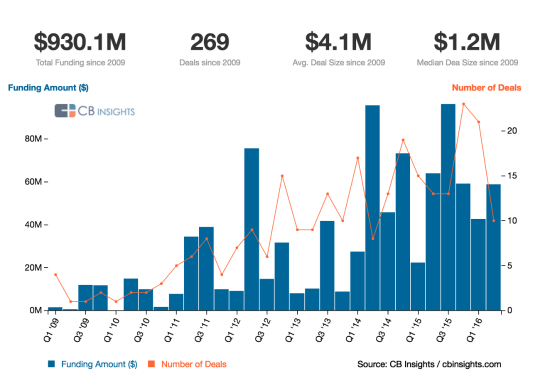
    I talked about a number of local startups in my presentation, including 500px, Wattpad and Wealthsimple. But I didn’t show any hard data. So I’d like to do that today. Below is a chart showing total venture funding (internet/software) and the number of deals (Seed to A/B/C/D) in Toronto since 2009:

    image

    It was taken from this Medium post. Supposedly this places us 12th in the world as far as startup cities go.

    Again, who knows how much of this venture growth has been helped along by intensification. After all: “Silicon Valley proper is soul-crushing suburban sprawl.” But I would bet money that it’s moving the needle in the right direction.

    Here is another relevant post by venture capitalist Albert Wenger where he talks about the great startup ecosystem that Toronto is growing. He posted it earlier today.

    All of this is important because some of these deals will spawn big companies. And those companies will the hire lots of people, as well as consume space. 

    Real estate developers like to talk about how they create jobs. And we do. But we can’t have a city of people just building buildings. People and businesses need to fill that space and that hinges on entrepreneurs who are willing to go out there and forge something new for themselves. Fortunately, Toronto seems to have a growing number of those kinds of people.

  • Building crap

    Last night I participated in an excellent dinner discussion with a group of planners, architects, city officials, and politicians from Amsterdam. They were visiting Toronto to see first hand what rapid intensification has done to this city. And I very much appreciated the invite. Thank you.

    My message was that intensification has created a far more vibrant and exciting city compared to 15 or so years ago. It’s hard to know what exactly could be correlated with intensification, but we have certainly seen an explosion of culture, innovation, and pride in this city – among many other things. (It could be all Drake’s doing.)

    However, the counter argument at the dinner table was that Toronto is letting unfettered development produce unremarkable architecture. We are simply building glass tower after glass tower. And I know that, for many of you, this will ring true. I hear it all the time, including in the comments of this blog.

    Now, I will be the first to admit that there has been a lot of shit built in this city. No argument there. Some people have no taste. But at the same time, I think it’s myopic to assume that it’s strictly because of profit-motivated developers. 

    Oftentimes the perception is that development projects are awash in cash. There’s tons of money in which to do the right thing. Developers just need to stop being so greedy and start being more creative.

    The reality is that developers operate within a market. There are real limits to what people will pay for new space. And when, for instance, land prices go through the roof (an input), municipal fees jump (cost of doing business), and approvals drag (time value of money), guess where everyone starts looking for savings? In the build.

    I say this not to justify building crap. If I had it my way, everything would be beautiful. I champion design whenever possible. I say it simply to shed light on the process. Because when we all understand the factors at a play, I believe we all become more effective at finding solutions.

  • Building the future

    Toronto-based heritage architect Michael McClelland recently published a piece in Spacing called: Misuse of Heritage Conservation Districts can deaden both past and future

    Here are a couple of snippets:

    The City of Toronto believes it has found a silver bullet to control development pressure in the downtown core through the use of a tool known as a “heritage conservation district” (HCD).

    The problem is that HCDs are meant to conserve intact and bone fide heritage areas, such as Wychwood Park, Rosedale, or Cabbagetown. They were never intended to control development downtown.

    In preparing for a HCD designation, consultants trained in history examine an area’s context and determine what is of value historically. They do not generally study the growth potential of an area, its future, nor any economic considerations, nor the larger planning policy framework, or even an evaluation of the built form generated by other market forces. HCDs look at heritage.

    The rigidity of the proposed new urban design controls introduced by the HCDs effectively prohibits innovative and thoughtful architecture in the downtown core.

    My own view is that it should be a balance between preservation and progress. We should respect our past, but at the same time look towards the future. Don’t fear change. Michael argues that HCDs achieve neither of those things. It’s worth a read.

    Speaking of the future, the CityAge conference is returning to Toronto on October 6 and 7. Their mission statement is about “building the future.” I was on one of their panels last year and it was an overall great event.

    If you’d like to attend, use the code “CITYAGE” to save $100. And if you’re a young professional (under 35) and/or a startup, email Marc Andrew to get an even sweeter deal. Tell him you’re a reader of this blog.

    Image: Photo by me taken at People’s Eatery on Spadina Avenue

  • BARED: Michael J. Cooper, Dream Unlimited Corp

    In 1974, at the age of 13, Michael J. Cooper won his first sailing championship in Toronto. And at this very young age he quickly learned that if you’re good at something, people treat you better. You become influential.

    But the real lesson came when he and colleague Jason Lester started making money by cleaning and taking care of other people’s boats. What Michael learned was that different professions seemed to attract, or perhaps cultivate, different personalities.

    The doctors weren’t the best customers. They weren’t that engaged. And they weren’t that personable. The lawyers were marginally better, but even then they weren’t like the business people. The business people were engaging and overall better customers.

    But then, in Michael’s words, you got to the real estate people. Now, they were charismatic. These are the people that Michael wanted to hang around. They were funny and interesting. They were the people that young Michael admired. His career wasn’t a direct line to real estate, but this early experience would later impact its trajectory.

    Like David Wex (previous BARED post), Michael started out as a lawyer. He went through law school and loved every minute of it. He found it conceptually fascinating. It was a different way of thinking. But after his first day working in a firm, he said to himself: “I can’t believe lawyers do this for a living!”

    He quickly discovered that his personality wasn’t a good fit for law. Michael framed it to me in the following way: “I asked myself, was I going to be an airline pilot or a baseball player? As an airline pilot, like a lawyer, my job would be trying to be 100% mistake proof. However, as a baseball player, I could make audacious plays, only be right 30% of the time, and still be considered excellent.”

    He wanted to be a baseball player.

    I would argue that most entrepreneurial minds think of themselves more as baseball players than as airline pilots. Billionaire Mark Cuban has famously said: “All that matters in business is that you get it right once. Then everyone can tell you how lucky you are.” Nobody remembers all of the failures.

    So Michael decided to go back to school, get an MBA, and figure out a way to do the most exciting thing possible – which in his words was “ABL, baby!” (Anything But Law!)

    In order to complete his MBA and not put himself deeply in debt, he decided to “pull a George Costanza.” Meaning, he continued to work full-time, but he also enrolled at the Schulich School of Business full-time. He would simply come into the office in the morning, put down a cup of steaming coffee, and then take off to class.

    Anything but law, baby.

    Upon graduating and upon reflecting on his childhood experience cleaning boats, he decided that real estate was the most exciting thing he could get into. So he drafted up a bunch of letters and sent them over cold to 10 different real estate developers. His offer was that he would work for free. (He had the ability to do this because of his clever George Costanza-like employment moves.)

    As luck would have it, he ended up getting a job with a man whose boat he had washed as a teenager. It was a man by the name of Walter Zwig. Walter Zwig had a 50-year real estate career in Toronto. He was responsible for developing over six million square feet of space in 13 downtown Toronto office towers, before eventually selling his portfolio to Olympia & York Properties; the legendary Toronto-based development company started by Paul Reichmann and his brothers. It was alleged to be largest development company in the world before going bankrupt.

    Michael started in 1986 and he would eventually work for Walter until 1993. However, Walter didn’t want him to work for free so he started him at $1,000 per month.

    Michael would cut his teeth with Zwig and eventually go on to develop office properties such as the Dynamic Tower at 1 Adelaide Street East, the Zurich Centre at 400 University Avenue, and the Atrium on Bay at 595 Bay Street. It was a small and flat organization without titles and Michael was able to learn a lot.

    But then the early 90’s hit and everyone went broke. The industry went into dormancy.

    However, as luck would again have it, he got a call from Ned Goodman who felt that there were great opportunities emerging in the market. (Ned also appeared in my BARED post about David Wex.) Michael had met Ned’s son, David, while he was looking for office space and Michael had greatly impressed him.

    Michael had brought David to five office buildings. Two of the buildings were owned by Zwig, but three of them weren’t. However, Michael knew that with the current economic climate, the buildings now had more debt on them than they were worth. So if the Goodman’s needed the space, he could simply buy the debt at a discount and take it over. Michael was showing buildings that his company didn’t own and he had a damn good reason why.

    On January 4, 1994, Michael, Ned, and Walter sat down for lunch at the Victoria Cafe in Toronto’s Financial District. The agenda was to figure out how to merge both Goodman and Zwig’s businesses into one and capitalize on what was starting to happen in the real estate market.

    However, Walter said that he was too old to join. He was out. But he encouraged Michael to seize the opportunity. In 1994, Michael Cooper became co-founder of what would eventually become Dream Unlimited Corp. He was 32 years old at the time.

    Remember, if you’re good at something people treat you better.

    Since 1994, Dream (TSX: DRM) has grown to over 1,000 employees and over $15 billion of assets under management in North America and Europe. They provide asset management services for 4 funds listed on the Toronto Stock Exchange and they have operating businesses that span master-planned communities and condominiums to renewable energy infrastructure and retail centre development.

    But what is not necessarily obvious from the above numbers is that, alongside Dream’s incredible growth, Michael also became one of “the real estate guys” that he admired so much as a young teenager cleaning boats. After sitting down with Michael to learn about how he got to where he is, I can honestly say that he is one of the funniest and most charismatic people I have ever met. He is the kind of guy you want to do business with and then go out drinking with afterwards.

    Perhaps not surprisingly, when I asked Michael if he had any advice for young aspiring developers (which I know is a lot of you readers), he quickly suggested that people study the classics. Speech. Drama. He said: learn how to connect with people.

    Because as a developer, your job is to conceptualize what the future could be and then get other people to believe in that same vision. Michael describes navigating all of the constraints on building as one of the most creative things you can do. And in a market like today where you have to be willing to pay the most for a piece of land, it’s the best ideas that win.

    That doesn’t sound like a lawyer or airline pilot to me. That sounds like a real estate guy with one hell of a batting average.

    ———————————————————

    This is the second post in my blog series called BARED (Becoming A Real Estate Developer). A big thanks to Mariane for helping to coordinate this piece. More posts to come in the following weeks. Subscribe to stay in the loop.

  • I can’t spend unrealized gains

    image

    Earlier this week the Wall Street Journal published an article claiming that the celebrated venture capital firm Andreessen Horowitz was lagging behind its elite peers in terms of returns.

    The firm then responded with a well-written blog post explaining why this accusation is off the mark. Their response was simply that you can’t measure returns on “unrealized gains.” Until there is a liquidity event – that is, the company gets sold or goes public – it’s just paper returns. And what matters is cash. 

    As the post clearly states: “I can’t spend unrealized gains.”

    But beyond just a rebuttal, the blog post is a great primer on how the venture capital industry works. We talk a lot about the tech space on this blog, so I thought some of you might find it interesting. 

    One of the reasons I like to follow the VC space is that there are many similarities to real estate development. Not only in the way that the funds are structured, but also in the way that the gestation periods are incredibly long.

    The post talks about this as a “J curve.” In the early years of a fund, the returns are negative. Money is going out the door to invest in immature and risky startups. And it’s not until the harvesting period (7+ years later) that the realized gains start getting paid out to investors (LPs).

    It’s also interesting to note that the exit timing for companies – at least according to Andreessen Horowitz – seems to be increasing (10+ years). This is yet another similarity to real estate development where it seems to be getting harder and harder to build and deliver new supply.