Daily insights for city builders, delivered every morning at 6 AM ET. I’m Brandon Donnelly — a Toronto-based real estate developer and founder of Globizen. I’ve been writing here since 2013.

Tag: parkview mountain house

  • Income migration across the US between 2020-2021

    Between 2020 and 2021, so right when the pandemic hit, Manhattan alone lost $16 billion of federally-taxable income, according to this recent study by Economic Innovation Group. And San Francisco saw net migration that reduced its federal income tax base by more than $8 billion. At the time, this represented about a 20% decline.

    Now, I don’t know to what extent this maybe changed, slowed, or reversed from 2021 to today, but the IRS tax data is pretty clear: the pandemic accelerated a longstanding trend of Americans moving out of older coastal cities toward newer, sunnier, and more sprawling cities in the sun belt and in the Mountain West region.

    Here is a map from EIG showing the difference in incomes between households moving in and moving out of each US county. A dark blue county means that the people who moved in were richer than the people who left. (For an interactive version, click through to their website.)

    To give two examples. Here is San Francisco County, which lost nearly 20,000 people with average incomes of around $240,000 per year.

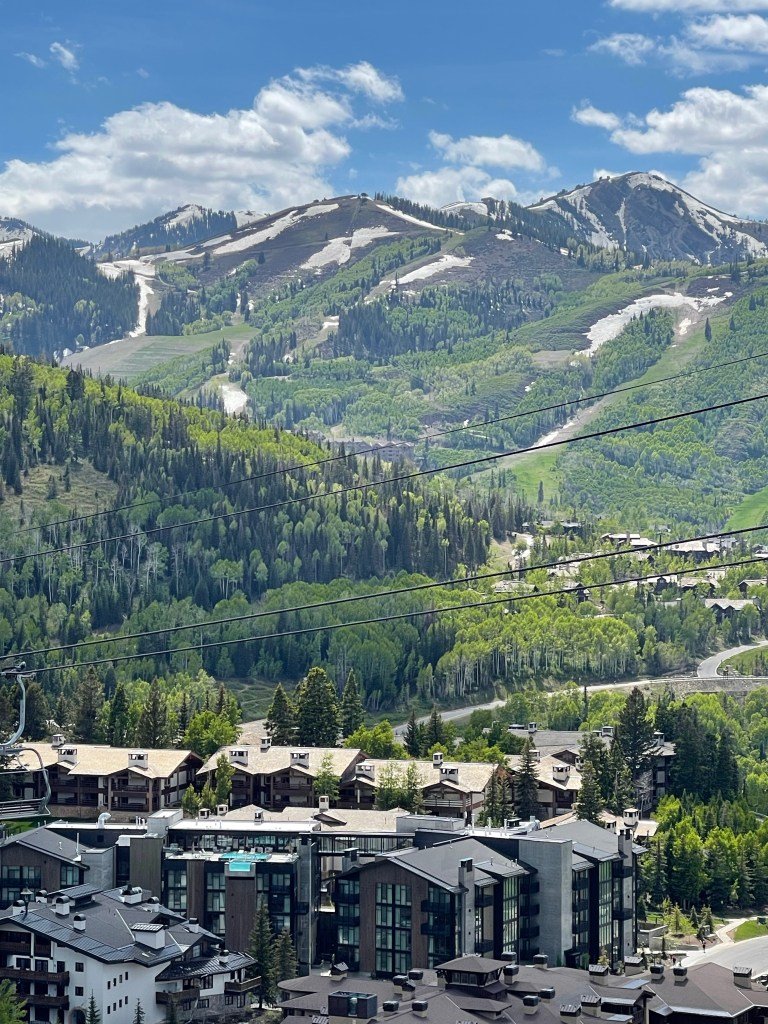
    And here is Summit County, Utah (home of Parkview Mountain House in the Mountain West region), which saw 81 new tax returns and an average newcomer income of $395,000 per year.

    This is an important reminder that people — especially people of means — vote with their feet. If they stop liking a place, they will leave, along with their incomes, to somewhere else. Indeed, in the case of this IRS data, the income flows to these growth regions seem to have been largely driven by upper-income households.

  • Footings and foundations in Park City

    We poured the concrete footings/foundations for Parkview Mountain House this week. Above is a photo of the pour. We’re about two weeks behind schedule because of delays related to site works and excavation. (We’re building into the side of a mountain.) But I’m hopeful we can make it up once we finish concrete work and move on to wood framing next month.

    For those of you who like details, here’s a section showing the footing and retaining wall on the back of the property facing the slope of the mountain:

    Our tallest retaining wall is going to be 15 feet high, which, as I understand it, is more or less the maximum we could have done here without getting into more elaborate structural solutions (such as tiebacks). So the team spent a lot of time solving a design puzzle that involved the height of this retaining wall, the maximum allowable zoning height for the site, and our choice of established grade.

    Onward. More concrete to come and then we move to wood. It’s a race to get “closed in” before the snow starts up again.

  • Vacation rentals in Park City

    We spent his morning meeting with prospective property managers for Parkview Mountain House. Here’s what we learned about the short-term rental market in Park City, Utah:

    • Property management fees generally range from 20-35% of revenue (these are turnkey solutions)
    • Airbnb is somewhere around 80% of the market here; though it does tend to skew toward slightly smaller rentals, whereas VRBO skews larger
    • Sundance Film Festival and New Year’s Eve are the two busiest times in Park City (demand greatly exceeds the available vacation rentals — 120%?)
    • Many Sundance guests tends to be people on expenses accounts: not price sensitive, but apparently very demanding
    • Winter is obviously peak demand because of snowboarding and skiing, but demand is still strong in the summer because of cycling, hiking, golfing, fishing, etc.
    • The two slowest times are spring (mud season) and fall
    • Many PMs will track booking lead times, which is the period of time between booking and check-in
    • This past winter season, demand was strong but average lead times were way down — meaning people were booking last minute and responding to snowstorms
    • During heavy snowfall seasons, like the one Utah had this past winter, you’ll likely need to budget for roof snow clearing (a few thousand for the season)
    • Heated driveways are a very good idea in the mountains
    • The most popular / most searched amenity is by far a hot tub; servicing one will run you about $125 per month

    I always find it fascinating to dig in and learn about a new industry and/or market. And that’s exactly what we did this morning.

  • Parkview Mountain House starts construction

    I am in Park City for the weekend because we just started site works for Parkview Mountain House (PMH).

    When you’re building in the mountains, there are generally two types of sites: sites that are uphill from the road and sites that are downhill from the road.

    The latter is significantly harder to build on because you have to first create access to the lot, which means bringing in soil and creating a ramp. You may also end up craning in materials.

    Thankfully, our site is on the uphill side. You bring in an excavator, dig into the mountain, and then you have a flat workable site.

    That’s what we’re doing on site right now and it’s what you’re seeing above — a big hole in the side of a mountain. And it’s pretty exciting.

    Photos: Isaac Silvera

  • 12th annual

    For those of you who are long-time readers of this blog, you might remember that I do an annual ski and snowboard trip with a group of close friends from both Canada and the US. This year should technically be the 14th annual, but we took two years off during the pandemic (though some of us did meet up to ski), and so we’re referring to this as the official 12th annual. The last one was in February 2020 in Fernie, BC, and this weekend we’re off to Park City, Utah.

    This annual trip is something that I look forward to all year. And it has really cemented my love of snowboarding and the mountains. For me, it’s this wonderful combination of outdoor activity, beautiful landscapes, unplugging, and catching up with friends that I have known, in many cases, for over 20 years. In fact, I know that this trip is the reason that a few of us decided to get together to build Parkview Mountain House (our upcoming “creative mountain retreat” in Park City).

    A big part of what we want to do with the house (when it’s hopefully ready next winter) is share our love of the mountains with others. We want others to experience what we experience when we go on these trips. At the same time, we felt like there was a huge gap in the market. Park City is a world-renowned ski and snowboard destination, and yet it still feels hard to find modern and design-focused places to stay. So we decided to create our own.

    There is, however, one small problem: my right knee. It has been bothering me for the last few years whenever I snowboard, and usually only when I snowboard, to the point where I have to get off the mountain. This obviously pisses me off. So I decided to spend the last 2 months training my tender knees with Noah Mandel. We’ll see if that did anything this weekend. But I’m so committed to the mountains that, if it helps, I’m even prepared to switch to skiing!

  • Dwelling in peace

    These “aesthetic monsters” are part of a new NFT collection that I recently bought into. They’re called Angomon (supposedly “ango” translates from Japanese into “dwelling in peace”). And they can be purchased on the Magic Eden NFT marketplace. At the time of writing this post, the floor price is about 1.15 SOL.

    The ultimate plan is for these characters to live in some sort of 3D world that will be called the Angoverse (which is an obvious play on metaverse). The team is also planning to provide NFT holders with the original 3D files for these Angomon so that owners can 3D print their own real-world figurines. Longer term, the hope is that there will be official Angomon collectible figurines available for purchase.

    All of these things are of course future plans. They could happen or they could not. These NFTs could have tremendous value or they could not. I just thought these monsters looked cool and fashionable, and so I bought a few. Right now the plan is to frame them and display them all at Parkview Mountain House.

    But it is also interesting to note how go-to-market strategies are changing in this new world of crypto and web3. Fred Wilson recently wrote about this over on his blog. In web2 (think the Facebook/Instagram era), most consumer applications started out with a tool. The network came after.

    Chris Dixon called this strategy, “come for the tool, stay for the network.” In the case of Instagram, the tool was initially photo filters. People used it to apply those filters that made every photo look brown and hipster-like. But eventually network effects took over and that became more important. There are were lots of people using it.

    In web3, everything now seems to start with some kind of asset or token. People buy in and then become invested in the project, which is interesting because they then begin to market out of self-interest. This post is not about that and is more about sharing something that I think is cool.

    Fred Wilson has proposed a new slogan for this. It is: “come for the assets, stay for the experience.” So these Angomon are now assets of mine. If the experience does eventually come, I guess I’ll stick around. Hello web3.