Daily insights for city builders, delivered every morning at 6 AM ET. I’m Brandon Donnelly — a Toronto-based real estate developer and founder of Globizen. I’ve been writing here since 2013.

Tag: parkview mountain house

  • The final push at PMH

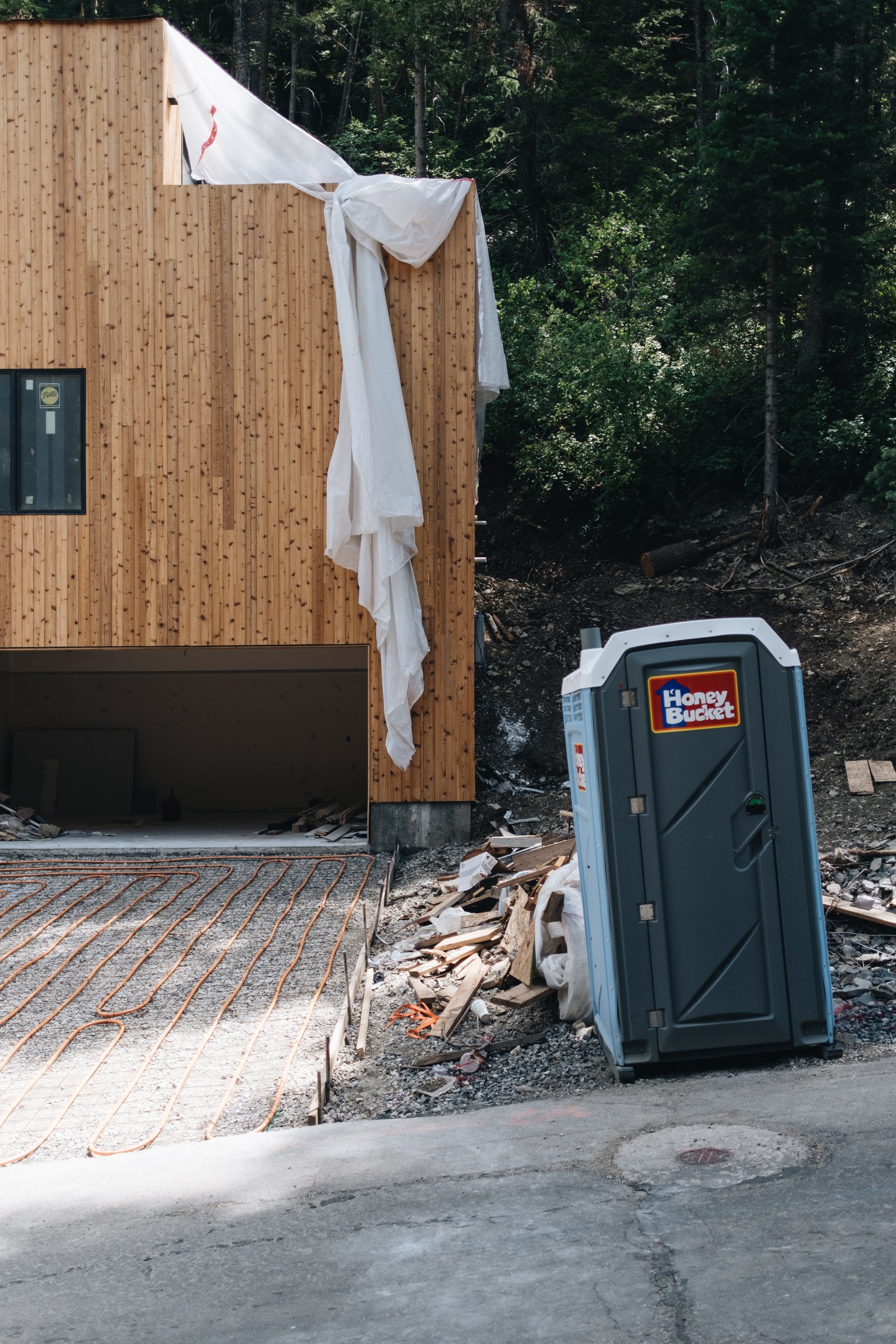
    We are into the final push at Parkview Mountain House. The radiant tubes are in for the heated driveway and walkway (essential), and the concrete is scheduled to be poured later this week. The kitchen countertops were installed this morning, and the backsplash was templated, with install scheduled for this Wednesday. The finish carpenter is back this week, and then the painters will be coming next week. The appliances and hot tub are also on standby in their respective warehouses and will be delivered to site as soon as the team is ready. As always, things are frenetic. But we’re pushing to get occupancy this month. I’m also excited to announce that we just hired an excellent management company. We’re in the midst of that onboarding process, and we’re looking forward to starting bookings sometime this fall. If you haven’t yet added yourself to our list, drop your email over here. We’ll be offering a bunch of discounted bookings on a first-come, first-served basis to the people on this list.

  • If a tree falls in a forest…

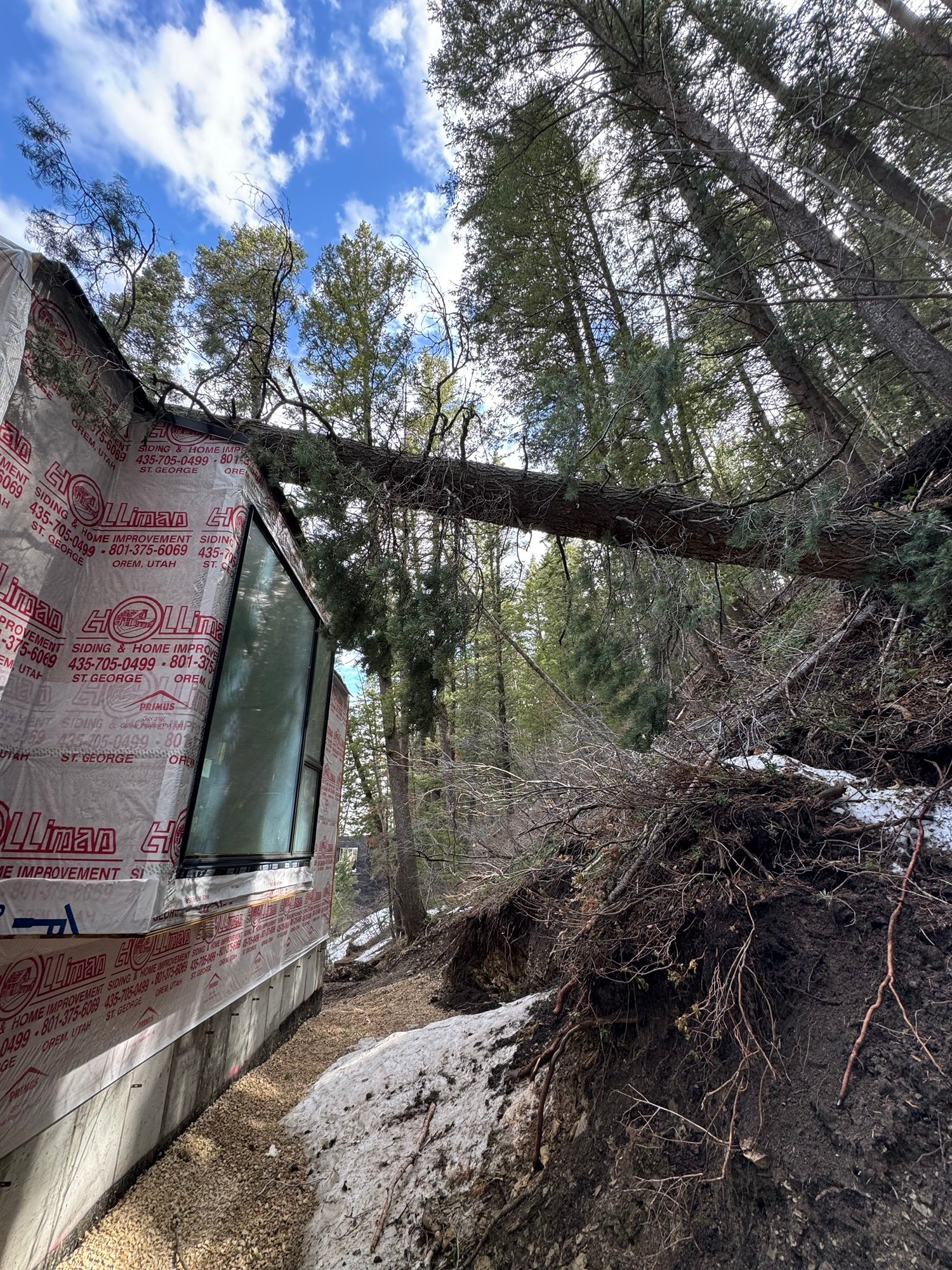
    Construction is risky. For example, last month a tree fell on top of Parkview Mountain House. The tree was located upgradient from the house and, it was so big, that pieces of it actually landed across the street on our neighbor’s property.

    Thankfully, it didn’t cause as much damage as it could have. It punctured the roof in a few places, but magically, the bay window that it landed on was perfectly fine. We also opened up the drywall around the window to inspect all of the structure.

    Needless to say, we didn’t have a line item in our budget for “trees that might fall on the house during construction.” We also didn’t have a line item to take down more trees behind the house, which is exactly what we decided to do after this happened. We called an arborist and asked them to fall anything that looked even remotely questionable. That ended up being 4 more trees.

    We were not expecting this.

    But this is why budgets have something called a construction contingency (although, we still have enough savings from some of our other contracts not to have to use it). In the end, we also learned something. If a tree falls in a forest and no one is around to hear it, the answer is — yes — it can still cost you a lot of money.

  • Last run of the season

    Shot on iPhone and a Fujifilm X-T3

  • Choosing speed over perfection

    This morning, I was on site at Parkview Mountain House reviewing construction progress and finalizing some finishes with our contractor. And during that time, he said two things to me that I was frankly happy to hear.

    The first is that we are his only client — ever — where they didn’t need to touch the construction contingency line item. (Knock on wood. We are about 2 months out from completion at this point.) And the second is that he loves working with us because we are also his most decisive client.

    Now to be fair, both of these things are easier to do when you’re not building your own home, or something else for yourself. The process becomes less emotional and more just about business.

    Even still, this is generally the aspiration with all construction projects. As an owner, you want to leave your contingency untouched. You want to minimize changes. And you want to make decisions as fast as humanly possible.

    In fact, this is a prime example of the mantra that “any decision is better than no decision.” And that’s because poor decision making is the kiss of death for construction projects. You need to keep things moving.

    I also find that decisions tend to seem more daunting in the moment. When you’re staring at 37 different shades of white paint and being asked to pick just one, it can be easy to get analysis paralysis. Is a yellow white with a subtle green undertone really the right one?

    But more often than not, when the project is done, you’re probably not going to remember the other 36 shades of white you didn’t select. Or least that’s been my experience. So choosing speed over perfection is typically your safest bet.

  • Utah needs to secure 24,000 hotel rooms to host the Winter Olympics

    Sometime before the Paris 2024 Olympics this summer, the International Olympic Committee (IOC) is expected to announce who will host the 2030 and 2034 Winter Games. Right now, the two frontrunners are thought to be the French Alps and Salt Lake City/Park City — I think respectively.

    Obviously these are two fantastic winter locations. But one of the things that the local committees need to do before they can secure the games is show the IOC that they have enough hotel rooms on hand. More specifically, they need 24,000 rooms reserved for 33 nights. This covers 17 nights during the games, 14 nights before, and 2 nights after.

    Most of these rooms, about 10,000 or so, will go to journalists.

    I didn’t fully appreciate — or I just didn’t think about it — that this was something that needed to be done 6-10 years out. Because right now there is a human running around try to lock up these rooms in advance of the decision this summer.

    According to the Salt Lake Tribune, they’re already at 85% of the requisite 24,000 rooms. Though some of these rooms have yet to be built and some of them reach into neighboring Wyoming, which apparently isn’t an atypical distance when it comes to meeting this accommodation requirement.

    For obvious reasons, I’m rooting for Utah here. I really want them to get the Winter Games.

  • How to design a mountain house in the French Alps

    This is the chalet that our group has been staying in for the last week:

    • We’ve been calling it a tree house. It is 5 levels in total. And you circulate through the house using a spiral staircase in the center of it. It’s space efficient, but there are a lot of stairs.
    • The site is downhill from the road, which, as we have talked about before, creates a more challenging build than uphill from the road.
    • You enter the chalet on the third level, which itself houses 2 bedrooms. One floor below and one floor above also have 2 bedrooms, meaning there are 6 bedrooms in total. On the lowest floor is an indoor hot tub, a shared parking garage, and a shared ski/snowboard room.
    • Every mountain house needs, at a minimum, two things: a fireplace and a hot tub. Ideally the latter is outside.

    • As is typical in the mountains, the main living space is on the top floor (level 5 in this case). You want this for the views. If you’re building into a sloping site, the lowest floors are usually somewhat constrained.
    • We did the same thing with Parkview Mountain House. But it does mean that you circulate through the more “private” spaces within the house before reaching the more “public” ones. This is the opposite of what happens in most homes.

    • The underground parking garage is accessed by way of a small parking elevator that lowers you down two floors. Initially this seemed excessive, but it is a shared elevator/garage. The chalet is semi-detached chalet, if you will, and so this was probably the only way they could get enough parking on the site. Assuming our attached neighbor is of a similar size, that’s 12 bedrooms.
    • It also creates an important pathway so that people don’t need to bring their skis and snowboards through the house.

    Every site has its challenges and that is especially the case in the mountains.

  • My first Turo experience

    I used Turo for the first time this evening. For those of you who aren’t familiar, Turo is like Airbnb, but for cars. It connects people who have cars with people who need rental cars. Here is a photo of ours at SLC:

    The pickup was perfectly seamless. I got a text from an alleged human the day before. It said that they would leave the car on the second level of the parking garage next to baggage claim. And that I would get more precise instructions — such as where the key will be — after it was parked there.

    I was also told that there would be a small charge to pay in order to exit the garage. And that the charge would obviously depend on how quickly I retrieve the car after they park it. In my case it ended up being US$10, but we also stopped for food on the way.

    Overall, I’d say the pickup experience was easier and faster than your typical rental car. The car was as advertised. And thankfully, it was also there waiting for us. The two standout features for me are probably: (1) It was cheaper and (2) you get to pick your exact car. 

    This second one is important because sometimes you need a rental car so that you can drive it into a snow-covered canyon. And when faced with this situation, it can be helpful to know exactly what you’ll be getting — right down to the type of tires.

  • Framing nearing completion at Parkview Mountain House

    The building season is short in Park City. There was still snow on our site in May and there was snow again on our site by October. You can certainly build through the winter, but it’s not ideal. It slows you down, and so the team has been racing to get “closed in” before the real winter weather arrives. (Park City Mountain Resort opens for the season on November 17.)

    Right now, it looks like we’ll be finished framing by early next week. We have our framing inspection scheduled with Summit County on Wednesday. Here’s a progress shot of level three from last week:

    This is the top floor of the house, which will house the kitchen, dining area, living room, terrace (which is where the above photo was taken from), and two bay windows. The far one is going to serve as a seat in the living room, and the closer one (on the right) is going to be a workspace area. In both cases, they’re designed to orient you towards the trees and the mountain.

    Overall, this was Mattaforma’s design strategy — to create a kind of introverted house. The windows facing the street are generally small and placed to frame very specific views of the landscape; whereas the windows facing the trees and mountain are generous. The intent was to always connect you with nature as you move throughout the house.

    Sadly, PMH won’t be available for rent this winter. But if you’d like to get on the list for next summer and winter, click here.

  • Summit County, Utah to vote on acquisition of 8,576-acre ranch

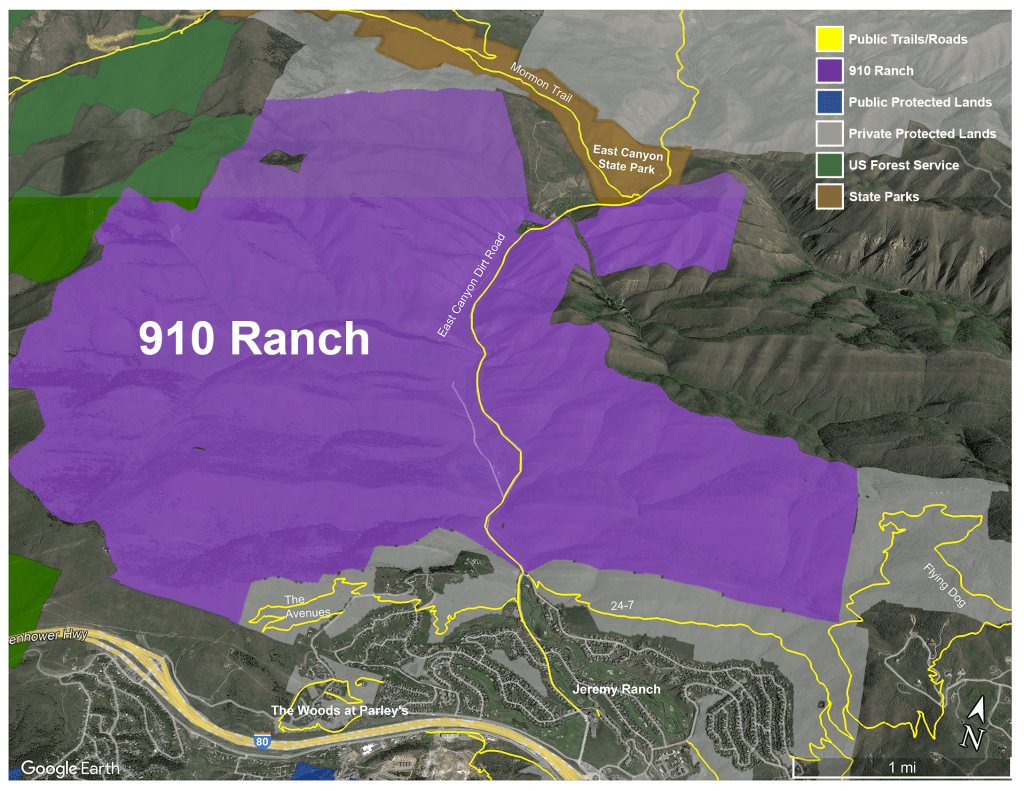
    Summit County Council is holding a special meeting this week to vote on the acquisition of an 8,576-acre property next to Jeremy Ranch and around the corner from Parkview Mountain House.

    The County Manager has recommended approval of the deal and these are the terms:

    – $55 million total purchase price (about $6,413 per acre)

    – Structured through a $15 million three-year option to purchase, with a right to extend for another year for an additional $5 million (option fees to be applied toward the purchase price)

    – During the option period, the County will have control of the property and pay $5,000 per month in rent

    Another way to look at this deal is that Summit County needs to initially come up with $15 million of equity. This is because they are getting seller financing for the remaining $40 million. (Implied loan-to-value of about 73%.)

    After 3 years, they will have to put in another $5 million, which lowers the implied LTV to about 64%. But in both cases, and assuming the $5k per month is all the County needs to pay, there’s effectively no interest on this 4-year “financing”. ($60k per year on $40-45 million.)

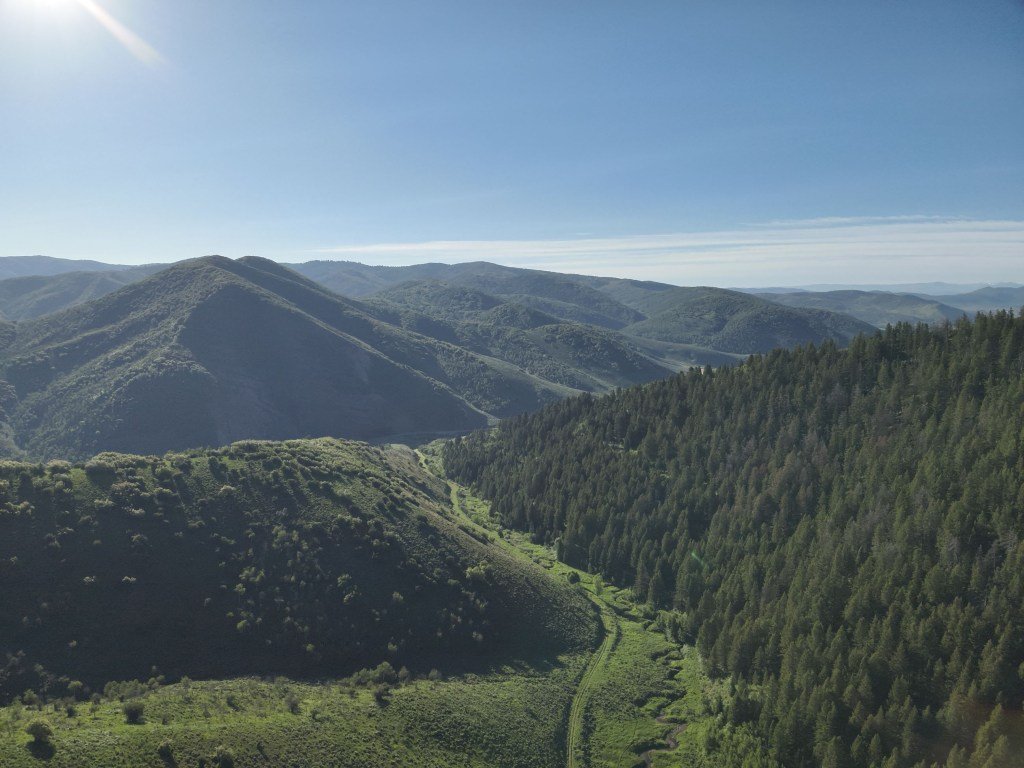
    The purchase price is also only ~$6k per acre, which should tell you that this is not development land. Its value is what you see here:

    And this is exactly what Summit County intends to do with the land: conserve it. As one of the last contiguous mountain ranches in the area that is privately owned, this sure seems like a win for the community. It’s a pretty good deal, too.

    Images: Summit County, Utah

  • Income migration across the US between 2020-2021

    Between 2020 and 2021, so right when the pandemic hit, Manhattan alone lost $16 billion of federally-taxable income, according to this recent study by Economic Innovation Group. And San Francisco saw net migration that reduced its federal income tax base by more than $8 billion. At the time, this represented about a 20% decline.

    Now, I don’t know to what extent this maybe changed, slowed, or reversed from 2021 to today, but the IRS tax data is pretty clear: the pandemic accelerated a longstanding trend of Americans moving out of older coastal cities toward newer, sunnier, and more sprawling cities in the sun belt and in the Mountain West region.

    Here is a map from EIG showing the difference in incomes between households moving in and moving out of each US county. A dark blue county means that the people who moved in were richer than the people who left. (For an interactive version, click through to their website.)

    To give two examples. Here is San Francisco County, which lost nearly 20,000 people with average incomes of around $240,000 per year.

    And here is Summit County, Utah (home of Parkview Mountain House in the Mountain West region), which saw 81 new tax returns and an average newcomer income of $395,000 per year.

    This is an important reminder that people — especially people of means — vote with their feet. If they stop liking a place, they will leave, along with their incomes, to somewhere else. Indeed, in the case of this IRS data, the income flows to these growth regions seem to have been largely driven by upper-income households.