
Daily insights for city builders, delivered every morning at 6 AM ET. I’m Brandon Donnelly — a Toronto-based real estate developer and founder of Globizen. I’ve been writing here since 2013.

Tag: new york times

  • New York City isn’t dead

    I was speaking to some friends in New York City over the weekend and they said to me, “you know what Brandon, we don’t really go out at night anymore. It doesn’t feel safe. There are homeless people everywhere and they’ve started to get very aggressive, particularly against Asians.”

    They live in a good neighborhood in Manhattan.

    I was somewhat surprised to hear this, but at the same time, I don’t think for one minute think that New York City is dead. But some do, including James Altucher. James moved to Florida because of the pandemic and recently penned an article in the NY Post called, “New York City is dead forever.”

    That didn’t sit well with Jerry Seinfeld and so this morning he published a rebuttal op-ed piece in the New York Times. It has been making the rounds online today with people responding from both sides of the fence. Richard Florida responded with this tweet thread.

    If you’re a regular reader of this blog, you’ll know where I sit on this topic. I love technology, but sitting at home all day going from Zoom meeting to Zoom meeting is not the kind of life I aspire to live. I agree with Jerry. There’s no energy. In fact, it sucks the energy right out of me.

    With that, I’ll leave you with some more words from Jerry Seinfeld:

    There’s some other stupid thing in the article about “bandwidth” and how New York is over because everybody will “remote everything.” Guess what: Everyone hates to do this. Everyone. Hates.

    You know why? There’s no energy.

    Energy, attitude and personality cannot be “remoted” through even the best fiber optic lines. That’s the whole reason many of us moved to New York in the first place.

    You ever wonder why Silicon Valley even exists? I have always wondered, why do these people all live and work in that location? They have all this insane technology; why don’t they all just spread out wherever they want to be and connect with their devices? Because it doesn’t work, that’s why.

    Real, live, inspiring human energy exists when we coagulate together in crazy places like New York City. Feeling sorry for yourself because you can’t go to the theater for a while is not the essential element of character that made New York the brilliant diamond of activity it will one day be again.

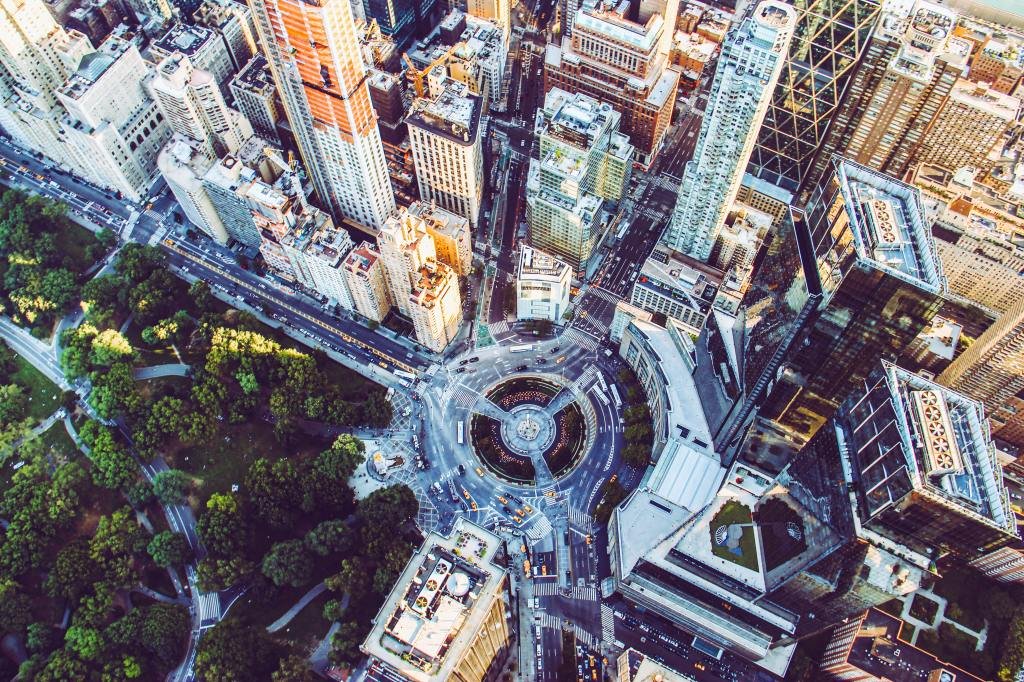
    Photo by Florian Wehde on Unsplash

  • Making giant ships

    This is an interesting New York Times photo essay about “how giant ships are built.” I wasn’t aware of some of these statistics, and maybe the same goes for you:

    • 90% of all traded goods are carried on ships
    • 90% of global shipbuilding happens in just three countries: China, South Korea, and Japan
    • There are 124 remaining and active shipyards in the United States, all supported by federal government contracts and the Jones Act, which requires that people and goods moving between American ports is done on ships that are owned/operated by US citizens and that were built domestically
    • US shipyards are believed to contribute about $37 billion in annual economic output and to support about 400,000 jobs
    • 88% of all food in the state of Hawaii is shipped in by boat — it is disproportionately reliant on trade (makes sense)
  • The America we need

    The New York Times is running an opinion series right now called, The America We Need. It is all about how the US might emerge from this crisis “with a fair, resilient society.” This piece by Carol Galante covers many of the topics that we discuss on this blog. Carol is a former city planner and nonprofit housing developer. She is now the faculty director of the Terner Center for Housing Innovation at UC, Berkeley. Here are a couple of excerpts from her article that I think will resonate with many of you:

    There are two things we know: The U.S. economy will recover. And the recovery will start in and be strongest in the same cities that were thriving before the pandemic. Economies in places like Seattle, San Francisco, New York and Boston are driven by the innovation, technology and biotech sectors, which are proving to be remarkably resilient to the impacts of Covid-19.

    We have an obligation to ignore the short-term reactionary impulse to blame density for the spread of the coronavirus and instead use this opportunity to rethink the policies that impede the construction of new housing, at more price levels, in the places where housing is most needed.

    In my subsequent career as a nonprofit housing developer working in prosperous coastal California communities, I spent far too many nights in City Council meetings working to get apartment buildings for lower-income older people and families approved. Underlying the “density” battle was almost always a battle over who has access to the opportunities of a place and who doesn’t, cloaked in arguments about neighborhood character and traffic impacts.

  • The case for being a generalist

    As many of you know, I am huge of Malcolm Gladwell. And one of the things that he has popularized through his writing is this idea that we all need to spend at least 10,000 hours specializing on someting in order to become truly exceptional at it. The Beatles did this because of all the time they spent playing music. Bill Gates did this because he was fortunate enough to have access to a computer at an early age. And Tiger Woods did this because his father gave him clubs as a toddler and got him to start practicing the game of golf. But is this truly the rule or the exception?

    In this recent TEDx Talk by David Epstein (embedded above), he argues that we’re actually ignoring one of the less intuitive but more common journeys. For every Tiger Woods, there are many Roger Federers. For every success story that hyperspecialized at an early age, there are countless examples of dilettantes who dabbled — and perhaps struggled — across different fields, only to find their true passion later in life. And so while it may seem like they’re not making progress, or even falling behind in the short term, this may not be the case in the long term.

    All of this reminded me of a post I wrote early last year about finding meaning in life and business. In it, I cited an article from New York Times Magazine recounting the outcomes of Harvard Business School graduates — some of which went on to be happy and wildly successful, and some of which ended up miserable after school. The takeaway here was that non-linear paths, experimentation, and a bit of struggle along the way, is nothing to be ashamed about. In fact, it may be exactly what is needed in order to prepare for today’s increasingly complex and wicked world.

  • What’s next for cities? Probably more of the same.

    I am surprised, although maybe I shouldn’t be, by how quickly many seem to be allegedly turning their back on cities. According to the New York Times, cities were “losing their allure” well before this pandemic, and this might just be the tipping point. The underlying argument: Density is bad. We should probably all move somewhere bucolic, where the cost of housing is less and work isn’t so stressful. Zoom only when necessary.

    But as the chief economist for Indeed, Jed Kolko, rightly points out in the article, how people behave (and think) during a global pandemic is probably not a great indicator for how they will want to live their lives when this is all over. It’s also not clear that urban density is really the contributor of spread. Hyper-dense cities such as Seoul and Hong Kong have been performing relatively well. (Joe Cortright has some thoughts on this.)

    Once we get to the other side, we will see the data and we will get a better understanding of this current situation. And then in hindsight, we will find ways to rationalize the outcomes to ourselves. In the interim, I’m not about to bet against cities. Here’s how Paul Romer, professor at New York University, put it in this recent interview in City Journal:

    “I think the underlying economic reality is that there is tremendous economic value in interacting with people and sharing ideas. There’s still a lot to be gained from interaction in close physical proximity because such interaction is a large part of how we establish trust. So I think that, for the rest of my life, cities are going to continue to be where the action is.”

    Photo by bady qb on Unsplash

  • How Europe is reopening

    Just over a month ago, as North America was beginning its lockdown, the Europeans were the ones showing us how to stay sane in quarantine through balcony orchestras and viral internet videos. Now we’re looking to them for how best to reopen the economy and minimize the number of fits and starts.

    • This morning Spain recorded its lowest daily death rate from the coronavirus. It is beginning to prepare for a phased relaxation of its lockdown rules. Things will not return to normal overnight. [Financial Times]
    • Spain allowed construction activity and manufacturing to resume this past week. As a reminder, Spain’s strict lockdown started on March 14. [New York Times]
    • Bookstores are open in Venice, but that’s about it. Customers have to enter one at a time, or schedule an appointment. Hotels, restaurants, and cafes remain shuttered. It is believed that at least 1/6th of all Italian restaurants and bars will not survive. Reopening is not happening uniformly across Italy’s 20 regions. [Wall Street Journal]
    • Last week, Denmark became the first country in the Western world to reopen elementary schools. The desks are far apart and teaching outside is being maximized, but some/many are concerned that this is too soon. Are we prioritizing the economy (i.e. free up the parents) over the health of our children? [New York Times]
    • The Czech Republic currently has one of the lowest number of cases on the continent. But hardware stores and bike shops are some of the only nonessential businesses that are allowed to be open. The Easter weekend saw an over 60% increase in year-over-year sales. Biking is something to do right now. [Wall Street Journal]
    • On Monday, the lockdown will be further relaxed by the Czech government. Weddings of up to 10 people will start to be allowed. Gyms are expected to open on May 11, but their change rooms will remain closed. (I’m surprised by this one.) Malls, hotels, and indoor restaurants aren’t expected to reopen until June 8 at the earliest. Should the number of new daily cases exceed 400 going forward, the government has said it will reimpose a lockdown. [Wall Street Journal]
    • The UK is not yet considering a relaxation of its lockdown. As of Sunday, the situation remains “deeply worrying.” The UK currently has the 5th highest national death toll. [Globe and Mail]
    • On April 13, Emmanuel Macron announced that France would begin a phased reopening of its economy — schools and some businesses — starting on May 11. This is a unique approach. He gave a firm date, well into the future. What if this doesn’t make sense when the time comes? Clearly the government felt that the psychological benefits of a firm date outweighed the potential risks. Minimize uncertainty during an uncertain time. [Le Monde]
    • Lots of discussion around the porosity of borders. Logically, there’s a view that unless there’s a common strategy, it’s better to keep borders closed. But what are the economic implications of doing that? [New York Times]

    Photo by Grant Lemons on Unsplash

  • Leveraging mobile phone data during a pandemic

    Smartphone user data is hugely valuable at a time like this. Which is why governments all over the world from Israel to South Korea are using aggregated telecom data to try and track how their citizens are moving during this pandemic.

    Some are calling this a violation of digital rights. I don’t know enough to comment on that specifically, but I do know that the value to society as a whole is clear. It strikes me that if we knew (1) who was infected (you know this by doing widespread testing), (2) where people have been, and (3) where people are today, we would be in a much better position to contain the spread.

    To that end, Singapore’s Ministry of Health has been publicizing a surprising amount of information regarding its cases. And that data has been in turn made into interactive maps. You can see who is infected, where they live and work, which hospital they were admitted to, and so on. Is this an overshare? Or is this price of collective health and security?

    The New York Times has similarly gone and visualized the movement of people and the virus using data from major telecoms, Baidu, and other sources; though in this case it is more of a retrospective view of what went wrong as opposed to a proactive management tool. The argument they make is that Wuhan’s lockdown was too little, too late.

    According to the NY Times, 175,000 people left Wuhan on January 1st alone. Throughout the month of January, outbound travel from Wuhan accelerated as many started to fear a lockdown. About 7 million people left in January. Where they travelled to can be found here. Would it be too draconian to use this kind of mobile phone data to see who is obeying a lockdown and who is not?

    Images: New York Times

  • Learning from Steve Falk

    Building new housing — in the places that really need it — is exceedingly difficult. This recent New York Times article by Conor Dougherty is a good example of that. It tells the story of a man named Steve Falk.

    Steve was previously city manager for Lafayette, California (a suburb of San Francisco), but he eventually grew frustrated by his inability to affect positive change, and actually build things. He ended up resigning.

    Below is a quote from the article. Steve is talking about housing affordability and supply.

    “I’m not sure individual cities, left to their own devices, are going to solve this,” he told me once. “They don’t have the incentive to do so, because local voters are always going to protect their own interests instead of looking out for people who don’t live there yet.”

    Steve is right in this assertion. I think it was Charlie Munger who once said, “Show me an incentive and I’ll show you an outcome.”

    I don’t know the specifics of the proposed 315 unit apartment building in Lafayette (perhaps it was ugly), but the article claims it was an as-of-right proposal close to a BART station (transit).

    How does that turn into 0 units and numerous lawsuits, while we all continue to debate housing affordability? Something is broken.

  • Making federal buildings beautiful again

    Here is an interesting topic for debate.

    This week the NY Times reported that a non-profit group called the National Civic Art Society has drafted an executive order that would make classical architecture the default style for all federal buildings in the United States. The draft order is naturally titled: “Making Federal Buildings Beautiful Again.”

    Here is an excerpt from the New York Times:

    “For too long architectural elites and bureaucrats have derided the idea of beauty, blatantly ignored public opinions on style, and have quietly spent taxpayer money constructing ugly, expensive, and inefficient buildings,” Marion Smith, the group’s chairman, wrote in a text message. “This executive order gives voice to the 99 percent — the ordinary American people who do not like what our government has been building.”

    As you can imagine, this proposed order isn’t sitting well with many architects (the real kind who, presumably, hold licenses). Thom Mayne of Morphosis put it well with this quote:

    “We are a society that is linked to openness of thought, to looking forward with optimism and confidence at a world that is always in the process of becoming. Architecture’s obligation is to maintain this forward thinking stance.”

    I think there are many people who would tell you that they prefer classical architecture to modern architecture. And that’s totally fine. I don’t know how many is many, but I am fairly certain it is not 99% of all Americans. (It would be interesting to know the approximate taste split.)

    My strong view is that I don’t see the need to mandate a particular architectural style. Let architecture respond to the world around us. Let urban context guide. Like Mayne, I am also drawn to the future, as opposed to the past — though I certainly appreciate history.

    What is your view?

    As a side note, classical architecture was used pretty much exclusively for federal buildings up until the 1930s. Architecture school taught me that it was initially chosen because it was seen to embody the ideals of the American democracy.

    Photo by Caleb Perez on Unsplash

  • How old do you have to be to live downtown?

    The North American rule of thumb is that young people — specifically people in their 20s — are the most likely to to live in an urban neighborhood. After that it’s all down hill and, broadly speaking, the percentages decline. But at some point, much later in life, the data suggests that there is a reversal and people start to return to urban neighborhoods, albeit not to the same extent. Part of the explanation for this is that as people age they start to look to more walkable neighborhoods where they don’t need to get a car to get around.

    But in this recent NY Times article, Jed Kolko points out two interesting trends. One, the “urban boomer” appears to be on the decline in the US. In 1990, about 21.6% of Americans aged 54 to 72 lived in an urban neighborhood (categorized by density). As of 2018, this number had dropped to around 17.8%. And two, the age at which there is a reversal (and people start returning to denser neighborhoods) is also increasing. Perhaps because people are living longer.

    Jed’s conclusion: American boomers, today, are actually less urban than previous generations.

    Graph: New York Times