Daily insights for city builders, delivered every morning at 6 AM ET. I’m Brandon Donnelly — a Toronto-based real estate developer and founder of Globizen. I’ve been writing here since 2013.

Tag: Montréal

  • The golden era of Canadian graphic design

    Over a year ago I wrote about a Kickstarter campaign that wanted to make a documentary to celebrate “the golden era of Canadian graphic design.” 

    And after I wrote about it, my friend Dave Wex – who, like me, is a lover of all things Canada – backed the project. Yesterday he flipped me the latest update. 

    The trailer is out and the world premiere of Design Canada is scheduled for Wednesday, June 13, 2018 at the Hot Docs Cinema here in Toronto. After that, it will move to Montreal and Vancouver. 

    If you can’t see the trailer below, click here.

    [vimeo 263571655 w=640 h=280]

    Tickets available, here.

  • Revisited: Habitat 67

    Last summer I went to see Moshe Safdie’s Habitat 67 in Montréal. Unfortunately, you can really on experience the architecture from the street. The entire complex is clearly marked as private and you can tell they have to work very diligently to keep the throngs of architecture nerds at bay. I almost called up an agent to see if I could see one of the listed apartments, but decided not to waste anybody’s time.

    Thankfully, James Brittain has a photography exhibition going on in London right now called Revisited: Habitat 67. The aim of the exhibition is to expose the hidden side of the famous housing complex, which I find fascinating, particularly because I wasn’t able to see anything hidden last summer. You can check out a bunch of his photos over at The Spaces.

    There are many dimensions to Habitat 67. But one aspect that stands out is this idea of conferring the benefits of low-rise single-family housing – things like large outdoor spaces and access to light – onto higher density urban housing. It is something that architects today still explore and something that we consider in basically all of our development projects. Habitat 67 considered this over 50 years ago.

  • Is Trump good for Canada?

    Richard Florida and Joshua Gans just published an article in Politico called: Trump Is Making Canada Great Again. The overarching argument is that as the US closes its borders, Canada benefits. The best and brightest from around the world are coming here.

    This fall, international student applications at the University of Toronto were up 70% compared to last year. And numerous companies in Toronto are reporting “steady, double-digit increases” in the number of job applications from Americans.

    This is exactly what I was getting at when I made the pithy prediction that Amazon is going to choose Toronto for HQ2. It’s about access to human capital (though I acknowledge the political reality of selecting a city outside of the US). 

    Perhaps here or here might work for a location.

    Here is an excerpt from the Politico article that starts to speak to the importance of foreign-born workers in the US:

    As of 2013, foreign-born workers in STEM fields—science, technology engineering and math—accounted for nearly a fifth of workers with bachelor’s degrees in the United States, 40 percent of those with master’s degrees and more than half of those with Ph.D.s. In the San Jose metro area, consisting largely of Silicon Valley, immigrants comprise more than 55 percent of adults who hold advanced degrees.

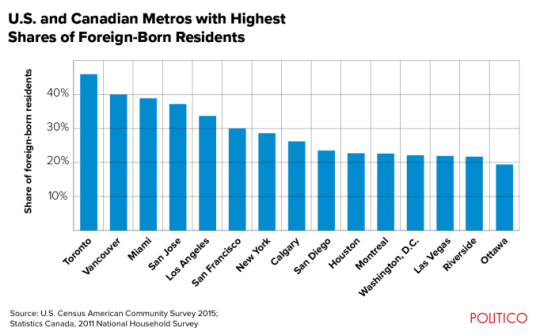
    Here is a chart showing the US and Canadian metros with the highest percentage of foreign-born residents:

    image

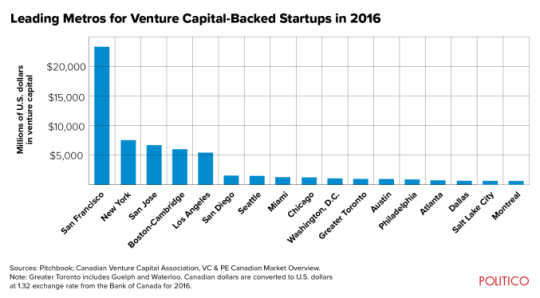
    And here is a chart showing which metro areas receive the most venture capital dollars (in millions of US dollars):

    image

    As to be expected, Toronto, Vancouver and Miami lead in terms of the percentage of foreign-born residents. Though, I would bet that Toronto’s foreign-born population is far more diverse than those of Vancouver and Miami.

    However, when you look at venture capital dollars invested, Toronto is nowhere near the top. Vancouver isn’t even on the list. And I suspect that some of you are surprised to see Miami sitting in between Chicago and Seattle (arguably a city that overperforms in tech relative to VC dollars invested). I was.

    Perhaps Trump will help with this by making Canada great again.

  • Frais du toit

    This past summer, an IGA store in Montreal’s Saint-Laurent borough erected “the largest organic green roof garden in the country.” It is about 25,000 square feet and it has a soil depth of only 150mm. 

    They also claim that it’s the first supermarket in Canada to sell produce grown on the roof of the actual store. The brand: Frais du toit, or fresh from the roof. There’s even a livestream in the vegetable aisle showing you how the goods are doing overhead.

    I would be curious to know what their yields are like and what they are charging for the produce. But it’s certainly a praiseworthy initiative.

    Below is a quick video that will give you an idea of what the roof looks like. If you can’t see it, click here.

    [youtube https://www.youtube.com/watch?v=-Z69ScyHCfU&w=560&h=315]

  • The 10 most promising Hyperloop routes (and thoughts on the naysayers)

    image

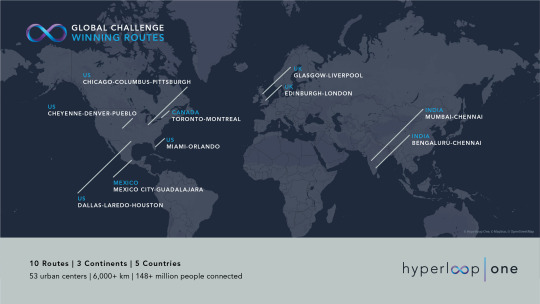
    On September 14, 2017, Hyperloop One announced the 10 winners of its Global Challenge. These are the world’s “most promising” Hyperloop routes; selected through a process that began in May 2016 and involved more than 2,600 registered teams.

    The winners:

    1. Canada | Toronto-Montreal
    2. India | Bengaluru-Chennai
    3. India | Mumbai-Chennai
    4. Mexico | Mexico City-Guadalajara
    5. UK | Edinburgh-London
    6. UK | Glasgow-Liverpool
    7. US | Chicago-Columbus-Pittsburgh
    8. US | Miami-Orlando
    9. US | Cheyenne-Denver-Pueblo
    10. US | Dallas-Laredo-Houston

    If you aren’t familiar with what Hyperloop One is trying to accomplish, here is a quick video explaining the basics. Their goal is to have the world’s first operating Hyperloop by 2021.

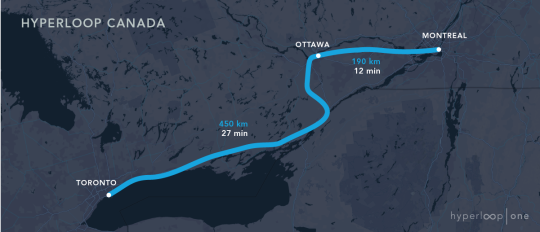
    If you happen to live in one of the above regions (about 148 million of us do), then you are probably already seeing the headlines in your feeds. For Canada, the promise is of connecting 25% of our country’s population with one single Hyperloop route.

    It would mean Toronto-Montreal in just 39 minutes:

    image

    This is shorter than many morning commutes. So it’s not hard to see why this is a tantalizing proposition. It would mean a union of our two biggest cities and our capital. More accessible Montreal bagels. And maybe, just maybe, a strengthened sense of bilingualism in this country. 

    But there are also critics who believe that all of this Hyperloop hype is simply a distraction. Why not focus on proven technologies as opposed to some fanciful pipe dream that may never materialize? This is about stroking political egos as opposed to real progress.

    My views are pretty simple on this one.

    Will Hyperloop Canada happen? Maybe. Maybe not. I sure hope it does. But it may not. It’s easy to draw lines on a map. It’s much harder to actually execute on those lines. And of course, logistics aside, the technology is still being developed.

    But if all we ever focused our energy on were things that have already been “proven”, we likely wouldn’t create many new things. Things that today are proven, were once unproven. But they became proven because there were folks who didn’t let that minor detail deter them from trying. They went for it.

    So if a private company would like to go out and raise $160 million from private investors to try and figure out how to sustainably connect Canada’s two largest cities in 39 minutes, I am more than happy to cheerlead. Because I’m not the one trying. Who am I to naysay? 

  • Official bilingualism

    When I was around 8 or 9 years old my mother put me into a French school in Toronto. Her logic was simple: “This is Canada. You should know how to speak both official languages. It will create opportunities for you in the future.”

    But I hated it. I couldn’t speak a word of French at the time and so I would come home from school complaining that I couldn’t understand anything the teacher was saying. How was I supposed to learn anything? 

    I begged her to put me back into an English school.

    To her credit, my mother remained absolutely steadfast. She would say to me: “Trust me. You’re going to thank me for this later.”

    Not surprisingly, I learned French. I was put into a special “intro” stream and so when my classmates were off learning a third language (German), I was given introductory classes designed to bring me up to their French level.

    I still remember the sense of accomplishment I felt when I could finally carry on an actual conversation in French.

    Sadly, at this point in my life, my French is fairly rusty. I really should work on that. But it’s decent enough that people in Montréal – which is where I am right now – will say to me: “You’re from Toronto. How is it that you speak French?” 

    In fact, somebody said to me last night that in Montréal they typically encounter more French speakers from the U.S. than they do from Ontario. That surprised me. As a country, about 10 million Canadians report being able to speak French (2011 number).

    Every time I visit Montréal, I marvel at the display of bilingualism that seems omnipresent in this city. And, if you grew up in an immigrant household, you may also speak a third language – the one your parents spoke to you in. I think that’s wonderful.

    So with that: thanks mom.

  • So is this Brutalism or not?

    image

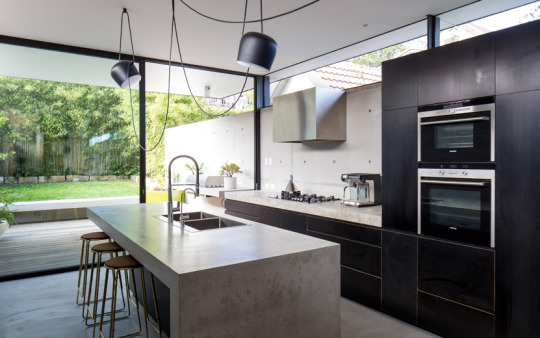
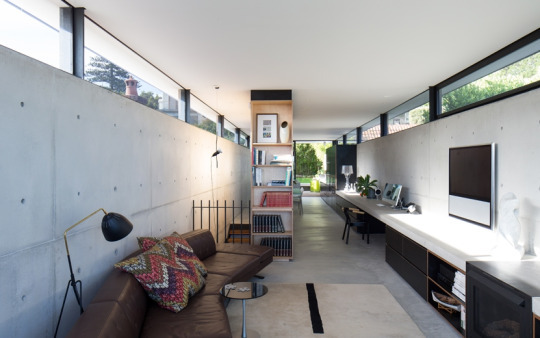
    The Spaces just featured 21 Scott Street in Bronte (a suburb of Sydney) as its property of the week. (The home is currently listed.)

    Designed by MCK Architects, the home is also called the “Upsilon House” and was supposedly designed for a fashion-industry couple.

    Two things should immediately stand out to you about the house. One is how long and narrow the site and house are.

    Here is a lengthwise view of the main living floor:

    image

    Based on the plans provided by The Agency (listing agency), the house is about ~3.9m wide. That’s because of its tight site. However, the clerestory windows that run the length of the house would provide ample light.

    The other thing that should stand out is all of the exposed concrete. The Spaces calls it “soft brutalism.” I personally love it, but I recognize that it’s not for everyone.

    In any event, it reminded me of a recent blog post by Witold Rybczynski in which he responded to the New York Times calling Habitat in Montreal a brutalist building. His rebuttal: that’s a gross over-simplification. Brutalism, in its truest sense, is about dramatizing the “rough character of concrete.”

    But I particularly enjoyed how he ended the post:

    “There is another litmus test of Brutalism. Buildings like Habitat remain popular with their users. If people don’t hate it, it can’t be Brutalist.”

    If that’s the case, then 21 Scott is certainly not Brutalism in my book.

    Images via MCK Architects

  • What’s happening in Melbourne?

    image

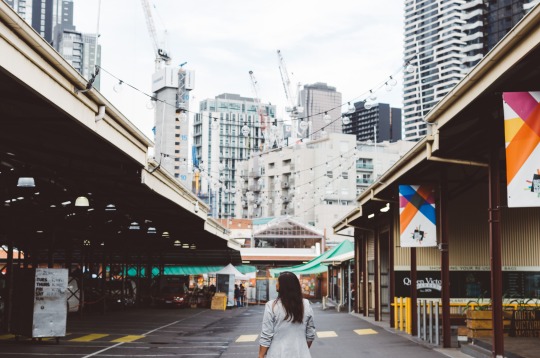
    I’ve never been to Australia, so take everything I’m about to say in this post for what it’s worth. I also don’t know much about Sydney and Melbourne, other than the fact that I’ve studied the latter’s laneways and the tremendous impact they’ve had on revitalizing the CBD.

    However, recently I’ve had a few close friends visit these cities for the first time and, since then, I have started noticing a trend. All of them come back and tell me the same thing, that they prefer Melbourne to Sydney. They say: “Yeah, Sydney is nice and beautiful and all, but it’s not all that exciting. Melbourne feels way more dynamic. Oh, and have you seen their laneways? You would love them.” That’s what they tell me.

    So that’s what I have in my head when I read that Melbourne is now the fastest growing city in Australia; that it’s one of the most liveable cities in the world; and that by as early as 2031 it could take Sydney’s place as the biggest city in the country. Below is a chart from The Australian. If you can’t see it, click here.

    //platform.twitter.com/widgets.js

    Some argue that this is happening because housing is cheaper in Melbourne (median dwelling price of ~$700,000 versus ~$1 million). And some argue it’s because the jobs are there and the city has become a cultural and sporting destination. Whatever the case may be, net migration is estimated to be somewhere around 100,000 people per year.

    My own view – and I’ve made this argument before on the blog – is that we shouldn’t underestimate the importance of cool shit when it comes to cities. People vote with their feet more than ever today. And for a growing segment of the population, cities are a consumer good.

    Indeed, in 2001, Edward Glaeser, Jed Kolko, and Albert Saiz penned a research paper called the Consumer city, where they argued precisely that. The premise was that historically we have tended to think of cities as being centers of production, but we should also be thinking about them as places of consumption.

    Here’s an excerpt:

    “But we believe that too little attention has been paid to the role of cities as centers of consumption. In the next century, as human beings continue to get richer, quality of life will become increasingly critical in determining the attractiveness of particular areas. After all, choosing a pleasant place to live is among the most natural ways to spend one’s money.”

    This is why those coffee shops and cool laneways matter. Some cities have unfair natural advantages. Los Angeles has weather. Vancouver has mountains. Montreal has poutine. But for the rest of us, the amenities typically form part of the built environment. They are a product of our choices.

  • Design Canada

    Canada has a rich graphic design history and that story needs to be told. Here is a Kickstarter project that’s absolutely worth checking out: Design Canada.

    https://www.kickstarter.com/projects/1002969621/design-canada/widget/video.html

    Greg Durrell (a graphic designer from Vancouver) and Jessica Edwards and Gary Hustwit (of Film First in Brooklyn) have partnered up, and they are looking for your support to produce the very first documentary about Canadian graphic design.

    As a proud Canadian, I am thrilled to see this project. Because this is obviously not just a documentary about graphic design (though in the 60′s and 70′s we were the best in the world). It’s a story about Canada, our history, and our evolving identity.

    If you can’t see the embedded video above, click here to make your way over to Kickstarter.

  • I love neon

    “As the manufacture of storefront signage becomes increasingly standardized,” says a circular from Berlin’s Buchstabenmuseum, “the tradition of idiosyncratic signs created by skilled craftspeople, reflecting regional differences and a firm’s unique character, is dying out.”

    The above quote is from this Globe and Mail article talking about the lost art of sign making and about an exhibition that starts today (until January 27) in Montreal at the Media Gallery of Concordia University’s Communication Studies and Journalism Building. It is called Tel Quel / As Is and it is by the Montreal Signs Project.

    Cities all around the world are facing a decline in distinctive local signage, which is not all that different than the decline in regional architecture. We are living in a global village.

    Montreal has responded with the above project. Berlin has responded with the Buchstaben Museum (letter museum). And here in Toronto, Mark Garner of the Downtown Yonge BIA has been trying to convert one of our laneways into a haven for restored Toronto neon signs. Great idea.

    It can be challenging to repurpose old signs. There are often issues of appropriateness and scale. Sometimes a new or renovated building looks good with its old signage. But in other cases – and perhaps more often than not – it wouldn’t. So then what do you do with it?

    Still, it behooves us to try. Signs, like buildings, are a snapshot of a moment in time. They are part of the environment that we create for ourselves. They are part of our history.