Daily insights for city builders, delivered every morning at 6 AM ET. I’m Brandon Donnelly — a Toronto-based real estate developer and founder of Globizen. I’ve been writing here since 2013.

Tag: Montréal

  • Toronto-Montréal should be a 2 hour high-speed train ride

    The Quebec City-Windsor corridor is the most densely populated region in Canada. The last time I checked Wikipedia, it was reported to house about 18 million people, or about half of Canada’s entire population.

    So it is not surprising that there have been numerous high-speed rail studies for this corridor over the decades, as well as studies for other important links in Alberta (Edmonton-Calgary) and other parts of the country.

    And yet, Canada remains the only G7 country without any high-speed rail. Though to be fair, the US doesn’t have all that much either; certainly with respect to the size of its population.

    However, there is some good news. In March of this year, the Government of Canada announced a Request for Expression of Interest related to high frequency rail service between Quebec City and Toronto. More information, over here.

    But from what I have read, it’ll be a faster upgraded service (~200 km/h), but not true high-speed rail (~250-300 km/h). I took the TGV from Marseille to Paris last summer, and this is how fast we were going:

    If we’re going to do this, let’s be the absolute best in the world and not settle for mediocrity.

  • Why traffic fatalities are lower in Canada than in the US

    We’ve talked about this before. If you live in New York City, you’re probably about a third as likely to die from a transportation-related accident as compared to the average American. And if you live in Paris, you’re probably about a third as likely to die from a transportation-related accident as compared to the average New Yorker.

    These stats might feel a bit intuitive to you. Both New York and Paris are big and dense metros with high public transit ridership. And that usually translates into less car accidents. As for the divide between these two cities, Paris is in Europe. It’s old. Most of its streets were built before the car had been invented. And all of these things are generally good for pedestrians. Makes sense.

    But David Zipper asked a good question today: So what’s going on with Canada? Canada is not in Europe (though some might argue that it sits culturally somewhere between the US and Europe). It’s not that old. And it generally has a car-oriented landscape just like the US. So why is it that in 2020, Americans were 2.5x more likely than Canadians to die in a car crash? The trend lines are also diverging between these two countries. Between 2010 to 2020, US road deaths increased 19% on a per capita basis, whereas Canada’s rate declined by about the same rate, according to David.

    Ultimately, we are probably going to need Malcolm Gladwell to write a book about this so that we can really figure out what’s going on. But in the interim, David does propose a few possible explanations ranging from Canadians buying slightly smaller vehicles to Canadians being slightly more law-abiding than Americans and so less likely to run people over. But one of the most persuasive explanations for me is that maybe our urban landscapes aren’t actually the same.

    More than a third of Canadians live in our three biggest cities: Toronto, Montreal, and Vancouver. And this number would be even higher if you looked at the full urban catchment areas of each. Either way, this is a significantly higher concentration than in the US, where about 13% of Americans live in the metro areas of New York City, Los Angeles, and Chicago.

    Part of this difference is because the US has almost 9x more people and has many more big cities to choose from. But it doesn’t change the fact that, despite our reputed love for things like forests and beavers, Canadians are actually quite urban. And as we have discovered, that’s a good thing for pedestrians.

    Photo by Jamshed Khedri on Unsplash

  • Housing starts up 63% in Calgary

    The Canada Mortgage and Housing Corporation (CMHC) just published its latest housing supply report for Canada’s 6 largest city regions (downloadable over here).

    One figure that stands out is the increase in housing starts in the Calgary CMA — it was up almost 63% last year compared to 2020. This is a positive indicator for that market.

    It’s also worth mentioning that Calgary’s supply is more evenly split between low-rise and apartment housing. This is in contrast to markets like Toronto, where 3/4 of all new housing is now “apartment”, and in Montreal, where the percentage is even higher.

    My view is that it’s time to get more granular with our reporting of higher density housing. In the above example, we are showing 3 categories for grade-related housing and only 1 for anything outside of that.

    This is our national bias toward low-rise housing coming through.

  • A nation of apartment dwellers

    The Canada Mortgage and Housing Corporation (CMHC) recently published its latest data on housing starts, housing under construction, and housing completions. Here are a few of the highlights:

    • Canada saw 271k housing starts last year (2021). This includes single-detached housing and multiples, which captures semi-detached housing, row housing, and apartments (and other unit types). This is the highest number of annual housing starts that we have seen over the last five years. The range for the prior years has been between roughly 209-220k.
    • Ontario saw 100k (~37% of the country), Quebec saw 68k (~25% of the country), and British Columbia saw 48k (~18% of the country).
    • What I was curious about when I first saw these numbers was the split across the various housing types. Single-family homes, for instance, came in at 82k for all of Canada. So that’s about 30% of total housing starts. If you add in semi-detached and row, which I believe would also be all grade-related, you get to 124k or 46% of all housing starts.
    • Apartments and other unit types make up the balance at about 147k or 54% of all housing starts. This is kind of interesting because they now represent a majority.
    • Looking at Ontario, the percentage of apartments actually drops to 50%. But the numbers are much higher in both Quebec and BC at 69% and 63%, respectively. Again, this is kind of interesting.

    Despite all of our deference to single-family housing, the numbers suggest that we are actually in the midst of building a different kind of country — one that entails people living in “apartments and other unit types.” Maybe it’s time we got more granular with this line item.

    Note: CMHC defines “apartment and other unit types” to include not just apartments, but also stacked towns, duplexes, triplexes, double duplexes (whatever this is), and row duplexes. A number of these will, of course, be grade-related. But they still represent more intense forms of land use.

  • Love letter to Québec

    I watched this for the first time last night. It is the late and great Anthony Bourdain hanging out in Montréal and Québec City with two of Canada’s most respected chefs and restaurateurs: Dave McMillan and Fred Morin of the famed restaurant Joe Beef. Initially aired in 2013, it’s hard not to miss Bourdain when you watch it. And it’s also hard not to love Québec. This is an episode about humility, authenticity, good living, and, of course, some of the best food and drink in the world. Bourdain has a great line right before they visit Wilensky’s (in Le Plateau area of Montréal) where he says, “no matter how you feel about Québec as either separate or as an essential part of Canada, any reasonable person loves this place.” I couldn’t agree more.

    If you can’t see the embedded video above, click here.

  • Making River City

    My good friends over at Urban Capital recently released a short film about the making of their River City project here in Toronto. (If you can’t see the embedded video above, click here.)

    For those of you who aren’t familiar, River City is a 4-phase development on the east side of downtown that was really the first project in what was known as the West Don Lands area. Urban Capital secured the right to develop the then government-owned lands in 2008 through a public tender process that was run by Waterfront Toronto.

    It’s a tricky and unobvious kind of site in that it’s surrounded by infrastructure and it came with a whole host of development challenges, including flood risk. But the team figured it out and River City has gone on to win a number of awards including the Ontario Association of Architect’s Lieutenant Governor’s Award for Design Excellence.

    River City is an important project for Toronto in that it dared to be different. It’s like no other project in the city, and I’m not just saying this because they’re my friends. I’m saying it because I want our city to be a global leader in architecture, design, and development, and to continue to push the envelope.

    River City did exactly that.

  • Is better design the solution to NIMBYism?

    Alexis Self has an opinion piece in today’s Monocle Minute (email newsletter) that deals with development in London and NIMBYism. Here’s an excerpt:

    Affluent, socially liberal city dwellers can be the most extreme Nimbys. But perhaps their ire wouldn’t be so fierce if what was being built weren’t so aesthetically offensive. In the postwar era, London’s councils teemed with ambitious urban planners. The result: design classics such as Trellick Tower in Kensal Green, the Barbican Estate and Camden’s Alexandra Road Estate. While it’s true that these were labelled ugly at the time, they were undeniably the work of Europe’s best architects. Few, if any, of the city’s 21st-century edifices will enjoy a similar reappraisal.

    Alexis raises two interesting points: 1) Could better architecture and design actually help to quash NIMBY sentiment and 2) are we really not designing and building like we used to?

    I’ll start with number two.

    I am not that familiar with the “design classics” that Alexis mentions above, but it just so happens then when I was watching Never Too Small over the weekend I came across this studio apartment in the Barbican Estate.

    Designed by Chamberlin, Powell and Bon in the 1960s, the Barbican is a residential complex with somewhere around 2,000 apartments. It’s considered a prominent example of British brutalist architecture and so most of it is listed.

    While certainly noteworthy, it strikes me that it is likely one of those pieces of architecture that designers and architects love (I like it), but that the general public dislikes. In fact, architect Witold Rybczynski once argued that, “if people don’t hate it, it can’t be Brutalist.”

    Brutalism is having a bit of a renaissance. Kind of. But I don’t think we’re anywhere near universal appreciation. So I wonder if the general public really views these “design classics” as being some sort of golden era of British architecture and development.

    I also think, and I have argued this before on the blog, that buildings sometimes take time to settle in. From Montreal to Stockholm, our perceptions have been shown to change. The things we disliked before suddenly become desirable.

    Which means it can be hard to tell if we objectively dislike something (we’re not building like we used to) or if it’s simply not old enough for us to starting appreciating it. Beauty also happens to be a kind of subjective thing when it comes to buildings. Turns out we’re better at assessing whether people are good looking.

    This is probably a good time to come back to point number one: Could better architecture help quash NIMBYism?

    Not quite. I would argue that it certainly helps but it won’t completely quash it. I believe wholeheartedly in the power of great design. I want everything to be beautiful and considered. But the cynical developer in me knows that it will sadly only go so far.

    Béton brut (raw concrete) isn’t for everyone, I guess.

  • To stepback or not to stepback

    I was riding my bike on Bloor Street along the north edge of High Park over the weekend. And in between cyclists in spandex yelling at me for seemingly riding the wrong way in the bike lanes, I managed to safely snap this picture:

    It was a reminder of that thing we like to do in Toronto where we want lower-rise along our main streets and then we tuck the taller parts somewhere in the back so that we can pretend they are maybe not there. Here’s an aerial shot of the situation from Google Maps:

    It’s a very different condition from what you will find in New York along virtually all edges of Central Park:

    Now, New York and Toronto are not the same city. This much is obvious.

    But there is a grandeur and degree of urbanity that is present along Central Park that is not present along High Park. And I would argue that this feature isn’t exclusive to New York. It can be found in many other cities, including places like Montreal.

    I am sure that part of the rationale here on Bloor Street had to do with matching the lower-rise existing context. But we shouldn’t forget that the edges of public spaces are oftentimes just as important as the spaces themselves. Sometimes they can be even more important.

    So I thought I would put it out to all of you. To stepback or not to stepback. What do you think would be the most appropriate built form along this north edge of High Park? Leave a comment below.

  • At what point does one start appreciating new housing?

    When you look at some of the most iconic home designs from around the world — which Bloomberg CityLab has been doing — there are some trends that emerge. One of them has to do with desirability. Whether we’re talking about Stockholm or Montreal, a lot of the housing that is today cherished, started out as fairly utilitarian. There was a need for housing and so governments and developers stepped up to build, often as cost effectively as possible. The result was housing that a lot of people seemed to dislike. At least initially.

    Here are a few excerpts from a recent post by CityLab talking about Montreal’s famous walk-up apartments:

    Their shape was dictated by the dimensions of the lots sold by developers: Narrow at the front, they run as deep as 120 feet and open onto an alley, leaving enough space for backyards and sheds behind. Inside, the units are not particularly big, with duplex apartments, often rectangular in shape, typically from 750 square feet to 1,000 square feet. Triplex apartments are a little larger and sometimes configured in an L-shape, a trick that builders used to make the most of the lot’s depth while getting some side light. Rooms unfold on one or either side of a corridor, with the kitchen at the back.

    Despite their reputation for charm today, the plexes were long criticized for their overcrowding and lack of light. Working-class homes were sometimes known as “the poor man’s coffin,” says Noppen. 

    “These are very narrow, dark, long buildings, which above all, were overcrowded,” he says. Today the apartments may be sought after, as “part of a considerable gentrification movement, but that’s because, two, three people live inside — that used to be 15.”

    I think most people forget that the housing we love today was probably built by a developer and almost certainly done in the pursuit of profit. Which begs the question: What has to happen before people suddenly start appreciating? Eliminating overcrowding certainly helps. But is it also a question of time? Do we just need time for the housing to settle in and get absorbed into the market? Or do we simply tend to dislike that which is new and so we need something even newer to hate before we can appreciate the now old?

  • Façadism in Montréal

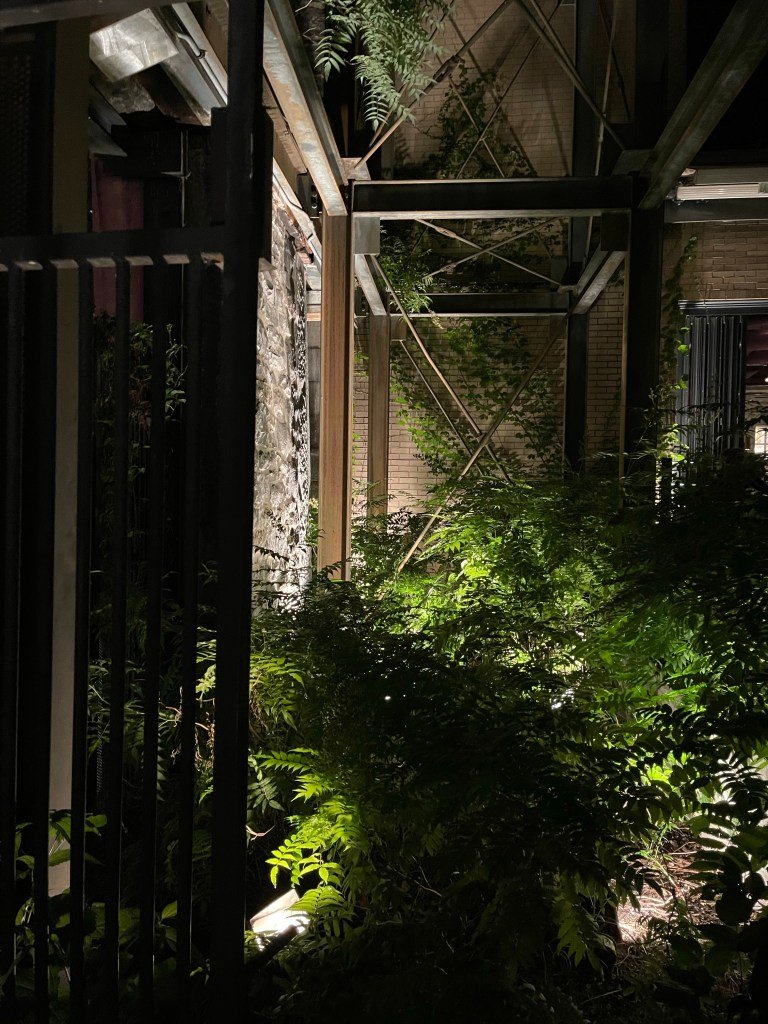
    These are photos from the terrace of a restaurant in Old Montreal called Boris Bistro. It’s not new — it’s been around since 1999 — but that doesn’t change the fact that its outdoor space is absolutely magical.

    The terrace sits behind an old stone facade on McGill Street that is held up with a three-storey steel structure. Hello façadism! I have tried to figure out the vintage of the original building through a cursory look online, but I came up with nothing. (Drop it in comment section below if you happen to know.)

    What we were told at the restaurant was that the original building burnt down, leaving just the facade and then an open space behind it. The size of the trees on the terrace do suggest that it’s been this way for a long time.

    There’s an office building beside it that looks to be of a 90s vintage (465 McGill Street) and this open space was apparently a place for office workers to go smoke. But now the ground floor of the office building and the terrace function as one large contiguous space.

    The result is what you see above. Magic.

    Montréal has been city building for a lot longer than Toronto. Some 400 years depending on how you calculate it. This history has created one of the most beautiful built environments anywhere in the world.