Daily insights for city builders, delivered every morning at 6 AM ET. I’m Brandon Donnelly — a Toronto-based real estate developer and founder of Globizen. I’ve been writing here since 2013.

Tag: monocle

  • Building a better São Paulo

    São Paulo, and Brazil more broadly, are near the top of my list of places that I want to visit. 

    Starting in the 1930s, Brazil became an early adopter of modern architecture with projects like the Ministry of Education and Health Building. It was one of the first countries outside of Europe to push modernism.

    So I am overdue for a tour of Oscar Niemeyer and Lucio Costa’s work.

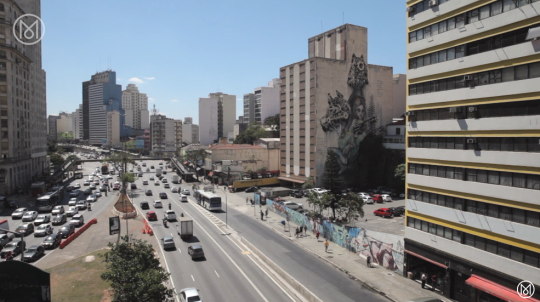
    Here is a short 7 minute video from Monocle about some of the ways in which São Paulo is reinventing its city center.

    It is for the launch of their new book, The Monocle Guide to Building Better Cities, and it got me excited about visiting the city (and country) sometime soon.

  • Homes built in the past year

    I’m on a flight right now reading the latest issue of Monocle Magazine in a seat that barely accommodates the length of my femur. This month’s issue has their annual ranking of the top 25 cities in the world.

    Munich is first, which is not unusual for their ranking methodology. It generally scores well. Quality of life is high. Crime is low. The economy is strong. Beer gardens are fun. And you’re close to the Alps for snowboarding.

    One stat that caught my attention — and it’s not included for all of the cities — is the number of homes built in the past year. Presumably this is all housing units in the metro area — for sale, for rent, subsidized and so on.

    Here are their (clearly rounded) numbers. The order is as they appeared in the ranking, but again, not ever city included this stat.

    • Munich: 8,300
    • Tokyo: 150,000
    • Copenhagen: 5,000
    • Berlin: 11,000
    • Madrid: 1,600
    • Hamburg: 7,000
    • Melbourne: 5,100
    • Helsinki 4,400
    • Stockholm: 7,000 (18,000 in Greater Stockholm)
    • Sydney: 39,000
    • Hong Kong 17,000
    • Vancouver 22,600
    • Amsterdam 5,100
    • Kyoto 8,900
    • Dusseldorf 2,600
    • Barcelona 1,000

    Some of these numbers appear to stand out, such as the counts for Tokyo, Sydney and maybe Vancouver. But it’s hard to draw any conclusions around housing supply and housing affordability.

    Melbourne and Amsterdam allegedly have the same number of homes built over the past year, but according to Monocle the metro areas of Melbourne and Amsterdam have populations of 4.85 million and 2.4 million, respectively. This also says nothing about their growth rates.

    So which one is doing a better job of addressing housing demand? I’m not sure.

    But it was still interesting to see that Tokyo delivers somewhere around 150,000 homes a year. Tokyo is somewhat unique globally in that it’s a big city — one of the biggest — that somehow manages to gracefully balance both scale and quality of life.

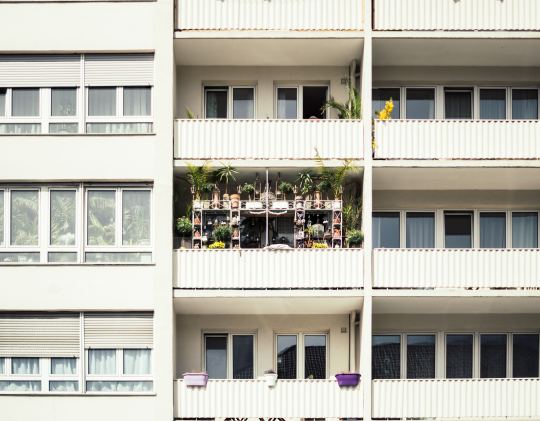
    Photo by Elias Keilhauer on Unsplash

  • Guide to hotels, inns, and hideaways

    Monocle has a new guidebook out that is dedicated to hotels, inns, and hideaways. It also has a particular emphasis on the “honest, charming, quirky and independent.” So forget the conventional 5-star hotels. Hotels are fascinating places, even in today’s world of Airbnb. If you’re planning a trip or planning to start a hotel, this may be a useful handbook for you. Pick one up, here.

  • Living on water

    Phaidon has a new architectural book out that surveys 55 homes, all of which have some sort of connection to water, whether that be an ocean, lake, river, or pool. It’s called Living on Water. I don’t (yet) have a copy, but it looks like the perfect coffee table book for a cottage, summer home, or studio apartment with zero connection to water. Monocle on Design recently interviewed the editor of the book (podcast episode here). So if beautiful homes on the water are your thing, maybe check it, and the book, out.

  • Video: Brooklyn Navy Yard

    image

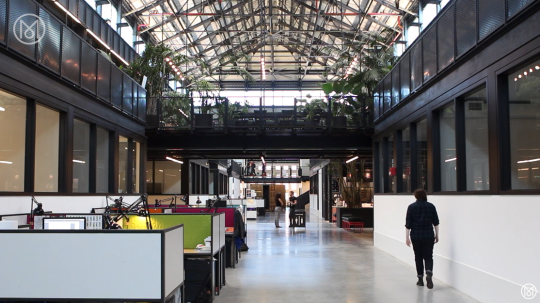
    Monocle recently published a short 4 minute video tour of the Brooklyn Navy Yard. It covers a bit of the area’s history and the kind of businesses that are flocking to the area today.

    One of the reoccurring themes in the video is a feeling of stability. The local businesses feel secure in their space and some even believe that the area is somehow immune to gentrification.

    Monocle doesn’t allow embedded videos, so you’ll have to click here to watch.

  • From Tokyo to Toronto — annual property survey

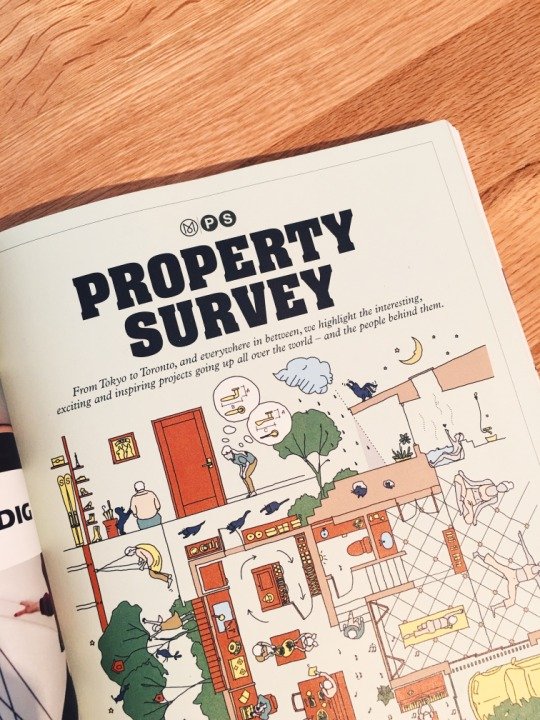
    This month’s issue (May 2017) of Monocle magazine is a special “design & property” edition. It includes their annual property survey (shown above), which showcases interesting projects and people from around the world.

    I was excited (but not surprised) to read the editor’s letter at the beginning of the issue and learn that the Monocle folks “think all the time” about launching their own property company. I would love to see how they execute on a development project, because I am sure it would question conventional norms.

    Ian Gillespie of Westbank (headquartered in Vancouver) is featured and interviewed under the heading: “a more beautiful city.” Here you’ll hear him say that they build Porsches and not Fords. I also learned that they acquired a district energy company called Creative Energy, which they are looking to bring to Toronto and Seattle.

    Because it’s a property issue, the ads are also tailored to that, so you get a good cross section of international projects. This morning was my first time seeing One Park Drive in Canary Wharf – London’s first residential tower by Herzog & de Meuron.

    So if design and property also happen to be your jam, you may want to pick up the May issue of Monocle.

  • Thickets of haphazardly planned condo towers

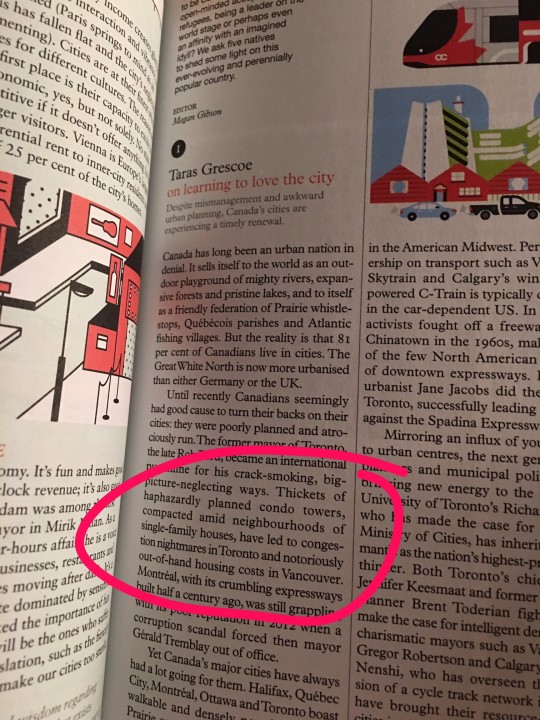
    I couldn’t sleep last night, so I got up and pulled out an old issue of Monocle magazine from my nightstand. I then stumbled upon the following article by Taras Grescoe.

    What really stood out for me was this line:

    “Thickets of haphazardly planned condo towers, compacted amid neighbourhoods of single-family houses, have led to congestion nightmares in Toronto and notoriously out-of-hand housing costs in Vancouver.”

    It bothered me for a few reasons:

    – The frame of reference is the single-family house. It perpetuates the cultural bias that what matters most in cities, like Toronto and Vancouver, is low-rise housing.

    – I don’t get the “haphazardly planned” comment. New tower development has been heavily concentrated in the downtown core, growth centers, along the Yonge subway corridor, and so on. Their built form is also significantly influenced by their relationship to these low-rise “Neighbourhoods.”

    – I believe that building up, as opposed to out, is the way to address congestion nightmares. Though I will concede that our ability to plan and execute on transit in this city is positively deplorable. 

    – How did thickets of condos create an affordability problem in Vancouver? Many factors at play in this city, including a powerful geographic supply constraint.

    Those are just a few of my thoughts from early this morning. What are yours?

  • Die Es

    image

    To celebrate the launch of their Guide to Cosy Homes (2015), Monocle Films produced a number of home tours. 

    Die Es, pictured above, is the home of South African architects Gawie and Gwen Fagan. They started building their home in 1964, just as they were starting their practice. 

    Because of this, they had little money and had to do a lot of the work themselves. They sold their car to buy a concrete mixer.

    Although they didn’t set out to explicitly design a “Cape” house, it ended up that way, with heavy thermal masses, white walls, and so on. 

    The architecture also relates very closely to the surrounding landscape – as it should – in the way in which it frames views of the water and mountains. 

    The mediterranean climate also really comes through in the materiality of the home and the connections to outside.

    If you’d like to watch the 5 minute tour of Die Es, click here.

  • Monocle Travel Guide: Toronto

    image

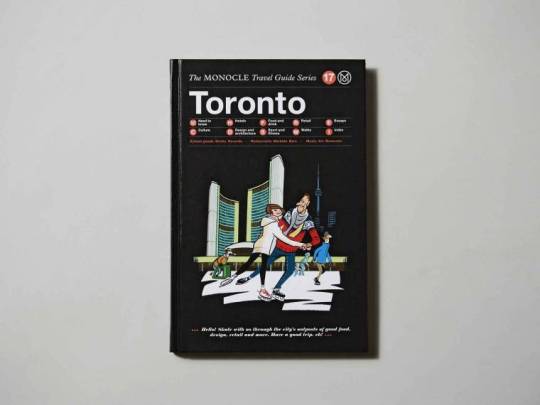
    The latest Monocle Travel Guide is out (#17) and it is none other than Toronto. I haven’t picked up a copy yet, but I will. I’m always intrigued by how other people perceive this city because I obviously can’t be objective. Toronto is home.

    Here is the video that accompanied the launch of the guide. If you can’t see it below, click here.

    [vimeo 191633284 w=640 h=360]

    Thrilled to see husband-and-wife team John and Juli of Mjölk featured in the video. They have a wonderful shop (and home) in the Junction focused on high-end Scandinavian and Japanese design. They also have their own collections which are produced locally in the city.

    If you haven’t seen their home – Mjölk House by Studio Junction – you need to.

  • re:Public + NXT City Night

    On Friday, November 25th, NXT City will be hosting a one-day symposium here in Toronto (re:Public) that brings together some of the top people, projects, and ideas in the world of public spaces. Following that will be an after party (called NXT City Night) that runs from 8pm to very late. 🙂

    Here are some of the organizations that will be represented at the symposium: City of Toronto, Uber, CivicAction, Monocle, Arup, STEPS Initiative, Breather, The Laneway Project, Oxford Properties, as well as many others. It will be a great event.

    For the full speaker list, the agenda, and to buy tickets, click here. There’s an under 35 / student offering for both the symposium during the day and the after party at night. If you attend during the day though, you automatically get a pass to the after-party. I hope to see you there.

    Here’s a time lapse video from NXT City Night (edition 2015). If you can’t see it below, click here.

    [youtube https://www.youtube.com/watch?v=_i6R687sdk0?rel=0&w=560&h=315]