Daily insights for city builders, delivered every morning at 6 AM ET. I’m Brandon Donnelly — a Toronto-based real estate developer and founder of Globizen. I’ve been writing here since 2013.

Tag: marketing

  • The social shift

    Those of you who know me or are regular readers of this blog, will know that I’m an avid social media user. 

    My favorites – judging by battery consumption on my phone – are Twitter, Instagram, and Snapchat (donnelly_b). I think it’s incredible what these platforms are doing to branding, marketing, personal connectivity, city building, and the list goes on.

    To that end, the March issue of Harvard Business Review has an interesting article by Douglas Holt called, Branding in the Age of Social Media. Whether you’re running a company, a city, or a real estate development project, I think you’ll find the information relevant.

    The article starts by describing a shift, brought about by social, whereby big brands are now struggling to capture the attention of consumers. Instead, consumers are listening to individuals and more grassroots movements.

    “Or consider Red Bull, the most lauded branded-content success story. It has become a new-media hub producing extreme – and alternative – sports content. While Red Bull spends much of its $2 billion annual marketing budget on branded content, its YouTube channel (rank #184, 4.9 million subscribers) is lapped by dozens of crowdculture start-ups with production budgets under $100,000. Indeed, Dude Perfect (#81, 8 million subscribers), the brainchild of five college jocks from Texas who make videos of trick shots and goofy improvised athletic feats, does far better.”

    So what should brands be doing? Holt argues that they need to tap into these developing subcultures and emergent ideologies:

    “These three brands broke through in social media because they used cultural branding—a strategy that works differently from the conventional branded-content model. Each engaged a cultural discourse about gender and sexuality in wide circulation in social media—a crowdculture—which espoused a distinctive ideology. Each acted as a proselytizer, promoting this ideology to a mass audience. Such opportunities come into view only if we use the prism of cultural branding—doing research to identify ideologies that are relevant to the category and gaining traction in crowdcultures. Companies that rely on traditional segmentation models and trend reports will always have trouble identifying those opportunities.”

    For me, this ties into one of my favorite lines from Simon Sinek: “People don’t buy what you do, they buy why you do it.” And now, thanks to social, it has become a lot easier to figure out what people and communities care about. It has become easier to figure out your why.

    Do you see this as being relevant to your work? I am certainly thinking about it in the context of mine.
  • [Video] Gang of Four

    Scott Galloway, professor of Marketing and Brand Strategy at NYU Stern, recently delivered a presentation on the Gang of Four: Apple, Amazon, Facebook, and Google. These dominant companies are also often referred to as the “Four Horsemen.”

    The video is about 16 minutes long and I would highly recommend that you give it a watch.

    It’ll be like drinking from a firehose, but there are so many fascinating takeaways. You’ll also quickly discover how far reaching the societal impacts of these companies have been and will likely be in the future.

    If you can’t see the video below, click here.

    [youtube https://www.youtube.com/watch?v=jfjg0kGQFBY?rel=0&w=560&h=315]

  • The benefits of sharing — what real estate could learn from tech

    One of the reasons I decided to start blogging was because I saw how open the tech community had become – with respect to sharing their ideas and experiences – and I thought that the same thing could and should be done in real estate, as well as in city building more broadly.

    But in many ways, the real estate industry is the antithesis of the tech industry. We are slow moving and secretive of our ideas. Now, some of this is driven by fundamental differences in terms of how these two sectors operate. It’s a lot easier to test and iterate on your ideas in tech than it is with actual bricks-and-mortar. But I still think about ways in which we, in real estate, could be pushing the envelope.

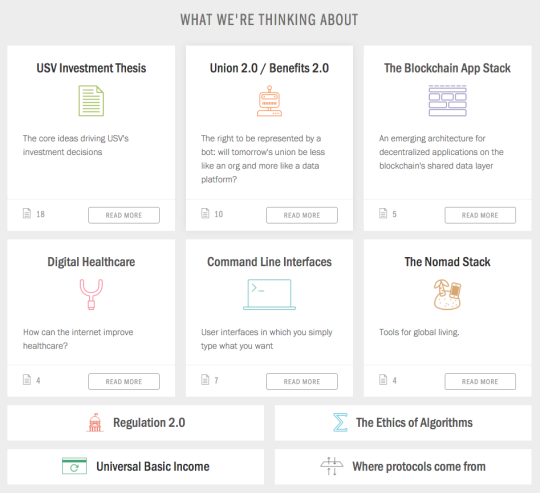
    As one example of what I’m talking about, take Union Square Ventures in New York. They call themselves a “thesis-driven venture capital firm”, which means they come up with a framework and core set of ideas, and then use those to drive their investment decisions.

    You would think that these frameworks and ideas would be pretty sensitive. I mean, they are the core drivers of their business. But their entire website is actually set up around sharing and collaborating – with the public – on these ideas. Here’s a screenshot:

    image

    Each topic is something they are “thinking about” and something they want to make an investment in (or already have). Fascinating.

    Many of you, I’m sure, would argue that there are risks to doing this. But there are also benefits, some of which are driven by collective intelligence. By sharing their ideas and hypotheses with the public, it helps to evolve their thinking. After all, their investment thesis is not a static thing. It grows over time.

    But in addition to this, it also makes it abundantly clear to their customers (entrepreneurs) what they believe in and what they look for. And I am sure this helps them with deal flow. More and more customers aren’t just “buying” a product, they are also “buying” a philosophical underpinning and belief system.

    Can you imagine a real estate firm doing something like this? I can. But it’s not happening yet, as far as I know.

  • The city is the brand

    Oslo Barcode I by Michel Krämer on 500px.com

    https://500px.com/embed.js

    I was reading the internet this morning and I stumbled upon an interesting urban blogger from Oslo named Erling Fossen. Most of his writing is in Norwegian, but he does have a section called “City Notes” that is in English.

    I enjoyed this paragraph titled, "The city is brand.” It is taken from a post called, “7 lessons from Oslo Urban Arena.”

    As cities compete to attract talents, companies and investment, many cities have branded themselves as either the most creative city in the world, the smartest or the most liveable. In many occasions cities develop slogans to go with the message. But as brand expert Martin Boisen said: No one has ever moved to a city due to a logo. Action speaks louder than logos. Branding cities can actually be helpful. The world is a stage, and your city has a role to play. The first message is to avoid being a copy cat and focus on your own uniqueness. It is also just as important to involve a larger community to make branding work. It takes a village to brand a place. Equally important is to have strong leadership communicating the message. Strong leaders can rock the boat.

    I’ve written about city branding quite a bit here and this has always been my message. An excellent city brand must stem from some form of reality. If you want to be the most creative or the greenest city in the world, then you have to live and breathe that philosophy.

    I also feel strongly about not copying other cities. You might think that having (insert thing here), which was pioneered in (insert city here), will make you world-class. But that’s a pretty banal way of going about things.

    Instead, to reiterate Fossen, focus on your own uniqueness. Then market the hell out of it.

  • How cities get branded

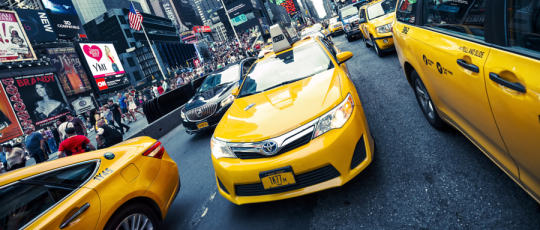
    Taxi on Times Square by frederic prochasson on 500px.com

    https://500px.com/embed.js

    I have been thinking a lot about city branding lately. It’s a topic I’m interested in to begin with, and all of the Blue Jays mania going on in Toronto right now has got thinking about our own brand.

    Because at the end of the day, yes, it’s baseball. But it’s also something much larger. It’s about civic and national pride, and it’s about who we are as a city. That’s why city branding has become a global industry and why it’s so closely connected to tourism, media, sports, and entertainment.

    Still, great city branding is incredibly difficult to do. Lots of cities have tried and lots of cities – from Adelaide to Toronto – have failed. Anyone remember the “Toronto Unlimited” brand of the mid-2000′s? It had absolutely zero stickiness.

    But in reality, cities are brand building all the time whether they realize it or not. Here in Toronto, our biggest brand builder right now is probably Drake. That might sound silly to some, but I believe it to be true. And next to that, you have people like Jose Bautista with his bat flips and his support of local brands like Peace Collective. In addition to their day jobs, these people are helping to shape the identity of the city.

    What, then, is professional city branding supposed to do?

    Well, in my opinion, it is their job to mine a city for the things that already exist. A city brand, no matter how great it may be, cannot be expected to create something from nothing. There has to be something there to begin with.

    But once you identify that something, a great city brand can tie it all together; create a cohesive and collective identity; and serve as a guide for future decision making. And when that’s done effectively, you actually begin to enhance the things that you initially started out with. The associations become even more powerful.

    So today I thought we could have a discussion in the comments about city brands. How would you describe the brand of your city in one sentence?

    For me, I would describe Toronto along the lines of being the most livable and multicultural 24/7 global city. And when you think of it this way, you can probably see why I think a 2AM last call at the bar is laughable.

  • “Am I supposed to like this?”

    image

    Today I had lunch at Webers Hamburgers so that I could see what all the fuss is about. Here’s my check-in.

    For those of you who don’t know Webers, it’s a burger place on the side of the highway in Orillia, Ontario. It opened in 1963 with the goal of targeting cottage goers and has since become an “institution” in the region.

    I don’t think I’ve ever been, so I figured I had to give it a try.

    Before going, I decided to ask around to see what people thought of the burgers. And in almost all of the cases, I got the same response: “You can get better burgers in the city. But you have to go. It’s an institution. It’s tradition.”

    And that ended up being a very accurate description.

    Were the burger goods? Yes. Were they mind blowing? No. In fact, they’re pretty basic burgers. You have a choice of 3 different toppings and 2 different condiments. That’s it. Want mayo? Sorry, they don’t do that.

    But in the end, it’s not really about the burgers.

    While there, I was reminded of a blog post by Seth Godin called, “Am I supposed to like this?” His opening line is the following: “If we think we are, we probably will.” And it’s all about how we make judgments well before we think we do (and how marketers invest in that).

    What matters a great deal is how we’re “supposed to” feel about something. If a wine is expensive, we’re “supposed to” to think it tastes better and our mind usually makes that a self-fulfilling prophecy.

    And in this case, Webers has become symbolic of summer and good times at the cottage. You’re “supposed to” stop there whenever you go to the cottage. It’s tradition.

  • Towards more publicness

    Back when the commercial internet first started to take off it was uncommon to use your real name online. Instead people relied on usernames and other pseudynoms to represent themselves. I honestly can’t remember what I used in those days, but I’m sure it was something ridiculous.

    Over time though that started to change. 

    Blogging started to take off in the late 1990s. And we started to become more comfortable sharing personal information online. Perhaps the biggest shift though, came with the introduction of Facebook in 2004 (over 10 years ago!). All of a sudden people – young college students initially – started sharing lots of personal information online, including photos of themsleves and their friends.

    But this wasn’t an overnight change. When Facebook first launched, privacy was an important component. It still is, but I would argue that it has become less central given how public a lot of other social media platforms are today. Twitter, for instance, is what it is today largely because of its publicness. 

    For my own social media accounts, I have made every single one of them completely public. From Twitter to Facebook to Instagram to Snapchat, nothing I post to social media is restricted in any way. And I do that because I believe we are headed towards a world with more – not less – openness, transparency and publicness.

    Of course, I’m not just talking about social media and tech. I’m talking about open data in general.

    Earlier this year, the Toronto Real Estate Board clamped down on real estate brokers who were publishing historical sales data online. Citing privacy concerns, TREB ordered them to stop or lose their access to the MLS system. 

    For those of you not from familiar with the Toronto real estate market, historical sales data for homes is not open and published online. You generally need to go through a realtor to get access to this data. Some think this is the right approach. And others think it is antiquated.

    But as I explained above, our conception of what should be private can, and will, evolve over time.

    Here are the details on my home:

    I purchased it in September 2012 for exactly $400,000 (Canadian). It’s a 650 square foot condo in the St. Lawrence Market neighborhood of Toronto. It has one bedroom, a 400 square foot terrace, one parking spot, and 10′ ceilings.

    Sooner or later, I believe this information will be freely available online. But since that’s not the case today, I figured I would just tell you. Sharing this information is not a big deal for me.

  • Snøhetta — an integrated architecture, landscape, interior, and brand design firm

    Last month I wrote a post talking about YOO Architecture. And in the body of that post I mentioned my interest in branding and marketing and how I wondered why it was something we never really talked about in architecture school.

    After publishing that post, a close friend of mine from architecture school quickly pointed out to me that there are firms today that are integrating brand design into their practices. Specifically, he mentioned two firms: Gensler and Snøhetta.

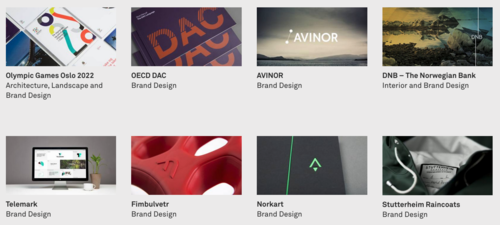
    Here’s some of Snøhetta’s work (click here for more it):

    I wasn’t aware that this was the case with these firms, but I’m delighted to see it happening. At the same time, I’m not surprised to see it happening. Architecture and branding have the potential to go hand-in-hand.

    A good brand and identity isn’t just about logos and tag lines. It should speak to and reinforce an organization’s belief system. 

    And one of the most powerful ways to do that is through its architecture and environments. I mean, just look at how important the design of Apple’s stores are to the Apple brand.

    Images: Snøhetta

  • The branding of places

    image

    Most people would agree that branding is a powerful and important exercise in the world of business. We recognize that brand equity is something that pays dividends in the future.

    When you walk around a city with a Starbucks, Tim Hortons, or some other coffee cup in hand, you are sending signals about who you are as a person and consumer. So, you could argue that you’re consuming the cup, as much as you are consuming the coffee.

    But one area that still feels like it’s in its infancy is place branding. That is, the branding of nations, regions, cities, and places. I’ve talked a lot about the business of cities and how impressions are created around cities, but I’ve never explicitly talked about place branding.

    However, it is an area on the rise. Monocle has written extensively about the importance of nation branding and there are firms, such as Vancouver-based Resonance, that now specialize in the strategy and branding of places.

    Here’s a short 5 minute video that they prepared talking about place branding and their approach to it. If you can’t see the video below, click here.

    //player.vimeo.com/video/66920801

    But at the same time, there are more grassroot ways in which a place brand can emerge. Think about the number of times Jay-Z has referred to himself as the Brooklyn boy or Drake has promoted Toronto in one of his videos. It’s hard to measure the impact of these sorts of things, but I am sure there is one.

    Here’s another example – a 4 minute video of Drake talking about why he loves Toronto. Click here if you can’t see it below.

    [youtube https://www.youtube.com/watch?v=M3TrbGEJbio?rel=0]

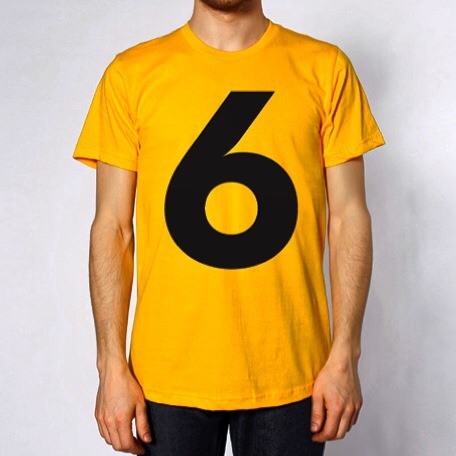
    Recently, you may have heard that Drake is about to give Toronto a new moniker: The 6. Some think it is in honor of our two main area codes 416 and 647, and I think that’s probably a good guess.

    But whatever the reason, I thought it was an interesting exercise in place branding. So I decided to partner with Toronto-based design firm Badd Press and make a “The 6” t-shirt (shown at the top of this post). You can get yours for $30 by visiting shopATC.

  • The impression you are leaving

    image

    “Toronto is a city that has long struggled to make any sort of impression on the imagination.”

    That is how Monocle correspondent Christopher Frey started his recent architectural feature on Toronto’s iconic City Hall. To watch the video click here. It’s about 5 minutes long.

    As a born and raised Torontonian who loves this city, I absolutely hate that sort of introduction. But at the same time, it doesn’t surprise me. Growing up in this city, there were always the haters. However, I think it’s important to keep 2 things in mind.

    Firstly, Toronto has gone through a dramatic transformation over the last decade or so. In fact, I recently had a friend say to me: “Brandon, 10 years ago you told me that Toronto was going to be a super cool global city. I didn’t believe you then. But you were right.” This is what I was getting at in my Guardian Cities piece when I talked about how people are becoming noticeably more passionate about this city. (I actually wrote about what my friend said but they edited that part out.)

    Secondly, if you’ve ever read Seth Godin’s book All Marketers Are Liars, you might remember this line:

    To illustrate what he means by this, Godin uses the example–among many others–of Riedel wine glasses. Riedel is a high end glassware company founded on the belief that every type of wine needs its own unique glass shape. And indeed, their customers believe that the right glass makes all the difference in terms of how their wine will taste. That’s why they buy them.

    However, when you blindfold those same people, they are no longer able to tell the difference between a Riedel wine glass and some cheap alternative. The wine all of a sudden tastes the same. What that tells us is that when we believe something is supposed to be better, we actually experience it differently. You could say that we’re actually lying to ourself.

    And I’ve thought about this same phenomenon when it comes to cities. When people visit a place like New York they’re supposed to like it. That’s what everybody tells them. New York is great. You’ll love it. But ultimately, that “supposed to” changes how people experience the city.

    Which is why when Toronto gets introduced as being bland and banal I get upset. Not only because I disagree, but because I know it’s creating a “supposed to” in somebody’s mind. And that’s not the story we should be telling as a city.

    Image: Wikipedia