
Daily insights for city builders, delivered every morning at 6 AM ET. I’m Brandon Donnelly — a Toronto-based real estate developer and founder of Globizen. I’ve been writing here since 2013.

Tag: marketing

  • The importance of storytelling

    Last night I was out for drinks with a friend of mine who runs an architecture firm in the city called Reflect Architecture. We started talking about the importance of marketing and storytelling in city building and then got onto the topic of Danish architect Bjarke Ingels and his firm BIG.

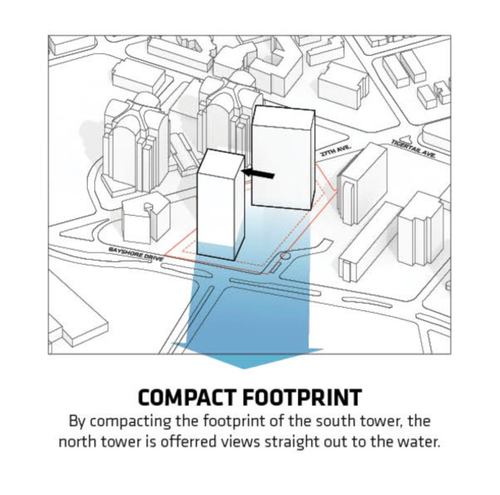
    At only 39, Bjarke Ingels has become a celebrity architect at a relatively young age. He’s working on projects all over the world from Vancouver to New York to Shenzhen. And he describes his work as a combination of “shrewd analysis, playful experimentation, social responsibility and humour.” But what has always interested me about BIG is their use of dead, simple, diagrams (see above for an example).

    A diagram is just a graphic way of communicating information. And lots of architects use them as a design tool. But what BIG does is use them to create a narrative around each and every project. If you look at their website you’ll see that every project is presented using a series of diagrams that outline the process used to arrive at the final design. You’ll never just see the final product. You always see the steps involved. Click here for an example from Vancouver.

    What’s powerful about this approach is that it demonstrates that there’s a logic behind every design outcome (even if sometimes it might be contrived or done after the fact). It’s not form for the sake of form; it’s form as a result of the uses in the building, the urban context, and so on. 

    But at the same time, I think it taps into a deeper psychological phenomenon: people love stories. In fact, research shows that when we’re told stories, our brains actually become more active. We pay closer attention.

    I mean, just think about how much people enjoy hearing about rags-to-riches stories. Nobody likes to talk about some rich person who was born rich. That’s not an exciting or interesting story. And it changes how we perceive that person. We want to hear about that guy or girl who came over from a war torn country and built an empire from nothing. Now that’s a good story.

    What I’m getting at is that I think a big part of Bjarke’s success has come from his ability to masterfully storytell and market both himself and his projects. Architecture schools don’t usually teach you how to market and sell; they teach you how to design. But the reality is that you need to sell. And storytelling is a great way to do that.

    If you liked this post, I recommend you check out this TED talk by Bjarke Ingels and this short interview with marketer Gary Vaynerchuk where he talks about how he used storytelling to sell wine.

  • Without trust, you have nothing

    I was reading Fred Wilson’s AVC.com blog this morning (as I do every morning), and I thought his post on trust was a really important one. He was talking about it in the context of building successful web applications, but I don’t think it’s only applicable to internet businesses.

    As marketer Seth Godin wrote on his blog earlier this year, the most important questions are not:

    Is my price low enough?

    Is it reliable enough?

    Do I offer enough features?

    Am I on the right social media channels?

    Is the website cool enough?

    Am I promising enough?

    No, the most important question in marketing something to someone who hasn’t purchased it before is,

    “Do they trust me enough to believe my promises?”

    Without that, you have nothing.

    I thought this was such an awesome, yet simple, post that I actually circulated it to a bunch of people in the office after I read it. Because whether you’re marketing widgets, marketing private cloud storage, marketing to investors, or marketing new condominiums, that question of trust is paramount.

    And it’s for that reason that I think social media and mediums such as blogging have become so important. Customers want to feel like they trust you before they buy your product. The best brands know this and forge “relationships” with their customers. And with the tools at our disposal today, it’s become a lot easier for companies to do that.

  • Things that are quintessential

    One of the things I think is important for cities to have are things that are quintessential. I’m talking about a quintessential behaviour, a quintessential experience, a quintessential accent, a quintessential architectural style, or whatever. I’m talking about the things that make people say: “Oh, that’s so New York.”

    What I’m essentially talking about is brand equity for cities. For better or for worse, when somebody associates something with a particular city, you could argue that that city effectively owns a trademark. (Definition of trademark: “…a recognizable sign, design or expression which identifies products or services of a particular source from those of others.”) In this case, the source is a simply a city.

    Sometimes these trademarks are an informal understanding amongst people in the know, but in other cases they can become quite legitimate. Take for example Chicago’s distinct architectural style known simply–at least within architectural circles–as the “Chicago School.” This is a style that Chicago clearly owns. And if another city were to adopt it, people might say: “Hey, that building reminds me of Chicago.”

    All of this is important because, just like companies, cities are increasingly in the position of having to compete for “customers” in a mobile and interconnected world. And if you ask some marketers, they’ll tell you (perhaps self-servingly) that brand is the most valuable asset a company has. But if you believe this to be at least somewhat true, then statements like, “Oh, that’s so (insert city name here)”, are actually pretty powerful.

    Is there anything about your city that you could say is unequivocally yours?

  • Am I supposed to like this city?

    Marketer Seth Godin just wrote a typically short blog post called, “Am I supposed to like this?

    In it he talks about the fact that we are, for example, more likely to enjoy the food at a fancy restaurant. And we’re also more likely to enjoy a bottle of wine if it’s expensive or if we believe it comes from some desirable wine region and it’s supposed to be good (you can even just switch the bottle).

    He then sums up this idea in one line that I really like: “Judgments happen long before we think they do.”

    Now, I’ve thought about this same idea with respect to cities. Take New York, for example. New York is famous. If I had to pick a capital for the world, it would probably be New York.

    You watch it in movies and shows (even if it’s actually filmed in Toronto, Chicago or some other stand in). We read about it. We hear about it. We generally form judgments without the actual experiences. That builds brand equity. We’re supposed to like New York. Sex and the City told us so. And that makes it all that much better when we eventually get there.

    Of course, it’s a bit of a catch-22. You have to be an awesome city for people to want to make movies and songs about you. But in this era of global connectedness, I think everyone, from citizens to economic development agencies, can fake it until that city makes it by investing in “supposed to.” Am I supposed to like this city?