Daily insights for city builders, delivered every morning at 6 AM ET. I’m Brandon Donnelly — a Toronto-based real estate developer and founder of Globizen. I’ve been writing here since 2013.

Tag: los angeles

  • Los Angeles seeks Creative Catalyst

    Dance in the Temple of Light by Harun Mehmedinovic on 500px.com

    https://500px.com/embed.js

    We all know that city building is a multi-disciplinary endeavour. That’s why I was incredibly interested to learn about a new “Artist-in-Residence” program that Los Angeles is launching:

    The Honorable Mayor Eric Garcetti, is pleased to announce the first collaboration between two City of Los Angeles departments to place an artist in residence in a department to serve as a Creative Catalyst who will develop creative intervention strategies to achieve department specific goals. The Creative Catalyst Artist in Residence Program will serve as a model to stimulate creative thinking and innovative projects, while supporting Mayor Eric Garcetti’s Back to Basics priority outcomes: to make our city livable / sustainable, prosperous, safe, and well-run.

    Cities are complex organisms. And some of you might be wondering how artists can help city build. But this is about bringing different minds together, thinking across disciplines and, hopefully, leveraging design thinking to solve urban problems. And LA is not the only city to try this approach.

    In my view, it’s not that dissimilar from the trend around “Designer-in-Residence” programs at venture capital firms and startup incubators. Cities, businesses, and many other organizations are recognizing that the way artists and designers think can be of tremendous value.

    So if you’re an artist who lives and/or works in LA, this might be something worth considering. You have until this Friday, November 6th, 2015 to apply.
  • Urban population densities, compared

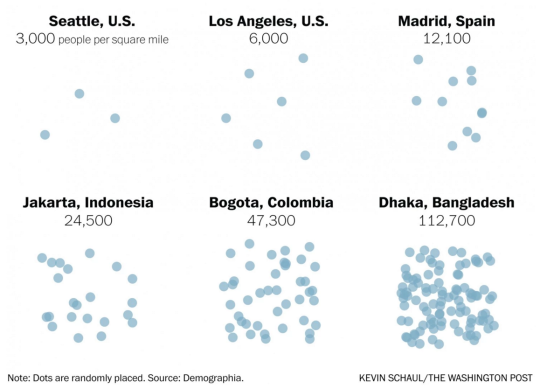
    Earlier this month The Washington Post published an article called, There’s no such thing as a city that has run out of room.

    And what it was really about was that when we say there’s no more room (I guess people are saying this), we are really saying that we just don’t want to allow anyone else to become our neighbor. Because the reality is that urban population densities vary widely around the world. So how can you really call a place full?

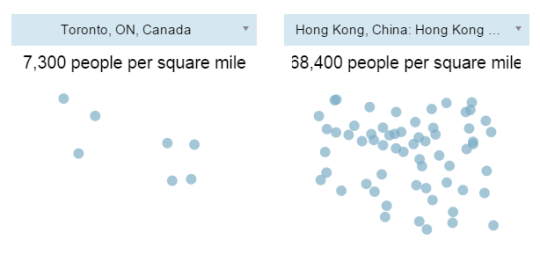
    I’m not sure I feel this pain point as much as the author, but I always find population densities to be a fascinating topic. And accompanying the article was a tool – using data from Demographia – that allowed you to compare the population densities of various cities.

    Here are are two scenarios I ran:

    It’s important to keep in mind that these numbers are averages for the entire economically contiguous region. So it tells you nothing about the potential spikiness of certain areas. That’s why the population density of New York (which includes portions of New Jersey and Connecticut) probably seems low to you.

    Still, it’s fascinating to see how extreme some cities – including some first world cities like Hong Kong – can be. Clearly many cities have a lot of room to become a lot more dense. And I think that would be a good thing.

  • The world’s top 23 financial centres (after London and New York, of course)

    The 2015 edition of The Global Financial Centres Index (GFCI) was just released last month. It is often used as one of the sources for ranking financial centres.

    The index – which is now in its 18th edition – is created using two main ingredients. The first is an analysis of 5 broad areas of competitiveness: 1) business environment, 2) financial sector development, 3) infrastructure, 4) human capital, and 5) reputational & general factors. And the second is an online survey given to financial services professionals. The 2015 edition includes responses from 3,194 professionals.

    Below are the top 25 financial centres in the world according to the GFCI (the full list has 84 cities).

    image

    Here are a couple of things to note from this year’s index: 

    London has overtaken New York for the top spot – but both remain more or less at parity if you dig into the numbers. 

    Dublin is performing particularly well in Western Europe.

    The leading centre in Eastern Europe is Warsaw (38th), with Istanbul just behind it.

    Toronto is now second in North America, only to New York.

    Sao Paulo remains the top Latin American centre.

    And, Los Angeles (49th) and Liechtenstein (60th) join as new entrants this year.

    If you’d like to see the full report and ranking, click here.

  • Cities with the most single men and women

    There are thousands of people who read this blog via email or by following on Tumblr. The rest of the readership just stops by on the web and visits periodically.

    But of the thousands of regular readers, I know that many do not click through to the comment section. And that’s a shame. Because oftentimes I find the comments more interesting than my actual post.

    Take for example yesterday’s post on The Millennial Dream

    The initial post was about Millennial housing choices (and some stats on marriage and fertility rates). The comments provided some additional color on the trends, but they also got into mobile dating apps and whether or not it’s easier or harder to meet people in cities, today. It was a fun discussion.

    This got me thinking and reminded me that people come to cities not only because of labor markets, but because of dating markets. 

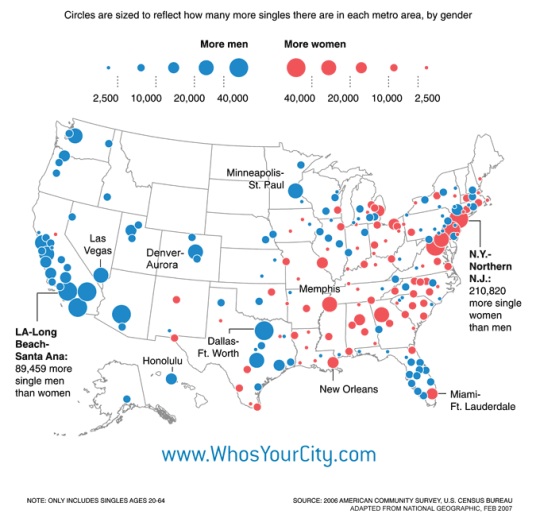
    So for today’s piece, I thought I would post the following diagram from Richard Florida’s book, Who’s Your City? It shows how many more singles (aged 20-64) there are – according to gender – in the largest US metro areas.

    I couldn’t find an equally detailed map for Canada, but based on this, it looks like Toronto is slanted towards single women and Calgary is slanted towards single men.

    Does the above look right to you?

  • The global pyramid of wealth

    Every year the London-based property consultancy Knight Frank publishes something called The Wealth Report. And it’s one of those reports that I could go through for hours. 

    It includes a ton of really fascinating stats that speak volumes about where in the world wealth is being created and how it’s moving around. And of course there are a lot of connections between wealth, real estate, and city building.

    Below are 3 diagrams that really stood out for me in the 2015 version. 

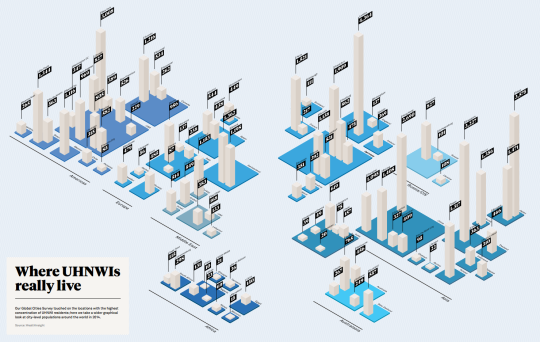
    The first diagram shows which cities have the most Ultra High Net Worth Individuals (UHNWIs). An UHNWI is defined as an individual with assets exceeding US$30 million, but excluding personal assets and property (such as one’s principal residence). Click here to see the full size image (I know the numbers are small).

    image

    Not surprisingly, London (4,364), Tokyo (3,575), Singapore (3,227), New York (3,008), and Hong Kong (2,690) are at the top of the list. But I was a little surprised – albeit happily surprised – to see Toronto (1,216) come in at #2 in North America, beating out Mexico City (1,116), Los Angeles (969), and Chicago (827). 

    The second diagram shows you how many square meters of luxury property (apartment) you can buy for US$1 million in a bunch of different cities around the world. 

    In Monaco (top end), that’ll buy you 17 square meters (183 square feet) and in Cape Town (bottom end), that’ll buy you 208 square meters (2,196 square feet).

    image

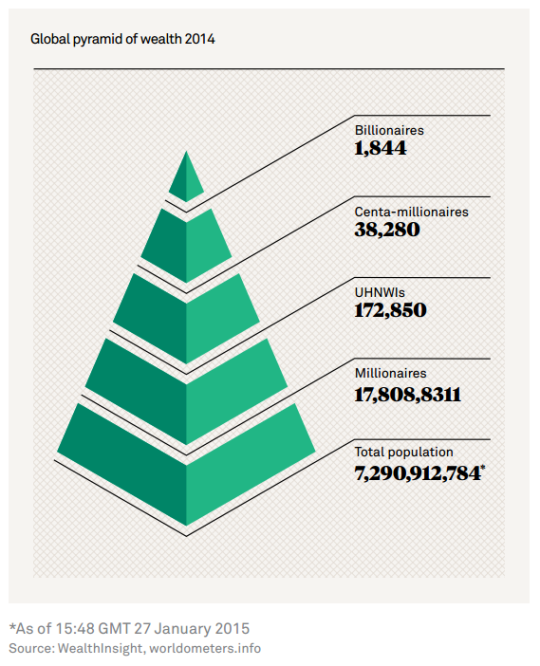
    The third and last diagram is what they call the global pyramid of wealth. It’s a pyramid of everyone in the world and then the number of millionaires, UHNWIs (see above), centa-millionaires, and billionaires. And if you do the math, the top of this pyramid comes nowhere close to 1% of the global population.

    image

    It’s fascinating (and exciting) to see where and how global wealth is concentrating. But it should also make you think about rising income inequality. I know it does for me.

  • The Olympics are dead. Or are they?

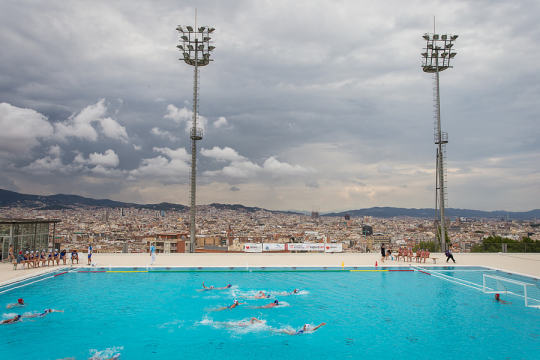
    Olympic Pool – Barcelona, Spain by Tom Weightman on 500px.com

    https://500px.com/embed.js

    Early this morning Professor Robert Wright – who is a regular reader and commenter on this blog – sent me an article from The Guardian called, ‘The Olympics are dead’: Does anyone want to be a host city any more? And that got me thinking.

    With Toronto having just hosted the Pan Am Games (the Parapan Am Games are still going on), there’s a lot of talk and debate happening in this city right now about whether or not we should make a go at hosting the 2024 Summer Games. The deadline for cities to express their interest is September 15th, 2015.

    The supporters (of which I would include myself) say it’s a great opportunity for civic (re)branding and urban renewal. It creates real deadlines to get things done. But the naysayers argue it’s a fiscal disaster waiting to happen. See 1976 Summer Olympics in Montreal.

    But in my view there are ways to host the Olympics and there are ways not to host the Olympics. Montreal (1976) is an example of what not to do. And Los Angeles (1984) and Barcelona (1992) are some of the best examples of what to do.

    The key is to think of the Olympics not as the end, but more as the beginning. In Olympic talk, they refer to this as legacy. Here’s what Los Angeles managed to accomplish as a result of the 1984 Summer Games (via Gizmodo):

    In 1979, the L.A. organizing committee had made a deal. If the games saw any profits, LA84 would give 60 percent back to the U.S. Olympic Committee and keep 40 percent for Southern California. At the end of the games, the total expenditures came in at a respectable $546 million, but even more impressive was the profit: A surplus of $232.5 million, meaning $93 million would stay in the region. This was huge. The only other games at the time which could claim to be financially successful at all were the other L.A. Olympics: The ones held in the city in 1932.

    The profits were used to create an endowment called the LA84 Foundation, which funds youth sporting events, resources, and facilities throughout the area. With smart management, the endowment has grown over the years, and over $214 million has helped an estimated three million children and 1,100 organizations in Southern California. Recently, the LA84 Foundation helped raise money to pay coaches and buy equipment at LAUSD high schools after budget cuts decimated their programs.

    The rest of the above article is definitely worth a read. It’s a great example of fiscal prudence.

    So what I am suggesting is not that we run blindly into hosting the Summer Games. But that we instead open our minds to the opportunities. Let’s great creative. If we could catalyze further city building, turn a profit, and leave meaningful legacies for this region (like what LA did), then why wouldn’t we want to have a go at it?

  • The world’s top 10 cities for prime property

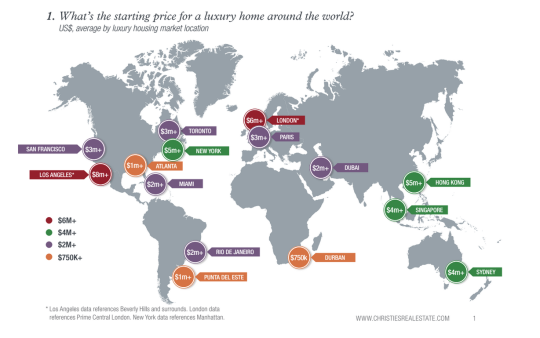
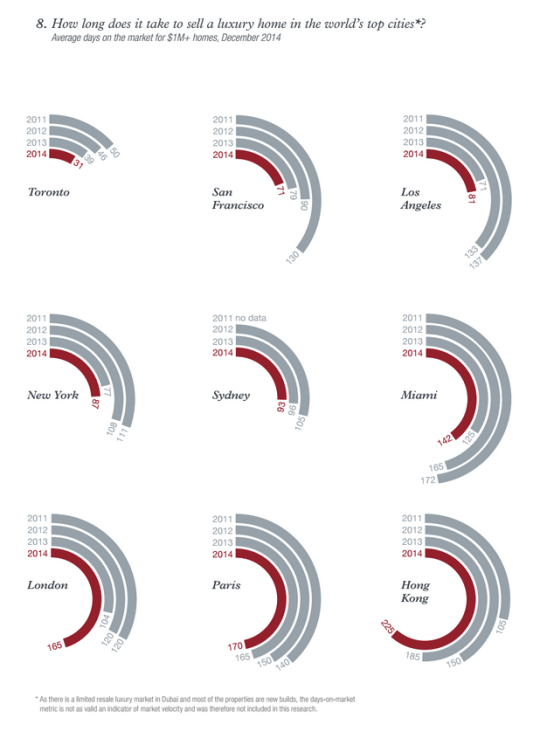
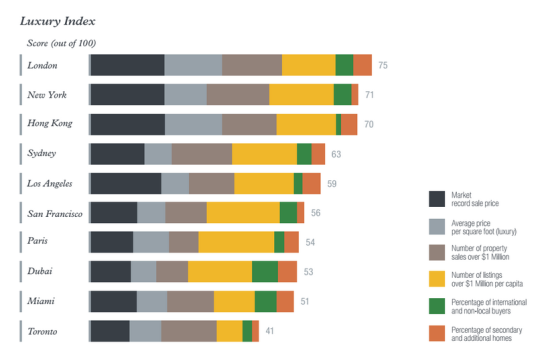
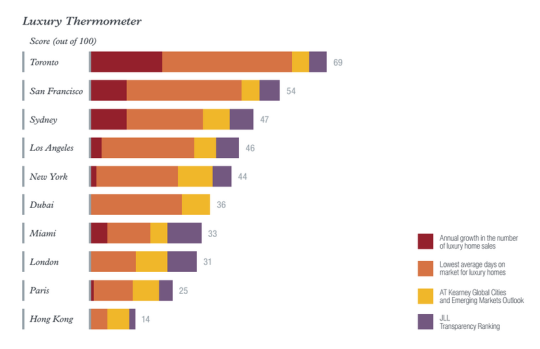
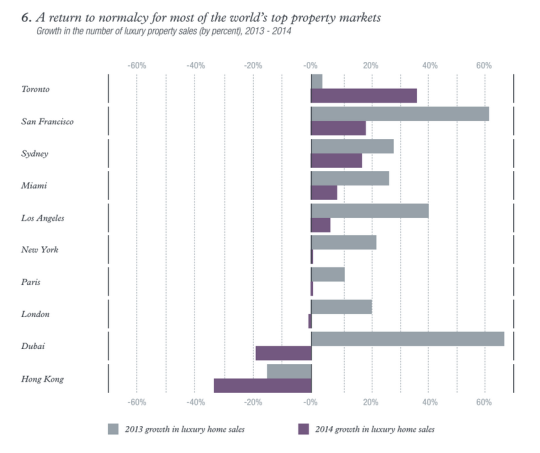
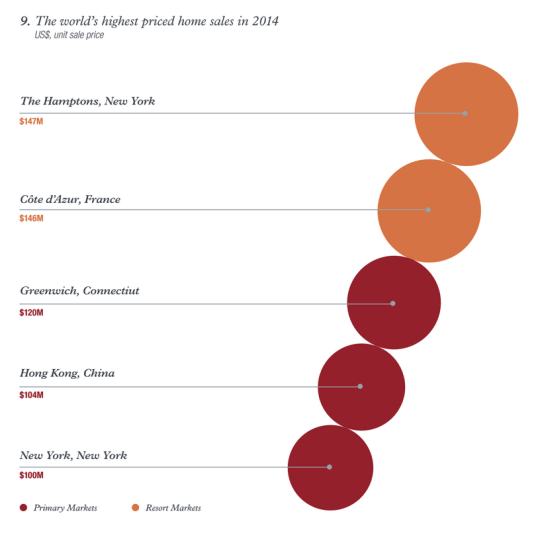
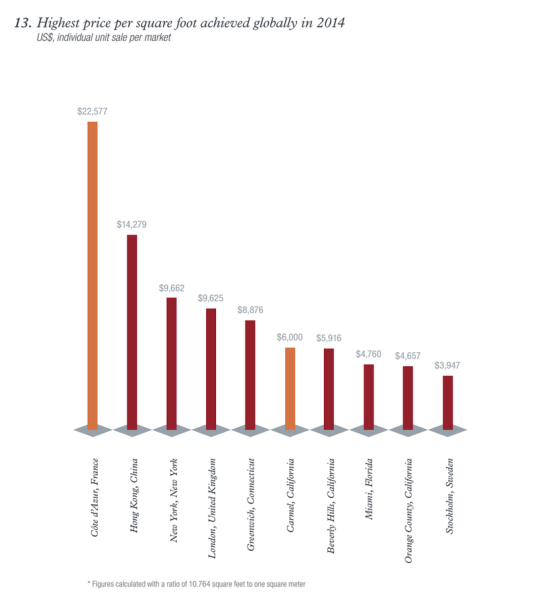
    This morning I read through a real estate report called Luxury Defined. It’s a look at the global luxury real estate market across “the world’s top 10 cities for prime property” and about 70 regional and resort destinations.

    It’s interesting to look at the trends and see how high-net-worth individuals (HNWIs) are choosing to allocate their funds in residential real estate. Here are some of the charts and diagrams that caught my eye as I was going through it (you may need to zoom your browser in):

    If you’d like to download the full report, click here. It’s free, but you’ll need to enter your name and email address.

  • What Rio de Janeiro looks like through an 80 megapixel camera

    Here’s a stunning time-lapse video of Rio de Janeiro that was shot with an 80 megapixel camera. It was done by LA-based photographer Joe Capra.

    [vimeo 119343870 w=500 h=281]

    10328×7760 – A 10K Timelapse Demo from SCIENTIFANTASTIC on Vimeo.

    Make sure you watch it full screen.

    As far as videos and photos go, it’s probably as close as you’re going to get to actually being there. And if you’ve never been to Rio de Janeiro (which I haven’t), it’s a great way to see and understand the city’s built environment. I loved looking at all of the details.

  • The new Toronto 2030 District

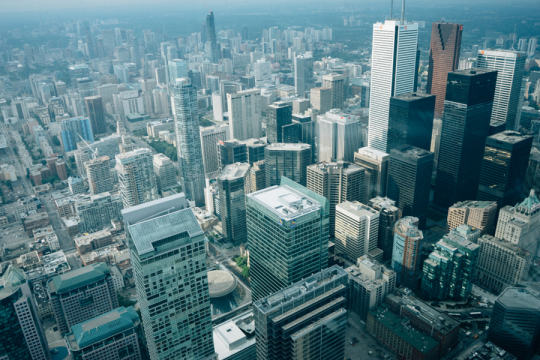
    Photograph Financial District, Downtown Toronto, Canada by Yeonju SEONG on 500px

    Image: Financial District, Downtown Toronto, Canada by Yeonju SEONG on 500px

    Today I learned about something new called 2030 Districts. They are: “designated urban areas committed to meeting the energy, water, and transportation emissions reduction targets of the 2030 Challenge for Planning.”

    Toronto’s new 2030 District is downtown, which is bound by the lake in the south, Bathurst Street in the west, Dupont Street and Rosedale Valley in the north, and the Don Valley in the east. 

    It’s the first district outside of the US. The other established districts are in Seattle, Pittsburgh, Los Angeles, Denver, Stamford, San Francisco, and Dallas.

    The goals for Toronto’s district are as follows (quoted from 2030 Districts):

    • To cut district-wide emissions in half, including zero-emissions from new buildings by 2030.
    • Support a better understanding of where and why energy use, water use, and GHG emissions occur across the District.
    • Work in partnership with building owners, service providers and conservation groups to accelerate the adoption of best practices for building design and management.
    • Facilitate broad stakeholder dialogues to uncover and overcome systemic barriers to long term reductions in energy use, water use and GHG emissions.

    I’m looking forward to following and learning more about this initiative. I think many of us can agree that producing less, not more, GHG emissions in the future would be preferable. And we know that the bulk of it comes from both buildings and transportation.

  • The value in small retail spaces

    image

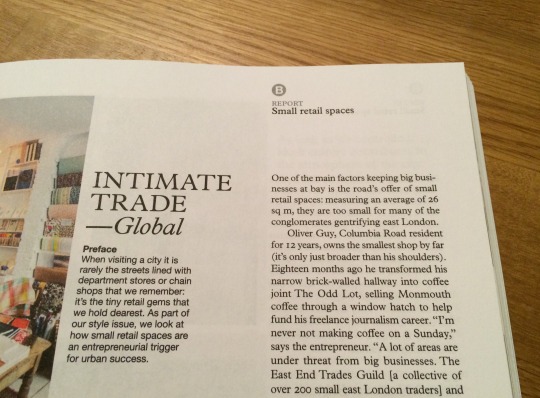
    This month’s issue of Monocle is centered around fashion, style, and retail. And one of the most interesting pieces is a report on small retail spaces. 

    The argument (which you can read in the preface shown above) is that micro retail spaces are incredibly important for entrepreneurship and urban vitality. Because if all a city has is large retail spaces, then you’re creating impossible barriers for new retail startups. The rents simply become too high.

    It’s on page 79 in case you have this month’s issue or want to go pick it up.

    After reading the article, I immediately thought of 2 posts that I recently wrote on related topics. The first is “Incubating new ideas in cities” and the second is “The hard things about retail.”

    In the first post, I questioned how cities might be able to encourage and incubate new ideas alongside new development and buck the Jane Jacobian truism that new ideas require old buildings. And in the second post, I expressed my concern for a micro retail condo complex here in Toronto that appears to be struggling.

    But maybe that micro retail complex is on to something (just with the wrong tenure: condo instead of rental). Maybe it’s as simple as starting with great urban design and small (affordable) retail spaces. 

    It seems to be working for Columbia Road in London, Knez Mihailova in Belgrade, and Tower Theater in Los Angeles (the 3 examples that Monocle gives).