Daily insights for city builders, delivered every morning at 6 AM ET. I’m Brandon Donnelly — a Toronto-based real estate developer and founder of Globizen. I’ve been writing here since 2013.

Tag: italy

  • This country has the highest fertility rate in Europe

    In 2023, there were 379,000 babies born in Italy. This is down from 393,000 babies in the prior year and represents a new record low. Already in 2022, the number of births was noted as being the fewest since Italy’s unification in 1861. The result is a “demographic winter.” Of course, this challenge is not unique to Italy. It is happening in most developed countries. Korea, for example, has a fertility rate somewhere around 0.72 babies per woman. Because of this, there are a lot of people in the world trying to figure out how to encourage more births.

    Here is Italy’s Prime Minister Giorgia Meloni:

    Meloni, herself a mother of a single child, has said it is a priority for her government to increase the birth rate and encourage women to have more babies “for the simple reason that we want Italy to have a future again”.

    So what’s causing this?

    One seemingly logical explanation could be that the employment rates for women and men are basically the same now. Fewer women are staying at home and so there’s less time to have and raise children. In fact, the opposite is true. If you look at fertility rates across Europe, high birth rates tend to correlate with high employment rates for women. I guess families need to be able to afford children. Here’s an excerpt from a Guardian article (c. 2015) on the topic of fertility:

    The map of the fertility rate in European countries more or less overlaps with that of women in work. In countries with relatively buoyant populations, such as France and Scandinavia, women play an important part in the labour market. According to data for 2010 published by the Organisation for Economic Co-operation and Development, the employment rate for women aged 24 to 54 in work was 83.8% in France, 84.4% in Finland, 85.6% in Denmark and 87.5% in Sweden, barely lower than the equivalent figures for men. In contrast, in southern Europe and Japan the share of women in work was much lower: only 64.4% of them had a job in Italy, 71.6% in Japan, 72.2% in Greece and 78.3% in Spain.

    Staying on the theme of being able to afford kids, another possible explanation might be that kids are expensive and so you need strong family-friendly government policies to help support them. While this I’m sure helps, there’s data to suggest that the correlation between these policies and birth rates is actually fairly weak. That’s why, even though many developed countries have expanded such policies, birth rates continue to fall. Here’s a graphic by John Burn-Murdoch from FT:

    So what the hell is it then? Well there is another possible explanation and it is that it’s more of a cultural thing. In the above article, John makes the argument that a number of other more important factors are leading to declining birth rates. Namely, more people are choosing to live alone, and not as a couple. Priorities have shifted, where family formation is no longer seen as central to a fulfilling life. And more young people are generally anxious. (He doesn’t get into why but I’m sure that it’s possible to blame TikTok.)

    But what really stood out to me was this graphic:

    Since the 1960s, parenting has gotten systematically more intense for parents. The average number of hours per day spent by mothers on “hands-on parenting activities” has grown significantly in most developed countries. However, there is one clear exception: France. It turns out that the French are, at least based on this data, less likely to be so-called helicopter parents. Parenting is less hands-on, kids get more freedom and — perhaps because of this — France has the highest fertility rate in Europe at over 1.8 babies per woman.

    This is not to say that France’s family-friendly policies aren’t doing something as well. I would imagine they are. But the above makes intuitive sense to me. If you create an environment where the threshold to be considered a good parent is constantly becoming more duanting and more life-consuming, it’s no surprise to me that more and more people are simply saying, no thank you.

  • Retiring on Lake Como

    For those of you thinking about summer in Europe right now, here is an interesting WSJ article about the real estate market in Lake Como, Italy. It’s behind a paywall, though, so here are two things that stood out to me.

    Firstly, the market is all about foreign buyers:

    The key driver of the Como market is, and has long been, foreign buyers. Prepandemic, Baysal estimated, non-Italian buyers were responsible for 70% to 80% of sales, with buyers from Russia, the U.K., Germany, and Switzerland leading the way. Today, foreign buyers still dominate. But while Russian and British buyers have gone quiet, said Baysal, North Americans stepped into their shoes last year, attracted by the relative strength of the dollar.

    More:

    Sara Zanotta, founder and managing director, Lakeside Real Estate, said most of her buyers are American, Swiss, Scandinavian and German vacation-home buyers. Armed with budgets of between $880,000 and $2.75 million, they are eager to buy a four- to five-bedroom villa, preferably historic, with a lake view and within walking distance of the water. Apartments in historic houses are also popular. “Outside space is a must,” she said. As a result of strong demand, Zanotta estimates that prices for this class of home have increased by around 20% between 2021 and 2022. 

    Secondly, there appears to still be some deals if you don’t need to be directly adjacent to George Clooney. The first home that is profiled in the article is a 1,000 sf two-bedroom condominium with a clear and direct view of the lake. It was purchased back in 2020-2021 for US$254,000.

    That feels very reasonable — $254 psf! The owner also purchased the property site unseen, visited it for the first time in 2021, and is somehow already approved for an Italian citizenship. (Doesn’t naturalization usually take 5 years of residency?)

    I can think of worse places to retire than Lake Como.

  • Pill-shaped prototypes

    Back in 2020/2021 when we were getting ready to launch sales for One Delisle, the team came up with the idea of pill-shaped kitchen islands for our residences. 

    What that means is we wanted to use perfect semi-circles on both ends. We didn’t want oval islands. We didn’t want distorted semi-circles. We wanted islands shaped like pills!

    We felt these opened up the kitchens and also looked really unique. So with Studio Gang and the rest of the team, we proceeded to design a few different types.

    We needed ones that would work for smaller suites, we needed ones that would work for larger suites, and we needed to accommodate breakfast bars/seating.

    When we approached Scavolini Toronto about this idea their first response was, “we’ve never done this before. It would be a first.”

    However, their second response was, “but we’ll figure it out with you.” And based on this response, we built (by hand) a pill-shaped island for our condominium sales gallery, and then included them as part of One Delisle.

    Fast forward to 2023 and we are now in the “let’s figure it out phase”. This week we reviewed the very first production prototypes in Scavolini’s factory in Pesaro.

    They are everything we could have hoped for, and we are thrilled that Scavolini was a willing partner in this endeavor.

    It’s not easy doing new things in construction. The smallest things can (usually?) end up being a lot more work. But it all feels worth it when you get to see the results.

  • Scavolini’s pasta sauce test

    Today I learned that one of the most important quality assurance tests you can run on a kitchen is this one here:

    It is the “pasta sauce test”. And it involves repeatedly boiling a cauldron of water underneath some cupboard doors for at least several hours.

    It is an important test because the combination of heat and humidity is particularly tough on certain kinds of finishes.

    So if you happen to be in the market for a new kitchen, make sure you ask them about the pasta sauce test.

    P.S. Scavolini is supplying the kitchens for both Junction House and One Delisle.

  • A few observations about Venice

    We are on the train headed to Milan this morning, so as is customary on this blog, here are a few observations from the last few days in Venice:

    • Venice was a dominant republic for some 1,000 years. It was the fulcrum point of trade in Europe and, at one point, its wealthiest city. But that started to change in the 15th century, which is an important reminder that nothing is guaranteed. The world changes. Markets change. And maybe you won’t be as relevant tomorrow, unless you can find another economic reason for being.
    • If you’re an old city with lots of history, perhaps the easiest fallback plan is tourism. And it goes without saying that Venice gets a lot of tourists. I was, of course, one of them. After Italian, the most commonly overheard language on the streets seemed to be French. Maybe it was the time of year?
    • Besides my debilitating spring allergies, May feels like a reasonably optimal time to visit the city. I don’t think you want to visit Venice in peak summer. Too many meandering tourists taking photos (myself included). And too hot and humid. A high probability of “walking rage.”
    • Hotels in Venice are not cheap. But the city itself didn’t seem overly expensive, at least compared to many other top tourist destinations. Think €2.50 jugs of wine, €20-30 for very nice local leather goods, and €110 for a 7-course Michelin-starred meal.
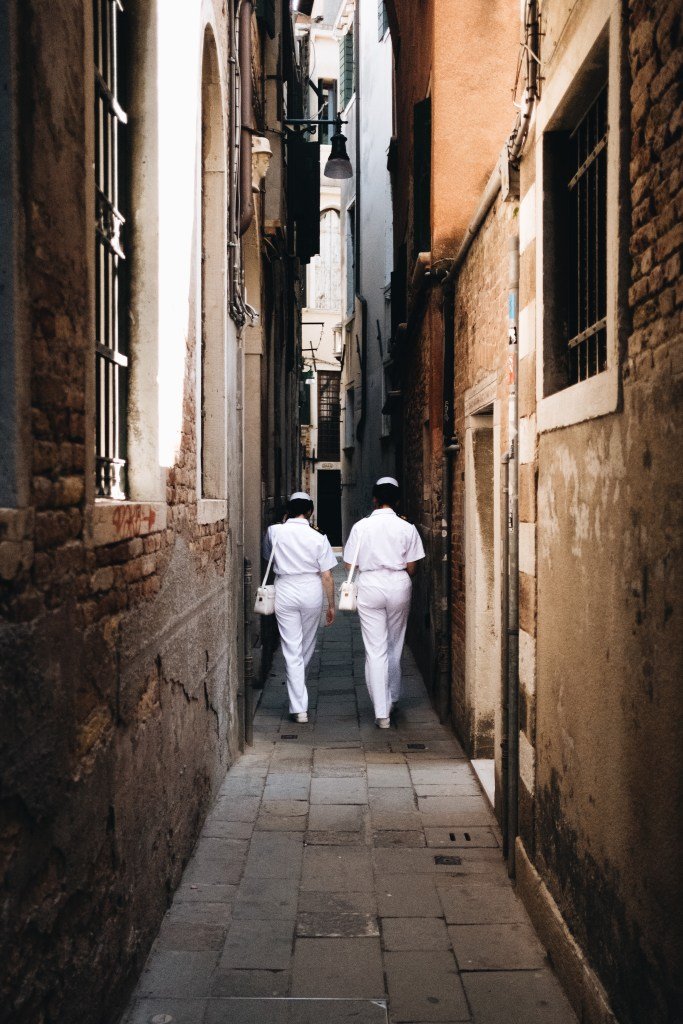
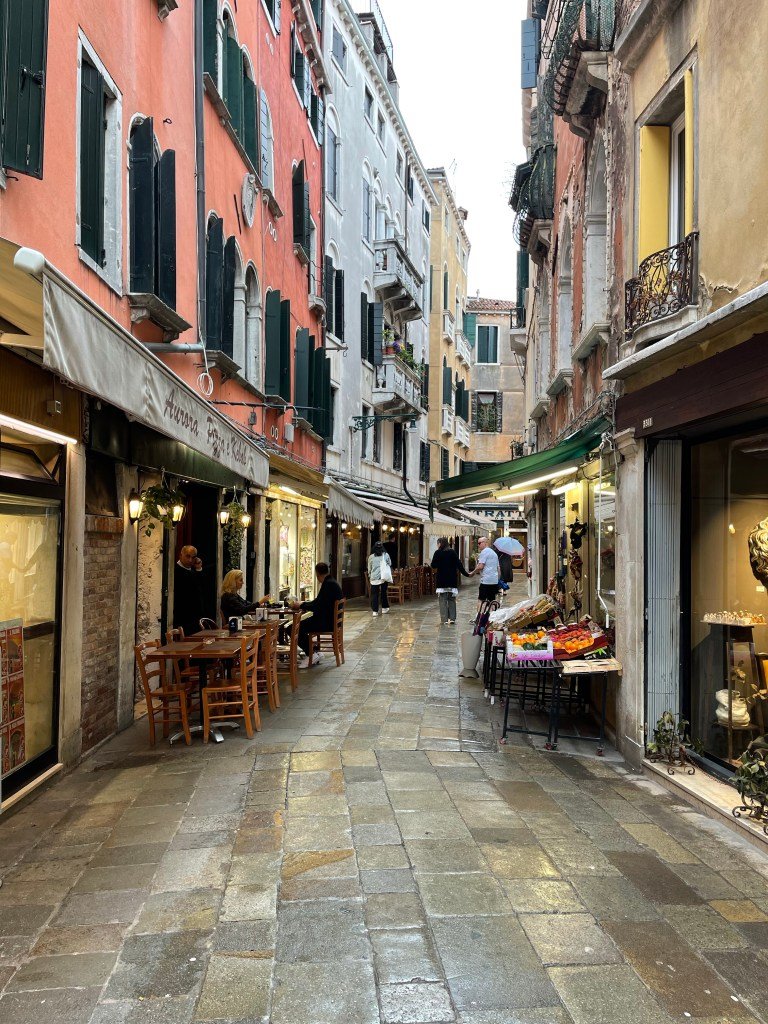
    • Venice has some of the most compact streets I have ever walked in. I didn’t have my laser distance measurer on me, but in many cases, you can barely fit two people side-by-side. I certainly couldn’t extend my arms fully outward. (See above photo.)
    • Wonderful doorbells. Virtually every apartment in Venice, has an array of doorbells at its front door. They are beautiful, typically in metal, and almost always round. But in addition to looking nice, there is also something very personal and about seeing people’s names right on the street. This probably tells you something about how differently privacy and security are viewed in the city.
    • That said, Venice isn’t a place where I would want a pied-à-terre. (I like to think about this sort of thing when I travel because it speaks to impressions of a place.) I mean, I love it, but: Too many tourists and the whole “we are sinking and have regular floods” thing seems like a bit of a problem. For me, it’s a city that I’d like to regularly visit. We spent much of our 2 days at the Venice Biennale, and there’s obviously a lot more to see.
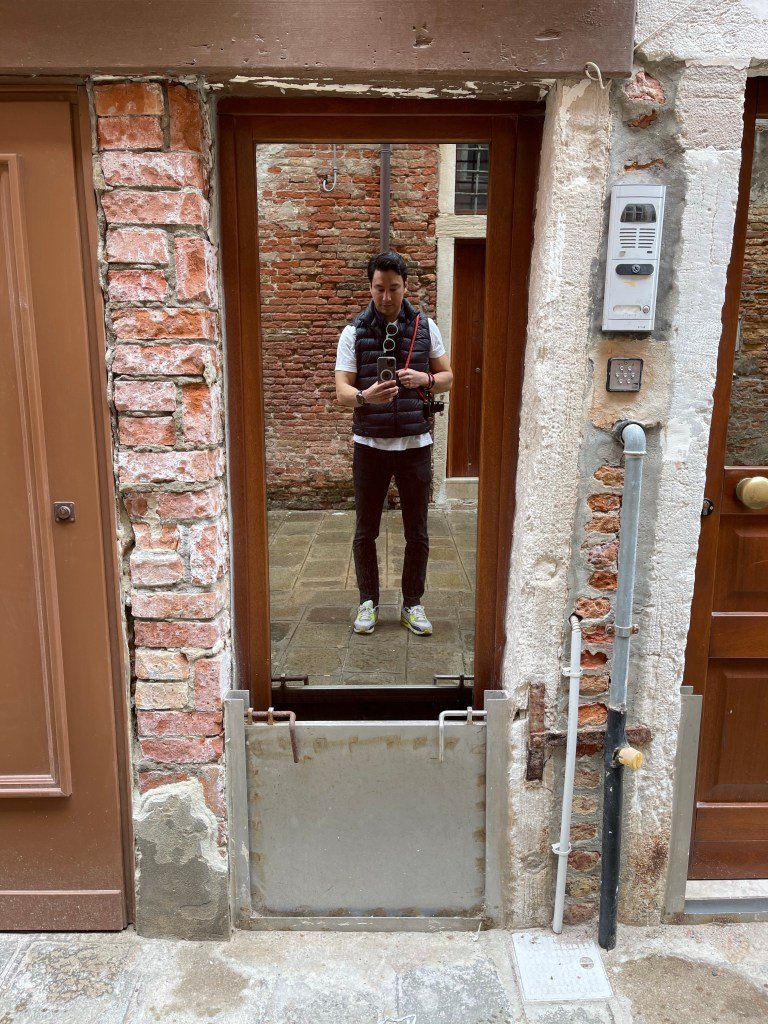
    • Finally, and this also goes without saying, but Venice is a city that is necessarily preoccupied with controlling water. Our hotel room had big rain boots in it, just in case. The base of every building is generally solid up to knee height. Interiors have tall tile baseboards. Front doors have removable flood dams. And there are markings across the city indicating some of its historic flood levels. As I understand it, this was always a problem for Venice; however, it is getting worse. I think it tells you just how economically valuable it was for Venice to be located where it is, in a shallow lagoon at the top of the Adriatic Sea.
  • Streets of Venice

    This entire city is centered around controlling water. Omnipresent front-door flood dam:

    Venice has great doorbell game. If it hasn’t already been done, I think someone should make a coffee table book of these:

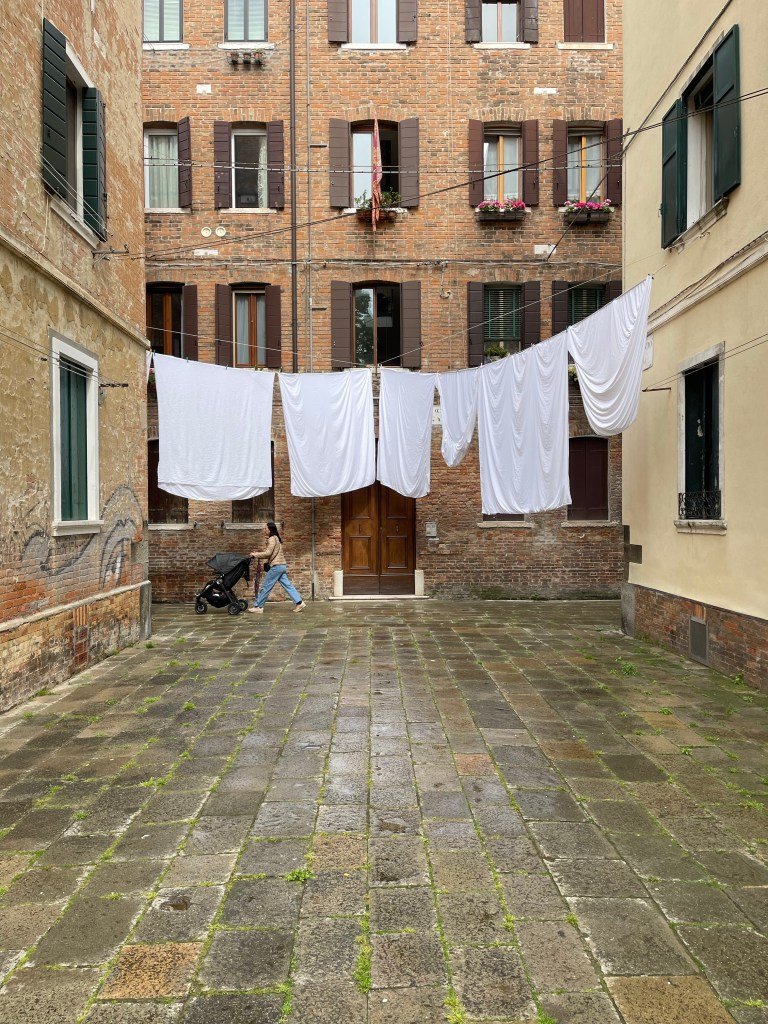
    This city is also quite prolific when it comes to urban laundry:

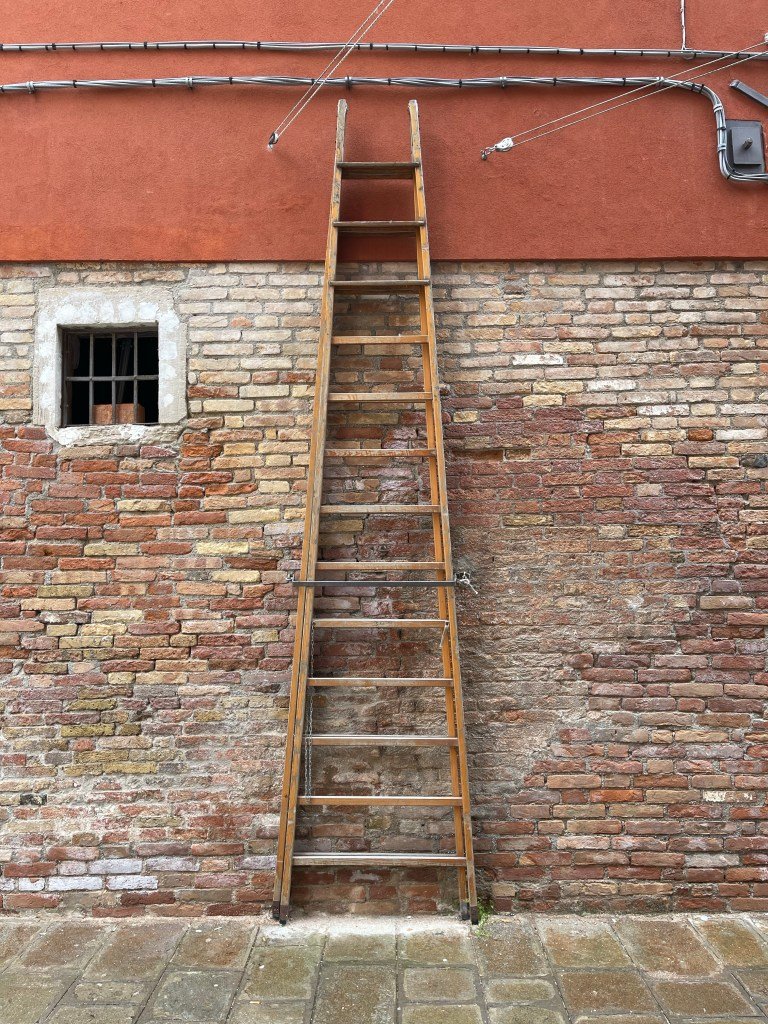
    We found a number of these street ladders. Presumably laundry related:

    Religion in the streets:

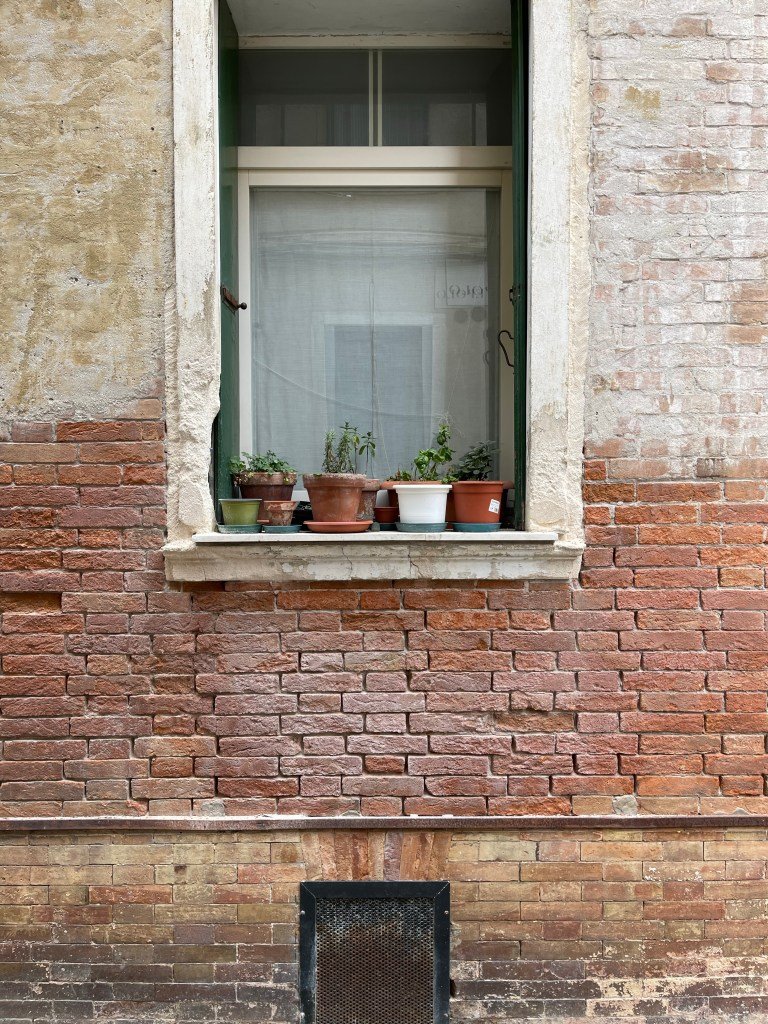
    Window garden:

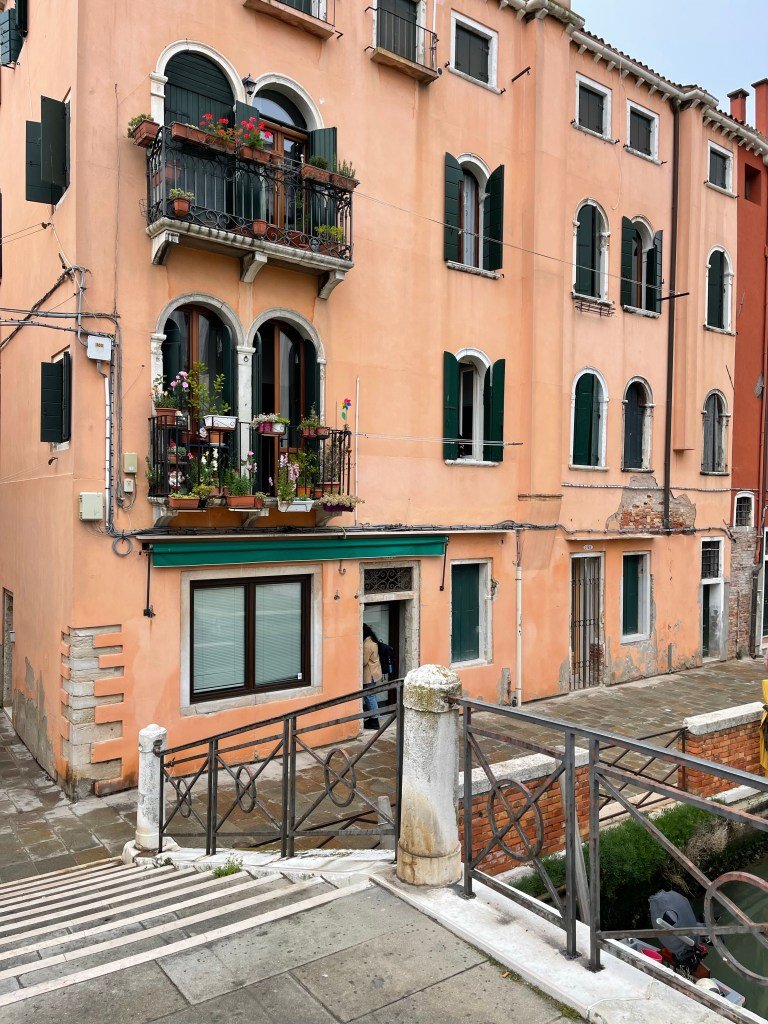
    Balcony gardens. Your reminder that (1) small balconies can still be impactful and that (2) balconies with a relationship to the street are used differently:

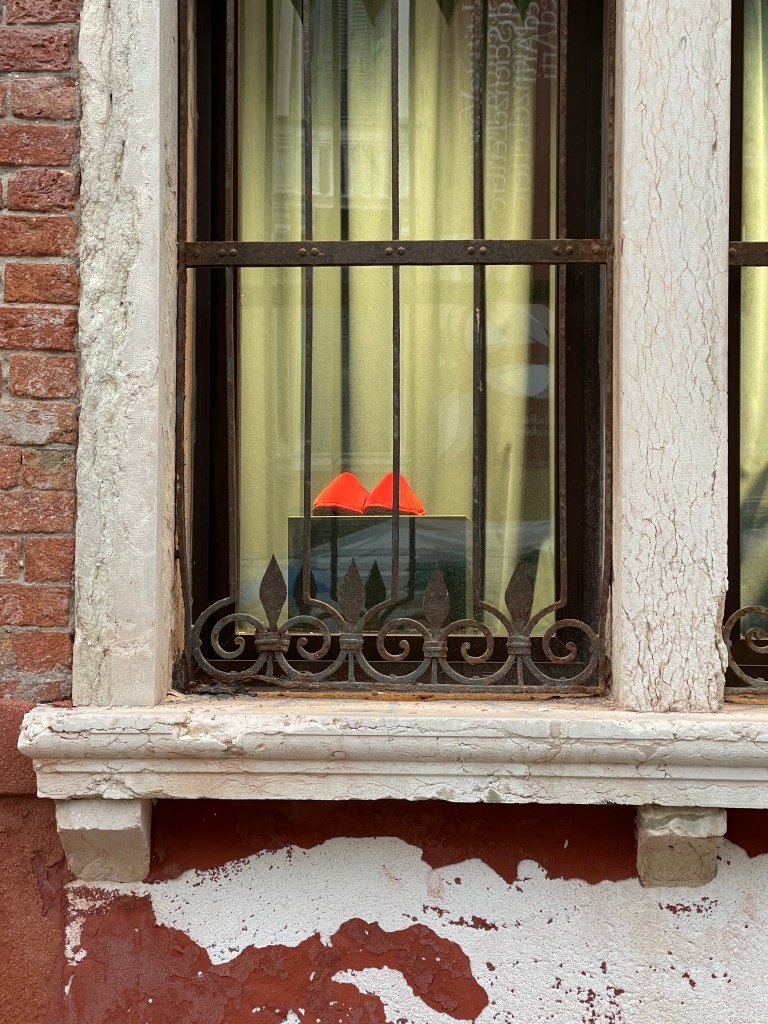
    Colorful shoes and green curtains:

    Grand Canal:

    The kind of street we should allow in North American cities:

  • Last night in Sicily

    The first time I went to Italy was, I think, when I was about 18 or 19 years old. My friend and I took the train down to Milan from Zug, Switzerland (where his father lives), and we got out of the train station without any idea as to where we were going or where we were going to stay. We were young and brazen and clearly not very prepared. I was probably also wearing Diesel jeans and holding a Sony Ericsson T68 in my hand. Sadly, neither of these things were all that helpful as travel aids.

    Today it’s impossible to imagine traveling without our smartphones and apps like Google Maps, Google Translate, Airbnb, Uber, and many others. I know that Uber has received its share of criticism over the years, but if you want to fully appreciate what Uber brought to the world, go to a place that you don’t know, that is generally unsafe, and where you don’t speak the language. It becomes invaluable. (This was Rio de Janeiro for me.) But even without all three of these things, it’s an incredibly powerful tool.

    In situations where there is zero overlap in languages, I have also used Google Translate to have entire conversations. When push comes to shove, I prefer this approach over trying to impose English (or French) on someone. After all, I am the visitor. I should be the one bending as much as possible. You can also use the app to photograph a restaurant menu and have the entire thing translated in realtime. This to me — realtime reading — feels like a powerful use case for when augmented reality arrives.

    I also like to use to Google Maps to fastidiously track where I want to go and where I have been. I love logging my travels, and that is much easier to do today compared to the Diesel jean days. I also try and remember to pre-download whatever maps I need so that I’m less reliant on roaming. Here is what Marseille and Sicily look like right now following our trip:

    (If any of you are looking for recommendations, CRABE-TORO was our absolute favorite restaurant in Marseille and Càssaro was our favorite place for a drink in Noto, Sicily. We, unfortunately, never tried the food at the latter, but I’m sure it’s terrific.)

    Technological change has always elicited criticism, negative externalities, and some people wishing that things would just remain as they are. And there is, of course, something liberating about getting off a train in a foreign city and figuring out things as you go. In Milan, we simply walked into various hotels, asked them what their rates were, and then probably got taken advantage of as two young Canadians.

    At the end of the day, though, I am a firm believer that the world is a better place because of technological progress. From the Gutenberg printing press to Google Maps, technology empowers us as humans. And I have little doubt that 10 years from now we’ll all be traveling with some sort of augmented reality device and romanticizing the good old days of pins on a Google Map.

    For the Canadian readers out there, I wish you all a happy Thanksgiving weekend. I am back in Toronto and regularly scheduled programming will now resume on the blog. I hope you enjoyed some of the post diversions over the last 10 days.

    Photo taken at La chiave in Catania, Sicily

  • Venice in numbers

    Here are some interesting figures about Venice take from this recent FT article by Chris Allnutt:

    • Tourist visits to Venice last year were estimated to be about 1/5 of what they usually are
    • Short-term rental bookings as of December 2020 were down about 74% year-over-year
    • It is estimated that short-term rentals normally represent about 12% of homes in Venice (this is significantly higher than the “typical city” which is estimated to be about 1-2%)
    • Even before the pandemic, average property prices had declined from about €4,500 per square meter in 2018 to €4,341 in 2019 (2020 data is still coming)
    • Pre-pandemic, the population of the city was about 50,000, which is less than a third of what it was back in the 1950s
    • A 2018 study by Airbnb reported that for every local Venetian the city had 74 tourists on average (wow)
    • Being a dominant port city, the city has generally been disproportionately impacted by plagues and other health crises throughout its history
    • The Lazzaretto Vecchio, which still stands today, is a small island in the Venetian Lagoon that was founded in the 15th century as a hospital to care for plague victims; apparently it was the first of its kind in the world
    • During the 15th century, Venice saw its population drop by about two-thirds as a result of an epidemic
    • At the height of the Republic of Venice in the 1790s, the city had a population of about 170,000; after falling to Napoleon it halved to about 96,000
    • It’s worth pointing out that the “height of the republic” occurred after many great epidemics; the subsequent population decline was seemingly the result of a conquest and not pestilence

    Photo by @canmandawe on Unsplash

  • European Alps are home to a third of the world’s ski resorts — but they’re mostly closed

    This winter was supposed to be the 12th edition of a ski and snowboard trip that I do every year with a group of friends from both Canada and the US. Last winter we were in Fernie, British Columbia and this winter we were planning to go to Europe. But for obvious reasons, the trip has been cancelled. It’s going to be a tough season for the ski industry.

    According to this recent FT article, the European Alps are home to more than a third of the world’s 2,084 ski resorts. Typically, these resorts bring in about €28 billion in revenues over the course of a season, which is similarly about a third of the global total and almost 7% of the value of the European Union’s overall tourism market.

    But many/most resorts are closed right now. France has shuttered all ski resorts until at least January 7, 2021. And Switzerland, while “cautiously open,” is apparently getting pressure from its neighbors to close down again as further quarantine restrictions are put in place.

    Interestingly enough, some resorts are already reporting higher than normal early bookings for the 2021-2022 season. This is according to the same FT article. Instead of several hundred early bookings, which would be typical, they’re reporting several thousand. And many of the bookings have moved upmarket compared to prior years.

    What this starts to indicate is that we are likely to see an explosion in travel and leisure spending as soon as people feel safe and as soon as these restrictions are lifted. Demand is getting pent-up right now and that can mean only one thing: the 12th annual ski and snowboard trip needs to be a banger.

    Charts: Financial Times

  • How Europe is reopening

    Just over a month ago, as North America was beginning its lockdown, the Europeans were the ones showing us how to stay sane in quarantine through balcony orchestras and viral internet videos. Now we’re looking to them for how best to reopen the economy and minimize the number of fits and starts.

    • This morning Spain recorded its lowest daily death rate from the coronavirus. It is beginning to prepare for a phased relaxation of its lockdown rules. Things will not return to normal overnight. [Financial Times]
    • Spain allowed construction activity and manufacturing to resume this past week. As a reminder, Spain’s strict lockdown started on March 14. [New York Times]
    • Bookstores are open in Venice, but that’s about it. Customers have to enter one at a time, or schedule an appointment. Hotels, restaurants, and cafes remain shuttered. It is believed that at least 1/6th of all Italian restaurants and bars will not survive. Reopening is not happening uniformly across Italy’s 20 regions. [Wall Street Journal]
    • Last week, Denmark became the first country in the Western world to reopen elementary schools. The desks are far apart and teaching outside is being maximized, but some/many are concerned that this is too soon. Are we prioritizing the economy (i.e. free up the parents) over the health of our children? [New York Times]
    • The Czech Republic currently has one of the lowest number of cases on the continent. But hardware stores and bike shops are some of the only nonessential businesses that are allowed to be open. The Easter weekend saw an over 60% increase in year-over-year sales. Biking is something to do right now. [Wall Street Journal]
    • On Monday, the lockdown will be further relaxed by the Czech government. Weddings of up to 10 people will start to be allowed. Gyms are expected to open on May 11, but their change rooms will remain closed. (I’m surprised by this one.) Malls, hotels, and indoor restaurants aren’t expected to reopen until June 8 at the earliest. Should the number of new daily cases exceed 400 going forward, the government has said it will reimpose a lockdown. [Wall Street Journal]
    • The UK is not yet considering a relaxation of its lockdown. As of Sunday, the situation remains “deeply worrying.” The UK currently has the 5th highest national death toll. [Globe and Mail]
    • On April 13, Emmanuel Macron announced that France would begin a phased reopening of its economy — schools and some businesses — starting on May 11. This is a unique approach. He gave a firm date, well into the future. What if this doesn’t make sense when the time comes? Clearly the government felt that the psychological benefits of a firm date outweighed the potential risks. Minimize uncertainty during an uncertain time. [Le Monde]
    • Lots of discussion around the porosity of borders. Logically, there’s a view that unless there’s a common strategy, it’s better to keep borders closed. But what are the economic implications of doing that? [New York Times]

    Photo by Grant Lemons on Unsplash