Daily insights for city builders, delivered every morning at 6 AM ET. I’m Brandon Donnelly — a Toronto-based real estate developer and founder of Globizen. I’ve been writing here since 2013.
I recently connected with one of the principals of a Toronto-based construction management firm called Ripple Projects, which focuses primarily on contemporary custom homes (credit to 52 Pick-up for the introduction).
They’ve only been in business for a few years, but the founders spent many years prior to this doing similar projects at similar companies, such as Wilson Project Management.
Since they don’t yet have a lot up on their website, I asked if he could share one of his recent projects with me. He was happy to do that and so, with his permission, I’d now like to share it with all of you.
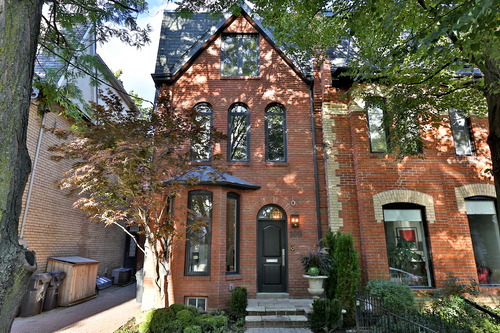
It’s a renovation and expansion of a semi-detached house at 109 Hazelton Avenue in Toronto’s upscale Yorkville neighborhood. The end result is roughly 3,000 square feet with 3+1 bedrooms and 5 bathrooms. If I remember correctly, it sold for close to $3 million.
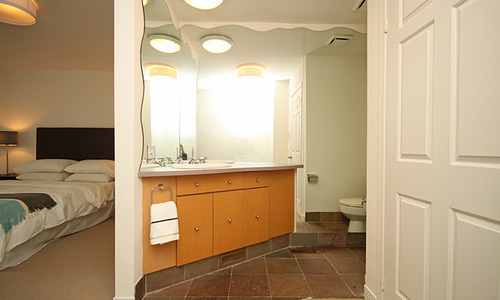
Here are a few before pictures. It wasn’t in bad shape – just a bit dated.
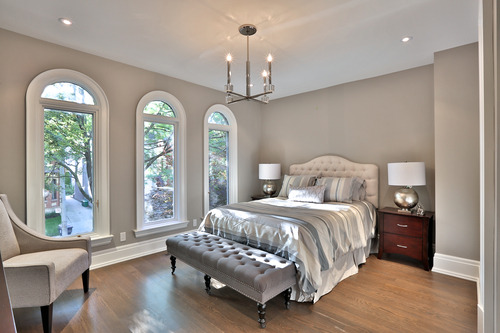
And here are a few after photos.
I personally would have gone with something even more modern, but that’s just me and I wasn’t the client. It’s still a phenomenal project. So if you’re in the market for a new custom home, I would encourage you to give Ripple Projects a call. I was really impressed by our conversation.
Note: I have zero affiliation to the company. I just believe that good people deserve exposure.
Really enjoyed reading this post about being a real estate developer. I was just wondering if you could do a write up on the various jobs and functions in a typical real estate development company so that people like me, who intend to work for a developer can roughly know what kind of skills are required or demanded in order to work there.
It’s a great question and so I will try and answer it today. The first thing I should say though is that real estate developers are typically very lean on people. I’ve worked for big publicly traded real estate companies and small boutique ones, and the development teams are always fairly small.
It’s that way because development projects can be messy and intermittent. The industry itself is also prone to regular market cycles and so the strategy is generally to remain fairly lean and outsource a lot of the work. You ramp up consultants and suppliers on a per project basis – as you need them.
With that said, let’s talk about the typical development process and some of the key skill sets required. A simplified process might look like this:
Buy development site (Acquisitions)
Design a project (Consultant Coordination)
Make sure project is feasible (Finance)
Obtain approvals for said project (Planning & Approvals)
Sell/lease space (Sales, Leasing & Marketing)
Build project (Construction)
Make money (The goal)
Depending on the size of the firm, one person may be responsible for managing many if not all of these steps, or they may be split up into different departments. So you could end up with a department list like this:
Acquisitions
Development/Project Management
Finance
Sales, Leasing & Marketing
Construction
From my experience as a developer, you’re going to be involved in all aspects. And that’s part of what makes development so exciting. But let’s talk about some of the key areas:
Planning & Approvals
After tying up a winning development site, securing your approvals (commonly referred to as “entitlements” in the US) is usually the first major step. The reason this step exists is because oftentimes what you want or hope to build isn’t what you’re actually allowed to build as-of-right.
So you have to go through a process to make that happen. It can take years depending on where you might be doing business, but there’s typically a significant amount of value creation at this stage. Some developers only focus on this stage and don’t actually build.
City planning is a good background for this function. You need to understand the local planning policies and frameworks.
Consultant Coordination
As I mentioned before, development teams are often small. And that’s because all developers rely on outside consultants to make a project happen (architects, engineers, and so on). So a big part of being a strong developer is just being a strong project manager. The expression often thrown around the industry is that development is like herding cats.
Having some sort of a technical background helps for this function. You end up dealing with a lot of technical details (which I find super interesting), and so it helps to have a bit of a background or an interest. If you’re not inclined in this way, you might find this area boring.
Financial Modeling
Building project pro formas and managing budgets is obviously a key component of the development process. From the moment you first look at a site up until project completion, you’ll be building financial models and constantly refining them as you get more information. The first version might be on the back of a napkin and the last version might be a complex Excel spreadsheet.
Banking and finance is obviously a good background for this function. But you also need to understand the real estate business. Models are only as good as the information you feed it, so your assumptions have to be sound.
Sales, Leasing & Marketing
I cannot over emphasize the importance of this function. If you are not selling units or leasing space, then you do not have a project. So no matter how amazing you might be at all the other functions (even fundraising from investors), if your firm is not bringing in money from your customers (purchasers or tenants), then you are dead.
When I was at Penn, a lot of the real estate professors used to tell us that leasing is the best way to get started in the industry. And I don’t disagree with that – even though I didn’t start there. This is often handled by a separate department and/or outside team, but you’ll need to be intimately involved.
Construction
If you’re at this stage, that’s usually a good sign. It usually means you’ve managed to sell a bunch of units and/or lease a bunch of space. Some developers (with enough scale) will have a construction team in-house, but many others will just outsource it to a 3rd party. Regardless of the setup, it once again helps to have a technical background.
If I missed anything or you want to add more detail, please let me know in the comment section below. I’m always happy to receive questions and post ideas, so feel free to tweet or email me. Tweets will almost always get a faster response.
Here’s a snippet that summarizes the things he believes we should be doing:
Municipalities across Ontario also have significant tools at their disposal to make a difference. To date, these tools have not been co-ordinated to achieve maximum bang for the buck. Property taxes can and should be waived not only for affordable rental homes but for affordable ownership homes as well. Additionally, cities can and should waive all development levies and other municipal fees for affordable rental and ownership housing.
Combined, these two measures provide municipalities with powerful leverage to implement inclusionary zoning — the most important tool in the affordable housing tool box. Inclusionary zoning on a city-wide basis creates a level playing field, an opportunity for a constructive partnership between municipalities and private sector developers to create both affordable ownership and rental homes within every new building approved for construction.
For those of you who might be unfamiliar with inclusionary zoning, it’s essentially a zoning requirement to build a certain number of affordable units in any new construction project. It originated – as far as I know – in the US, but has been fairly controversial since the outset.
So today I thought we could have a discussion on the merits of inclusionary zoning. Do you think it’s a good or bad thing for cities? Is it really the most effective way to deliver affordable housing at scale? Leave your thoughts in the comment section below 🙂
I don’t have a strong view on inclusionary zoning, but I do believe that affordable housing and a mix of incomes is critical to cities and neighborhoods.
I do, however, wonder if it’s one of those things that seems to make a lot of sense, but actually has a bunch of negative externalities associated with it. Maybe the answer is to just prototype the idea and then iterate on it.
This Tuesday evening at 630pm, WORKSHOP – which is a design studio, gallery, and retail shop located in Yorkville, Toronto – will be hosting a panel discussion titled: What is Smart Now?
On the panel will be a building scientist, a computer scientist, and two architects. The moderator will be Larry Wayne Richards, who is Creative Director of WORKSHOP and the former dean of the Faculty of Architecture, Landscape, and Design at the University of Toronto. He was dean when I was completing my undergraduate degree and is one of my favorite people in the world of Toronto architecture.
Here’s a bit more on the panel:
For more than half a century, visionaries and companies such as Monsanto, Hewlett-Packard, Microsoft, and Samsung have promoted the concept of technologically smart homes with highly integrated, interactive systems. However few of these homes have actually been realized, leaving us to wonder why.
Meanwhile, architects, builders, and home owners have become aware of the advantages of being smart in terms of energy efficiency and sustainability, from using common sense to selectively employing high-tech.
But now, with the digital realm and software advancing rapidly, will sophisticated smart home systems merge with recent advances in high performance materials and energy-efficient construction, making “totally smart” (and affordable) homes commonplace? Will we finally be living in the magical future that was imagined 50 years ago? And what are the implications for architects and architectural education?
And here are the panelists:
PAUL DOWSETT, Architect and Founding Principal, Sustainable TO
SRINIVASAN KESHAV, Professor of Computer Science, University of Waterloo
TED KESIK, Professor of Building Science, University of Toronto
JANNA LEVITT, Founding Partner, LGA Architects, Toronto
LARRY WAYNE RICHARDS (Moderator), Creative Director, WORKSHOP
Given the current “Internet of Things” trend and the fact that software is creeping into so many non-tech fields, such as housing, I think this is a really timely discussion to be having. I also think it’s critical for these kinds of conversations to be cross-disciplinary. There are infinite opportunities in the housing market for people who are able to think in that way.
If you’d like to attend, click here to sign up. It’s free and open to the public. WORKSHOP is located in the lower concourse level of 80 Bloor Street West.
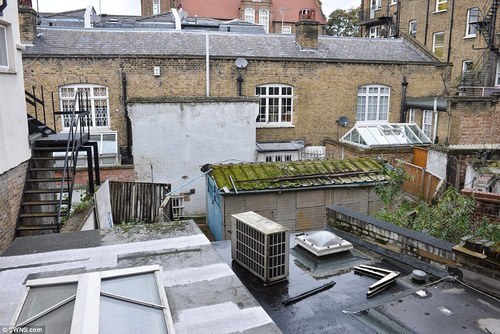
The garage shown above (with the pseudo green roof) is located in the Chelsea neighborhood of London. It measures about 11’ x 7’ and it – along with the site it sits on – is about to go up for auction.
It’s expected to go for more than £550,000 according to the DailyMail UK, which would make it the most expensive garage ever sold in the UK. The site area is 535 square foot – about the size of an average 1 bedroom condo in Toronto.
Below is an aerial view of the site. It basically looks to be residual land.
But as awkward as this site might appear, the expected value is being driven by the fact that planning permissions were granted to turn it into this:
It’s a 2 bedroom house that feels a lot like a laneway house. It certainly fits the description of “a house behind a house”, which is often how laneway housing gets described here in Toronto.
I wanted to share it because it supports my belief that, sooner or later, Toronto will come around to laneway housing. As property prices rise and affordability continues to erode, people will – quite justifiably – start looking in all sorts of new places for a decent urban home.
Many thanks to my friend Adrian for sending me the link.
A few weeks ago I was invited by Toronto realtor Andrew la Fleur to participate in his True Condos podcast series. I had actually never met Andrew before in person, but I knew of him because of Twitter, his blog, and because he was an early user of my past startup, Dirt.
I was initially a bit apprehensive about being on a realtor podcast, because I thought it might end up as some sort of cheesy marketing piece. But I’ve come to learn that Andrew is not that kind of guy. He’s also interviewed some really great people in his podcast series (here’s the full list), so I feel honored to have been invited.
I’ve embedded the podcast below, but if for whatever reason you can’t see it, click here to be redirected to Andrew’s site. We talk for about 30 minutes, with a big focus on openness and transparency in the real estate industry. Thanks again for the invite Andrew. It was great to meet you in person.
I was at a good friend’s wedding last night (congratulations again to Adrien + Rachel!), and one of the topics that came up at our table was whether it is better to own or rent your home. Now, in North America, conventional wisdom would suggest – almost mandate – that you have to own your place. If you’re still a renter, well then you’re “throwing away your money” my friend.
But are you really?
A big part of the value of owning your home is that it’s forced savings. Every month when you make those principal and interest payments, you’re paying down your mortgage and socking away money for the future. And this can be a great thing for a lot of people, particularly if you’re not disciplined enough to save otherwise.
But when you own a home, you’re also spending time and money on maintaining that home, and you’re also tying up capital that could be used elsewhere. So consider this: what if, instead of putting your savings towards a downpayment, you simply continued to rent and created an investment portfolio that you then contributed to on a regular basis just as you would a home?
Similarly, I remember being told in business school that companies that own their own real estate tend to under perform those that do not. And the rationale is that owning lots of real estate ties up capital that could otherwise be reinvested in the core business. In other words, if your core business is making widgets, then invest your money in making better widgets, not in real estate.
But this is not to say that everybody should rent. Obviously I’m a big believer in real estate. And for a lot of people, owning may make sense. This post was really just to say that the owning vs. renting decision may not be as black and white as you might think.
Last week a friend of mine sent me a really fascinating article from The Economist talking about the role of foreign investors in Vancouver’s housing market. If you subscribe to The Economist, you can click here to read the article. If you don’t subscribe, you’ll have to rely solely on what I’m about to say.
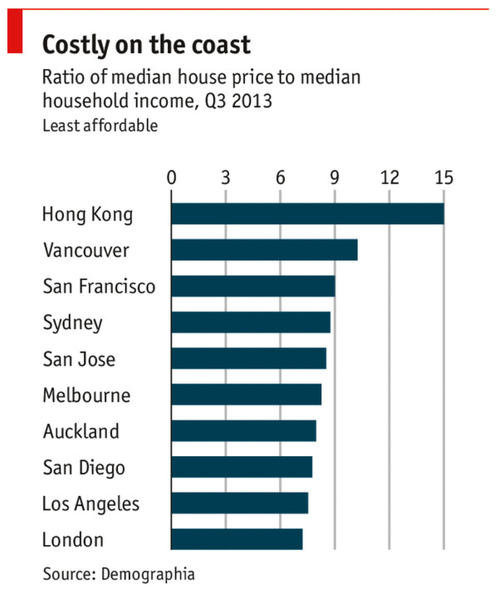
In case you weren’t aware, Vancouver is an incredibly expensive city when it comes to real estate. The average price for a single-family detached house is now around C$1 million. By some measures, that makes it the most expensive housing market in North America. Here’s a chart that looks at house prices as they relate to household income:
According to The Economist, the median household income in Vancouver is $68,970. This places them 23rd out of 28 in terms of Canada’s major cities. So how is it that homes are, on average, selling for $1 million? The locals don’t seem to be able to afford them.
Well, it’s a well known fact that Chinese buyers continue to be an integral part of Vancouver’s housing market. In fact, up until this year, Canada offered a fast track option for citizenship applications if you brought at least $800,000 into the country.
So we know that foreign buyers are having an impact. It’s a phenomenon we’re seeing in many other cities around the world, such as London. But to what extent is hard to measure–which has forced analysts to get creative.
To try and figure out what percentage of homes are going to foreign buyers, analysts have been looking at macro data, filing through sales records, and even monitoring utility bills to see which homes might be sitting empty.
What they found is that there’s a fairly significant correlation between economic activity in China, and Vancouver’s housing market. When the Chinese economy does well, so do Vancouver homes. Interesting. Still, that doesn’t quantify impact.
When analysts looked for utility bills that would suggest an empty home, they found that only about 8% of high end downtown condos were likely sitting empty. That’s a relatively small amount. It could be vacancy rate.
But when they looked for “mainland Chinese-sounding names” on sales records, they found that for homes priced $3M and up, almost ¾ of the buyers could be from mainland China. Now that’s a significant number!
I found this all rather fascinating and I thought you all might as well. It yet again reminds me of how much opacity there is in real estate markets. We’re all craving better data. Why else would people be scouring utility bills?
Toronto Life recently published an interesting article called Stuck in Condoland. A lot of people have mentioned it to me, so there seems to be a lot of interest in the topic. It basically profiles the lives of a few young families who live downtown and are trying to raise young children in relatively small condos (think 700 square feet).
I thought it was interesting because I like the idea of small and efficient living. The average post-war bungalow in Toronto was probably less than 1,000 square feet. And so this modern notion that you need a big house in order to properly raise a family is a relatively recent phenomenon. Although we’re a richer city today and that’s what happens when people become wealthier: they consume more.
But the article also makes it seem that developers only want to build small condos and that larger condos and single-family homes just aren’t profitable enough. Thus the reason all these families are being forced to into tiny shoeboxes in the sky. But that’s not really true.
Look, just like every other for-profit business on the planet, developers are concerned with making money. And so they will always look for ways to increase efficiency, drive down costs, and so on. But there are certain realities of the market that developers don’t have control over.
First, developers aren’t building new single family homes in the city (at any sort of meaningful scale) because there’s no land to do so. And because the land use policies in place and the current thinking around how we can more sustainably build our cities for the future dictate that we should be building more intensely. In other words, building up. So it’s not a question of developers not wanting to build single family homes; it’s a question of not being able to.
Second, trust me when I say that if the market wanted large 3 bedroom family units, developers would build them. Mandating them is a useless exercise if people don’t want them or are unable to afford them.
The challenge we face is that a reinforced concrete condo tower is more expensive to build than a wood-framed single family house. So until land values get to a point where single family homes become the more expensive option (compared to condos), I don’t think we’ll see a huge rush towards 3+ bedroom suites.
This is my hypothesis at least. Because when you buy house, you’re really buying two things: the house itself and the land. If the house itself (wood) is cheaper to build on a per square foot basis than a condo (concrete), then the variable that will make a difference is the land. And as people like to say: “buy land, they ain’t making any more of it.”
So what I’m saying is that I just don’t think the situation is as simple as: “developers are bad, all they want to do is build tiny condos and make lots of money.” It’s more complicated than that. But I do believe the question of how families are going to live in the city is an important one.
I have a friend in town visiting me from New York this weekend. And since today was such a beautiful day in Toronto, we decided to spend the afternoon on the Toronto Islands–Ward’s Island to be exact. The islands are such an incredible amenity in the city. I try and go as often as I can during the summer. It’s my Central Park.
But in addition to parks and beaches, many people also live on the islands. There are 262 residential properties across the archipelago. Below is what a residential street looks like. There are no cars allowed. It’s a gorgeous place.
But if you want a house on the Toronto Islands you have to get on a waiting list. There only 500 spots and it’ll probably take you about 30 years before you get to a meaningful position on that list. But even then, you’re only buying the house. The land itself is on lease.
But if we didn’t regulate, the islands would be a very different place. 262 homes is not a lot of housing. In fact, it’s less than most of the new condo buildings going up downtown. So it’ll probably always be a heavily regulated market.