Daily insights for city builders, delivered every morning at 6 AM ET. I’m Brandon Donnelly — a Toronto-based real estate developer and founder of Globizen. I’ve been writing here since 2013.

Tag: city building

  • 10 city building predictions for 2016

    Dawn by Adrian Popan on 500px.com

    https://500px.com/embed.js

    Few things are better than waking up in the mountains and seeing a notification on your phone that 9″ of fresh snow have fallen overnight, bringing the 48 hour snowfall total to 16″.

    This is what people in mountain towns live for. They ski in the morning and then head to work in the afternoon. I heard a number of people on the mountain today saying that they, “want to be in the office after lunch.” It’s a lifestyle thing.

    On that note, today I’d like to focus on 10 city building predictions for 2016. I’ve been assembling this list over the past few weeks and now that I have had my fill of Utah powder for the day, I’m dedicating the rest of the afternoon to writing.

    These are never easy to put together. But here are my thoughts:

    1. We will see increased migration to secondary cities – outside of the alpha global cities – which offer a higher quality of life, more affordable housing, and the ability to live a particular lifestyle. This includes cities like Austin (creative startup hub) and Denver (outdoor recreation).
    2. As more and more cities wake up to the importance of lifestyle in attracting top talent, I think we will see a lot of cities follow the lead of Amsterdam and create “night mayors” or some other equivalent. These cities will begin to see nightlife as a competitive urban advantage.
    3. Global cities will start experimenting with different land use and property tax reform strategies to try and deal with rising income inequality and eroding housing affordability.
    4. We will see a barbell of residential unit sizes. We’ll see more well-designed small units as a way to try and promote housing affordability and we’ll see larger urban infill units for families and baby boomers who want to live/remain in walkable urban communities.
    5. In line with above, I think we will see a further rethinking of urban spaces. Flexible spaces, unique program mixes, and a continued blurring of public/private spaces. One example of this is the trend towards small private spaces surrounded by generous public/communal spaces.
    6. The Toronto and Vancouver real estate markets will continue to chug along because of low interest rates, a weak Canadian dollar, and increased foreign investment. That said, I think we will see more restraint when it comes to over-the-top luxury product.
    7. We will finally see a disruptive technology product that starts to get people in the real estate industry thinking that change is on the way. This will not be a product that ports an offline experience online; it will a new way of thinking about the industry.
    8. This will be the year that cities stop fighting Uber (and other similar marketplaces). Cities (and lobbyists) will finally accept that this is a new reality and then work to figure out the best way to create policy around it. Edmonton, Alberta has already become the first Canadian city to regulate Uber.
    9. Road pricing will get the attention it deserves in North America. Things will start out slow, but we will finally get ourselves on a path which recognizes that we can’t build our way out of traffic congestion in most major cities.
    10. I will publish a book on becoming a real estate developer.

    Many city building trends and shifts seem to happen in a global way. But I think it’s worth noting that a lot of these predictions were likely written with my North American lens on, and in some cases my Toronto lens on.

    It’s not easy sitting down and thinking about what will happen in the future. But it’s a worthwhile exercise. It forces you to take a stance and then, when the future does come, you can see how well you did. I saw Fred Wilson do this on his blog and I thought it was a great idea.

    Now I would love to hear what you think about my predictions and what yours are for this year. Please let us know in the comment section below.

  • Amsterdam is about to host the first Night Mayor Summit

    Canal Reflections by Peter Elliston on 500px.com

    https://500px.com/embed.js

    What is a night mayor, you might ask?

    Well, just as the name suggests, a night mayor is the chief executive officer of a city’s nighttime activity. And in 2014, Amsterdam became the first city ever to have one.

    Why is this important, you might ask?

    Well, for most cities the night is a blindspot. It’s viewed as something that needs to be carefully controlled as opposed to something that is celebrated and leveraged. Amsterdam saw this opportunity and, in my opinion, is now at the forefront of rethinking the night.

    Here’s an example of the kind of changes that this has meant for the city (via CityLab):

    “Until recently, Amsterdam enforced what by continental European standards is a fairly strict curfew: nightclubs had to close by 4 a.m. on weekdays and 5 a.m. on weekends. The city often had problems with noise and disorder at the exact moment when all the clubs closed, filling narrow inner city streets with rowdy people.

    To solve this problem, the night mayor suggested not less, but more time for people to go clubbing. He has helped push through the granting of 10 24-hour licenses for nightclubs. Crucially, all of them were located not in the dense city center but in thinly populated districts around Amsterdam’s outer ring road. The result was a marked reduction in street noise.”

    Some of you are probably feeling skeptical as you read this. Especially since 4AM and 5AM hardly seem strict when compared to other cities (Toronto’s last call is at 2AM). 

    But I would not underestimate the importance of what Amsterdam is doing. We are living in an era of the 24-hour global city and it’s about time that governments woke up to that. I’m sorry Toronto, but 2AM is an absolute joke.

    The night can be your competitive advantage in attracting human capital. As the CityLab article cited above suggests, a big part of what transformed Berlin into a capital of cool was its nightlife. 

    I wholeheartedly believe that and I have no doubt that the night will start to become a greater focus in city building.

    If you’d like to learn more about the Night Mayor Summit, click here.

  • Why Google is worried about being welcoming to employees who want to build new businesses

    Here on ATC, we’ve talked a lot about the changing nature of work and what that could mean for cities. 

    We talk (and debate) about the value of density and of being in close proximity to others so that ideas can percolate – whether that means open office floor plans or community coffee shops.

    But alongside all of this, there are some fascinating structural changes taking place within organizations. Below is an excerpt from a recent New York Times article called, How Larry Page’s Obsessions Became Google’s Business

    But corporate success means corporate sprawl, and recently Google has seen a number of engineers and others leave for younger rivals like Facebook and start-ups like Uber. Mr. Page has made personal appeals to some of them, and, at least in a few recent cases, has said he is worried that the company has become a difficult place for entrepreneurs, according to people who have met with him.

    Part of Mr. Page’s pitch included emphasizing how dedicated he was to “moonshots” like interplanetary travel, or offering employees time and money to pursue new projects of their own. By breaking Google into Alphabet, Mr. Page is hoping to make it a more welcoming home for employees to build new businesses, as well as for potential acquisition targets.

    What I find interesting about the statements I’ve bolded is that they represent a radically different approach to business and employment. Of course, it’s not really a new thing. Google has been encouraging its employees to work on personal projects since, I think, the very beginning. 

    But as you read the above article, you really get the sense that Page believes that this kind of organizational culture is fundamental to the long term competitiveness of the company. It’s something he is genuinely worried about.

    As counter intuitive as it might seem to encourage employees to work on other things besides the core business, one could argue that it’s almost essential in a world of rapid and constant innovation. Would you rather an employee or a competitor discover what’s next in your industry? If it’s the former, you have a chance of absorbing it into your current business. If it’s the latter, you’re already too late.

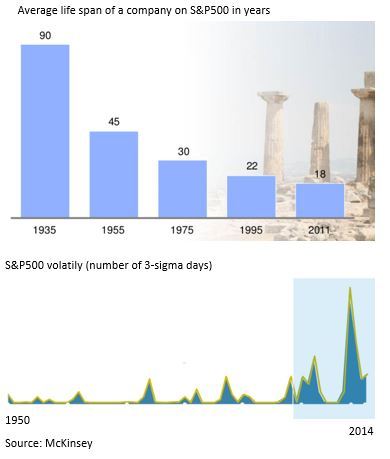
    If you go back to the article I posted earlier this week, you’ll see that creative destruction is happening a lot faster than it did in the past. The average life span of many, or most, companies seems to be decreasing.

    The tech sector seems to be ahead of most other industries with respect to this kind of thinking. But I believe that it will continue to percolate through the economy. And when it does, it will probably have many impacts on the kinds of spaces we design and build in our cities.

  • Urbanism Online: #capital

    image

    For those
    of you from Ottawa, I’m going to be in town this Thursday evening talking
    at an event put on by the National Capital Commission called Urbanism
    Online
    . It’s all about how blogging, social media, and online discussions can
    and are contributing to the betterment of cities.

    The other
    bloggers include:

    – Marc-André Carignan, Montreal, Kollectif.net

    – Jillian Glover, Vancouver, This City Life

    – Robert Smythe, Ottawa, UrbSite

    The event is
    now full, but email them or tweet me if you’d really like to come
    and I’ll certainly ask about space availability. I’m sure it’s going to be a great discussion.

    I have a bit of a soft spot for Ottawa. I used to spend a lot of time there when I was working on an office building at 150 Elgin Street. (Key tenants include The Canada Council for the Arts, KPMG, and Shopify.)

    I haven’t been back since the building was completed, so I’m excited to see how it turned out.

    Update: The event will also be streamed on Periscope, here.

  • The highs and lows of mid-rise

    Last week
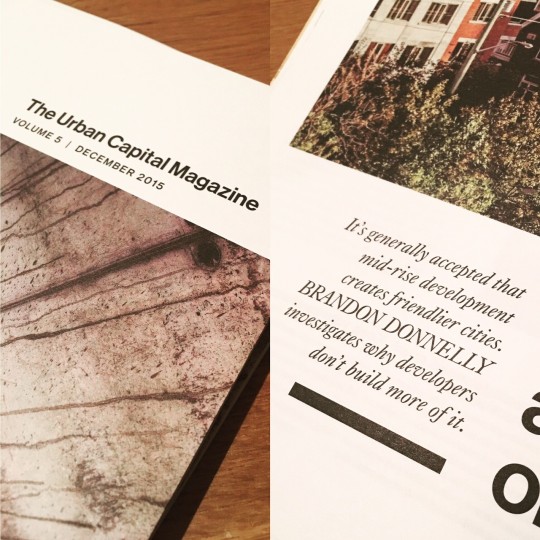
    was developer Urban Capital’s 5th annual “Naughty or Nice” party. It’s obviously a holiday tradition of theirs and it has become a tradition of mine to attend. Judging by my vast collection of photo booth photos, there’s a chance I may have been to all of them. It’s easily one of the best holiday parties in the business.

    One of the things that Urban Capital does at its annual party is release its annual magazine. And this year I was fortunate enough to be invited to write a piece for it on the highs and lows of mid-rise development. Put differently, it’s about the challenges facing developers who want to build mid-rise, but also why they’re pretty great for cities.

    If you’d like to have a read, you can do that online by clicking here. And if you’d like to receive a hard copy of the magazine, I can make that happen as well. Tweet at me. Alternatively, you can also pick up the magazine at any Urban Capital sales office.

    I deliberately tried to make it so it wasn’t your typical real estate puff piece: condos are great, yada, yada, you should buy one from us. I tried to make it an intelligent piece on some of the real challenges facing mid-rise developers. And that’s what Urban Capital wanted as well. I hope you enjoy it 🙂

  • The value of absurdity for innovation (and a story about tacos)

    Vegan tacos by Karolina Wiercigroch on 500px.com

    https://500px.com/embed.js

    “Great ideas alter the power balance in relationships. That’s why great ideas are initially resisted.” –Hugh Macleod

    I have been following the work and writing of designer Tobias van Scheider for quite some time now. If you don’t subscribe to his newsletter and you end up liking this post, you should consider signing up.

    Recently I stumbled upon something he published back in October called “Ignore Everybody”, where he argues that when you’re exploring something new – that could potentially fail – one of the best things you can do is ignore everybody. 

    And that’s because:

    “We have to understand that ideas are by nature very fragile. They’re like little naked babies, unable to protect themselves. If we really believe in a new idea, we have to protect her with great effort. This is difficult, because oftentimes the greatest ideas get killed by the people around us. Executing on a great idea is by nature a lonely path. If everyone would agree with you, the idea is probably not that great anyway.”

    I am incredibly interested in how new things get started and how new ideas thrive. Fostering innovation has become a critical component of city building in today’s world. But sometimes I feel as if we’re thinking too top-down, as opposed to bottom-up. 

    As Tobias rightly points out in his article, lots of great ideas started as stupid little projects. Who would have thought that a teen sexting app with disappearing messages (Snapchat) would become a company worth many billions of dollars?

    It’s for this same reason that Sam Altman of Y Combinator recently wrote that sometimes its better to call your new company a project, rather than a business. When you call it a business you impose all kinds of biases onto it in terms of viable business models, and so on. But when you keep it a “project”, it becomes more acceptable to be experimental.

    As an example of all this, I was fascinated to learn this past weekend about a Toronto-based ad agency called OneMethod. Because as part of their agency they have a division called the MethLab, where the goal is to simply experiment with “absurd ideas.”

    One of those absurd ideas was a social media campaign slash pop-up taco restaurant – remember, they are an ad agency not restauranteurs. It was so grassroots that they ended up having to sell original art work that happened to come with a “free” taco in order to get around all the legal requirements for serving food. Brilliant.

    The idea was so well received that it has grown into a fully fledged restaurant called La Carnita, which today operates across 3 permanent locations and happens to be one of the most popular taco restaurants in Toronto.

    But let me ask you this, if they had instead gone out to investors – as an ad agency wanting to get into the taco business – would they have been able to raise the money for their first physical restaurant? I can imagine this being a lot more difficult.

    On a larger scale, this is exactly what Google is doing with Alphabet. The company was reorganized and rebranded so that they could continue to work on absurd ideas outside of the Google cash cow. If the idea/project takes off, then it becomes a fully fledged company. If it doesn’t, then it gets shut down and something else is tried.

    This is what people and companies are doing today to stay relevant in the innovation race. 

    But in some ways it feels like a battle to allow the absurd to survive. That’s why the best approach might be to just ignore everybody. There’s value in the absurd but maybe you’re the only one who sees it right now.

  • Interview with urbanist Richard Florida

    UrbanToronto.ca recently published an extended interview / discussion with urbanist Richard Florida about cities and, in particular, the future of Toronto. What it’s doing wrong. What it’s doing right. And what it should be doing to properly position itself for the future.

    What became clear to me after reading the interview is that Toronto is really at an inflection point. We are transitioning into a much bigger global city and we have yet to fully embrace the city that we are quickly becoming:

    “…the city was—and is—still too dominated by a NIMBYist, faux-progressive left that refuses to engage with having to build a dense, transit-oriented, and inclusive city.”

    The interview is packed with information and it’s definitely worth a read this morning. There’s a lot I agree with, including his views on transit and his positions on the Island Airport and the Gardiner East – which is a topic that is near and dear to me.

    In case you don’t have time to read the full interview, below are 3 excerpts.

    First, on the Gardiner East:

    “There’s also a learning curve to Mayors, and I think they tend to get a better understanding of urbanism over the course of their tenures,” Florida adds, hoping that Tory, self-described as an “ideologue on very few issues,” will make pro-urban decisions as his time in office continues. “For one thing, I really hope that he reverses his decision on the Gardiner,” Florida continues, highlighting Tory’s controversial support for renovating—as opposed to demolishing—the eastern portion of the Gardiner Expressway as an example of especially poor urban policy.

    Second, on the need for a true urban agenda at all levels of government:

    Offering prescriptions for the future, Florida calls for a “virtual moratorium on road-building,” arguing that the perpetuation of an automobile culture hinders a city’s creative capacity, with little exchange of ideas and culture occurring when people are sitting in their cars, and not engaging with life on the street. “The city also needs a more committed Federal partner,” Florida adds, calling for a ’ministry of cities’ to help provide a vision for growth and fund urban infrastructure projects. 

    And third, on the value of Toronto’s openness:

    “A huge reason for the city’s continued success—as we trudge along despite our lack of urban vision and reactionary tendencies—is the fact that we continued to be so open to newcomers, allowing a great deal of global creative energy to be harnessed. It means we can fuck up a lot, but as long as we continue to remain open, we’ll have an important edge.”

    There’s a lot of great discussion fodder here. I would love to hear your thoughts in the comments below.

  • Being grateful

    Lately I’ve been reading about and interested in the idea that the more grateful you are, the happier you can actually become. It’s similar to the idea that positivity can lead to better outcomes in your life. Believe something and you make it true.

    It turns out that some people could have genetic tendencies towards more positivity and gratefulness. But there’s no reason why you couldn’t train yourself to be more like that.

    I’ve thought about adding to my daily discipline and introducing a bit of gratefulness here on Architect This City. But it’s hard to do that without regularly sounding braggadocious.

    In any event, I’ve also thought about how this same idea could apply to cities. I mean, when was the last time you were grateful and appreciative of the city you call home? Sometimes, or maybe most of the time, it’s easier to just complain about what we don’t like.

    But if being grateful about your own life can make you happier, I think being grateful about your own city could do the same. I did a bit of that in this post a few months ago. But I try and do it far more often than that. I’m a big fan of my city.

  • My blogging methodology

    I often get asked about the methodology behind my blogging. (Though I have written a few posts about it already.) 

    Most people seem to assume that I sit down on the weekends. Draft a content calendar. Write a bunch of posts. And then queue them up for the coming weeks. 

    I don’t do any of that (besides sit down).

    Instead, I get up every morning and I write something. Sometimes I wake up with an idea that’s been bouncing around in my head and sometimes I wake up with no idea what I’m going to write about. 

    In the latter case I just start reading the internet over breakfast until something interesting catches my attention.

    But in both cases, what you are reading about is what I am thinking about at that moment in time. 

    Because in addition to a blog about cities, this blog is about a discipline and a habit. It is about taking time every day to step away from tasks, sort through my thoughts, and write something. It’s one thing to think about something; it’s another thing to write about it.

    And so as much as I hope you all get value out of this blog, it also very much about the personal benefits I receive from doing this same thing over and over and over again.

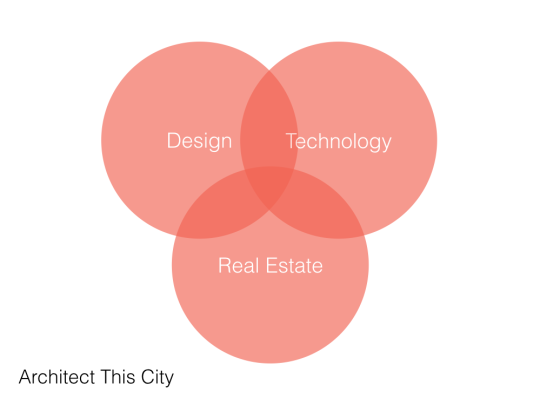
    Now, in terms of the content, the focus is obviously on city building. But I’m more specifically interested in the following 3 areas and their overlap:

    If you’re a regular reader you know this.

    I didn’t set out to focus in this way, but it just happened over time. This is what I’m passionate about and so I naturally started applying it to our discussion on cities and city building.

    And finally, in terms of writing style, I’ve found myself adopting a particular structure.

    I often start with a personal note – almost as if this were purely a personal blog. Then I dig into a particular city building issue and try to uncover one particular way of looking at it. And then I end with a decisive position. I’ve seen this format on other blogs and I really like it.

    Obviously I don’t always follow this structure. For example, sometimes I haven’t made up my mind on a particular issue. But I try to. I lean towards the belief that a decisive wrong answer is better than a wishy washy right answer. So I push myself to take stances and have an opinion. 

    But in the end, the goal of every post is simply to present one idea for all of us to think about and then discuss. I’d like to believe that it keeps us all sharp. Hopefully it’s working for you.

  • City building every way you can

    Tonight I attended and gave a short talk at a city building themed PechaKucha night here in Toronto. If you aren’t familiar with the PechaKucha 20×20 presentation format, click here.

    The first PechaKucha night was held in Tokyo, but it has since expanded to over 800 cities around the world. Each city has a local organizer who acts as a steward and here in Toronto it is Amy Bath. She did a fantastic job this evening.

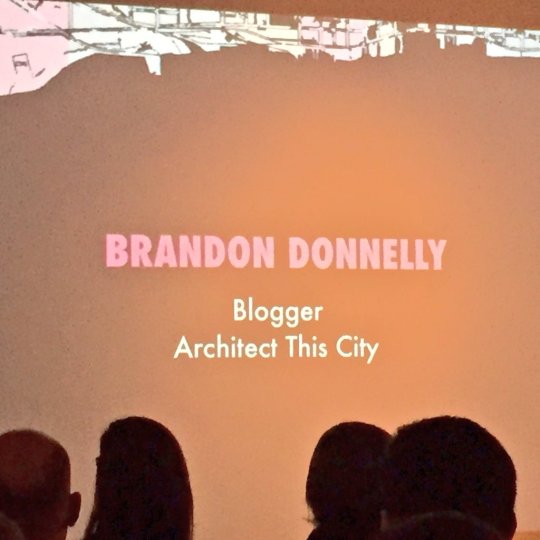
    Tonight’s event was all about non-traditional forms of city building. It was not so much about how architects and developers are shaping the built environment – thought there was some of that. It was more about how interdisciplinary artists, graphic designers, bloggers, and others, are having an impact on cities. So in my case, I was speaking as a blogger, rather than as a real estate developer, which was a bit unique for me.

    What excited me about tonight is the amount of talent and passion that we have in this city, and how so much of it is being harnessed to make cities better.

    Jay Wall of Studio Jaywall is doing incredible work at the intersection of graphic design and city building. My friend Mackenzie Keast of Distl and NXT City Prize is organizing public space competitions and then working with the city to get them built. And my friend Justin Broadbent, who is an interdisciplinary artist, is just killing it and putting Toronto on the map. I don’t know how else to say it.

    And this is just naming a few of the people in attendance.

    I have so much respect for people who love the city they call home and actively try to make it a better place. That’s a lot harder to do than just complain about why your city isn’t (insert other allegedly better city here). But it’s also a lot more productive.