Daily insights for city builders, delivered every morning at 6 AM ET. I’m Brandon Donnelly — a Toronto-based real estate developer and founder of Globizen. I’ve been writing here since 2013.

Tag: city building

  • Enemies of the High Line

    Despite not being the first example of infrastructural adaptive reuse, the High Line in New York has certainly kickstarted an urban trend. Cities all around the world now want their own “version of the High Line.”

    Philly is working on a new “rail park.” I toured the space last summer and it’s very similar to the High Line in terms of existing infrastructure. Rome and Toronto are both working on “under” spaces, which are beneath an old viaduct and elevated expressway, respectively. And the list goes on.

    But I think it’s worth remembering just how contentious the High Line was before it was built. For some people it was just an eyesore and a public safety hazard. Here’s a excerpt from a New York Times article dated 2002:

    “This is a terrific win for us,” said Michael Lefkowitz, a lawyer for Edison Properties, one of 19 businesses that own land beneath the High Line.

    Janel Patterson, a spokeswoman for the city’s Economic Development Corporation, said an agreement to share the $11 million cost of dismantling the High Line was being circulated among the property owners and the rail bed’s owner, CSX, of Richmond, Va. “It’s about eliminating a public safety hazard,” Ms. Patterson said, “but it’s also about enabling the city to move forward and better develop the area.”

    It’s also worth mentioning that former Mayor Giuliani supposedly favored demolition of the High Line. Former Mayor Bloomberg, however, did not:

    …Mr. Bloomberg said: "Today, on the West Side of Manhattan, we have an opportunity to create a great new public promenade on top of an out-of-use elevated rail viaduct called the High Line. This would provide much-needed green space for residents and visitors, and it would attract new businesses and residents, strengthening our economy. We know it can work … . I look forward to working with Friends of the High Line and other interested parties to develop a feasible reuse scenario.”

    The challenge with these sorts of things – that is, new ideas – is that we live in a world of proof and precedents. We want to see that it has been successfully done before, because, otherwise, we might be wrong. So now that New York has shown what is possible, it has cleared the way for other cities.

    Rethinking old infrastructure is a sound urban strategy. But we also shouldn’t forget that it’s less valuable to be right about something that every other city already believes to be true. The real value is created when you’re right about something that most other cities don’t yet believe.
  • Project Sidewalk

    One of Alphabet’s subsidiaries is a company by the name of Sidewalk Labs. Some of you, I’m sure, have been following it. The goal of the company is to leverage technology in order to solve some of our biggest urban challenges.

    Initially, they were fairly under the radar, but more recently they’ve become a lot more public with their projects and their mission. Here is a snippet from a recent blog post written by their CEO, Daniel L. Doctoroff

    “The world is poised for a fourth urban-tech revolution — an age of connectivity capable of reshaping cities as much as the steam engine, electricity, and automobile have in the past. New technologies will help citizens and elected officials tackle those intractable urban challenges that Larry outlined last summer, but making sure this age imposes fewer social costs than those previous shifts is critical.”

    Earlier this week it was also announced that the company is likely to enter the real estate development business and construct a new city precinct in order to pilot some of their ideas and projects. The initiative is called Project Sidewalk. 

    Here is an excerpt from the Wall Street Journal:

    “According to people familiar with Sidewalk’s plans, the division of Alphabet is putting the final touches on a proposal to get into the business of developing giant new districts of housing, offices and retail within existing cities.

    The company would seek cities with large swaths of land they want redeveloped—likely economically struggling municipalities grappling with decay—perhaps through a bidding process, the people said. Sidewalk would partner with one or more of those cities to build up the districts, which are envisioned to hold tens of thousands of residents and employees, and to be heavily integrated with technology.”

    When I read this, I immediately thought of the Port Lands area in Toronto. Not because Toronto is decaying – far from it – but because it’s a massive 880 acre site that is both adjacent to downtown and entirely underutilized. I can’t wait to see this area transformed into a thriving waterfront community.

    In any event, if or when Project Sidewalk gets off the ground, it will be very interesting to see what a Google-backed real estate development company looks like.

  • Building Toronto Tomorrow

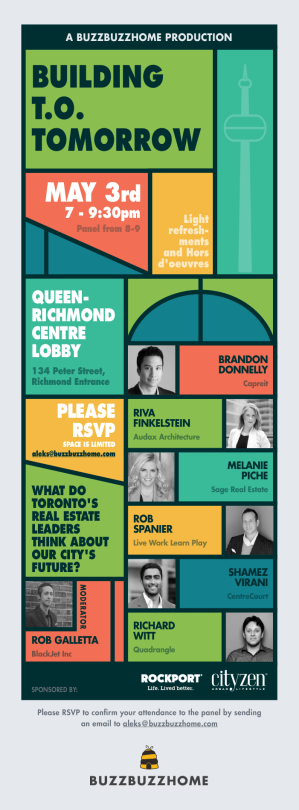
    I’m going to be speaking on a panel on May 3rd, here in Toronto, called Building T.O. Tomorrow. The topic is the future of this city.

    It is being put on by the good folks at BuzzBuzzHome and it will be held in the lobby of Allied’s new Queen-Richmond Centre (134 Peter Street). If you haven’t yet been to this building, that alone makes attending worthwhile.

    Here’s the event poster:

    If you’d like to attend, make sure you RSVP to aleks@buzzbuzzhome.com.

    On a largely unrelated note, I recently picked up the handlebar bicycle mount for my GoPro and I’m looking for some fellow city geeks who would like to ride around the city and film some – potentially cool – videos.

    I find that being on a bike is one of the best ways to experience a city (at least the cities that are actually bikeable). So I’m hoping some of that magic will translate into video. If that sounds at all interesting, drop me a line.

  • New curated city building bulletin

    I have decided to spin-off the Architect This City identity into a weekly newsletter that I’m referring to as a “curated city building bulletin.” (This is as a result of the unbranding of this blog last week.)

    The inaugural issue went out this past Monday at 9am eastern with a collection of city building-related links. And that was it. This is not another blog. I’m not writing any new content for it. It’s simply going to be a collection of links to things that I think city builders would find interesting and/or valuable.

    Here’s why I decided to do this:

    It allows me to keep this new bulletin entirely focused on one thing. You’re not going to find me sneaking in a link about snowboarding, wine or something else that I’m interested in. It’s strictly about targeting city builders. (Of course, city building can be a pretty broad topic.)

    Keeping in mind what I wrote yesterday about saying no, I also chose this format because the additional workload for me will be minimal. In order for me to write a daily blog like this one, I have found that I need to keep a running list of reading material. But a lot of what’s on this list (stored in Pocket) never sees the light of day – there’s only so much I can write about. This new bulletin will be a quick way for me to share the rest of it.

    Finally, I’m also hoping it’ll be an efficient way for me to share the links, events, projects, and other things I receive from readers. In an ideal world, the bulletin will evolve into having a “links” section and a “from the community” section – which will be things that subscribers send me but today don’t get shared.

    So that’s the plan. If that sounds good to you, please subscribe at architectthiscity.com

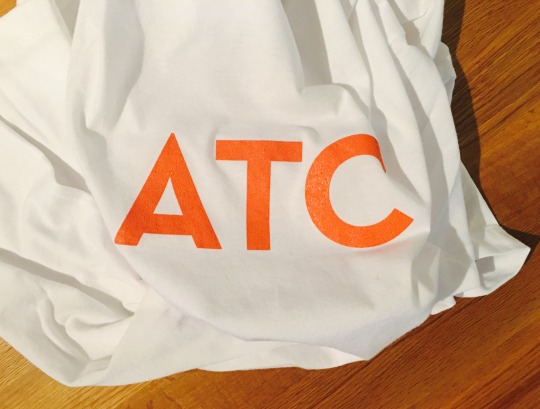
    To kick things off, I’m going to be giving away 5 x free ATC t-shirts. (See photo at the top of this post.) To win one, just (1) subscribe and tweet out a link to this new city building bulletin, (2) tag @athiscity, and (3) tell everyone which city/town you live in.

    Regularly scheduled programming will resume tomorrow.

  • The Death and Life of Great Italian Cities

    image

    I am sure that a lot of you know where the title of this post comes from. It’s a riff on one of the most important and influential books in the world of city planning: The Death and Life of Great American Cities by Jane Jacobs (1961).

    But when Jane Jacobs first wrote this book, there was no such thing as smartphones and nobody was “checking-in” to hipster dive bars on Foursquare

    So instead of leveraging big data, her analyses and arguments were based on observation. She walked the streets of New York and Toronto and figured out what made cities thrive and what made cities die. That was her brilliance.

    Today, however, we have data – lots of it. And so recently, a group of researchers set out to test Jane Jacob’s theories using mobile phone data. The study was called, The Death and Life of Great Italian Cities:
    A Mobile Phone Data Perspective
    .

    More specifically, they set out to test the following 4 essential conditions:

    “She [Jane Jacobs] argued that, to promote urban life in large cities, the physical environment should be characterized by diversity at both the district and street level. Diversity, in turn, requires four essential conditions: (i) mixed land uses, that is, districts should serve more than two primary functions, and that would attract people who have different purposes; (ii) small blocks, which promote contact opportunities among people; (iii) buildings diverse in terms of age and form, which make it possible to mix high-rent and low-rent tenants; and (iv) sufficient dense concentration of people and buildings.”

    To accomplish this, the team assembled and studied data from the following sources:

    • Mobile phone activity (specifically internet activity)
    • OpenStreetsMap Data
    • Census Data
    • Land Use Information
    • Infrastructure Data
    • Foursquare Data (Venues API)

    Ultimately, they determined that Jane Jacobs knew what she was talking about. The above conditions are essential to urban vibrancy and they apply to Italian cities, just as they did and do to American cities. But this test was valuable, because the more that we can measure and quantify cities, the better I think we’ll get at creating and promoting urban vitality. 

    Now imagine if you overlaid the findings of their report with residential and commercial rents. I bet you’d also find that there’s a strong business case for urban vitality.

    I’ve heard a number of people say that, eventually, every company will be a software/technology company. And I don’t think we’re far off from that reality. To me, this study feels like an early example of what that might look like for city building.

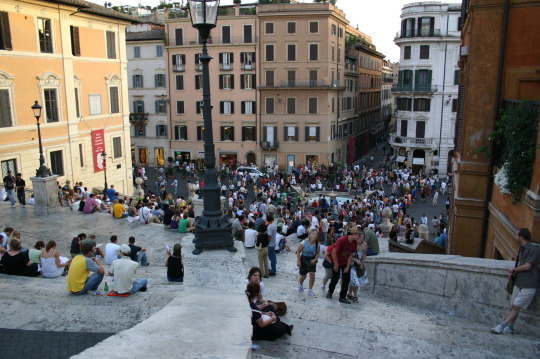
    On a side note, the picture at the top of this post is of the Spanish Steps in Rome. I took it on a weekend trip in 2007. I was living in Dublin at the time.

  • Why pessimism sounds so smart

    Tom Gardner and Morgan Housel (The Motley Fool) recently published a LinkedIn article called, Why Does Pessimism Sound So Smart? (Especially When Things Are So Good.)

    Here is the gist of it:

    If you say the world has been getting better you may get away with being called naïve and insensitive. If you say the world is going to go on getting better, you are considered embarrassingly mad. If, on the other hand, you say catastrophe is imminent, you may expect a McArthur genius award or even the Nobel Peace Prize.

    Part of the reason for this is that we, as humans, respond more strongly to losses:

    There’s clearly more at stake with pessimism. Daniel Kahneman won the Nobel Prize for showing that people respond more strongly to loss than gain. It’s an evolutionary shield: “Organisms that treat threats as more urgent than opportunities have a better chance to survive and reproduce,” Kahneman once wrote.

    The behavioural economic theory being referred to above is called Prospect Theory. I wrote about this back in the fall of 2013 and made the argument that Prospect Theory might explain why NIMBYISM is so common in city building. 

    Change to our communities is perceived as risky. And in the face of these uncertain situations, we tend to place more emphasis on the potential losses (traffic, congestion, shadowing, and so on) rather than the potential gains (increased vibrancy, improved streetscape, creation of more housing, and so on). It’s human nature.

    Having said all this, I show up here every day and try to make this blog a positive place on the internet. Sure, I make suggestions about things I think we should do, but I generally focus on them as opportunities. Hopefully that comes through, because I’m a big fan of optimism.

  • Technology x Business x Design

    John Maeda – Design Partner at venture capital firm KPCB – recently
    published the second and 2016 edition of his #DesignInTech
    Report
    . I shared his first one almost exactly a year ago.

    His core thesis is that we are heading towards a world where technology,
    business, and design become closely integrated – in school, in business, and so
    on. Throughout the report he looks at the increasing impact that design and
    designers are having within the startup ecosystem.

    Here are a few verbatim bullet points:

    – Design isn’t just about beauty; it’s about market relevance and meaningful
    results.

    – 36% of the top 25 funded startups are co-founded by
    designers, up from 20% in 2015.

    – The general word “design” will come to mean less as we
    will start to qualify the specific kind of design we mean.

    – Currently design education lags the technology industry’s
    needs for data-oriented, coding enabled graduates with business acumen.

    – We must consciously invest in education to develop a
    more hybrid perspective on creativity in the 21st century:
    Technology x Business x Design.

    – President Obama’s signing of ESSA (Every Student
    Succeeds Act) into law in 2015 is a positive sign: by turning STEM into STEAM (adding Art) in K-12 education as a US priority.

    As somebody who studied design (architecture), business,
    and computer science (briefly, before switching to architecture), I probably
    have a bit of a biased view here. But to the extent that I can be objective, I
    really see this as the future. I am a big supporter of the transformation from STEM to STEAM.

    Below is a quote that Maeda uses to end his report, which I will also use to end this post:

    “Engineers are efficient problem solvers. Business people think short term. Designer want things to be elegant and beautiful. All three need to create collaboration and harmony, and honor the value each other brings. There needs to be a new kind of ‘multi-dimensional’ approach to design that is yet to be invented.” –Linda Holliday

  • #BuildHereNow — Crowdsourced city building

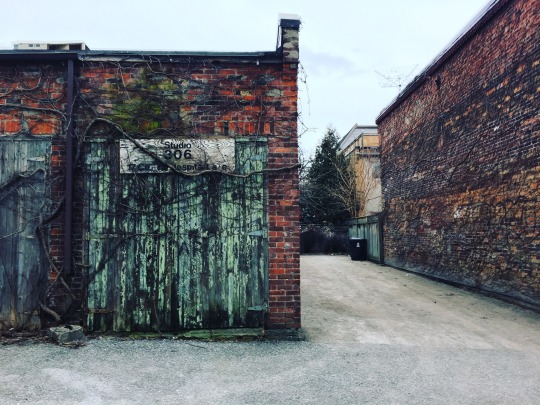
    image

    This week Strong Towns has been running a great social media campaign called #BuildHereNow

    The way it works is very simple. They asked people to get outside and take photos of vacant and/or underutilized properties in their town or city and post them to Twitter or Instagram using the hashtag #BuildHereNow. The goal was to start to identify properties that could “use a little love" and to encourage city builders who might need a little push to develop a particular property.

    I’m a big fan of crowdsourcing information and I love the idea of digitally annotating buildings and spaces. In this case, it’s about pulling together the desires of the community,

    Hashtags are a great way to quickly make something like this happen, but I would love to see a purpose-built tech platform do this in a more permanent way. Of course, it doesn’t just have to be about developing. Buildings are rich in information; hopefully so rich that a platform like this could survive.

    If you think about it, property titles are already a form of annotating real property. So this isn’t really a new idea. 

    But now technology allows us to harvest all kinds of other information – such as what people would like to see built. Imagine the possibilities if we became more effective at collecting, organizing, and leveraging this data at scale.

  • The advantages of disadvantages in business and entrepreneurship

    This morning I stumbled upon an interesting book by Claudia Kalb called Andy Warhol Was a Hoarder: Inside the Minds of History’s Great Personalities

    I obviously haven’t read it yet, but I like the premise. The book examines 12 famous figures and makes the argument that each of them had some sort of mental health condition that aided them in their success. 

    Here is an excerpt from a recent Harvard Business Review interview with the author:

    “The most common one may be narcissism. Frank Lloyd Wright is a good example. He had classic narcissistic qualities — a sense of grandiosity, superiority, a huge and complete belief in his aesthetic sensibility, and disregard for architecture that did not live up to his standard. Narcissists also have an ability to be charming, and to lure people into their orbit. That’s obviously useful for an entrepreneur. The issue is that while these qualities may make you a good leader, they may not make you a winning boss. Employees often feel that narcissistic bosses are ruthless or lacking in empathy. Also, unlike people with depression or anxiety disorders, narcissists don’t suffer as much personally from their condition — but the way they behave can be much harder on the people around them.”

    Related to this topic is an emergent body of research that, more specifically, looks at the relationship between mental illness and entrepreneurship. And according to work done by professor Michael A. Freeman of UC-San Francisco and professor Sheri Johnson of Berkeley, there’s a significant relationship. 

    Below are two excerpts from a Washington Post article published last year.

    “Forty-nine percent of entrepreneurs surveyed reported at least one mental health condition. Nearly a third reported having two or more mental health issues, such as ADHD, bipolar disorder, depression, anxiety or substance use conditions. And half of the entrepreneurs who reported no mental-health conditions identified themselves as coming from families with a history of mental illness.”

    Why would these conditions be of any benefit to entrepreneurs?

    “For all of its ills, depression also brings empathy and creativity. Martin Luther King Jr. and Mahatma Gandhi attempted suicide as teenagers. Uncommon levels of empathy can allow a businessman to better understand a customer’s need. And a creative mind won’t be satisfied on the corporate ladder, but instead in a fast-moving start-up where he or she can unfurl ideas and dreams.

    Individuals with ADHD naturally make decisions faster, are comfortable working independently and are more creative, necessary skills at a start-up. They’re likely to be bored working for someone else.”

    From a city building standpoint, all of this is quite relevant. Because for all of the focus on promoting innovation and entrepreneurship, we don’t seem to be talking about healthcare and mental health systems. And there’s clearly an argument to be made that the two are connected.

  • My approach to blogging

    In yesterday’s post about the city as an egg, I received a comment basically saying that I use this blog to carefully curate my own image and that I would never argue against “dumb Toronto planning” because, after all, I’m a developer. I am going to do what breads my own butter.

    I welcome intelligent debate on this blog. That’s why it is open to anyone who would like to comment. But since I’ve received similar comments in the past, I thought I would use the opportunity to talk broadly about my approach to blogging.

    Firstly, there will always be some level of curation involved. That’s inevitable. We see it all over social media. But I’m a big believer in transparency and I try to do exactly that on this blog. I am keen to push the boundaries in this regard.

    At the same time, part of what makes blogs unique is that they’re often personal. That is the origin of blogging. Some of my favorite blogs to read are the ones that have figured out how to combine a particular niche topic with personal stories. And since ATC is ultimately my personal blog, I am going to continue taking that exact same approach.

    Secondly, I only write about things that I’m passionate about. I get asked all the time to write about and promote specific projects, causes, and events. But almost all of them do not get written about it. Because if I don’t care about it, then I’m not going to write about. It’s as simple as that.

    Thirdly, I believe in positivity over negativity. I believe that optimists, not pessimists, change the world. President Obama won his first term with a message of hope, not despair. To me, that is a stronger motivator.

    I’ve been told before that I’m overly optimistic and that my youthful exuberance will one day wear off. Boy, I sure hope it doesn’t. Because would you rather have a beer with someone who is optimistic or someone who is pessimistic? I will always take the former.

    However, this is not to say that I want to be blind to the realities of the world. Last summer I disagreed with Toronto’s decision to rebuild the elevated Gardiner Expressway East along the waterfront, and I continue to disagree with that decision. 

    When I believe something is a mistake, I am happy to make it public and put it in writing on this blog. But as a developer, I suppose I have certain biases working against me. That’s just the way it is.

    In any event, this is my rough and ever-evolving approach to blogging. As usual, I welcome any and all comments.