Daily insights for city builders, delivered every morning at 6 AM ET. I’m Brandon Donnelly — a Toronto-based real estate developer and founder of Globizen. I’ve been writing here since 2013.

Tag: city building

  • City building jobs

    I get a lot of emails from readers of this blog. I try my best to answer every single one of them, but sometimes I fall behind and fail spectacularly at that. (The snooze feature in Mailbox and Google Inbox is one of the best inventions ever.)

    One of the most common emails I receive is about careers. Sometimes it’s someone looking for a new job or for advice on how to break into the industry (usually real estate development). And sometimes it’s an employer (or recruiter) with a role they need filled. 

    It’s hard to match up supply and demand when they arrive in my inbox on an ad hoc basis like this, but I have been thinking about ways I might be able to help these people out.

    So today I thought I would try something new. If you have a relevant job listing that you’d like me to distribute to the ATC community (something in architecture, planning, real estate, tech, and so on), email it to me at b@brandondonnelly. 

    If I get enough high quality listings, I’ll send them out in my newsletter. And if everyone finds it valuable, I may make it a regular feature.

  • Blogging as city building

    This past week I received 2 separate invitations to talk at events about blogging as a form of city building.

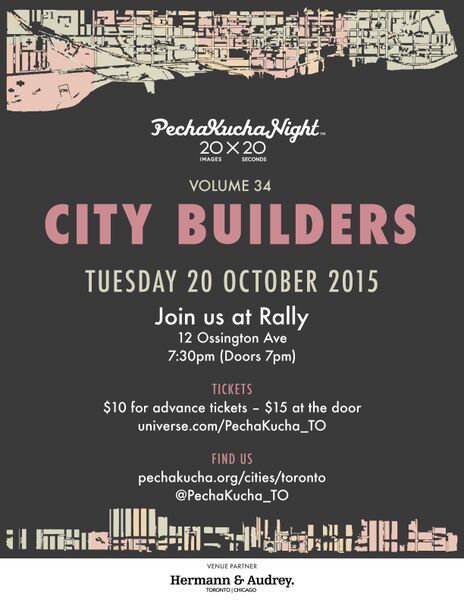
    The first is a Pecha Kucha talk being held here in Toronto on Tuesday, October 20th, 2015. If you’ve never heard of the Pecha Kucha movement, it’s basically all about rapid fire presentations. Each person gets 20 slides and 20 seconds for each one. 

    Here are the details for the upcoming Toronto event:

    image

    The second event is being held in Ottawa in the new year. I’ll write more on that closer to the date when I have more information to share.

    I haven’t yet figured out exactly what I’m going to talk about at each event, but I am starting to think about a few things.

    When I started writing this blog, it was intended simply as an outlet for my own city-related – and also personal – thoughts. Ultimately, the blog evolved into having its own mission, which is to promote the building of beautiful, sustainable, and globally competitive cities. And so clearly in my mind blogging was and is in fact a form of city building.

    But writing is vastly different than the kind of city building I do for a living. During the day I worry about things like rental rates, building setbacks, bulkhead locations, parking counts, and a bunch of other fun stuff.

    The two are certainly related, but the latter feels a lot more tangible. The result is spaces that people will occupy and buildings that will have some sort of impact on the overall built environment.

    But as you all know, city building is a lot more than just bricks-and-mortar. It is political. It is emotional. It is subjective. It is ego-driven. And it is so many other things. Because of this, words do have a role to play in shaping the cities we live in. And hopefully my words are having some kind of positive impact.

    At the same time, I see myself as simply part of a larger set of trends that are happening in both city building, as well as in many other sectors. Trends around transparency, decentralization, and the democratization of information.

    Technology today allows us to connect at zero marginal cost. And that is empowering people like me to self-publish, people to crowdfund real estate development projects, people to crowdsource community feedback for projects, and to do many other exciting things that weren’t possible before. Without this blog, most of you reading this right now would have absolutely no idea who I am.

    So I guess I kind of do know what I’m going to talk about.

  • Towards a post privacy world — what the Ashley Madison hack could mean for cities

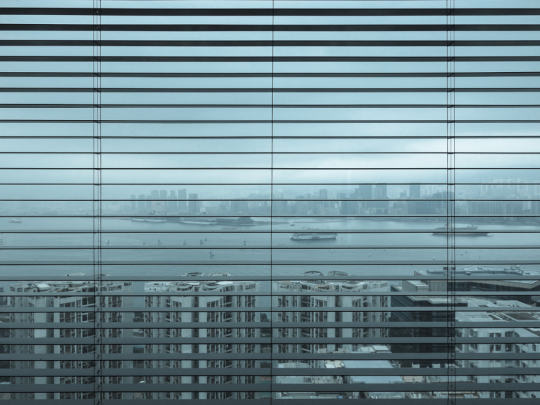
    Blinded View by Markus Jentes on 500px.com

    https://500px.com/embed.js

    Ashley Madison is a website that helps married people have affairs. 

    Recently the website was hacked and over 33 million accounts were exposed. This included full names, email addresses, mailing addresses, and so on. Not surprisingly, this has gotten a lot of press. The site was/is marketed as being private and secure. And clearly that is not what it is right now.

    But there are people in the tech community, such as venture capitalist Albert Wenger, who believe that is merely a glimpse into the future – a “post privacy future.” He even argues on his blog that we as a society should be more accepting of the leak and that the release of this data could lead to a “more measured view of affairs.” (There are many who argue that humans are not intended to be monogamous.)

    For many, or probably most of you, I’m sure this position seems pretty radical. After all, this leak will likely destroy many marriages.

    But Wenger’s position on privacy is a fascinating one and he’s written a lot on the topic. The tension he sees is one between individual privacy vs. collective intelligence. In this part of the world, our society values the former over the latter. But he believes that we are headed towards a world where almost everything, yes everything, will eventually become public. Again, radical position. But consider how much we publicly share about our personal lives today versus 10 or even 5 years ago.

    What’s perhaps more relevant to the Architect This City audience though is what this could mean for many other industries beyond tech.

    I often think about what a “post privacy future” could mean for city building. Imagine if every architect, real estate developer, engineer, and other participant made public all of their work. This would mean that all designs, financial models, sales data, and so on were made widely available to anyone who wanted to see them.

    The thought probably scares many of you in the industry, but consider what it would mean for our collective intelligence. There’s a strong argument to be made that we would all be better off and that the process of building would become far more efficient. In fact, if truly everything were public, it could in theory eliminate most of the market’s concerns about overbuilding, a condo bubble, and all the other stuff that gets talked about.

    The reason people speculate on these market factors is because we don’t have all the data. We don’t actually know what’s going to happen. We have no idea. I know I certainly can’t predict the real estate market.

    So why aren’t we quickly becoming more public?

    Wenger raises the game theory principle known as the prisoner’s dilemma:

    “So one way to think about secrecy is that it leads to lots of prisoner’s dilemma style situations. Individuals (or companies) would be worse off if they were the only ones disclosing, but if everyone disclosed (or at least the majority), then everyone would be much better off. In the language of game theory, we are in a bad equilibrium.”

    In other words, if only one real estate developer disclosed her project’s financial information to the public, then she would probably be worse off against her competitors. But if every developer in the city did it, then the market as a whole would be better off because everyone would then benefit from collective intelligence.

    Using the example of infidelity, if one person is caught having an affair, then that person is more than likely worse off. But if over 33 million people are caught having an affair and it reinforces the statistic that between 30-60% of married people in the United States will have an affair at one point in their lives, then maybe it forces us as a society to rethink what marriage means today. And maybe that makes us all better off.

    This is a pretty far out there argument, though the city building example is probably more palatable than the Ashley Madison one. Regardless, I would love to hear your thoughts in the comment section below. 

    Are we heading towards a post privacy world?

  • 2 years of Architect This City

    Sunset in Toronto by Daniel Fernandes on 500px.com

    https://500px.com/embed.js

    On Wednesday, August 28th, 2013 at 8:33am, I wrote and posted this.

    And that started a 2 year tradition of writing something on this blog, every, single, day, no matter how long or short it might be and no matter how insightful or not insightful it might be. It kick started a discipline.

    For the most part, I tend to write about city building and everything that feeds into that, whether it be design, planning, transportation, technology, or real estate. But I also write personal posts, especially when I go snowboarding. And the longer I write this blog, the more comfortable I feel writing those sorts of posts.

    Sometimes I feel guilty about those posts though, since I assume most of you are here to learn and talk about city building things. I assume you don’t want to hear about me. But at the end of the day, ATC is a personal blog. It’s not a business or corporate blog, and I like to think that the personal touches help make the content more engaging over time.

    Regardless, a big thank you to everyone who reads, subscribes, and follows Architect This City. There are few things more gratifying than hearing someone say they love this blog and that they read it every morning when they wake up. 

    That’s a huge commitment on their/your part and I am grateful for that. Because my commitment (writing this blog) wouldn’t be nearly as fun if you weren’t all around to engage with and learn from. And in the early days of writing this blog, there truly was nobody around.

    So for today’s 2 year anniversary post, I thought I would share some readership stats. Last Friday I posted a map of all of this blog’s email subscribers (in anticipation of today’s post). But today we’re going to get into some hard numbers (from Google Analytics).

    Here are the high level stats from the past year.

    Here are the number of visitors (users) over the last year. It feels great to see it increasing. The spikes are posts that, for whatever reason, really took off.

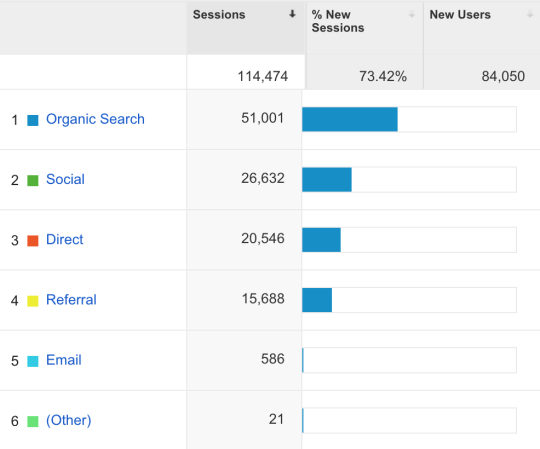
    Here’s how people discovered this blog. Almost half of the visitors to this blog are just searching around online and stumble upon it.

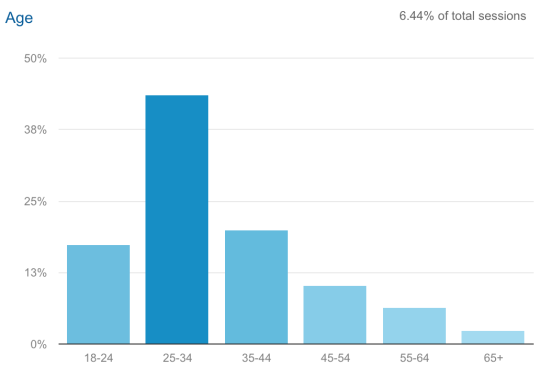
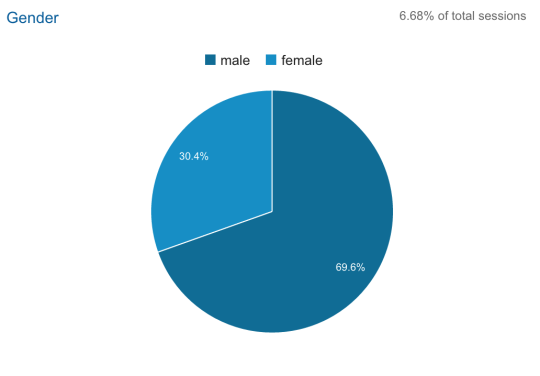
    And finally, here are the demographics. I only turned this feature on a few weeks ago, so the data set isn’t as large as above. Still, it’s probably pretty accurate. I need to work on correcting the gender imbalance here.

    And there you have it. Thanks again for reading. If you have any suggestions for the third year of Architect This City, I would love to hear from you. Leave a comment below. Here’s to another year!

  • BIG coming to Toronto’s King West

    Colourful architecture by Elka Nilsson on 500px.com

    https://500px.com/embed.js

    Earlier this week a press release went out announcing that Allied Properties REIT (TSX:AP.UN) had established a joint venture with Westbank to redevelop 489 – 539 King Street West here in Toronto.

    “What is so exciting here is that Allied has over time assembled 620 feet of frontage on what is fast becoming one of the most interesting streets in Toronto,” said Ian Gillespie of Westbank. “With this scale, we have a unique opportunity for world-class city building.”

    Westbank is relatively new to the Toronto market. Their first project was the Shangri-La Toronto in 2012. But since then they’ve entered the city in a big way with high profile projects like the redevelopment of Honest Ed’s at Bloor and Bathurst.

    But what excites me the most about this King Street project is that they’ve selected Bjarke Ingels Group as the design architect. I’ve written about BIG a few times before and I’m a huge fan of their/his work. So I’m pumped to see what gets proposed here. It will not be typical.

    There are a few heritage buildings on the site. And it looks like some (but not all?) will be preserved. 

    Based on this post and discussion on UrbanToronto.ca, it’s not clear whether 489 King Street West will be preserved and incorporated into the new build (as was the case with a previous design). I sure hope it is though.

  • Build the Future – A CityAge Summit this October

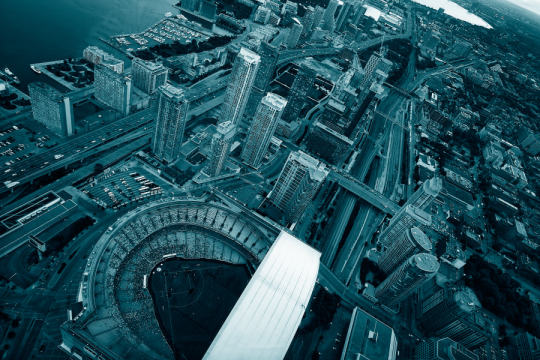
    The View from CN Tower II by Roland Shainidze on 500px.com

    https://500px.com/embed.js

    This October 8th and 9th (2015) in Toronto, CityAge will be hosting a summit at the MaRS Discovery District called, Build the Future. The goal is to explore the future of Canada’s economic powerhouse.

    Here’s a little bit about CityAge:

    CityAge is a platform for ideas and business development, designed to enable new partnerships among the business, government and societal leaders who are shaping the 21st Century.

    Founded in 2012 in Vancouver, Canada, our events have taken place, or are scheduled, in New York City, Hong Kong, Toronto, London, Los Angeles, Seattle, Edmonton, Philadelphia, Kansas City, Ottawa, Vancouver and The Waterloo Region in Canada.

    To date more than 4,000 leaders in business, government and society have attended a CityAge event.

    I’ve seen the draft agenda and list of speakers for the event, and if you enjoy the content on this blog, I think you’ll also really enjoy this CityAge summit.

    But even better is the fact that if you’re a young professional (under 35) and a reader of Architect This City, you can use the code YOUNGPRO to attend for just C$195.

    You’re welcome. I hope to see you there 🙂

  • The Olympics are dead. Or are they?

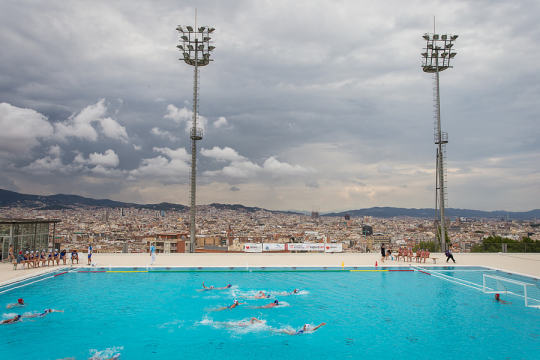
    Olympic Pool – Barcelona, Spain by Tom Weightman on 500px.com

    https://500px.com/embed.js

    Early this morning Professor Robert Wright – who is a regular reader and commenter on this blog – sent me an article from The Guardian called, ‘The Olympics are dead’: Does anyone want to be a host city any more? And that got me thinking.

    With Toronto having just hosted the Pan Am Games (the Parapan Am Games are still going on), there’s a lot of talk and debate happening in this city right now about whether or not we should make a go at hosting the 2024 Summer Games. The deadline for cities to express their interest is September 15th, 2015.

    The supporters (of which I would include myself) say it’s a great opportunity for civic (re)branding and urban renewal. It creates real deadlines to get things done. But the naysayers argue it’s a fiscal disaster waiting to happen. See 1976 Summer Olympics in Montreal.

    But in my view there are ways to host the Olympics and there are ways not to host the Olympics. Montreal (1976) is an example of what not to do. And Los Angeles (1984) and Barcelona (1992) are some of the best examples of what to do.

    The key is to think of the Olympics not as the end, but more as the beginning. In Olympic talk, they refer to this as legacy. Here’s what Los Angeles managed to accomplish as a result of the 1984 Summer Games (via Gizmodo):

    In 1979, the L.A. organizing committee had made a deal. If the games saw any profits, LA84 would give 60 percent back to the U.S. Olympic Committee and keep 40 percent for Southern California. At the end of the games, the total expenditures came in at a respectable $546 million, but even more impressive was the profit: A surplus of $232.5 million, meaning $93 million would stay in the region. This was huge. The only other games at the time which could claim to be financially successful at all were the other L.A. Olympics: The ones held in the city in 1932.

    The profits were used to create an endowment called the LA84 Foundation, which funds youth sporting events, resources, and facilities throughout the area. With smart management, the endowment has grown over the years, and over $214 million has helped an estimated three million children and 1,100 organizations in Southern California. Recently, the LA84 Foundation helped raise money to pay coaches and buy equipment at LAUSD high schools after budget cuts decimated their programs.

    The rest of the above article is definitely worth a read. It’s a great example of fiscal prudence.

    So what I am suggesting is not that we run blindly into hosting the Summer Games. But that we instead open our minds to the opportunities. Let’s great creative. If we could catalyze further city building, turn a profit, and leave meaningful legacies for this region (like what LA did), then why wouldn’t we want to have a go at it?

  • Laneways and ravines

    Solitude by Lionel Linton on 500px.com

    https://500px.com/embed.js

    I have a new mission for this summer: To explore more of Toronto’s ravines.

    Last week I had a fascinating conversation with Steve Heuchert of the Toronto and Region Conservation Authority (TRCA). Most developers in this city would probably cringe when they hear those words. Because often when the TRCA gets involved it means your project is about to get more complicated.

    But if you take a step back and look at the larger city building equation, our ravines are a remarkable and unique feature of the Toronto area landscape.

    And unless you live near one or are fortunate enough to have a home that backs onto one, I suspect that for many of us this city’s ravines are a somewhat forgotten layer of the urban fabric. We drive by them. We pass through them on the subway. But they don’t really register in the way that they should.

    And so if you think about it, our ravines actually share many similarities with our laneways (alleys). We know they exist, but we could be doing a lot more to truly celebrate and integrate them into the rest of the city. They are missed opportunities.

    The challenge with our ravines though is finding the right balance between preservation and increased usage. But this isn’t something that a great landscape architect couldn’t help solve.

    So today’s thoughts are: How do we increase ravine awareness? How do we improve access and expand their uses? How might we craft our ravines to become an interconnected open, green, and cultural network within the city? And how do we better position the ravines as part of Toronto’s overall city brand?

    If you’re interested in this topic, check out this talk that Steve Heuchert did last year. It was part of an event that Megan Torza of DTAH organized called RavinePortal.

  • The Laneway Project is looking for a Fundraising Coordinator

    https://500px.com/embed.js

    As many of you know, I advise a non-profit called The Laneway Project. The goal of the organization is to change Toronto’s relationship with its laneways and help create laneway friendly policies and procedures.

    It’s something that I’m incredibly passionate about. I believe that our laneways represent a missed opportunity, both from a public space standpoint and a real estate standpoint. And I’m confident that Toronto will eventually figure that out.

    If you’re also interested in this space, now is your chance to get involved. The Laneway Project is currently looking for a Fundraising Coordinator to help develop its operational funding strategy and to help with actual fundraising.

    Since it’s still early days, this is a volunteer position (with an honorarium). But it’s a great opportunity to get involved early with a passionate group of city builders. So I hope you’ll consider applying. Click here for the full job description.

  • Fun Friday: Everyone’s Upstairs Neighbors

    This week has not been a good week for Toronto city builders. So I think a Fun Friday post is in order to lighten things up around here. (I’m stealing the idea of a Fun Friday post from Fred Wilson’s technology blog – he has been doing them for years).

    Here’s a short comedy sketch called, Everyone’s Upstairs Neighbors. If you’ve ever lived with a noisy neighbor above you, this will all make perfect sense to you and I think you’ll find it hilarious. Click here if you can’t see the video below.

    [youtube https://www.youtube.com/watch?v=4IRB0sxw-YU?rel=0&w=560&h=315]