Daily insights for city builders, delivered every morning at 6 AM ET. I’m Brandon Donnelly — a Toronto-based real estate developer and founder of Globizen. I’ve been writing here since 2013.

Tag: city building

  • #DensityCreep

    The Toronto Star published an article today called: Midtowners battle the rise of the midrise. It’s about a group called The Density Creep Neighborhood Alliance, which was formed in order to fight a 4 storey stacked townhouse project that is currently going through the rezoning process.

    Here’s a snippet from the article:

    “I’m really concerned about my property value going down,” says Lisa Goodwin, 49, a stay-at-home mother of two who has lived in a four-bedroom dwelling on Keewatin Ave. for 19 years. “Right now all the houses are $1.1 to, say, $2.2 (million) but they’re looking at putting in places that are only $500,000.”

    Not surprisingly, social media took hold of this and #DensityCreep quickly started trending on Twitter. BuzzFeed ran a piece called, Toronto Real Estate Is So Preposterous People Are Protesting Condos That “Only” Cost $500K. And somebody even bought densitycreep.com (their site is .ca) and redirected it to NIMBY on Wikipedia.

    There’s so much I could say about this. But you all already know what I’m thinking. So I’ll end with this quote from the article:

    “The simple fact of the matter is that the creation of a more sustainable, equitable, and affordable city requires the development of midrise and other more dense housing options along major roads, subways, and streetcar lines in already built up areas,” says Christopher De Sousa, director of the School of Urban Planning and Regional Planning at Ryerson University.

    We have work to do.

  • I would make a terrible politician

    Ever since I was a little kid, I have thought that I would one day get into politics. 

    A lot of it has to do with me wanting to affect positive change, which is also one of the reasons I love real estate development (and one of the reasons I write this blog). Developers might have a bad rap in some circles, but I view it as a mechanism for positive change in the built environment.

    However, I have also felt that politics is something that’s better to do when you have grey hair and you don’t actually need the money to live. That way people take you more seriously and you can, hopefully, just do what you feel is right as opposed to playing the political game.

    But more and more I find myself thinking: Brandon, you would make a terrible politician.

    I don’t want to play games. I don’t want to have to think about which stance will win me the most votes. And I don’t want to have to dance around questions so I can avoid upsetting certain constituents. I’d rather be clear and decisive about what I think is the right thing to do.

    But that doesn’t always work so well in politics. So I think I’ll just stick to building things and writing this daily blog.

  • When the crowd builds a city

    I’ve been following and checking out Kickstarter pretty much since the beginning. But it wasn’t until last night that I backed my first project. 

    After doing that, I immediately started thinking about urban projects that might be able to also get crowdfunded using Kickstarter. How could it be used for city building? A Kickstarter project, after all, just has to be something with a defined scope and a clear end goal.

    Not surprisingly, this has already been happening for many years now.

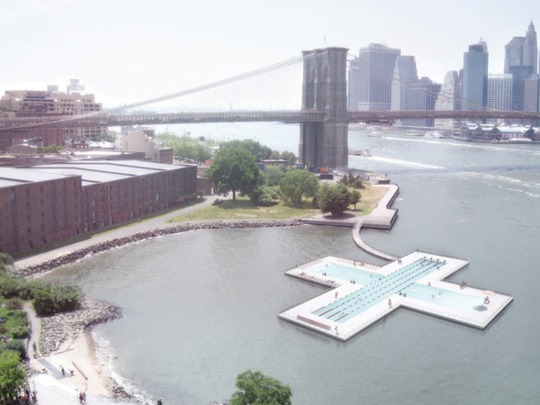
    A great example is +Pool in New York, which is an initiative to build a publicly accessible floating pool that also filters river water. The project launched in June 2011 and by July 2011 they had raised $41,648 USD to build and test different filtration techniques.

    image

    Today, the project is still moving ahead and they are now offering up the opportunity to buy and have your name engraved on tiles within the pool. If I lived in New York, I would be all over this.

    But what’s powerful here is the ability for crowd-based platforms (like Kickstarter) to both get radical new ideas off the ground and to empower local communities to affect change. Here’s a quote from PSFK:

    It’s very difficult to get funding for these ‘out there’ ideas that regular systems might not support. Creators have to take risks and be imaginative, as well as put their ideas out there and let the public decide. There are no traditional guidelines on crowd-sourced platforms—they’re much more meritocratic. You can think in big scope and that changes what gets made and who can access it. Anybody with a couple of doubles can voice what they want to be built, and in that way we see the entire community having a huge say in the design world.

    And when I see projects and platforms like this, I can’t help but wonder if (when) city building is going to become even more decentralized. 

    Last night I was also at an event – being put on by Ryerson University’s City Building Institute – called Bridging Divides: What Can Cities Do? And one of the suggestions that came up was that Toronto needs more local and granular community councils (there are currently 4) in order to bridge some of the divides that are happening in our city.

    But in a world where it’s possible for each and every person in a city to not only have a say but to quickly say it from their smartphones, why can’t we go even more local? Instead of 4, 10, or 90 community councils, why can’t we have everyone more engaged?

    I think we’re headed in that direction.

  • Value creation, transparency, and authenticity

    https://500px.com/embed.js

    I started writing this blog a year and 10 months ago. 

    At that time, I had no real title for it (it was just called “Cities”) and I had no idea where it was going to take me. All I knew was that I enjoyed the discipline of writing every day and that I wanted to talk about cities and city building. It was a way for me to neatly organize all of my passions – which span everything from architecture and real estate to technology and transportation.

    Since that time, this blog got a name (Architect This City). It was named by the Guardian (UK) as one of the best city blogs in the world. I’ve met an incredible array of different people (send me an email if you like coffee and are doing cool things). I get invited to comment on city building issues on a regular basis. And an incredible community of almost 10,000 daily readers has emerged (you can email subscribe here).

    A big thank you to everyone who reads and contributes to ATC.

    But over the course of writing this blog, something else unexpected happen. I started getting referred to as a “brander, marketer, and content creator.” Now, I’ll admit that I’ve become increasingly interested in these fields over the years, but it was certainly not something I thought of or could have predicted at the outset.

    What really happened though is that I simply started riding a wave that arguably took hold sometime around the mid-2000s and then focused my attention on an industry that has historically been slow to change (real estate). And that wave is the shift towards inbound marketing (as opposed to outbound or interruption marketing).

    If you’re a marketer, this is old news. You already know this. But I think there’s still lots of room for this to take hold in the real estate industry. So let’s talk about it a bit.

    To give you an example from outside real estate, take a look at Five O’ Clock magazine by Harry’s. Harry’s is a shaving company out of New York that offers moderately priced well-designed shaving supplies for men. It’s simple model that works very well.

    Their positioning has been around the idea of “Own Your AM”, which makes sense given that they are a shaving company. And so what they often do in their Five O’ Clock magazine is profile the mornings of interesting people, such as professional skier Jimmy Chin (who happens to live in one of the best places on earth).

    But if you do a search for the word “shave” in that Chin article, you won’t find it. Because it’s not about just creating content so that you can plug your business at every opportunity; it’s about creating value for your customers and building a relationship.

    And that’s really fundamental to the change I’m talking about. 

    Today, the marginal cost of reaching your customers has dropped to almost zero (even if you’re reaching out to them on a one-on-one basis over, say, social media). And so the opportunity exists for companies, brands, and individuals to do things that simply weren’t feasible before.

    Because of this, it is now possible for everyone to easily establish their own personal brand. I think we’re going to see more, not less, of that. And it has changed how we message and communicate – whether it be via blogs, social media, or online magazines.

    In my view it comes down to 3 considerations: value creation, transparency, and authenticity. If you can create value for your target audience and be transparent and authentic, you’re going to naturally draw people in. I try and do all of that on this blog and hopefully it comes through.

  • Dublin 2007

    image

    In 2007, I spent the summer working in Dublin, Ireland for a boutique real estate consulting firm called Urban Capital. (For those of you who are from Toronto and know the industry, there’s no connection between the Urban Capital in Dublin and the Urban Capital in Toronto.)

    At the time, they were working with a number of government agencies on the development of masterplanned communities, as well as on specific development projects. Real estate was booming and everyone wanted to be a part of it – including the band U2.

    But as you all know, the following year (2008) wasn’t kind to the real estate industry and, in particular, to Ireland. That year the country fell into recession for the first time since the 1980s and became labeled as one of the “PIGS.”

    I really wish I had started this blog by that point because it would be interesting to look back today on my posts from that summer and see how I was thinking about the Dublin real estate market. I remember having many Guinness-fueled discussions about whether the bull market could continue.

    In any event, the Irish economy is coming back.

    This year GDP is expected to grow by 5.4%, which would make it the fastest growing economy in Europe. National debt is also falling. At the end of 2013 it stood at €215 billion or about 123% of GDP. And at the end of 2014 it had fallen to €203 billion or about 109% of GDP. The national debt is expected to fall below 100% of GDP by 2018.

    At the same time, Ireland also got permission to pay off its bailout loans early. That’s a good sign.

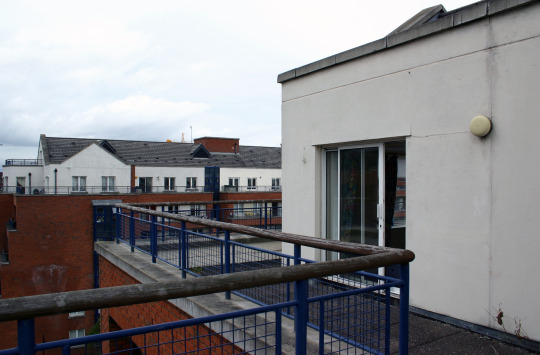
    I’m thinking and reading about all of this today because I was looking through my photo collection this morning and I stumbled upon a folder titled “Dublin 2007.” The photo at the top of this post was the terrace that I had outside of my apartment in the Docklands area. I don’t think I used it once that summer. 

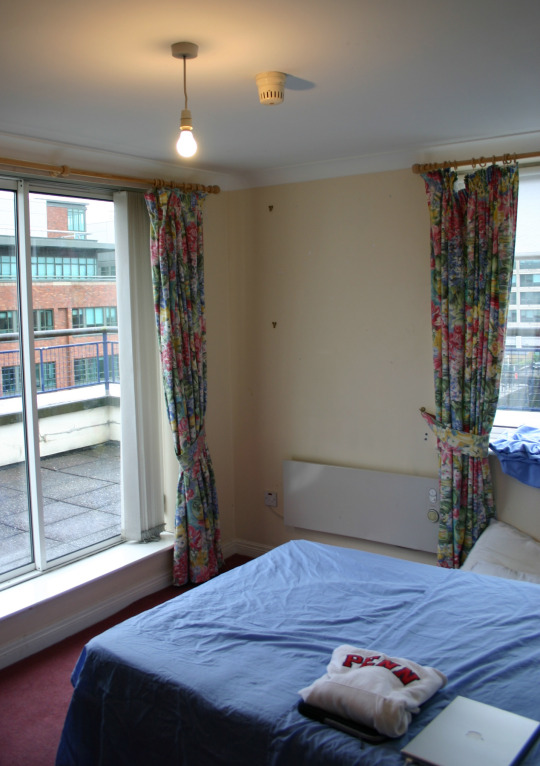
    And here’s a photo of my bedroom. It must have been the curtains that sold me on the apartment.

    image

    I had a great time in Dublin that summer. It’s a fun and young city and I remember being incredibly impressed by the quality of city building that was going on. I’m sure that wasn’t lost in the Great Recession.

  • What do you want to read about on Architect This City in 2015?

    Photograph Schönefeld by Vladimir Smirnov on 500px

    Schönefeld by Vladimir Smirnov on 500px

    Though this blog is focused on cities and geared towards city builders, I cover a lot of different topics. 

    I talk about real estate, architecture, planning, transportation, technology, and even personal topics. My primary goal is to create a worldwide community of people passionate about building great cities, but at the same time it’s still a personal blog.

    Usually I just write about whatever is currently on my mind. I never queue up posts and so each post is written the day of. But sometimes I wonder if I’m delivering on what you, the readers, really want to read and talk about. 

    So today I thought I would simply ask: what would you like to see more of on ATC in 2015? Let me know in the comment section below and I’ll try my best to deliver.

  • Community building on the east side of downtown

    Yesterday evening I went to the Toronto Christmas Market in the Distillery District. I had actually never been before, but it was something that I had been meaning to check out for a few years now. And it was wonderful. If you’ve never been, I would highly recommend you go. This past weekend was the opening weekend and it runs all throughout Advent until Sunday, December 21st.

    For those of who might not be aware, the Christmas Market festivity is a longstanding tradition that originated primarily in German-speaking Europe. Accounts of a “December market” were found as early as the end of the 13th century. The Toronto Christmas Market is a slightly more recent tradition (it’s only about 5 years old), but it was already selected as one of the world’s best.

    But Christmas carollers and hot toddies aside, the Market is also a fantastic opportunity to see the Distillery District in all its glory. Every time I visit the Distillery, I can’t help but feel how lucky we are to have a district like this in the city. The architecture and scale of the place is incredible and – alongside the Toronto Islands and Kensington Market, sometimes – it’s pretty much the only car free zone we have.

    However as someone who lived near the Distillery District in its early days, I remember how much of an “island” it was when it first opened. It felt disconnected from the rest of the city and the only way to get people there was to hold a special event. The retailers and galleries struggled and many didn’t last.

    With all the condos that have been built, literally on top of the neighborhood, that has changed dramatically. Today the area has become much more balanced as a mixed-use community. But the real tipping point, I think, will come next year when Toronto hosts the Pan Am Games and the West Don Lands neighborhood starts to come online just to the east of Cherry Street.

    Now all of a sudden the Distillery District won’t feel like the edge of downtown anymore, it will feel more like the middle of it. As my friend Alex Bozikovic of the Globe and Mail pointed out to me this weekend, the Pan Am Games are going to put the east side of downtown on people’s radars. And I would completely agree. Once that happens, the Distillery District will finally start to reach its maximum potential.

  • Atlantic City is the next Detroit

    If you have been following the headlines over the past year, you’re probably aware that Atlantic City — the “Gambling Capital of the East Coast” — is in trouble. This year alone, 4 casinos shut their doors – including Revel, which only opened in 2012.

    To be perfectly honest with you, gambling isn’t my thing. I’ve only been to Atlantic City once, and it was really just so that I could say I had been (it was when I used to live in Philadelphia). But I know that many people derive a lot of entertainment value out of gambling.

    However, I worry when cities starting believing that a casino can fix all of their city building and economic development challenges. They are not a silver bullet. And many would argue that they cause far more harm than potential benefit. The negative socioeconomic impacts have been well documented.

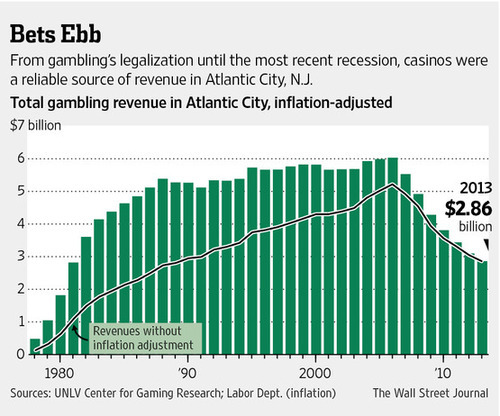
    In the case of Atlantic City, I suppose you could say that casinos “worked” – for awhile. But that’s because Atlantic City had a monopoly on gambling. In 1978 the city opened the first legal casino in the eastern United States. And that led to a boom in casinos and a spike in municipal revenue. But those revenues peaked in 2006 and have been on the decline ever since. 

    My good friend Alex Feldman argued in a recent Next City article that Atlantic City is, quite frankly, the next Detroit. It repeated the same mistakes and now it’s going to need to go through the same painful rebuilding process:

    It’s no exaggeration to say that Atlantic City is poised to become the next Detroit. In many ways, the trajectories of the two cities are similar. Both cities relied on one industry to prop up their economies — and both failed to innovate as competition increased. Similarly, both Atlantic City and Detroit failed to invest in a sense of place — casinos and factories were more successful when their customers and employees had little reason to go outside. The result: defensively built cities designed around the automobile that gave visitors little reason to stay.

    And I think he’s right. The time has come to rethink Atlantic City. Onwards!

  • #ATHISCITY

    One of the things that makes cities so exciting is the fact that they’re always changing. New restaurants open up. New buildings are built. Old buildings (with no heritage value, of course) are demolished. Bike lanes are added. New infill homes pop up in quiet residential neighborhoods. And the list goes on.

    For years I’ve wanted an app or some sort of product that would allow city builders to keep track of everything that’s going on in their city. In the same way that Foursquare helps you find cool restaurants around you, I would like to know about everything that’s going on, from rezoning applications to construction updates.

    One of the challenges, of course, is that I’m sure more people care about cool new restaurants than about esoteric planning applications. It’s definitely a niche market. But that doesn’t mean there isn’t a thriving group of people who do care. So I’ve decided to introduce an Architect This City hashtag on Twitter: #ATHISCITY.

    I’ll be using it for city building updates and, if some of you join in as well, I think it could become a great way to keep track all of the neat things that are happening in our city, as well as in others around the world.

  • Put your window to work and make $50 a month

    image

    I’m convinced that city building – like probably every other industry – is going to get a lot more data driven. Yesterday I wrote about how driverless cars are collecting exact replicas of our cities as a result of the 3D scanning that they do. And today I learned about an interesting new startup called Placemeter.

    Basically it works like this: If you have a window (at home, at the office, or wherever) that faces onto a lively street, Placemeter will pay you to setup a smartphone in that window as a “meter.” The going rate is up to $50 per month and they’ll even provide you with the necessary suction cups.

    Through video, your phone will then start collecting anonymous data about that street’s activity levels: the number of people, cars, and so on. Below is a video of what that output looks like. Notice that it’s even collecting the number of people that go into each of the stores. Click here if you can’t see the video below.

    //player.vimeo.com/video/69091237

    To make money, Placemeter plans to sell (or is already selling) this data. And their goal is to “make your city better” by specifically improving the way that pedestrian spaces are designed. There are of course lots of other use cases for data like this (such as seeing how busy that bar is across town), but their primary goal appears to be around city building. At least that’s the case right now.

    Not surprisingly, there are concerns about privacy. But I’m sure they’ll be able to work around that. All of the data they collect is anonymous and they don’t save any of the footage that they receive from the meters. Their system just extracts the relevant data points and then automatically deletes the video. 

    What’s also interesting to me about this startup, though, is that it’s yet another example of decentralized value creation. Just like Airbnb empowered anyone with a spare room to run their own bed and breakfast and YouTube empowered anyone with some talent (or a funny cat) to create engaging content, Placemeter is allowing anyone with a window and a view to connect and contribute to a network of urban sensors.

    And it works because the marginal cost of adding a new meter to their network is relatively low. Especially if you compare it to what it might cost for a municipality to setup and manage a similar – albeit centralized – system. It’s a totally different cost structure. So when we talk about smart cities and data driven city building, we’re really talking about networks and an environment of decentralized inputs.

    It’s a pattern that keeps coming up as a result of the internet. If you start watching for it, I’m sure you’ll see it.

    Image: Flickr