Daily insights for city builders, delivered every morning at 6 AM ET. I’m Brandon Donnelly — a Toronto-based real estate developer and founder of Globizen. I’ve been writing here since 2013.

Tag: canada

  • BARED: David Wex, Urban Capital Property Group

    image

    David Wex started his career working for one of the big Seven Sister law firms in Toronto. But right from the outset, it was clear that he wasn’t in it for the long run.

    In fact, only a few days after he started, David had the clever idea of turning his desk around so that it faced the window, instead of the hall. That way, he could avoid eye contact with partners as they walked by his office, and reduce his chances of being assigned a file.

    Of course he couldn’t avoid being tracked down all the time. But whenever someone would try to assign him work, he would simply say: “I’m sorry, but I’m really busy working on something right now.” His nickname quickly became “One File Wex” and it was clear that he was headed towards the departure lounge and not a corner office.

    But already, David had his mind set on doing something related to cities. So while still working as a lawyer he decided to complete his Graduate Record Examination (GRE) in preparation for going to planning school. Ultimately, he decided not to go back to school, but instead leave the firm and just figure things out. He left in 1992.

    After leaving, he did in his words, “nothing” for a few years. He lived off his savings, spent some time working with a bunch of guys cleaning up the Don River, and tried to figure out a way to put together a development project.

    Eventually he met a friend of the Goodman family and this led to an introduction to the Dundee Corporation.

    It was the early 90’s and nothing was happening by way of development in Toronto. The real estate industry was in a deep recession. Ask anyone who was “active” during this time. It was a painful time to be in the business. But the Goodmans told David that he if could find a suitable site to develop, they would invest. Lesson: Developers are constantly leveraging other people’s money.

    So David went out and found a site on a sleepy street named Camden in Toronto’s Fashion District. This is not the Camden Street of today, which has an Ace Hotel currently in the works. It was a dead zone. By this point we are in 1995 and few people believed that anyone would want to live on a downtown street like Camden.

    Given the perceived undesirability of the site and the continued lull in the market, David tied up 29 Camden for C$700,000 with a 2 year option. What this means is that he had 2 years to figure out if he actually wanted to close on it. He could put very little money down and get the project going before having to worry about carrying the land. It wasn’t until midway through sales that he actually went firm.

    It’s hard to imagine being able to do this in today’s competitive real estate market, but that was the market at the time.

    Of course, the flip side to all of this is that it also took him 2 years to sell about 20 condominium units (out of a total of 55), at an average price per square foot of $195. Today you could sell those units in 2 hours at $800 psf.

    Brad Lamb – who was just starting out at the time – was the broker on the project. And activity at the sales office was so scant that everyone would get excited even when a car would drive down Camden Street. That’s how dead it was in the Fashion District.

    Eventually Dundee got impatient. Sales were slow. A lot of money had been spent on marketing. And the partners didn’t believe that “the bump and grind of Queen Street” (original marketing pitch) was the right way to position the product. David was also in the midst of rebranding his company from Red Rocket (named after our transit commission) to Scrappy Dog Real Estate Investments. By that point Dundee came in and said: “You’ve fucked up this project. You’re out.”

    David had felt like he had made it and become a developer with Camden Lofts. But just like that – before construction had even started – he was off the project.

    The deal that David struck with his partners was that he didn’t want any money out of the project (it didn’t end up making much money anyways). But he wanted to stay involved and be able to call Camden Lofts his project. And so to this day, Camden Lofts remains the first development project of his very successful real estate career.

    But Camden Lofts didn’t solidify David as a real estate developer. After the fumble, David took on the role of managing a loft conversion for what turned out to be some pretty dodgy landowners. The total management fee was a princely $5,000, but David wanted to complete his own project from beginning to end. And so he did just that with Century Lofts at 365 Dundas Street East. He also spent a great deal of time learning Illustrator, Photoshop, and other design tools so that he could do all of the marketing himself. This is an experience that would later manifest itself in his company’s business model.

    After tuning his craft for a couple of years, David met his current business partner, Mark Reeve. Mark was a corporate real estate developer and planner, and they talked about doing something together. So they did, and the result was Urban Capital Property Group. Mark was also able to planning consult on the side and that helped fund their fledgling business as they worked on breaking into the development game.

    The first project to come out of this relationship was The Sylvia, which was also on Camden Street (#50). However, you won’t find this project on their website because it was done in partnership with developer Intracorp. The relationship ended up not being a productive one and both David and Mark vowed never again to be involved in a project that they weren’t actively managing themselves. That vow continues to this day.

    The first project that Urban Capital did on their own was the 66-unit Charlotte Lofts. It’s the first project they completed from A to Z. They sourced the site, secured the financing, worked on the design, marketed it, and constructed it. It was a success.

    The partners did well but the learning curve remained so steep that neither felt that they had really “made it” with this project. Indeed, my interviews have uncovered that this is a common experience amongst new developers. It can take a few projects before they really hit their stride and, in some cases, even make any money.

    But who ever remembers the stumbles?

    Today, Urban Capital has completed over 4,000 urban condominiums and has another 2,500 in the works. They have developed over $2 billion worth of real estate to become one of Canada’s most influential urban infill developers.

    Unlike other Toronto-based condo developers, they have branched out beyond Toronto: east to Montreal, Ottawa and Halifax; and west to Winnipeg and Saskatoon, with other cities on the horizon. Their mission is to act as an urban regenerator by bringing high design urban living to new markets across the country.

    They have come a long way since the days of Scrappy Dog Real Estate Investments. Clearly David is the furthest thing from “One File Wex.”

    You can follow Urban Capital on Twitter and on Facebook.

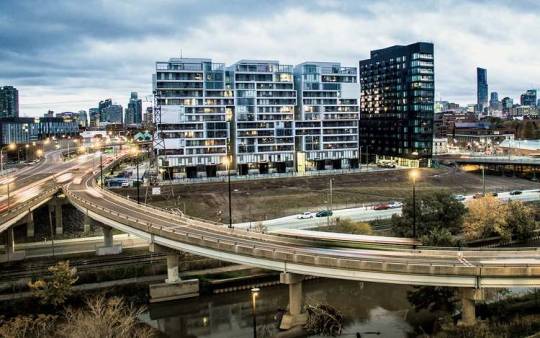
    Image: River City 2, Toronto

    ———————————————————

    This is the first post in my new blog series called BARED (Becoming A Real Estate Developer). More posts to come in the following weeks. Subscribe to stay in the loop.

  • Mapping of global migration

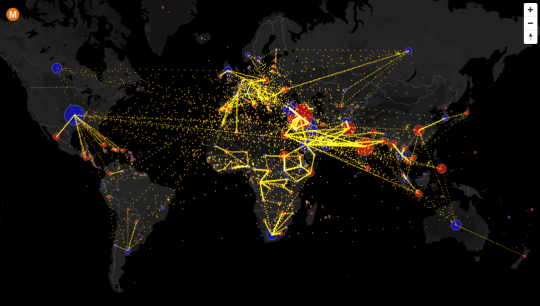
    Max Galka has created an incredible visualization of country-to-country net migration (from 2010 to 2015) on his blog, Metrocosm.

    Here’s a screenshot:

    image

    But you really need to view the full screen interactive version

    In that version, you can hover over a country to see the total net migration number (+/-) and you can click on a country to see where people are moving to and from. A blue circle indicates positive net migration (greater inflows) and a red circle indicates negative net migration (greater outflows).

    All of the data is from the United Nations Population Division. And though the numbers are estimates, it’s a fascinating look at global migration. For instance, look at the outflow from Syria.

    It would also be interesting to see these numbers on a per capita basis because some countries certainly punch above or below their weight in terms of migration. Off the top of my head, I’m thinking of Canada and Australia vis-à-vis the US.

  • Architect Profile: Omar Gandhi

    image

    This week – thanks to an introduction from a mutual friend – I had the pleasure of having lunch with architect Omar Gandhi. 

    Based in both Halifax and Toronto, the Globe and Mail has called Omar one of Canada’s next top architects and Wallpaper Magazine has named him one of the top 20 young architects in the world. So if you haven’t yet heard of him, consider this post as your heads up.

    What’s exciting about his work is how it really reflects the ethos of the places he works in (east coast Canada in many cases). At the same time though, his works seems to define a new modern and Canadian design sensibility. 

    And this is what I believe great architecture should do. It should respond to and reinforce local cultures, but also help to shape them as they invariably evolve. Architecture and culture are inextricably linked.

    I love seeing local talent thrive, so I hope you will take a minute to visit Omar Gandhi’s website.

    Image: Modern Cabin in Cap Breton from OG

  • School of Real Estate

    I’ve been getting a lot of (email) questions lately about what to study in order to become a real estate developer. So I thought I would reblog this post that talks about exactly that. I wrote it over a year ago and I almost forgot it existed.

    At the same time, I’m reminded of something: I think these questions really speak to the fact that there’s a significant opportunity (particularly in Canada) in terms of real estate development education. 

    Oftentimes when I get these questions, I end up recommending the Master of Science in Real Estate Development (MSRED) at ColumbiaMIT, and USC. Why don’t we have something similar (and better) in Canada? We are falling behind.

    I have raised this with some Universities here in Toronto, but the response I got was that they felt the real estate courses being offered as part of their existing MBA programs were more than sufficient. I think we can do a lot better.

    One professor suggested that I line up a big donor and work with them to spearhead the creation of the (Insert Donor Name Here) School of Real Estate. I think that’s a great idea, but not something I have the capacity for right now.

    Hopefully somebody else out there is of the same mind.

    Post Update: 3 days ago the Schulich School of Business (York University) announced a one-year full time Master of Real Estate and Infrastructure (MREI) program – the first of its kind in Canada. 

    This is great news. 

    Now I would love to see the University of Toronto and Ryerson University (as well as others) step up and leverage their respective architecture schools. Schulich is already out of the gate on this one.

  • Global home prices at the end of 2015

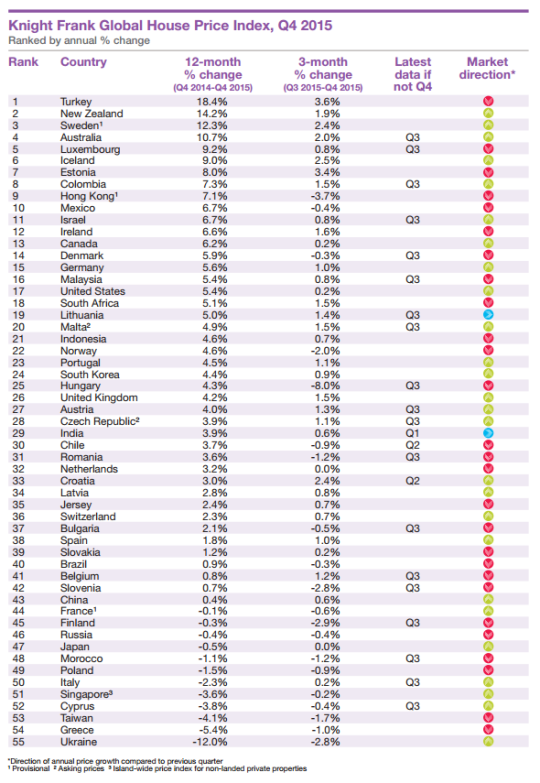
    Seeing how we’ve started looking at data from last year, I thought it would be interesting to look at global home prices as of Q4 2015. Here’s a chart from Knight Frank, which they refer to as their Global House Price Index:

    At the top of the list is Turkey, with an 18.4% increase from Q4 2014 to Q4 2015. (Supposedly this is because it has recently become easier for foreigners to buy property in the country.) Canada is 13th with a 6.2% increase (during this same time period) and the United States is 17th at 5.4%.

    This is obviously a high level analysis. There are lots of regional and local variations within each country. For instance in Canada right now, Calgary is a very different place than, say, Vancouver or Toronto.

    Nonetheless, it’s still valuable to see the relative performance of each country and see what their (Knight Frank’s) prediction is for 2016:

    “Our outlook for 2016 is muted. We expect the index’s overall rate of growth to be weaker in 2016 than 2015. The global economy is experiencing a potentially dangerous cocktail of low oil prices, a strong [US] dollar and a continued slowdown in China.”

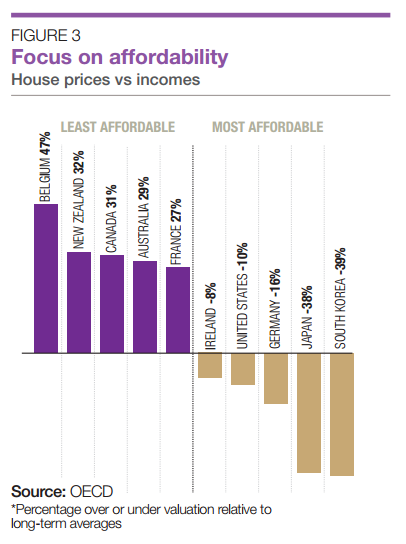
    It’s also interesting to see how the countries rank in terms of affordability:

    Once again, Canada ranks as being one of the least affordable countries in terms of home prices.

  • Towards a cashless society

    I increasingly never carry cash on me. I just never think to take out money and, when I do, I hate paying for things and getting change back. That change just ends up in a “change jar” in my apartment and then never comes out ever again. I keep telling myself that I need to buy coin rolls but that never seems to happen.

    Lucky for me, it’s pretty clear that many cities and countries are quickly headed towards a cashless society. It’s pretty easy to get by in most cities today without cash. Here in Toronto, I use Uber and my PRESTO card to get around. I can use my phone for many purchases like coffee. And I can use my credit/debit cards for everything else. I never really thought about it until recently, but I have unintentionally gone almost completely cashless.

    But of course it’s not just cash that is going to disappear; it’s also our physical wallets. Just this week Fred Wilson wrote a post on his blog about how he forgot his wallet at home and how Apple Pay came to the rescue at Whole Foods. I can’t wait until more banks roll this out in Canada. It’s also encouraging to see that under “coming soon” on the Apple Pay website, the Toronto Transit Commission is listed. I guess that means it will be integrated with PRESTO.

    However, this transition is not happening in the same way everywhere. There are many countries that still prefer cash. According to CNN (November 2015), only about 10% of people in Indonesia and the Philippines would prefer to pay with a credit card. And it’s for this reason that Uber now accepts cash in a number of countries. It’s what those customers wanted. I find this interesting though, because not having to carry cash is one of the main reasons I use Uber.

    Of course, there’s also the question of what happens to people who are currently not connected in anyway to electronic forms of money. I get asked by people on the street for change at least every day when I walk around Toronto. But there is actually no way for me to transmit the money I have to them. I don’t carry cash and I certainly don’t carry change.

    I would be curious how many of you have gone or are close to going cashless. And if you are operating cashless, did you even notice the transition happening?

  • A look at net migration by age group in Vancouver

    I’ve written quite a few posts about family formation and, more specifically, about where Millennials will move once they start having kids

    Many seem to believe that – despite the current Millennial love affair with urban centers – much of this cohort is destined to repeat the pattern of the previous generation. Meaning, once the kids come along, they’re headed to the suburbs in search of bigger and more affordable housing.

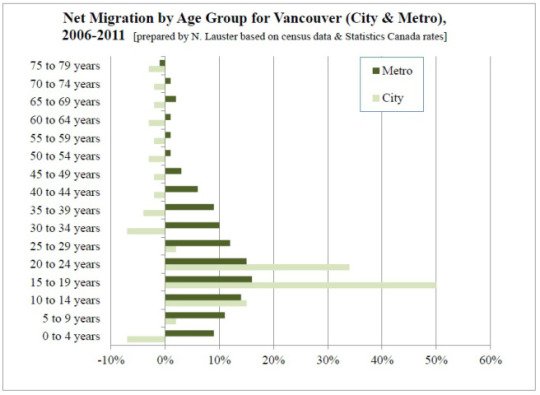
    If you look at the data, there’s a lot to support this prediction. Below is an interesting chart from Nathanael Lauster (Professor in Sociology at the University of British Columbia) that looks at net migration by age group for the City of Vancouver and the metro area.

    image

    What this chart shows is a flood of people in their late teens and early 20s migrating into the city (many of which are likely students), but then a fairly dramatic net loss of people leaving the city as they enter their 30s. The metro area, however, continues to grow – almost certainly because of people looking for more suitable family housing.

    But this data is from 2006-2011. We don’t yet have the 2016 census data. And I suspect that we will start to see an increase in the number of people opting to remain in the city across many different urban centers. 

    There are some very real economic pressures that successful cities today have to contend with. But I believe that the desire to remain in the city is there for a lot of young people.

  • Share your big idea for Canada’s #Capital2067

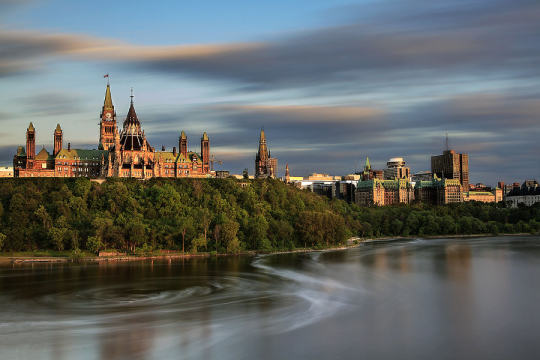
    Parliament Hill by Maryus Bio on 500px.com

    https://500px.com/embed.js

    On Thursday night I spoke at an Urbanism Lab event in Ottawa put on by the National Capital Commission.

    The event was all about the interconnection between the online world of blogging and social media, and the offline world of tangible city building.

    More specifically, one of the goals was to help inspire institutions, such as the National Capital Commission, to better leverage these new channels in order to get their message out.

    Social media and blogging may be ubiquitous, but lots of organizations are still getting their heads around it.

    So today I thought I would do my part and share something with all of you that, truthfully, I didn’t know was underway until I visited Ottawa.

    But first, how many of you (Canadians) are exactly aware of what the National Capital Commission does?

    The NCC is a federal Crown corporation that is focused on 3 specific mandates:

    1. They are the long-term urban planner of federal lands in Canada’s Capital Region. They are also the largest landowner in the region.
    2. They are the principal steward of nationally significant public spaces and buildings, including the Capital’s six “official residences.” Residences such as 24 Sussex Drive.
    3. And they are a “creative partner” on initiatives that tie into both development and conservation.

    To this end, the NCC is now working on a Plan for Canada’s Capital, 2017-2067. This is a 50-year plan that will outline what they do with federal lands, buildings, parks and other symbolic spaces in the Capital. And it will identity which projects would best craft and represent our national identity, as well as strengthen Canada’s influence in the world.

    This is all pretty important and interesting stuff. But unfortunately I didn’t know it was underway. And I also didn’t know what they were looking for “big ideas” from Canadians. These are ideas that will directly shape the 50-year plan.

    So if you have an idea – big or small – for the National Capital Commission, I would encourage you to click here and share it with them. Not only is this city building in the Capital, it’s also nation building.

    Please also feel free to copy and paste your idea(s) in the comment section of this post. These ideas definitely deserve a fulsome discussion. I will post mine once I write it.

  • Art is the new steel — a photo essay of Hamilton, Ontario

    Today, myself and a few others spent the afternoon urban exploring Hamilton, Ontario with Thomas Allen of the blog, Rebuild Hamilton. If you don’t read his blog, you should. Since he started writing about 3 years ago, he has really emerged as the online voice of Hamilton’s urban resurgence.

    If you’re from Toronto, you’ve probably been hearing rumblings about good things happening west of the city. Rumblings about people leaving overpriced Toronto for greener and more affordable pastures in Hamilton, and even that it was destined to become the Brooklyn of Toronto. That basically means Millennials, trendy coffee shops, and beards. (For the record, Thomas’s beard is very nice.)

    With all this talk of affordable housing and beards, I decided that it was time to make a pilgrimage. Below is a short photo essay of what we saw.

    We started the day east of Hamilton where we found this beauty along the waterfront. I don’t know who designed it, but it’s called the Cube House and it was construction managed by Toms + McNally Design. You’re going to want to click through to their website to see the interior photos. 

    image

    We then made our way downtown to Jackson Square. Jackson Square is one of two downtown malls (the other is the post-modern City Centre Mall). It has seen a lot of investment in recent years and I was impressed to find a thriving grocery store. 

    image

    Then came a taco and craft beer pit stop at The Mule. I would definitely recommend this spot if you happen to find yourself in the area.

    imageimage

    Following this, we walked James Street North, which we were told has only really come up in the past 5 years or so. And alongside with this resurgence has come the slogan: Art is the new steel. This, of course, is responding to the fact that Hamilton is the steel capital of Canada, but that the industry is facing many challenges. I think it’s a neat slogan.

    imageimage

    On James Street we stopped in at Saint James Espresso Bar & Eatery, and it was everything we had hoped for and more. It was more because not only was it a cool space with great coffee, but they had some fancy thing called steam punk coffee.

    imageimage

    After James Street, we then drove around checking out some of the other areas in the city such as Kirkendall and neighboring Dundas.

    All in all, this afternoon was a great reminder that we are truly living in an urban century. It’s not just the Toronto’s, Berlin’s and Shanghai’s of the of the world that are laying down bike lanes, investing in art and culture, and generally reimagining their city centers. It’s also happening in smaller and mid-sized cities such as Hamilton. And that’s really exciting.

  • 5 random charts related to cities and real estate

    I was reading through PwC and ULI’s 2016 Emerging Trends in Real Estate report this evening and a handful of charts stood out to me. They’re not all related to each other, which is why this blog post is called what it is. But I think you’ll find them relevant to many of the things we talk about on this blog.

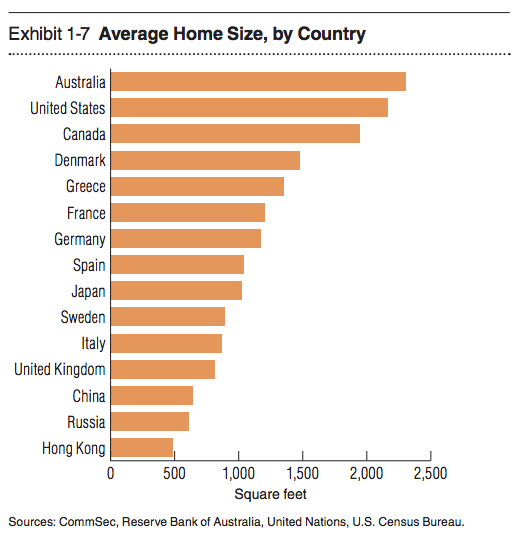
    1. Average home size by country

    With all the interest today in “small urban spaces” it’s interesting to see that the average home size for half the countries on this list is somewhere between 500 and ~1100 sf. It’s also amazing to see Hong Kong hovering just below 500 sf.

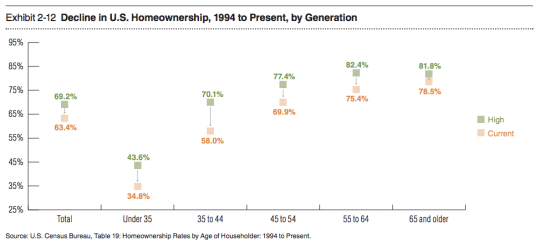
    2) The decline in homeownership in the US

    I like to follow home ownership rates because there’s a lot of debate around whether or not this obsession with homeownership – which has been so central to the ethos of countries like the US and Canada – is at all falling out of a favor. This chart shows some pretty significant drops from previous highs.

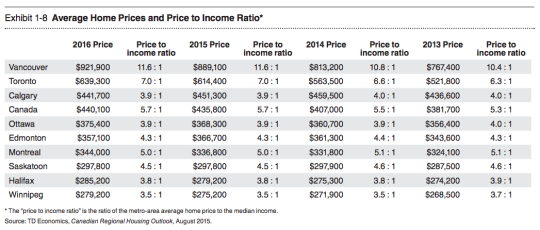
    3) Average home prices and the price to income ratio in major Canadian cities

    Not surprisingly, Vancouver and Toronto are the top of this list with the highest average home prices and the highest price to income ratios (i.e. the worst affordability).

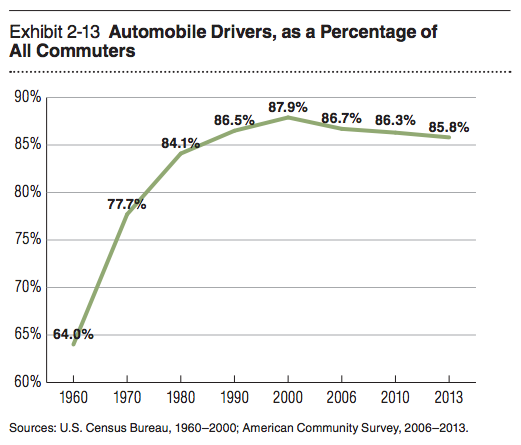
    4) Drivers as a percentage of all commuters in the US

    This chart is similar to what you would see if you looked at vehicle miles traveled. I’ve heard some people say that driving is now once again on the rise, but for the past decade and a half it’s been on a slow and steady decline.

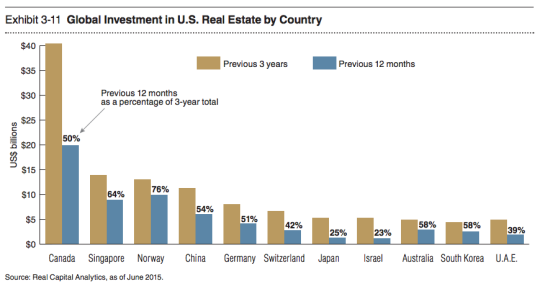
    5) Countries buying US real estate

    Canada is a big buyer of US real estate. But with the dollar where it is today, I am sure that number is headed downwards.