Daily insights for city builders, delivered every morning at 6 AM ET. I’m Brandon Donnelly — a Toronto-based real estate developer and founder of Globizen. I’ve been writing here since 2013.

Tag: canada

  • The biggest international buyers of American homes

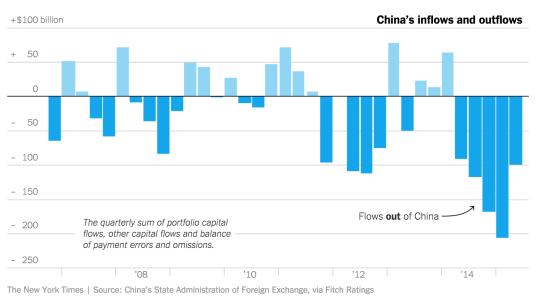
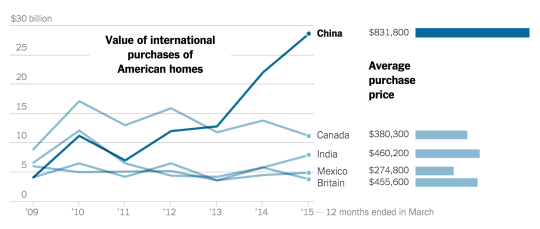
    A reader recently sent me a New York Times article talking about Chinese buyers flooding into the US residential real estate market. This is something that I’ve written about before, but I liked the “graphic” section called The Roots of China’s Real Estate Rush.

    Here are two of the graphs:

    imageimage

    The second chart shows you just how much more significant Chinese buyers are compared to the next biggest foreign customer of American homes: Canadians. And with the Canadian dollar where it is, it is no surprise that we are trending downwards. That doesn’t seem to be the case with the Chinese.

  • Housing completions in Toronto from 1996 to 2014

    Whenever I read studies that cite census data, I’m often left feeling like the data is out-of-date. 

    Five years – which is how often Canada conducts its national census – is a long time. Somebody could move to this country for school, complete a 4-year degree, and then leave, and we wouldn’t even pick it up in our data.

    Thankfully, we’ve at least reinstated the long-form census for next year. Here are the questions, if you’re curious.

    But all of this is a digression. 

    This morning I read through a housing report that the City of Toronto published in October of this year. It’s about housing trends. And I wanted to share the below chart that covers housing completions for the period of 1996 to 2014. Keep in mind that this is for the City of Toronto, and not the Greater Toronto Area.

    What it shows is that over this 18 year period, 78% of all housing completions in this city have been either low-rise or high-rise condominiums/apartments. The remaining 22% is a mix of detached and semi-detached houses and townhouses.

    However, this 22% is an average. 

    Detached and semi-detached housing completions declined from 22% in the 1996-2001 period to 10% a decade later. And row and townhouses declined from 16% to 6% during this same period.

    At the same time, “many” of the housing units in this 22% were actually replacing existing and older housing stock. That is, according to the report, many were “knock-downs” and rebuilds. In these cases, it means that the completions actually do not represent net new housing units. So in reality, the supply of new single-family housing is even lower than it appears in the chart above.

    When you look at all of this, it should come as no surprise to you that our current combination of low interest rates and low supply has been leading to huge price increases on the single-family side of the market.

    And it’s for this reason that I believe Toronto will eventually start to look towards allowing more low-rise intensification. Laneway housing, as one example, would represent virtually 100% new ground-related housing in already built up areas. Where else are we going to find that kind of housing opportunity?

    So in my view, it is a question of when, not if, this will happen.

  • Is Hongcouver better off than Vancouver?

    The Twilight Zone | Vancouver by Apar Sidhu on 500px.com

    https://500px.com/embed.js

    It’s raining this morning in Toronto. The sun really hasn’t come up and out yet. And I’m spending the morning drinking coffee and reading a City Journal article from this past summer called “Hongcouver.”

    The article talks about how the Chinese – first from Hong Kong and then from mainland China (PRC) – have dramatically reshaped the economic and cultural landscape of Vancouver.

    I, unfortunately (it’s a great city), don’t spend a lot of time in Vancouver and so I don’t have an accurate sense of the local sentiment towards all of this change. But there’s no question the city has changed. 

    Here’s a snippet from the above City Journal article:

    As for the notion that Chinese money tended to be ill-gotten, Yu pointed out that the property boom was propelled by the structural disparity between prosperous Hong Kong, a dynamic economy, and the comparative backwater of Vancouver, still “living on the fumes of empire.” For the price of a Hong Kong flat, a Chinese immigrant—even, say, an accountant—could buy a splendid home on Vancouver’s West Side. “The Hong Kong Chinese who came could buy their way into any neighborhood. [They] knew that money was a tool,” Yu told me. “They weren’t going to accept a second-class citizenship in Vancouver. They could say, ‘I don’t care about your British Imperial manners, I am going to buy your house.’ ” The irony was that the Hong Kong arrivals—“more sophisticated than the people they were displacing,” with “better schooling, better English accents,” Yu said—were themselves the products of a system of law and finance instituted by the British with the establishment of their Hong Kong colony in the 1840s, after Britain thrashed China in the First Opium War.

    A lot of this was fuelled by the now defunct Immigrant Investor Program. The intent of the program was to allow “experienced business people” into the country in order to contribute to economic growth. If you had business experience, a net worth of at least C$1.6 million (that was gained legally, of course), and were able to invest C$800,000, then you could get permanent residency.

    Between the mid-1980s and the end of the 1990s, approximately 30,000 Chinese came to Vancouver via this investor-class visa. And between 1987 and 1997, it is estimated that this group of Chinese possessed about $35 to 40 billion in disposable income. No wonder they bought real estate.

    But the interesting question is whether or not Vancouver is better off now than it was in the 1970s before all of this migration really took hold. 

    There many who would argue that it is not. Vancouver now has the most expensive real estate in Canada and prices have completely detached themselves from local income levels – as they have in many international cities.

    But there’s also a strong argument to be made that this influx of money has made the Vancouver economy more dynamic. Unemployment in the city was cut almost in half between the early 1980s and 1991 during the first wave of migration. It went from 13.6% to 7.7%.

    In a way, it’s not all that different than what’s currently happening in San Francisco with tech and housing. I’m not saying there aren’t problems to be solved. But I think many of us can agree that the answer is not to eradicate the tech sector.

    That’s throwing the baby out with the bathwater.

  • Life after fishing on Fogo Island

    Fogo Island is a small remote island off the coast of Newfoundland in Canada. As of 2011, the population was roughly 2,400 people.

    For centuries the island was a thriving fishing community, particularly for cod. At its peak, Canadian fisherman alone were bringing in 266,000 tons of cod every year.

    But in 1992 the Canadian government put in place a moratorium on fishing North Atlantic cod. And it decimated the local economy. (Should we still be calling it a moratorium after all this time?)

    However, thanks to people like Zita Cobb and her Shorefast Foundation, Fogo Island is in the midst of an entrepreneurial and cultural renaissance. Take a look at the Fogo Island Inn. It’s on my list of places to visit.

    Back in 2013, Monocle Magazine published a two-part video series outlining what is happening on the island. You can watch part 1 of that series by clicking here and part 2 by clicking here. Each video is under 10 minutes long.

  • It’s too cold for that

    This past Sunday I spent part of the afternoon in Kensington Market (Toronto) for Pedestrian Sundays. 

    If you’ve never been to a Pedestrian Sunday, you’re missing out. The entire neighborhood – which happens to be a National Historic Site of Canada – gets closed to cars, and filled with street vendors, musicians, bands playing on roofs (see above), and so on. It’s pretty wild. And it feels very Toronto to me.

    It happens the last Sunday of the month from May to October. But every time I go I wonder why the area isn’t this way more often or even all the time. It’s a natural candidate. But after 12 seasons of Pedestrian Sundays, it still hasn’t happened. It’s only 6 days throughout the year. 

    I remember being in a meeting early on in my career when I brought up the idea of a pedestrian mall in Toronto for a project I was working on. And I got completely shut down. I was told they don’t work here in our climate and that we should just forget about it. I was told to look at the failure of Ottawa’s Spark Street Mall.

    But I’m still not convinced that’s the case. In fact, I feel even stronger at this point that it could and would work in Toronto. I’ve been to the Distillery District in the dead of winter for the Toronto Christmas Market and I could barely move because of all of the people. 

    Acknowledging climate is important. But it shouldn’t become an excuse for not doing things.

  • #LoveWins in the United States

    https://500px.com/embed.js

    By now, I am sure that all of you know that the U.S. Supreme Court made a landmark ruling yesterday (Friday, June 25, 2015). In a 5-to-4 vote, it was decided that the U.S. Constitution guarantees the right to same-sex marriage.

    Here is Justice Anthony Kennedy’s closing paragraph. What a great read.

    image

    With this decision, the United States joins the Netherlands, Belgium, Spain, Canada, Norway, Sweden, and many other countries who already allow same-sex marriages nationwide. And I am delighted to see that happen with Canada’s neighbor.

    I am also proud to say that it has already been a decade (2005) since Canada became the 4th country in the world – and the 1st country outside of Europe – to allow same-sex marriages. Not because it had a direct impact on my life, but because it is the right thing to do.

    It is the right thing to do because it creates “equal dignity” among all men and women (as Justice Kennedy states above) and because it’s the right thing to do for our economies.

    I believe that the strongest economies are the ones that can remain open and tolerant to new ideas and all kinds of people. 

    Cities like Toronto and New York (as I’ve argued before) became successful precisely because they opened themselves up to new ideas and new people (immigrants).

    But many studies show that as people age, “openness” declines. We become less intellectually curious and our preference for variety wanes. Perhaps this is where the expression “set in your ways” comes from and why political orientation often correlates with age.

    Thankfully the U.S. wasn’t so set in its ways that it couldn’t provide equal dignity to its citizens.

  • Fun Friday: Your ancestry

    People often ask me about “my background”. When I’m feeling cheeky, I usually just say that I’m Canadian or that I was born in Toronto (because that’s what I culturally self-identify with). But that’s not what most people want to hear.

    The short answer I usually give is Eurasian (European + Asian) or Chirish (Chinese + Irish). Although I recently learned that Chirish means something else to people from Chicago.

    But now, thanks to 23andMe’s DNA test, I can give a much more specific answer. Here’s the full chart:

    Now I can say that I’m 50.6% East Asian & Native American and 49.2% European. 

    More specifically, I can say that I’m 43.7% Chinese, 2.0% Broadly East Asian, 2.1% Southeast Asian, 1.5% Native American, 1.4% Broadly East Asian and Native American, 16.5% British & Irish, 6.0% French & German, 11.5% Broadly Northern European, 1.7% Iberian, 1.7% Italian, 6.9% Broadly Southern European, 1.5% Eastern European, and 3.4% Broadly European.

    But the interesting thing is that I don’t really feel any cultural affinity towards any of the regions or countries listed above (except for maybe France since I grew up going to a French school based off the French schooling system). For me, I identify as being Canadian. That’s more than enough for me.

    Now it’s your turn. 

    What’s your “background” and how do you self-identify? I think this is an interesting discussion given that we are now an incredibly mobile world. What your DNA says and how you feel about yourself, could be two totally different things.

  • Day 1 in Quebec City

    I just checked into the Chateau Laurier Quebec after a busy day touring the city. I don’t have a ton of time to write this post before dinner (though I have a few post ideas brewing). I did however want to share some of the day’s events and some of my photos.

    After I landed I went straight to Île d’Orléans. I had never been there before so I’m glad I got the opportunity. It’s about twice the size of Manhattan and it has a population that hovers somewhere between 7,000 and 10,000 people depending on the season.

    The first stop was a “sugar shack”, which is apparently a big deal in Quebec and in the springtime. The place was packed. Here I had a traditional Quebec lunch (which was great) and I learned that all of the Canadian stereotypes are actually true. We really do put maple syrup on everything.

    After lunch I then asked if we could stop at a few of the local wineries. I love wine and I love wine culture.

    imageimageimage

    I picked up one bottle of “wine” from Cassis Monna & Filles. It’s actually made from black currants though, which I was told was illegal to grow in North America for a long time. It’s far more popular in Europe.

    The winery is run by a father and his two daughters. And I thought they did a great job with their brand story and their overall identity.

    After leaving the island, I then went to the Montmorency Falls. I had no idea Quebec had falls, but they do. And the vertical drop is bigger than that of Niagara Falls.

    image

    Finally, I finished the afternoon with a quick tour of downtown and the OMA designed expansion to the fine arts museums. It has one aggressive cantilever.

    Here’s a video of the project. Click here if you can’t see it below. 

    [vimeo 111133943 w=500 h=281]

    If you’re interested, you can also follow my social posts on the Porter Escapes website by clicking here.

  • What are your disciplines?

    Photograph sunset drag by Philippe Clairo on 500px

    sunset drag by Philippe Clairo on 500px

    I’m sitting in Calgary International Airport right now waiting for my flight back to Toronto. This marks the end of the 6th Penn Annual (our annual ski and snowboard trip). We all had an amazing time and I can’t wait until next year’s annual. We’ve already (pretty much) decided that it’s going to be in Park City, Utah.

    As you can probably tell, I like traditions and routines. As boring as that might sound, I think there’s a lot of value in doing the same thing over and over again. 

    It’s why I do an annual ski and snowboard trip every February with some of my closest friends (to a mountain we’ve never been to before). It’s why I write something – no matter how short it might be – every day here on Architect This City. It’s why I lift weights 3-4 times every week. It’s why I’m interested in brand building (creating equity takes consistency and time). It’s why I love the permanence of real estate. And it’s also why I like dollar cost averaging when it comes to investing.

    I guess you could say I like the long game. I enjoy having “disciplines.”

    And that’s because I think there are very few substitutes for hard work and sustained efforts. We all love to talk about those overnight success stories, but in reality they’re often the farthest thing from overnight. I know that it takes time to get great at something. And I also know that I’m not always going to be right. But the simple act of not stopping can take you pretty far.

    In any event, I hope you enjoyed all the mountain town talk (I have a few more ideas I want to write about) and my Snapchat stories (if you followed along). I got really into Snapchat on this trip. And that’s because I think the platform is at a tipping point where brands are going to start thinking of it as a legitimate marketing channel – and not just an app for teens.

    Do you have any routines or disciplines? If so, feel free share them in the comment section below. Or if you hate routines, tell us why.

    See you in Toronto 🙂

  • 21 largest venture capital investments in Canada

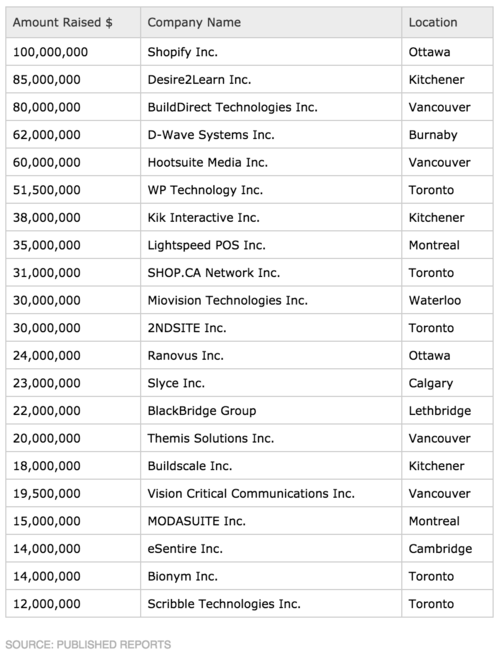
    The Globe and Mail published an interesting article this evening looking at the 21 largest venture capital investments in Canadian tech over the last 18 months. It’s called: Who needs Silicon Valley? Canadian startups scoring bigger deals.

    To put things into perspective, total venture dollars invested in Canada last year (2014) was around $1.9 billion. In the US, that number is estimated to be somewhere around $48 billion. So there’s a big spread here. But the Globe is arguing that there’s a shift towards medium-sized Canadian tech companies raising larger and larger rounds.

    Here are the top 21 largest venture capital investments made in Canada over the last 18 months:

    image

    At the same time, there’s also an attitude change that seems to be taking place. Confidence is growing. Here’s a quote from Mike McDerment of Freshbooks from the same article:

    “Our goal is to be an anchor tenant in Toronto. At Freshbooks, we want to build a global company that really contributes in some meaningful way to the city,” Mr. McDerment said. He touts the local schools and talent pool and downplays the Valley’s head start.

    “The money is shameless – it’ll just go wherever. It wants the opportunities,” Mr. McDerment said. “I don’t see why Toronto can’t beat Silicon Valley.”

    All of this is important because the medium-sized companies of today will hopefully become the large-sized companies of tomorrow. And that’s what you need to build a thriving startup hub. You need big successes. You need those companies going public and generating wealth for their employees and communities.

    Thankfully, that seems to be where we’re headed. The first company on the list above – Shopify – is already preparing for a dual US-Canada IPO.