Daily insights for city builders, delivered every morning at 6 AM ET. I’m Brandon Donnelly — a Toronto-based real estate developer and founder of Globizen. I’ve been writing here since 2013.

Tag: brand

  • How to brand and market a new development

    The typical way to do it looks something like this:

    • Hire a creative agency
    • Come up with a new name and brand identity that speaks to your target market
    • Create a new website and new social media accounts
    • Start marketing the project with this new single-purpose brand and identity in the forefront (the developer’s brand is usually far less prominent)

    Of course, this is the typical way and things do vary. What I would like to discuss today is this last point: the interrelationship between new project-specific brands and developer brands. Because in most other industries, the brand of the company is paramount. It is everything. When BMW releases a new car model, it is BMW and then the something. It is not the something, with BMW hidden at the bottom of the page.

    So why is real estate any different?

    One possible explanation is the entrepreneurial and opportunistic nature of development. New projects are often the result of people and groups coming together to make a specific “deal” happen. And unless you’re an established player with a long history, you may not have a consumer-facing brand with much equity in it. So you rely on a new single-purpose one instead.

    But perhaps the main reason is that, as an industry, we have never really succeeded at making buildings a product (architects sometimes despise when you call buildings this). It is for this reason that every building can feel like a prototype and that prefabrication remains this dream that never seems to become a reality. A product implies something repeatable and producible at scale. And buildings are generally not that. Every market and site are unique.

    All of this said, there are ways that developers are building meaningful brands for themselves.

    The first way is to obviously focus on building your own brand alongside or in lieu of strong project brands. One example of this is Toronto-based Urban Capital. They build a specific kind of condominium building/product and, to the extent that it’s possible, it doesn’t change whether they’re building in Saskatoon or in Halifax. David Wex, one of the partners, describes this as branded vs. opportunistic real estate development.

    Another example is Toronto-based Fitzrovia (which I wrote about, here). They are one of if not the most active rental developers in the city. And if you go into one of their apartment buildings, you’ll find the same No. 10 Dean coffee shop and bar in the lobby; the same rooftop pool (called LIDO); the same gym (called The Temple); and the list goes on. Their goal is to build a consistent and hospitality-like experience for apartments.

    The second way to go about building a brand is to make it so attractive that other developers will pay you to use it. The best example that I can think of is London-based YOO. A partnership between John Hitchcox (a developer) and famed designer Philippe Starck, they have built a business out of creating branded residences for third-party developer clients. And this is in some ways the holy grail of development: you get paid without taking on the risk of building.

    Of course, this same licensing model is also used with hotels. And hotel brands are globally the most common kind of branded residence. What this obviously tells us is that brands matter a great deal in real estate. They matter so much that developers will pay to use the right one, because it will likely command a premium and it will likely increase sales/leasing velocity.

    It is for this reason that I’ve always felt it important to grow the parent brand alongside any project-level brands. And it’s why we never bother creating new social accounts for our individual development projects. Brand building takes time. If you’re going to invest time and money into one, why not take advantage of the compounding at the very top of the house.

  • Dubai is now the capital of branded residences

    One way to define “brand” is that it is “the sum of how a product or business is perceived by those who experience it.” And it’s a pretty awesome construct when you stop to think about it. Because if I perceive one brand to be superior to another — which might just mean that it better matches my sense of self — then there’s a good chance I’d be willing to pay more for that brand.

    And if I happen to own a brand that people perceive to be valuable, then I can also monetize this brand by lending it out to other people for money.

    It is for this reason that in the world of real estate development there is something known as branded residences. Broadly speaking, it involves a pretty simple trade. Person 1 has a brand that lots of people perceive to be desirable. Person 2 has real estate that it is looking to sell, but it doesn’t have a brand with the same kind of cachet as person 1.

    So what happens is that person 1 offers the following trade to person 2: pay me $X (upfront and/or over time) and then I will let you use my highly coveted brand to sell your real estate. And hopefully you won’t screw it up by doing weird things with it. (But other than this, person 1 isn’t really taking on much risk with this trade.)

    Because person 2 believes that they’ll be able to sell their real estate for more money and/or faster than without the brand, it gladly accepts the trade. And as long as the benefit it gains is, in fact, greater than the cost of using the brand, it should be a good trade and both person 1 and person 2 should be happy with the outcome.

    Now here’s an actual example. Earlier this month, the proposed Baccarat Hotel and Residences in Dubai set a new pre-construction pricing record when it sold a ~14,507 square foot apartment for 203.1 million dirhams (or US$55.3 million). For those of you who are wondering, this works out to be about US$3,812 psf.

    Supposedly this is the most that anyone has ever paid for a new place in Dubai, and there’s a strong argument to be made that the developer got this pricing because it was a branded residence.

    Image: Bloomberg

  • This is not a hotel

    I am not the target market for Restoration Hardware, I mean RH. But I do think it is interesting the way they are evolving their brand. At the beginning of 2021, the company announced a $105 million equity investment in a development project in Aspen, where it is planning a new guesthouse and, more broadly, a new “RH ecosystem” that will include residences, restaurants, a spa, etc. It hasn’t opened yet, but RH does now have a guesthouse in New York. To be clear, it is not a hotel:

    So what is RH trying to do with all this?

    Surface Magazine recently argued that they are trying to become the “public” version of Soho House. That is, a lifestyle omni-brand that isn’t membership-based, but that will still make you feel rich and special while you eat, sleep, play, and shop for various things for your home. Now, I do think that their target customers aren’t exactly the same person. But of course, I see the parallels. And it’s certainly interesting from an experiential retail, brand ecosystem, and real estate development standpoint. It gets the brand everywhere.

  • What’s in a name?

    Picking a name for someone or something can be a daunting task. I have never had to name a newborn baby (though I’ve witnessed lots of people go through that process). But I am often involved in the naming of new buildings. Sometimes that process involves sitting in a room with a list of possible names in front of you, and having to decide which one is optimal. I don’t love this approach. Nowadays, I find it’s better to have the name naturally emerge early on in the development process, well before there’s an actual brand and identity for the project. You want it to accurately embody the vision for the project, the site’s history and context, and you want to know that it has some durability over time. Or at least, that’s the goal.

    On a related note, the New Yorker recently published an interesting piece on why your name matters. In the middle of the 20th century, research suggested that our chosen names were hugely impactful to life outcomes, and that more typical names were better than unusual ones. The theory was something known as the implicit-egotism effect, which basically states that we like things, including names, that most resemble ourselves. We want familiar. Which to me, immediately suggests that this effect must depend on cultural context. What is considered “typical” obviously changes depending on where you are in the world.

    Our thinking has advanced since then. More recently we have found that it’s not the name itself that creates the better life outcomes. Because if you control for a child’s background and upbringing, any sort of name effect seems to disappear. However, names do in fact signal who we are. They imply certain things. Many of us have heard about the studies that use resumes with different names to test how people respond. Names just aren’t inherently deterministic. You probably aren’t more likely to become a doctor simply because of your name.

    Although, I’m not sure that takes much of the pressure off of picking the right one.

  • The [Next] Pepsi Generation

    The product matters. How big is the screen on this smartphone? How many horses does this all-wheel drive car have? And how high are the ceilings in this condo? (Some architects get grumpy with me when I call buildings a “product.” It’s so much more than that, right?)

    But here is a good reminder from Zander Nethercutt via a post he did on Medium earlier this year: People Don’t Buy Products, They Buy Better Versions of Themselves.

    The example he gives is that of Pepsi. While damn near identical to Coke in terms of its chemical composition, Pepsi was struggling until it decided to try something new. They stopped focusing on the product itself and instead starting selling the type of person you would become, if you drank Pepsi.

    These people, and this campaign, became known as the Pepsi Generation.

    We have talked about this idea before on the blog and this approach to selling is now quite commonplace. But I like how Nethercutt distills it down: Desire translates into consumption. And I want to buy a better version of myself.

    I also buy his add-on argument that social media has amplified our awareness and desires around self, because today we are so often externalizing it to the world and being instantaneously judged on it. Like. No like.

    Am I the kind of person who eats here, stays there, and consumes this?

    Photo by Christina Boemio on Unsplash

  • “BRAND”

    image

    For a number of reasons, I am fascinated by the streetwear label, Off-White

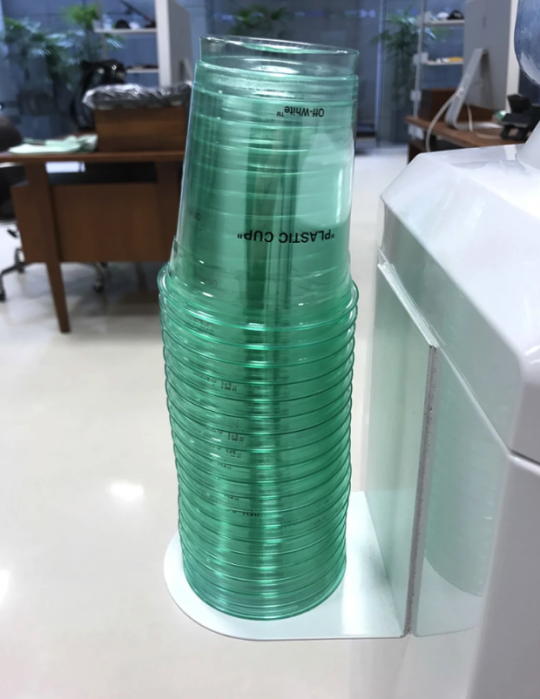
    It is one of the hottest labels in fashion, and yet there’s a part of me that doesn’t really get it. It’s mostly bold text, usually in quotations, on various apparel items. A set of Wellington boots might be plastered with “FOR RIDING.” A winter coat might be plastered with “DOWN JACKET.” And when they collaborate with Nike, the shoes might be tagged with “AIR.” Quotations included. Is that fashion?

    But then you hear Virgil Abloh – the founder of Off-White, who by the way was also trained as an architect before becoming creative director for Kanye West – talk about his brand and it starts to make more sense. The quotation marks are supposed to signal “ironic detachment and a comment on the idea of originality.” Okay, so a little more sense.

    Part of his inspiration comes from the work of Marcel Duchamp. In 1917, Duchamp shocked the art world with, Fountain. Some would consider this to be the most pivotal art piece of the 20th century. It was an off the shelf urinal that he simply signed, dated, and placed on a pedestal. Though initially rejected as art, it eventually redefined what art could be, shifting it from, “new physical creations to [the] moulding [of] ideas.”

    The corollary to this was that anything could be art, even something as utilitarian as the catch basin that you pee into. And this insight is something that Abloh has used to fuel his label. But he has taken it a step further. He has leveraged the ubiquity of these everyday-items-elevated-to-art as a way to elevate his own brand. Here’s a quote by Abloh from the Guardian:

    “The idea [that] an everyday object is art. Branding is generic and if I adopt the generic, then it becomes my branding, but it normally occurs in life.”

    In other words, he is co-opting generic and ubiquitous items – like, for instance, the patterning on caution tape – for his Off-White designs. And if you believe that a bit of brand equity is at least partially driven by brand ubiquity, well then you might start to see the value in this approach. He is simply assigning authorship to things that are already omnipresent.

    But, is that fashion? I guess that depends on whether you consider Duchamp’s Fountain to be art.

    Image: SSENSE

  • The world’s best brands — 2018 edition

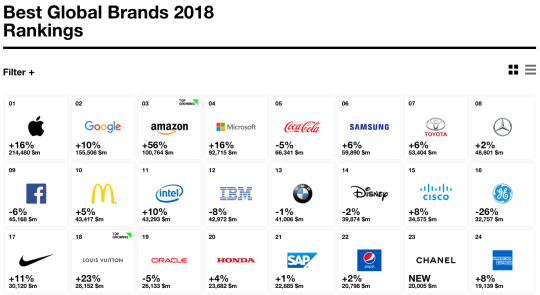
    At the beginning of this month, Interbrand released its annual ranking of the world’s best global brands. This year’s 2018 report marks the 19th year of the study. If you’d like to download a free copy of the report, you can do that here. But below is a snapshot of the first 24 brands:

    Apple and Google are in top position for the 6th year in a row. And Amazon is on a hockey stick trajectory with its brand value jumping by 56%. More than half of the list is comprised of the following five sectors: Automotive (16), Technology (13), Financial Services (12), Luxury (9), and Fast-Moving Consumer Goods (9). Luxury is currently the fastest growing sector.

    In their report, they outline five themes that have emerged and that are helping these brands outperform. They are:

    1. Positive utility – not enough to just make people feel good through storytelling; you need to create real value and a positive impact in the world
    2. Subscription mindset – there’s an increasing amount of brand value in subscription-based businesses (29% in 2018 compared to 18% in 2009); you need to offer your products and services with the least amount of friction as possible
    3. Customer-centricity – bring the voice of your customer into every aspect of your business; be nimble enough to respond quickly
    4. Learning from luxury – the top performing category in this year’s ranking; about exclusivity and authenticity
    5. Role of brand – make your brand part of the decision-making process; build brand equity and trust

    I’ll stop there and let you all dig into the rest of the report if you’re interested. 

    But one thing I found particularly interesting about the study is that they used – insert buzzwords here – “AI-powered social listening” to try and measure the emotion and sentiment floating around on the internet around specific brands. The goal was to pin down the perceived trustworthiness of specific brands.

    Not surprisingly, they found a pretty strong correlation between customer trust and purchasing intent. Makes sense to me.

  • We’re new here. Find your home.

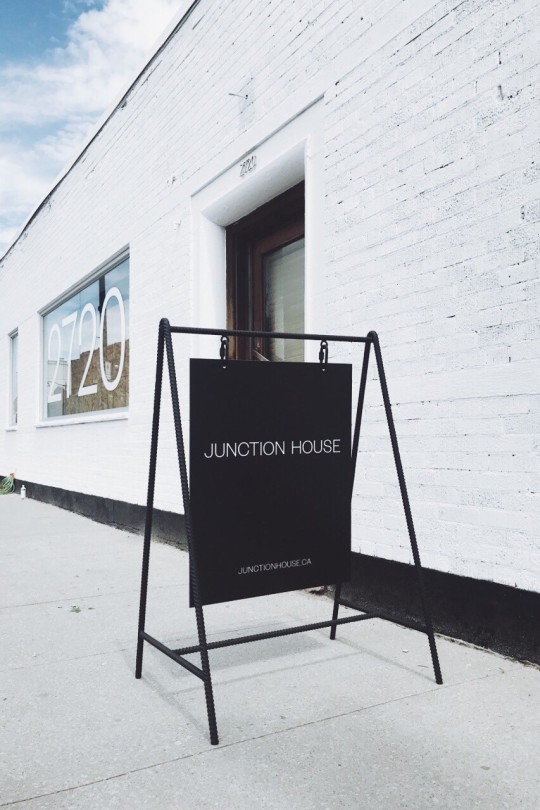
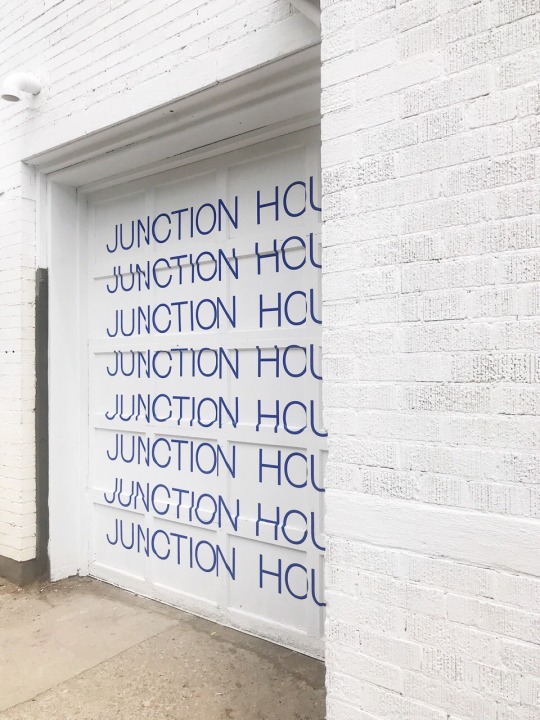
    A simple registration page is now live for our upcoming Junction House (condo) project. We also got this neat sign made:

    Of course, eventually there will be a full website, but this is for people who want to get on the early registrant list and tell us what they are looking for in a new home. Early registration. Early access to suites.

    We’re thrilled with the way the overall brand & identity is coming together for Junction House and we think it reflects the architecture and our project ambitions. 

    Hopefully you all like it as well.

    Photos by Vanderbrand

  • Branding is part of city building

    Below is a good discussion with Aaron Renn about how to brand a city. I fully agree with two of the points he makes: (1) Not enough cities are thinking holistically about this topic and (2) tech startups, bicycle lanes, and craft breweries aren’t going to cut it as a strategy. Every city is focusing on that sort of stuff these days. Zero differentiation. Find something germane to your city and start building on it. If you can’t see the embedded podcast below, click here.

    [soundcloud url=”https://api.soundcloud.com/tracks/436104924″ params=”color=#ff5500&auto_play=false&hide_related=false&show_comments=true&show_user=true&show_reposts=false&show_teaser=true&visual=true” width=”100%” height=”300″ iframe=”true” /]

  • Flynn in the city

    I very much enjoy the branding and marketing side of the development business. It’s probably an architect / designer thing. So I’m always looking out for interesting case studies.

    Recently I came across The Flynn in Chelsea, New York. The developer is IGI and the agency is Winkreative.

    What they did was create a namesake character named Flynn. Everything then became about a day in the life of. 

    The Instagram account is flynninthecity. They made colorful animations. And they even partnered with the Spring Street Social Society to host in-person performance art pieces. The Being Flynn series was a bunch of vignettes that combined “dance and physical comedy” and highlighted a cast of fictional characters who all, of course, reside at The Flynn.

    As you all know, selling condos is typically about selling a lifestyle. A dream. In this case, they created a character to show you exactly what that dream should be.

    Real estate marketing can sometimes often be cheesy. But I thought this was a clever and overall creative approach. Winkreative does great work.

    What do you think of the approach?

    Image: Winkreative