Daily insights for city builders, delivered every morning at 6 AM ET. I’m Brandon Donnelly — a Toronto-based real estate developer and founder of Globizen. I’ve been writing here since 2013.

Tag: brand

  • That emotional connection

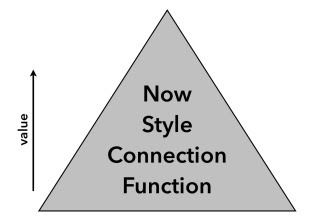
    Marketing guru Seth Godin recently published this value
    triangle on his blog
    :

    image

    No matter what business you’re in, it’s worth giving some thought to this. What do you offer?

    At the bottom of the triangle is function. A hotel room functions as a place
    to sleep. A smartphone functions as a device to make calls, send text messages,
    and download some apps. A condominium functions as a place to live, eat, sleep, have sex, and so on. But all functions being equal, most of us will buy whatever product is the cheapest.

    That is until there’s an emotional connection. I love the
    way Seth frames it: “Where do people like me do things like this?” It is about defining
    who you are. Am I the kind of person who buys A or am I the kind of person who buys
    B? If I care deeply about the environment and B promises to respect that, I am
    likely to buy B.

    But then, moving even further up the triangle, if two items offer the same function and the
    same emotional connection, many of us will go for the one that appears sexier, shinier (the new iPhone 7 is very shiny), and more
    stylish. It just deepens the connection.

    Finally, at the very top of the triangle is now. This is
    about scarcity. What’s hot right now?
    Think of that new restaurant that just opened downtown that you haven’t been
    able to get a table at. It’s now and you want to Instagram the food so badly so
    that you can show everyone you were there. You want to be now.

    The point of all of this is that we consume things for
    reasons that go well beyond simple function. That’s just the start of it all.
    One could argue that all of this is simply smoke and mirrors, but that’s a
    topic for another blog post. This is our reality.

    To relate this topic back to architecture and real estate, I
    am curious how many of you have made a housing decision that you believe went
    beyond function. How much of it was based on connection and style?

    Not surprisingly, for me, architecture and design matter a
    great deal.

    Earlier this summer I was driving around the city with my
    father and he was pointing out to me all of the new build single family homes
    that were sprouting up. He then asked me what I thought of them. I responded: “They’re
    shit.”

    What I was really saying with that glib remark was that
    those homes – no matter how expensive – didn’t reflect my own belief system
    about the world. Sure they served their function, but they didn’t offer the
    connection and style that “people like me” like to praise. To borrow once again
    from Seth: we are all part of a certain tribe.

    What tribe do you belong to? And does your housing choice
    reflect that?

  • Visions of urban living

    This apartment is such a great idea:

    Let me explain.

    Freunde von Freunden (FvF) is a Berlin-based publication that documents inspiring people from creative and cultural backgrounds. If you don’t read their stuff, I think you should. Sample: Here’s an interview with Chang Lin. He is Creative Director at Zalando and lives in Mitte, Berlin. I always find it fascinating to see how people live.

    In 2014, FvF decided to bridge the online and offline worlds and open up their first “apartment” in Berlin. They refer to it as: The FvF Apartment – Visions for Urban Living. And they describe it like so:

    “The apartment has been designed to be fully adaptable to the diverse and often unexpected scenarios of everyday life, reflecting how a creative, mobile and digitally-oriented generation lives. It serves not only as a platform for innovative products from friends and partners, but as a unique venue for events, workshops, and presentations.”

    Basically, the space serves as one part apartment and one part venue. They have used it as a pop-up shop, as a stage for photo and film productions, as a place for distillers to host private tastings, and the list goes. 

    Again, I think this is such a great idea as a brand extension. It is giving me all kinds of ideas and so I thought I would share it with you all today as well.

    Image: The FvF Apartment

  • The unbranding of this blog

    You’ve probably noticed that I have removed the Architect This City branding from this blog and gone to just my name. I like to refer to it as unbranding. (Though one could argue that a person’s name is still just another brand.)

    Already I’ve received a few emails from people telling me that they prefer the old look and feel of ATC and that there’s some level of brand equity there. But let me explain my thinking.

    First and foremost, this is a personal blog. I’ve written about that before. And it’s why it’s hosted at brandondonnelly.com. But along the way, as readership grew, I attached a name to it (ATC) and it started to become a kind of pseudo-independent brand. 

    When I would speak at events, people would introduce me as the founder of Architect This City, which always struck me as a bit odd because, again, this is just my personal blog. People also started asking me why I wasn’t turning ATC into some big company and started treating the blog as a media channel. You should see how many press releases I now find in my inbox.

    Of course, these are good “problems” to have. It means my writing is getting out there and I am thrilled about that. But I was starting to feel increasingly uncomfortable with the grey area between a personal and independent brand. I also felt like it was starting to impact my creative writing because I would sometimes wonder if I was going too personal on “Architect This City.”

    To reinforce that point, below is a snippet from a post that Fred Wilson wrote on his blog last summer. His 10+ year old blog has been a huge inspiration for me.

    “There is something about the personal blog, yourname.com, where you control everything and get to do whatever the hell pleases you. There is something about linking to one of those blogs and then saying something. It’s like having a conversation in public with each other. This is how blogging was in the early days. And this is how blogging is today, if you want it to be.”

    So I decided to clarify the brand. I wanted to make it clear that this blog is about my personal musings on city building, among the other things that I’m passionate about. And I wanted it to not pretend to be anything else.

    Ultimately, regular scheduled programming won’t really change for you. The content on this blog is still going to be heavy on city building, real estate development, design, planning and so on. And I will endeavor to create as much value as I can for all of you on a daily basis. (I am humbled by the number of people who now subscribe.) But hopefully it will end up feeling a bit more personal.

    Of course, now there’s the question of what do I do with the ATC brand (and social accounts). Do I let it die or do I spin it off into something else? I’m considering the latter. I’ve been obsessed for years with the idea of crowdsourcing and collecting meaningful real estate and city building activity, so maybe ATC will turn into some kind of open platform for that.

    But for now, I am feeling pretty excited about the unbranding of this blog. Hopefully some of you feel the same way.

  • Snøhetta — an integrated architecture, landscape, interior, and brand design firm

    Last month I wrote a post talking about YOO Architecture. And in the body of that post I mentioned my interest in branding and marketing and how I wondered why it was something we never really talked about in architecture school.

    After publishing that post, a close friend of mine from architecture school quickly pointed out to me that there are firms today that are integrating brand design into their practices. Specifically, he mentioned two firms: Gensler and Snøhetta.

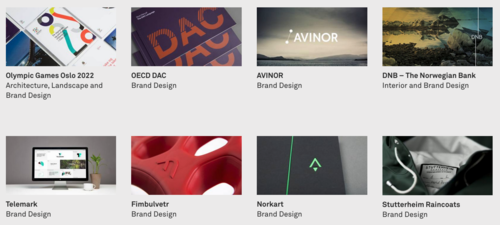
    Here’s some of Snøhetta’s work (click here for more it):

    I wasn’t aware that this was the case with these firms, but I’m delighted to see it happening. At the same time, I’m not surprised to see it happening. Architecture and branding have the potential to go hand-in-hand.

    A good brand and identity isn’t just about logos and tag lines. It should speak to and reinforce an organization’s belief system. 

    And one of the most powerful ways to do that is through its architecture and environments. I mean, just look at how important the design of Apple’s stores are to the Apple brand.

    Images: Snøhetta

  • How much does it matter what message a city sends you?

    In keeping with the recent theme about cities, their brands, and the messages they send, I thought I would revisit an old essay (2008) written by Paul Graham (of Y-Combinator) called “Cities and Ambition.” In it, he talks about the various messages that cities send us, such as:

    • You should make more money (New York)
    • You should be better looking (Miami?)
    • You should be smarter (Cambridge)
    • You should be more powerful (Silicon Valley)

    But the most interesting part of his argument is the belief that we are largely products of our environment. No matter how strong or formidable our personalities might be, the message a city sends us is hugely important. In fact, it might be impossible to escape it. Here’s how Paul puts it:

    How much does it matter what message a city sends? Empirically, the answer seems to be: a lot. You might think that if you had enough strength of mind to do great things, you’d be able to transcend your environment. Where you live should make at most a couple percent difference.

    But if you look at the historical evidence, it seems to matter more than that. Most people who did great things were clumped together in a few places where that sort of thing was done at the time.

    You can see how powerful cities are from something I wrote about earlier: the case of the Milanese Leonardo. Practically every fifteenth century Italian painter you’ve heard of was from Florence, even though Milan was just as big. People in Florence weren’t genetically different, so you have to assume there was someone born in Milan with as much natural ability as Leonardo. What happened to him?

    If even someone with the same natural ability as Leonardo couldn’t beat the force of environment, do you suppose you can?

    I don’t. I’m fairly stubborn, but I wouldn’t try to fight this force. I’d rather use it. So I’ve thought a lot about where to live.

    To some, this thought may depress you. I mean, if you happen to live in a city or place with the “wrong” message, you might feel as if you’re missing out. I know that thought certainly crossed my mind when I read his essay. But different messages resonate with different people, and so maybe the message your city is telling you is exactly the one you need to accomplish great things.

    In Toronto, I’d say that the message is similar to that of New York: You should make more money. Oh, and also that you should buy more condos 😉

    What message does your city tell you?

  • The branding of places

    image

    Most people would agree that branding is a powerful and important exercise in the world of business. We recognize that brand equity is something that pays dividends in the future.

    When you walk around a city with a Starbucks, Tim Hortons, or some other coffee cup in hand, you are sending signals about who you are as a person and consumer. So, you could argue that you’re consuming the cup, as much as you are consuming the coffee.

    But one area that still feels like it’s in its infancy is place branding. That is, the branding of nations, regions, cities, and places. I’ve talked a lot about the business of cities and how impressions are created around cities, but I’ve never explicitly talked about place branding.

    However, it is an area on the rise. Monocle has written extensively about the importance of nation branding and there are firms, such as Vancouver-based Resonance, that now specialize in the strategy and branding of places.

    Here’s a short 5 minute video that they prepared talking about place branding and their approach to it. If you can’t see the video below, click here.

    //player.vimeo.com/video/66920801

    But at the same time, there are more grassroot ways in which a place brand can emerge. Think about the number of times Jay-Z has referred to himself as the Brooklyn boy or Drake has promoted Toronto in one of his videos. It’s hard to measure the impact of these sorts of things, but I am sure there is one.

    Here’s another example – a 4 minute video of Drake talking about why he loves Toronto. Click here if you can’t see it below.

    [youtube https://www.youtube.com/watch?v=M3TrbGEJbio?rel=0]

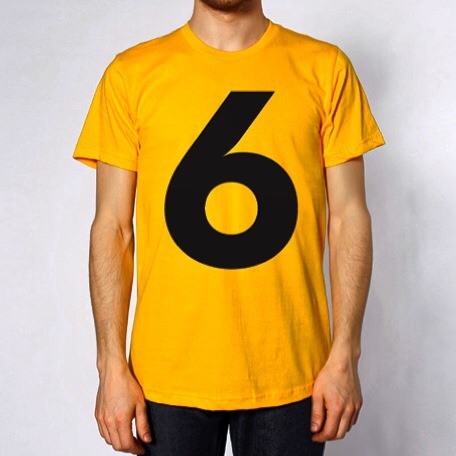
    Recently, you may have heard that Drake is about to give Toronto a new moniker: The 6. Some think it is in honor of our two main area codes 416 and 647, and I think that’s probably a good guess.

    But whatever the reason, I thought it was an interesting exercise in place branding. So I decided to partner with Toronto-based design firm Badd Press and make a “The 6” t-shirt (shown at the top of this post). You can get yours for $30 by visiting shopATC.

  • The story of a symbol of belonging

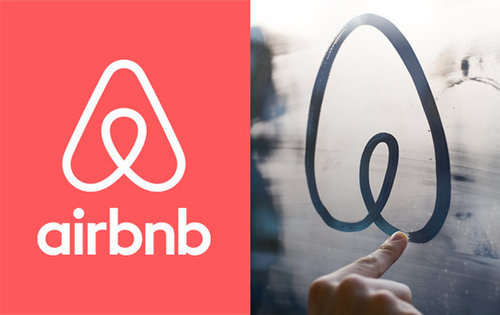
    image

    I’ve been following Airbnb pretty much since the beginning. The company has always fascinated me because I saw it as being less about technology and more about travel, hospitality, community and, in my view, real estate.

    An office building is just a set of spaces that get rented out on long term leases. A hotel building is just a set of spaces that get rented out on short term leases (one night at a time). And Airbnb spaces are simply extra or “found spaces” – such as an extra bedroom – that could never really be rented out at any sort of scale before. But then Airbnb came along, built a community around it, and empowered everybody to make money off that found, extra space. I think that’s pretty neat.

    Well today, Airbnb unveiled an entirely new logo, brand, and expression. It’s all about belonging, and their new logo is called the Bélo. Here’s a quick video that they call “the story of the symbol of belonging”. If you can’t see it below, click here.

    [youtube https://www.youtube.com/watch?v=7Hs0C2UvVBY?rel=0]

    What’s interesting about this new expression is that it’s a perfect example of Simon Sinek’s belief that people don’t buy what you do, they buy why you do it. And in this case, Airbnb’s why is community, trust, belonging, and a sense of place. Talk about emotive.

    In both the above video and in CEO Brian Chesky’s blog post today, reference is made to our cities and towns, and the fact that as they continue to get larger, we’re also becoming increasingly more disconnected. Things have gotten impersonal. But Airbnb is bringing back that sense of belonging.

    On a less emotive level, what it also does is set Airbnb up for expansion.

    Chesky has said before that the company wants to own the entire travel experience – from the moment you leave your home to the moment you return. So presumably a big impetus behind the rebrand was to develop something that could become ubiquitous across a number of different products and services. Which is why it makes perfect sense that they would encourage people to design their own versions of the logo.

    So while the rebrand has received a lot of criticism today – some people say it looks like a vagina – I wouldn’t discount it just yet. There are bigger plans in store.

  • Telling Toronto’s story

    If you’re a regular reader of ATC, you’ll know that I often talk about cities in the same way that many people talk about products and services. (See: The business of cities.) And I do that because cities are our new economic unit and so I find it helpful to think of them as businesses fighting to attract and retain the best talent and win over customers (i.e. residents and businesses).

    Which is why I’m intrigued by Jason Logan’s pitch to invent the position of Creative Director at the City of Toronto. Here’s his pitch:

    “This is an open challenge to the all the mayoral candidates. In the past 10 years, Toronto has undergone a cultural, artistic, and technological renaissance: The ROM, the AGO, and OCAD U all underwent architectural makeovers; TIFF rose to prominence as one of the most prestigious film festivals in the world; Nuit Blanche was unleashed in 2006, and Luminato in 2007, both to huge acclaim; the high-tech industry has created 30,000 new jobs; and The New York Times admitted that Toronto’s culinary scene is more ethnically diverse than the five boroughs. But here’s the thing: The story we tell ourselves and the world about our remarkable city needs an overhaul. Toronto Needs a Creative Director is a campaign committed to building a better story by better mobilizing the arts, culture, and technology sectors to enhance civic engagement. The CDTO (the office of Creative Direction for the City of Toronto) would function as a lab for incubating ideas where art, culture, politics, science, and technology intersect.”

    Truthfully, I’m not yet sure if a Creative Director is the ideal approach. I haven’t had a chance to give it enough thought. But I am certain that Toronto would benefit from a bunch of smart people who were focused on telling our story to the world, crafting our brand and identity, and honing the experience of living or visiting this great city.

  • Things that are quintessential

    One of the things I think is important for cities to have are things that are quintessential. I’m talking about a quintessential behaviour, a quintessential experience, a quintessential accent, a quintessential architectural style, or whatever. I’m talking about the things that make people say: “Oh, that’s so New York.”

    What I’m essentially talking about is brand equity for cities. For better or for worse, when somebody associates something with a particular city, you could argue that that city effectively owns a trademark. (Definition of trademark: “…a recognizable sign, design or expression which identifies products or services of a particular source from those of others.”) In this case, the source is a simply a city.

    Sometimes these trademarks are an informal understanding amongst people in the know, but in other cases they can become quite legitimate. Take for example Chicago’s distinct architectural style known simply–at least within architectural circles–as the “Chicago School.” This is a style that Chicago clearly owns. And if another city were to adopt it, people might say: “Hey, that building reminds me of Chicago.”

    All of this is important because, just like companies, cities are increasingly in the position of having to compete for “customers” in a mobile and interconnected world. And if you ask some marketers, they’ll tell you (perhaps self-servingly) that brand is the most valuable asset a company has. But if you believe this to be at least somewhat true, then statements like, “Oh, that’s so (insert city name here)”, are actually pretty powerful.

    Is there anything about your city that you could say is unequivocally yours?

  • Invitation to guest blog

    I have a secret to tell all of you.

    When I rebranded this blog a few months and renamed it Architect This City, it wasn’t just to come up with a more interesting name (initially this blog was just called “Cities”). That was partially the reason, but it was also so that I could begin to create a brand that was independent of myself.

    I wanted to do this because I’ve been thinking for a while that I would like to open this blog up to guest bloggers and eventually turn it into a much larger conversation around cities—one that me alone would never be able to provide.

    I also keep hearing from a lot of readers that—time permitting—they would “love to start their own blog” and create something similar to ATC. Well, here is your opportunity. If you’re passionate about cities and would like to write a post or two, shoot me an email. Let’s work together to architect awesome cities.