Daily insights for city builders, delivered every morning at 6 AM ET. I’m Brandon Donnelly — a Toronto-based real estate developer and founder of Globizen. I’ve been writing here since 2013.

Tag: book

  • How to achieve peak productivity

    image

    Lately I’ve been finding that I need to divide my time between multitasking and blocks of uninterrupted time. The multitasking phase is doing calls, responding to emails in 3 seconds, going from meeting to meeting, and so on. It’s a mode that many of us probably exist in virtually all of the time.

    But I can’t stay in this mode all of the time. I think of it as short attention span mode. There are times when I need blocks of uninterrupted time so that I can “go deep.” One example would be to review drawings. I really need to focus so that I can think of all of the externalities associated with the decisions being made.

    This is related to my post about managers and makers, but it’s also the focus of a recent book by Cal Newport called, Deep Work: The Secret to Achieving Peak Productivity. You can read more about the book here at Knowledge@Wharton, but I wanted to highlight two concepts. The first is this equation:

    High-Quality Work Produced = (Time Spent) x (Intensity of Focus).

    Obviously the argument here is that if you want to maximize your output, you need to increase the intensity of your focus. Minimize distractions. Ratchet up the intensity. There’s only so much time in the day.

    Newport gives the example of Adam Grant. He is a New York Times bestselling author and the youngest tenured professor at the Wharton School at the University of Pennsylvania. 

    He is so committed to intensity of focus that he batches all of this teaching into the fall semester, allowing him to truly focus on the students. He’s the highest rated teacher at Wharton. At the same time, this lets him focus on research and writing during the spring and summer semesters. He’s also known to regularly use auto-of-office responders when he’s in the office, but needs to focus.

    The second concept is that of “attention residue.” The idea here is that when we switch from some Task A to some other Task B, our attention doesn’t immediately snap over. A portion of our attention remains on the original task and distracts us from fully focusing. There’s residue.

    An example of this would be when you’re working on something and you see an email come in. As soon as you turn your attention to that notification, your attention gets divided. And even if you don’t immediately respond to that email, a portion of your attention now remains with that uncompleted task. It lingers in the mind.

    The above probably makes intuitive sense to a lot of you, but in many ways our work culture today does not encourage intensity of focus.

    Thanks for reading today. There’s lots of evidence to suggest that the best way to learn new things is to not simply read about it, but to share it with others. That’s one of the reasons I blog and hopefully you find that valuable.

  • Ingressi di Milano

    A new architecture book, called Entryways of Milan, will be released next month that profiles some of the city’s most beautiful residential entryways. There are 144 of them and they are housed in buildings dating from 1920 to 1970. For a sneak peek of the architecture, click here.

    What makes a book like this interesting is that these are private entryways, which means they are spaces that are largely overlooked within a city. They are the spaces that mediate between public (street) and private (residences). The book also dives into things like materials and the art-historical and social significance of each lobby.

    I am now wondering if similar books or photography projects exist for other cities. I think it would be fascinating to compare residential entrance halls across different cities during the same time period. Although the above Milanese lobbies have set the bar pretty high. 

  • rain gravity heat cold

    image

    Today I got a copy of rain gravity heat cold. It’s a book by the Toronto-based architecture firm superkül and it’s meant to celebrate their first 10 years of practice. 

    The book itself was put together by Blok Design. Blok has also done a new – yet to be rolled out – identity for superkül. (Definitely worth a click through.)

    One thing I wanted to highlight from the foreword of the book (written by Kiel Moe) is this line: “Great design does not respond to a static sense of context but rather perhaps transforms its flaws into assets and certainly amplifies the potential of site.”

    We often talk about contextual architecture. That is, architecture which responds to and is sensitive to its surroundings. But here’s the idea that responding is, in fact, not enough. The ambition should be “amplification of site through design.” 

    I like that a lot.

    If you’d like a copy of the book, it can be found on Amazon, at the University of Toronto bookstore, as well as, I’m sure, other places.

  • BOOK by Cadillac

    Cadillac is just about to launch a new subscription-based car service in New York City. It’s called “BOOK by Cadillac” and the inspiration for the idea is as follows (taken from this Cool Hunting interview):

    “We believe there is an as-yet untapped space between traditional ownership (leasing, financing, buying) and the rental, ride or car sharing options available today (Car2Go, rental, Zipcar, Uber) — a space where experience is more important than ownership, but a luxury experience is paramount.”

    The way it works is that you pay a flat fee of $1,500 per month, which includes repairs & maintenance, insurance, taxes, unlimited mileage, and the ability to swap out your Cadillac vehicle 18 times per year. The idea here is that you can have one car in the city, one car when you drive to the mountains, and one car when you land in LA and are just feeling something a little different. It’s also commitment-free. Cancel any time.

    It’s all done through their app and there’s a concierge to take care of every little detail, including moving your stuff (sunglasses, phone charger, and so on) to whatever new car you’re swapping to. My understanding is that you can also make the swapping as carefree as you’d like. Meaning: “Oh look, there’s a new Escalade in my parking spot.”

    Here’s their marketing video (click here if you can’t see it below):

    [youtube https://www.youtube.com/watch?v=m-2c6BsqRYU?rel=0&w=560&h=315]

    Now, $1,500 is not cheap. But the value prop here is effortless luxury. I think it’s interesting to see car companies experimenting with new and different business models. 

    My view has always been that the most cost effective way to have a car is to buy a 2-year old model, pay it off, and then drive it for as long as it remains respectable. I am currently in that camp. But even that approach is starting to feel antiquated to me. 

    So much is changing in this space. Pretty soon, I don’t believe we’ll be thinking about car ownership in the same way.

  • The New Urban Crisis

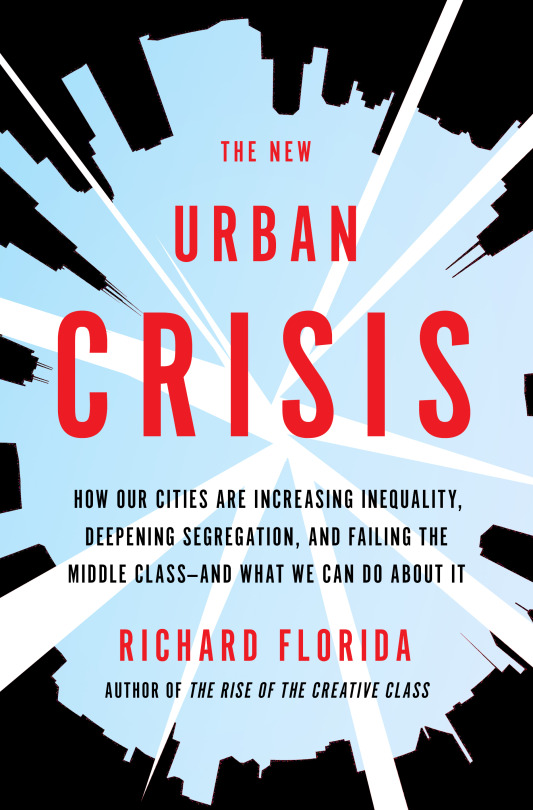
    Richard Florida has a new book coming out in the spring called, The New Urban Crisis

    Noteworthy about the book is that he has changed his tune with respect to the potential of the “creative class” to form the new middle class. Here’s a quote from the Houston Chronicle:

    “I got wrong that the creative class could magically restore our cities, become a new middle class like my father’s, and we were going to live happily forever after,” he said. “I could not have anticipated among all this urban growth and revival that there was a dark side to the urban creative revolution, a very deep dark side.”  -Richard Florida

    Regardless of what you think of the work of Richard Florida, I’m sure this book will be bedside for most urbanists. The focus is on creating a new kind of inclusive urbanism, which is top of mind for so many of us today.

    If you’d like to pre-order it, you can do that here.

  • Introducing: BARED blog series

    I was out with for a bike ride the other night with a good friend of mine and we were talking about all of the creative and social media-based projects that we would like to do. Everything from a daily vlog to a regular podcast. Sadly there are only so many things one can focus on.

    If you’ve been reading this blog since the beginning of this year, you’ll know that I’ve been trying to write a book on “becoming a real estate developer.” I believe there’s a lot of interest in this topic. It’s the number one question I receive from readers: “How do I become a developer?”

    But with everything that’s going on this year, I have decided to turn the research and writing I have done to date into a blog series that I’m calling BARED (Becoming A Real Estate Developer). I’ve interviewed a lot of fantastic people in the business and I want to get that information out there.

    The focus of the series – which was the intent of the book – is to uncover the early decisions and first projects that these now successful developers made and took on. In other words, it’s less about their current successes and more about what they did to get there.

    So no book. But expect to see the first BARED post very shortly. I think I’ll start with 3 posts and then gauge the response.

  • World after capital

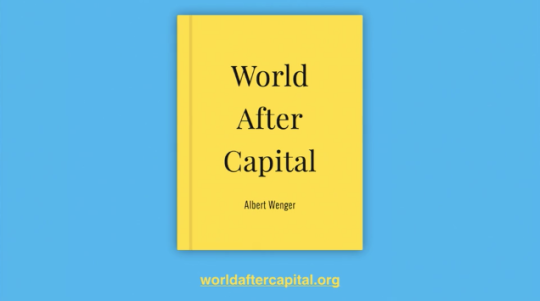
    Albert Wenger is currently in the process of writing a book called World After Capital. The book isn’t finished yet. It still exists in a crude rough draft form. But already he has made it freely available online. You’re also welcome to comment and contribute to the book as he works on it.

    Why has he done it this way? 

    Because this format of publishing is in line with where he believes the world is heading. He believes we are headed towards a world where new forms of surplus – brought about by technological innovation – will create greater levels of freedom: economic freedom, informational freedom, and psychological freedom.

    His overall thesis is that the world has been moving through a series of scarcities. As hunter and gathers, the scarcity was food. In our agricultural period, we learned how to create food surpluses (which freed up more of our time), but it then produced land scarcity. Once the industrial revolution hit we once again freed up more of our time through surpluses, but then the scarcity became centered around capital. We also started to negatively impact the environment. Today, as we clearly move away from the industrial economy towards a knowledge and information economy, Albert believes the new scarcity is attention. (I wrote a related post about a month ago.)

    If you’re interested in this topic and don’t feel like diving into his book, I suggest you watch this 23 minute presentation by Albert Wenger. I watched it this morning and he talks about everything I mention above. 

    Here’s one of his slides that I felt was important to share:

    Why it’s interesting to think about this shift is because there will inevitably be positive and negative outcomes associated with it; there will inevitably be groups who, probably because of self-interest, would rather cling to the past; and because there are pressing global issues that we need to be focusing our attention on – issues such as climate change.

    I can’t help but wonder about all the ways this shift could reverberate through the economy and our cities. Earlier this week I wrote a post about architecture as a tool for capital. But with our current fixation on “starchitecture”, one could argue that we have already transformed architecture into a new tool – a tool for grabbing attention. If you believe that attention is the new scarcity, then this makes perfect sense.

  • Come original

    I am thinking about nonconformity and originality this morning because I just ordered a book by Wharton professor Adam Grant called, Originals: How Non-Conformists Move the World. I ordered it along with another book that was recommended by a regular reader of this blog. (Thanks Daniel.)

    I find this topic fascinating because there’s clearly a deep appreciation for originality and creativity in our society and yet I think we do a lot to encourage the opposite: conformity. Of course, part of this is that it’s inherently easier to conform. Think about how much pressure we have in our lives to please others and generally just “fit in.”

    This is something that I think about and try to fight in my own life, particularly as I get older. As a teenager, I was a skateboarder with bleach blonde hair who rode around in a t-shirt that said “skateboarding is not a crime.” That’s clearly not me anymore (I prefer my natural hair color), but I continue to believe that a bit of rebelliousness can be valuable.

    For instance, I don’t think it’s a coincidence that San Francisco – the epicenter of counterculture in the 1960s – ended up becoming such a hotbed of entrepreneurship.

    To drive that point home even further, here’s a quote from a recent interview with Adam Grant:

    “It often starts with a slight recalibration in perspective followed by a small, but defiant act. It’s the originals who keep pulling on that thread — they instinctively know that that’s the difference between inspiration and innovation.”

    So there’s also a lesson here for cities. Most cities around the world believe in the value of a thriving startup ecosystem. They want entrepreneurs to start companies and create jobs. But we shouldn’t forget that starting a company is also “an expression of nonconformity.” It is someone deciding to carve out their own path in life.

    If that’s what we’re trying to encourage – and most places are – I believe we should also think about what we’re doing and not doing to encourage the right kind of nonconformity in our cities.

  • Architecture as a tool of capital

    I just stumbled upon an interesting Architectural Review article from last year called: Architecture is now a tool of capital, complicit in a purpose antithetical to its social mission. The author is Reinier de Graaf, who is an architect and partner at the firm OMA.

    The focus of the article is on inequality; capitalism vs. socialism; Thomas Piketty’s book, Capital in the Twenty-First Century (which is now on my reading list); and on how Modernism lost its social mission and got repurposed as a tool that just serves capitalist interests. It went from an ideology to simply an architectural style.

    Here is an excerpt:

    “Once discovered as a form of capital, there is no choice for buildings but to operate according to the logic of capital. In that sense there may ultimately be no such thing as Modern or Postmodern architecture, but simply architecture before and after its annexation by capital.”

    Given that I am initially trained as an architect, but that I work as a real estate developer, this article hits home for me. But unlike the author, I am not as fussed by this intertwining of capital and architecture. In fact, I have always believed that the more architecture can understand its economic milieu, the more likely it can affect positive change.

    Of course, there’s the question of whether that economic milieu is even the right one in the first place. I’ll echo this blog post (on the limits of capitalism), by saying that I consider myself a capitalist, but not an absolute capitalist. Capitalism isn’t perfect.

    I like Reinier’s description of income vs. wealth (borrowed from Piketty):

    He identifies two basic economic categories: income and wealth. He then proceeds to define social (in)equality as a function of the relation between the two over time, concluding that as soon as the return on wealth exceeds the return on labour, social inequality inevitably increases. Those who acquire wealth through work fall ever further behind those who accumulate wealth simply by owning it.

    What are your thoughts?

  • 100 years since Cincinnati tried to build a subway

    image

    I can get lost on Google Maps for hours on end. I love looking at maps and I love using Street View to virtually explore cities. This morning I’m honed in on Cincinnati, Ohio (a city I’ve never been to) while I listen to this podcast about their unfinished subway.

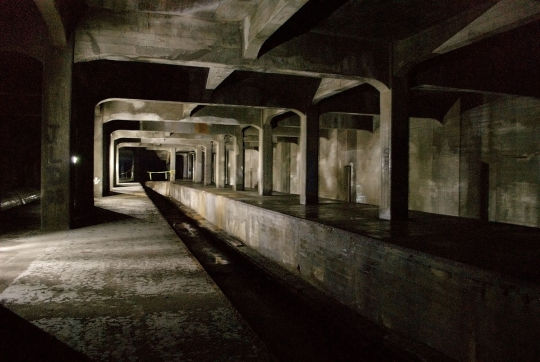
    In 1916, the city voted in favor of spending $6 million on a new subway. But it was never finished and so today – 100 years later – it has the dubious distinction of being the largest abandoned subway tunnel in the United States. 

    The podcast I’m listening to is with a fellow by the name of Jake Mecklenborg. He has written a book on the subway’s history and has emerged as the expert on this topic. And it all started with him just throwing up a website.

    One particularly interesting aspect of the subway is how it tied into the city’s flooding problems. At the time, the population density of the constrained downtown was surging and the subway was viewed as a way to stitch together desirable land and relieve some of those urban pressures.

    I’m also very interested in understanding how cities got founded in the locations that they did. As in, who was the person who dropped their bag and said: “yup, this, is the spot.” Somebody had to have made a decision.

    Oftentimes there were specific strategic, economic, and/or environmental reasons for a certain location. And this is something that Jake touches on. In the case of Cincinnati, flooding was again a major determining factor. 

    If you can’t see/listen to the podcast through the embed below, click here.

    //html5-player.libsyn.com/embed/episode/id/4210424/height/90/width/580/theme/custom/autoplay/no/autonext/no/thumbnail/yes/preload/no/no_addthis/no/direction/backward/render-playlist/no/custom-color/87A93A/

    Image: Jonathan Warren via Wikipedia