Daily insights for city builders, delivered every morning at 6 AM ET. I’m Brandon Donnelly — a Toronto-based real estate developer and founder of Globizen. I’ve been writing here since 2013.

Tag: book

  • Getting older

    Yesterday I promised that today’s post would be less sad. I am sticking to that promise, but I am also sticking with a somewhat similar theme: getting older.

    Fast Company recently published an interview with New York-based architect Matthias Hollwich. The topic is aging and the kinds of spaces that we have created for people as they age: retirement communities, nursing homes, and so on.

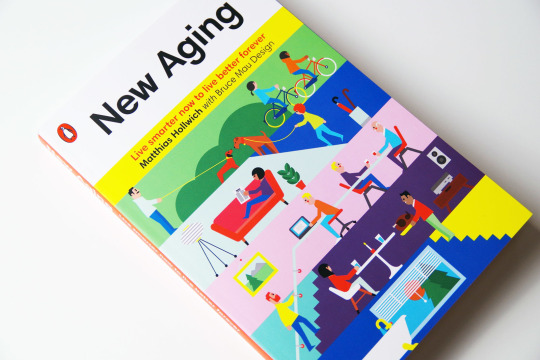
    The reason this is getting airtime right now is because Matthias has just published a book on the topic called, New Aging: Live smarter now to live better forever

    image

    But this isn’t a new focus. Matthias actually taught at the University of Pennsylvania while I was there and I remember his design studio being focused on this topic. (I wasn’t in his studio, unfortunately.)

    The sound bite that I really like from the interview is this one:

    “I think the biggest flaw is that it’s age segregation. You take all of the people who are above 75, 85, or 95, depending on what type of environment it is, and put them into one place. And then you’re just surrounded by old people, people who have social and physical challenges, and you’re not around the vibrancy of a multi-age environment, which is something that we experience all life long. I think that is something that society really has to rethink.”

    Not only do I agree with him, but I think it exemplifies one of the things that I love about architecture. The idea that the way things are done today is usually not some sort of universal truth. Instead, everything can be questioned, rethought, and reinvented for the better. It’s a very entrepreneurial way of operating and I don’t think that parallel, between entrepreneurs and architects, is drawn or leveraged nearly enough.

    I also don’t think we’ve given enough design consideration to this topic of aging. I mean, why can’t the spaces that people end their lives in be as (or more) sexy and enjoyable as (or than) the spaces they live the rest of their lives in? That’s what I want when I’m 95.

    So kudos to Mattias and the rest of the team at Hollwich Kushner (his firm) for caring about and working on this

    Book image from Matthias Hollwich’s Facebook.

  • The value of a millisecond

    I’m reading a book right now called Flash Boys: A Wall Street Revolt

    One of my graduate school buddies recommended it to me on one of our annual ski/snowboard trips and I’m finally getting around to reading it. I’m only about half way through it, but I’m enjoying it so much that I have decided to write about it today.

    One of the protagonists in the book is a Toronto-native by the name of Brad Katsuyama. That’s probably one of the reasons I like it – although Michael Lewis makes all Canadians out to be overly polite and well-behaved. Is that what we’re like?

    The other reason I like the book is that a lot of it actually has to do with geography. Technology and the internet were supposed to make cities and location irrelevant. But as Flash Boys argues, location and physical connectivity matter a great deal in the world of high-frequency trading. Each millisecond matters.

    To illustrate this point, the book starts by describing the construction of a $300 million, 827-mile cable running as straight as humanly possible from Chicago to New Jersey in order to reduce data travel times from 17 to 13 milliseconds. That’s how much the milliseconds matter.

    This is also not a topic that I know a lot about and so it’s eye opening (and a bit disappointing) to learn about the sorts of things that happen in our financial markets. If any of you would like to borrow the book after I’m done (and are located in Toronto), leave me a comment below.

  • The advantages of disadvantages in business and entrepreneurship

    This morning I stumbled upon an interesting book by Claudia Kalb called Andy Warhol Was a Hoarder: Inside the Minds of History’s Great Personalities

    I obviously haven’t read it yet, but I like the premise. The book examines 12 famous figures and makes the argument that each of them had some sort of mental health condition that aided them in their success. 

    Here is an excerpt from a recent Harvard Business Review interview with the author:

    “The most common one may be narcissism. Frank Lloyd Wright is a good example. He had classic narcissistic qualities — a sense of grandiosity, superiority, a huge and complete belief in his aesthetic sensibility, and disregard for architecture that did not live up to his standard. Narcissists also have an ability to be charming, and to lure people into their orbit. That’s obviously useful for an entrepreneur. The issue is that while these qualities may make you a good leader, they may not make you a winning boss. Employees often feel that narcissistic bosses are ruthless or lacking in empathy. Also, unlike people with depression or anxiety disorders, narcissists don’t suffer as much personally from their condition — but the way they behave can be much harder on the people around them.”

    Related to this topic is an emergent body of research that, more specifically, looks at the relationship between mental illness and entrepreneurship. And according to work done by professor Michael A. Freeman of UC-San Francisco and professor Sheri Johnson of Berkeley, there’s a significant relationship. 

    Below are two excerpts from a Washington Post article published last year.

    “Forty-nine percent of entrepreneurs surveyed reported at least one mental health condition. Nearly a third reported having two or more mental health issues, such as ADHD, bipolar disorder, depression, anxiety or substance use conditions. And half of the entrepreneurs who reported no mental-health conditions identified themselves as coming from families with a history of mental illness.”

    Why would these conditions be of any benefit to entrepreneurs?

    “For all of its ills, depression also brings empathy and creativity. Martin Luther King Jr. and Mahatma Gandhi attempted suicide as teenagers. Uncommon levels of empathy can allow a businessman to better understand a customer’s need. And a creative mind won’t be satisfied on the corporate ladder, but instead in a fast-moving start-up where he or she can unfurl ideas and dreams.

    Individuals with ADHD naturally make decisions faster, are comfortable working independently and are more creative, necessary skills at a start-up. They’re likely to be bored working for someone else.”

    From a city building standpoint, all of this is quite relevant. Because for all of the focus on promoting innovation and entrepreneurship, we don’t seem to be talking about healthcare and mental health systems. And there’s clearly an argument to be made that the two are connected.

  • The Business Blockchain Series

    I just backed this project on Kickstarter.

    https://www.kickstarter.com/projects/wmougayar/the-business-blockchain-books/widget/card.html?v=2

    I haven’t backed a lot of projects on Kickstarter, but I definitely enjoy the process of discovering a project that I’m interested in and then providing a small, seemingly insignificant, sum of money to help make it a reality.

    In this case, it’s a collection of two books by William Mougayar about Bitcoin, blockchains, cryptocurrency, and decentralization.

    These are all topics that I’ve touched on before on this blog, albeit with much less rigor than what I’m sure William will be applying to his books. I wrote this post about 2 years ago, when I first started wrapping my head around Bitcoin. And more recently, I wrote posts about how the blockchain could transform home buying and how Honduras is building a decentralized land registry system using the blockchain technology.

    So while at first glance it may seem like these books having nothing at all to do with city building and real estate, I am betting that they will over the long term, which is why I am doing my homework today.

    Here’s a snippet from William’s Kickstarter page:

    “The fundamental characteristics of blockchains are puzzling to consumers, corporations, governments, policy makers and regulators, because their implementation challenges centrally orchestrated trust, and enables a new kind of trust: one that is distributed, decentralized, from peer to peer, and not centrally managed by any single entity. Take any service, and add “without previous center-based authority”, and replace by “peer to peer, trust-based network”, and you will start to imagine the possibilities.”

    If all of this isn’t enough to pique your interest, then you should also know that William is from Toronto. Great things come out of this city 🙂

  • I’m writing a book on becoming a real estate developer

    typerwriter closeup by Sean Gladwell on 500px.com

    https://500px.com/embed.js

    One of the most common questions I get from readers of this blog is: How do I become / get into real estate development?

    In fact, I get it so often that I’ve decided to write a book as my response. It may be a short one or it may end up a long one. If you’ve emailed or messaged me with this question and I haven’t responded, I’m sorry. There’s a lot of you out there. But I do want to help and that’s why I’ve decided to take on this hobby book project.

    As part of the book, I’ll be talking about my own journey, as well as the actual nuts and bolts of development. But I would also like to feature some much more established players in the business. In order to do that, I’ve decided to crowdsource some of the content for this book. 

    So here’s my ask to you: If you’re a real estate developer and would like to share your story, please complete this short questionnaire. You can be located anywhere in the world.

    My plan is to select a handful of developers from around the world and then feature their stories, one-by-one. I’m confident that there will be a lot of interest in hearing how successful developers established their careers and/or own businesses.

    I’ve been thinking about doing this for quite awhile now. It feels good to get started. 

  • The Next Urban Renaissance

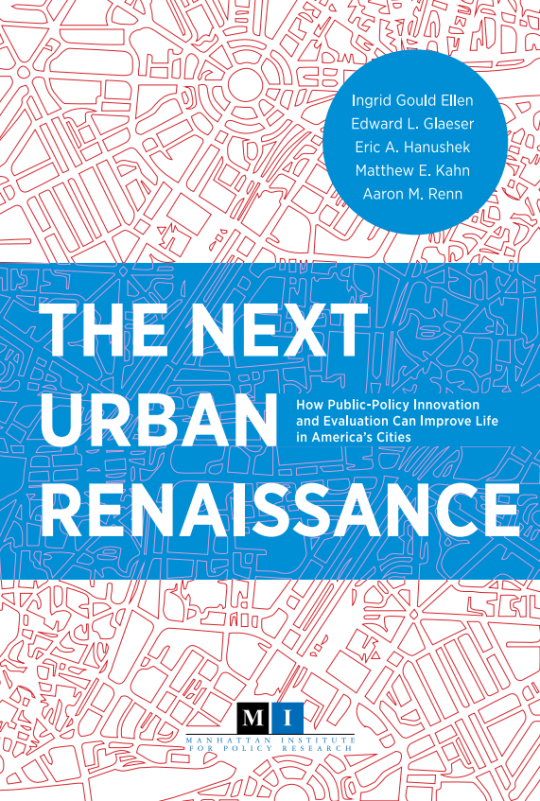
    The Manhattan Institute for Policy Research has just published a free book called, The Next Urban Renaissance: How Public-Policy Innovation and Evaluation Can Improve Life in America’s Cities.

    Here’s an excerpt from the foreword:

    This collection of essays brings together the best ideas from scholars with expertise across a broad spectrum of urban issues. The common theme of the papers is to innovate, evaluate, and leverage the remarkable private talent that is so abundant in America’s great cities. Public capacity is sharply limited; the ingenuity of urban entrepreneurs seems practically boundless. Local governments should be more entrepreneurial and do more to use the talents of the entrepreneurs around them.

    As a further preview, two of the ideas suggested in the book include: 1) reducing or eliminating parking requirements for new developments (which is something I’ve written about before on ATC) and 2) implementing a split-rate property tax for land and its improvements.

    If you’d like to download the free PDF, click here.

  • Guest Post: How We Changed Toronto

    This past summer I participated in a Jane’s Walk here in Toronto, where I was the only speaker to advocate for removing the eastern portion of the Gardiner Expressway.

    After my short talk I was feeling a bit like the black sheep of the group. Either nobody felt the same way as me, or nobody was willing to speak up. Most of the other people there seemed more enamoured by architect Les Klein’s “Green Ribbon” proposal.

    But as I put down the megaphone and began walking to the next stop, a man came up to me. Truthfully, I didn’t know who he was at first, but he reassured me that it was the right thing to do. The Gardiner East should come down.

    Eventually he gave me his business card. On the front it said: John Sewell. And as soon as I saw that I said out loud: “I know this name!”

    John Sewell was a member of Toronto City Council from 1969 to 1984 and was Mayor of Toronto from 1979-1980. Today, he is a Toronto activist and has written dozens of books, mostly relating to urban issues.

    His latest book, released last month, is called: “How We Changed Toronto – The inside story of twelve creative, tumultuous years in civic life, 1969-1980.”

    And today I’m delighted to share a guest post that he has written for Architect This City. The focus of his post below is on the importance of community participation in the planning process and how it was used in this city in the 1970s.

    If you’re a developer, this post might scare you. I think there’s often the perception that communities will generally oppose any sort of development. But there are developers in this city, such as Westbank, which have been taking a more proactive approach to community consultations. And it appears to be working for them. So maybe this is something we should be talking about.

    If you have any thoughts on this, let’s have a discussion in the comment section below. I hope you enjoy the guest post. Thank you again, John.

    _________________________________

    Transportation plans, redevelopment schemes, urban expansion: municipalities address big issues like these in several different ways. A staff report can be requested; consultants can be called in; a competition can be held.

    The device used most successfully by Toronto City Council in the 1970s was a committee of citizens working directly with city staff and council members. It produced enormously successful results, as I recount in my new book `How We Changed Toronto’, but sadly it is rarely used in the 21st century.

    In 1970 City Council appointed a working committee of local residents and several councillors to create a new plan for the Trefann Court Urban Renewal Area, a neighbourhood that had been fighting the city’s plan of demolition for half a dozen years. With the help of a city planner hired specifically for this task, a new plan satisfactory to the different factions in Trefann was hammered out within a few years, then successfully implemented.

    In 1973, when the new Council pondered how to rethink a downtown designated for more office towers, it appointed the Core Area Task Force, a body of community representatives and developers, to give direction to city planners as a new approach to the downtown was devised. The result was the remarkable Central Area Plan which encouraged housing downtown and mixed uses, put an end to windy plazas, and generally created an environment that was active and felt comfortable to anyone on foot.

    In 1974, as Council faced the problem of how it would redevelop 45 acres of wasteland on the edge of the downtown, it appointed a working committee of concerned residents and councillors to give direction to city staff. It’s fair to say that no one had a good idea of how the site should be developed, but the working committee and city staff conceived a brilliant plan which was quickly executed – the first new building was under construction within two years of the working committee being established – and the neighbourhood, now known as St. Lawrence, remains one of the great successes of the latter half of the 20th century.

    From the 1980s onward, City Council has touted the idea of citizen participation, but confined that activity to public hearings on decisions recommended by staff. That generally is the practice today, although open houses have been added, as though showing people plans and getting informal comments is a good way of involving people.

    What’s lost in public hearings and open houses is the creativity that a group of committed, diverse individuals can bring to a problem when they meet together over a number of weeks and months. The members of the group know the local scene but they aren’t experts, so they must be advised by planners and other professionals about the issues they should address, the pitfalls of some options, and the trade-offs available before decisions are taken. It is an open ended process fueled by debates about different opinions, but held together by a common purpose and the realization that those around the table are playing an important role in shaping the direction of the city.

    The working committee that started meeting in Trefann had no clear idea in advance of what the plan it finally arrived at would look like. It was the same with the Central Area Plan, the St. Lawrence community, and the other processes in the 1970s which I touch on in the book. The process that the politicians, staff and residents committed themselves to made all the difference.

    One reason this kind of process is not employed much today is because too many elected figures take an ideological approach. They think they have the answers which they have been elected to implement, rather than to establish ways in which many more minds can be involved in seeking results which are widely agreed on.

    As well, city staff are not seen as independent professional advisors serving the public at large, but as a part of a corps serving the mayor and city councillors. In the 1970s in Toronto there was a clear separation between the politicians and the administration, and there were frequent (and welcome) debates on the floor of City Council between the two factions. Both were there to serve the public although they might have different ideas of how that should be done. This kind of tension was seen as entirely appropriate.

    In Toronto (and probably other cities) the situation is now even more complicated as councillors see themselves not as public servants for a few years, but rather as individuals with a lifetime commitment to holding public office. Too many members of Toronto City Council have been there for more than 15 years, and they fear that taking a principled stand on an important issue might result in the worst of all possible outcomes, their defeat. They decide not to take on the big issues.

    Toronto is currently facing significant problems.  The downtown is being overrun with new tall condo towers, for which the city does not have the infrastructure, and the new housing is not designed to meet the needs of future residents. It is the perfect opportunity for a new look at the Central Area Plan, using the same mechanisms as in the 1970s: a holding bylaw so the new plan won’t be pre-empted by development applications; a citizen-led task force including some councillors, advised by city staff. Who knows what brilliant plan an open ended process can recommend?

    Another problem is money. Toronto does not have enough money to upgrade its transit system or repair the affordable housing it owns, let alone build the new affordable housing it needs. The demands of the mayor that other governments should pay are understandably disregarded. It is time that the city had its own revenue sources, and what better than a citizen led initiative to point the way?

    It’s the same with a plan to build the affordable housing the city needs, to ensure development activity enlivens the near suburbs, to put some restraint on the continued low density subdivisions which are being unrolled far beyond the city’s borders, to restructure the megacity into something which works for the different communities within the city. These challenges all need strong citizen driven processes.

    As I recount in `How We Changed Toronto’, the 1970s really did change Toronto for the better. The city has been coasting ever since on those successes. It is time for renewal, and using the successful mechanisms from forty years ago is something worth doing.

    -John Sewell

  • The importance of having your own beliefs

    On Monday I watched the movie Moneyball for the first time. I really enjoy movies, but I unfortunately don’t watch a lot of them, which is why I am only now watching Moneyball. It was released in 2011.

    The movie is based on a 2003 book of the same name that many people believe changed the game of baseball. It emphasizes rigorous statistical analysis (known as sabermetrics) over gut feeling, instinct, and traditional metrics when it comes to assembling winning baseball teams.

    I don’t know a lot about sabermetrics, but I am now excited to read the book. Still, the dichotomy between the New York Yankees and the Oakland Athletics is incredibly interesting to me. And it reminded me of a post I wrote a few months ago ago called: When everyone thinks you’re wrong.

    In the movie, Billy Beane, the GM of the Athletics, realizes that he cannot compete with the Yankees dollar for dollar. The Athletics are a small market team and the Yankees, with their large payroll, will always be able to pay more for players. So he decides that he will need to think about the problem differently to win.

    What’s interesting about this is that it’s exactly the framework I talk about in my post when it comes to buying (real estate) development sites:

    “…you can really only win development sites in one of two ways. Either you’re willing to spend the most money or you see something and have a vision that nobody else sees.”

    Of course, lots of baseball teams today are now employing sabermetrics. But at the time, everyone thought Billy Beane was nuts. It’s hard to try something new and be different. Many of us just want to do what is least likely to fail.

    But there’s so much value in having conviction and being right about something that everyone else thinks is wrong. You won’t always get it right. And that’s okay. But when you do get it right, it’ll be magic.

  • Cities without ground

    image

    The “ground plane” is an important reference in architecture. The ground is typically where people walk. The ground is where our fabricated buildings meet the earth. And the ground is where our experience of the urban environment–however good or bad it may be–truly takes shape. Often times I feel that we, city dwellers, spend far too much time worrying about the height of buildings and not enough time worry about the ground floor.

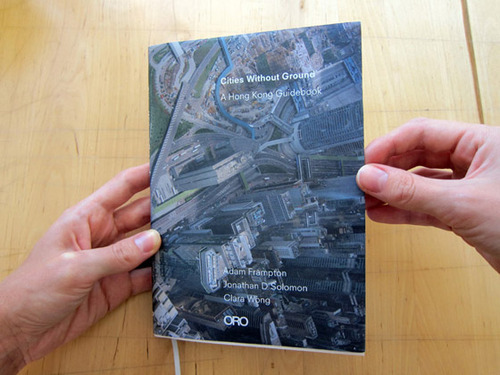
    But what if there were no clearly defined ground plane? This morning I stumbled upon an interesting book called, Cities Without Ground: A Hong Kong Guidebook. The authors call it “a manifesto for a new theory of urban form.” And the argument is that Hong Kong has developed a unique series of public/private spaces that allow it to function as a fully three-dimensional city. 

    image

    Through underground tunnels, above ground walkways, escalators, and other connective infrastructure, Hong Kong is reinventing the way we typically think about cities–both from a user experience and a real estate standpoint. Here’s an excerpt from the Guardian architecture and design blog:

    The phenomenon began in the 1960s, when the Hongkong Land company, one of the main developers in the region, built an elevated walkway to connect a luxury hotel to the second storey of an adjacent shopping mall. An insignificant move, perhaps, but it in fact had the effect of changing the rentable values within the building: suddenly the mall’s second floor units could be rented out for more than those at ground level. It entirely recalibrated the vertical logic of real estate value.

    Now, you could argue that Hong Kong is a unique place. And it is. Other, less dense cities, have found above and below grade walkways to be a destroyer of urban vibrancy. But in Hong Kong it works and, as many other cities around the world focus their energies on urban intensification, we may find that Hong Kong is indeed a new model for urban form.