Daily insights for city builders, delivered every morning at 6 AM ET. I’m Brandon Donnelly — a Toronto-based real estate developer and founder of Globizen. I’ve been writing here since 2013.

Tag: blogging

  • Morning routines

    I often get asked: How the hell do you find time to write every day?

    The trick, for me at least, is to do it first thing in the morning. I get up early, prepare a bowl of cereal with fruit, make a single cup of coffee, and then sit down at my desk and read until something hits me. I like to do this before touching my inbox. It’s too easy to get sucked in once you start opening emails.

    I am not naturally a morning person, but I find this approach works best for me. When I did my MBA a few years ago, I did it part-time through 7am to 9am classes. I really enjoyed that ritual of morning education before the office and so I try and replicate that experience with my blogging routine.

    Some people like to workout in the morning, but I have never been great at that. I have more energy and I lift more when I work out in the afternoon or evening. I just wish I could find a gym that wasn’t so busy in the evenings.

    What’s your morning routine?

    Image: Snapped at Quantum Coffee last week

  • It’s content marketing

    Oscar Wilde once said:

    “There is only one thing in life worse than being talked about, and that is not being talked about.”

    I’m sure that all of you can think of someone right now who subscribes to the philosophy that any press is good press.

    But there is something to be said about exposure. Almost every company on the planet wants it. They pay for it.

    They fight for it.

    It’s the lifeblood of business. If nobody knows who you are and what you do, you’re dead.

    In my view, one of the best ways to gain exposure today is content marketing. Marketing sometimes has negative connotations, but content marketing is probably the least offensive varietal. It’s a soft, rather than hard, approach. It invites you in and tries to earn your trust, instead of hitting you over the head with an ask.

    But at the same time, it’s a more difficult form of marketing. You have to be insightful. You have to be useful. And you have to try and create value for people on a regular basis. That’s easier said than done. I try and do that every day, but I don’t always succeed.

    I say all this because we live in a content-driven world. In fact, this blog – despite it being a personal one – is a form of content marketing. I like how Fred Wilson responded on his blog to the criticism that too many entrepreneurs treat venture capital blogs as scripture:

    “So how should entrepreneurs use this knowledge that is being imparted by VCs on a regular basis? Well first and foremost, you should see it as content marketing. That is what it is. That doesn’t mean it isn’t useful or insightful. It may well be. But you should understand the business model supporting all of this free content. It is being generated to get you to come visit that VC and offer them to participate in your Seed or Series A round. That blog post that Joe claimed is not scripture in his tweet is actually an advertisement. Kind of the opposite of scripture, right?”

    Again, that doesn’t make the content necessarily bad. It’s just the truth. It’s content marketing.

  • 3 years of daily blogging

    image

    This past Sunday was the 3rd anniversary of this blog. That is 3 years of me writing something here every day (I think I’ve only missed 2 days in the past 3 years). So I have now written almost 1,100 blog posts.

    Admittedly, they weren’t all masterpieces. But that doesn’t really matter. To do good work, I think you have to be prolific and show up every day.

    The big change this year was that I “unbranded” this blog and started writing just under my personal name, as opposed to Architect This City. I got some initial pushback when I did that, but I continue to believe it was the right decision for what I am trying to achieve here.

    I recently had someone ask me if there was any change in traffic after the switch. And the answer is no. If anything, traffic increased. 

    Over the last year, this blog received about 225,000 page views. Of course, this doesn’t include the 14,000 or so people who read via email subscription and Tumblr, and never actually land on this site.

    But honestly, I don’t care about the numbers anymore. I used to. But not anymore. I blog because it:

    – Forces me to stay current on the topics that matter to me

    – Allows me to clarify my thoughts in a way that thinking alone can’t do

    – Holds me publicly accountable for the things I say and the stances I take

    – Connects me with people I would never otherwise meet

    – Exposes me to new business opportunities

    – Gives me a distribution channel for discussion and sharing

    – Allows me to learn from readers who know more than I do

    – Feeds my desire to create things (creating > consuming)

    – Allows me to exert my personal independence (I write what I want here)

    – Promotes greater transparency and, hopefully, better city building

    I could go on, but those are some of the most salient points.

    At the same time, the world of blogging and social media is all about giving first. So I do try to curate content and posts that I think would be valuable to the readership of this blog. If there’s something else you’d like to see on here, I am always open to suggestions.

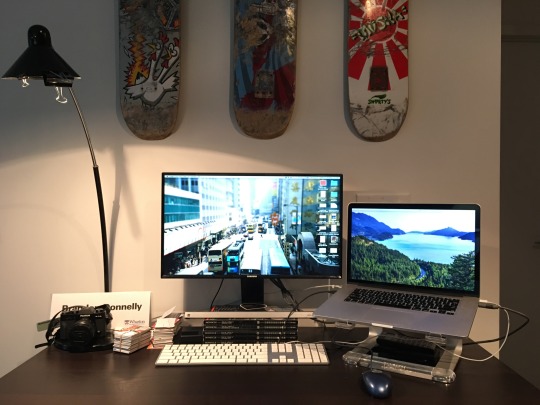
    Thanks for reading! Regular scheduled programming will resume tomorrow. And yes, those are my old skateboard decks hanging on the wall behind my desk.

  • Compact and constrained

    I was walking by a tight construction site last night and it got me thinking. Besides the obvious environmental benefits of building up, as opposed to out, compact urban sites can force something else: intent.

    One of the ways I think about good design is that it is intentional. It is about seeing problems and/or opportunities and then being deliberate in how you respond. Every creative decision needs a reason why. I like how John R. Moran talks about design in this blog post from 2014:

    “The opposite of design, then, is the failure to develop and employ intent in making creative decisions. This doesn’t sound hard, but, astonishingly, no other leading tech company makes intentional design choices like Apple. Instead, they all commit at least one of what I term the Three Design Evasions.”

    The three design evasions he goes on to talk about are (1) preserving, (2) copying, and (3) delegating.

    The thing about compact and constrained urban sites is that they can force you away from the three design evasions that Moran lists in his post. You can’t just repeat what was done in the past or copy what someone else has done, because that precedent probably didn’t have the same challenges you face.

    Of course, if this were enough to promote great design, our cities would look a hell of a lot different. Still, it’s one of the reasons why I’m attracted to compact forms of development such as laneway housing and other urban infill.

  • Hello Boston

    image

    I arrived in Boston early this morning. It has been about a decade since I was last here.

    I took the subway in from the airport, which is typically what I like to do when I visit a city. It’s such a great way to get a feel for a place. And in the case of Boston, Logan Airport is only a few stops away from downtown.

    image

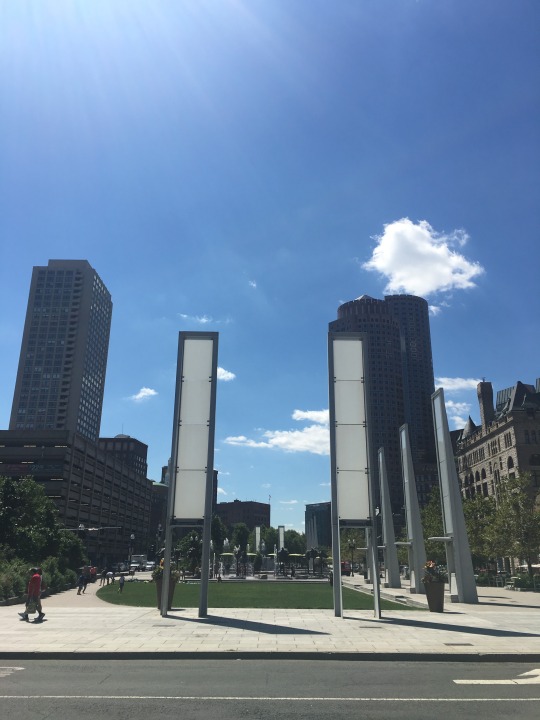
    As soon as I got in, I walked over to see the Rose Fitzgerald Kennedy Greenway (above image). It’s a linear park that was made possible by burying the city’s elevated waterfront expressway – the infamous “Big Dig.”

    image

    I recognize that it was a lavishly expense infrastructure project that went many times over budget, but walking across the greenway to get to the water was rather pleasant. Will Toronto’s The Bentway achieve a similar result at a fraction of the cost?

    image

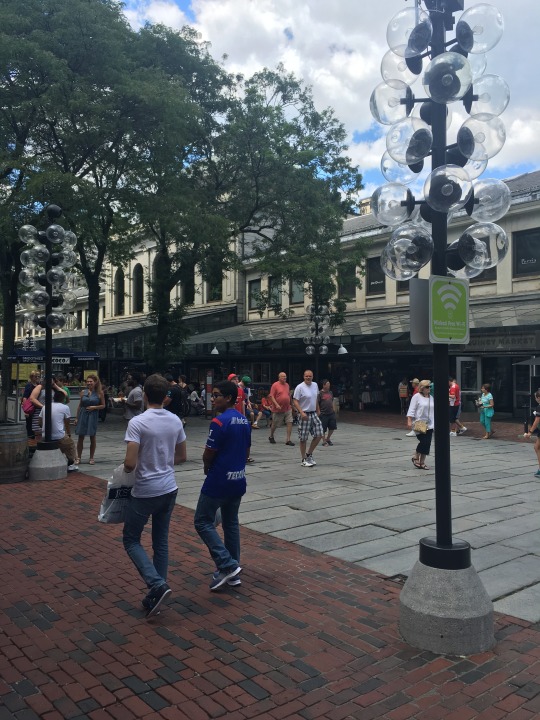
    With that out of the way, I went for a lobster roll. It had to happen. I then walked around Faneuil Hall and Quincy Market (above image). It felt a bit touristy, but what a remarkable pedestrian-only area

    image

    And now I’m on a boat heading over to Provincetown (Cape Cod) for a wedding. I’m writing this blog post over a spotty wifi connection, so out of fear that I may spontaneously lose it, I am going to end here. See you all tomorrow.

  • Going swimming (and being transparent)

    I woke up this morning to this view:

    image

    I then went for a swim. The water tends to be on the cooler side in the Georgian Bay, but with the weather we’ve been having it’s pretty perfect right now.

    At this point I’m thinking about a beer and some reading. I have Capital in the Twenty-First Century by Thomas Piketty sitting in my car. It’s next in the queue.

    I am telling you all of this simply to be transparent. 

    Recently I had someone caution me that I should be careful about being too public and too open. I won’t get into specifics, but I was told that sometimes it’s better to just fly under the radar.

    I recognize that there have to be limits to transparency, but as a rule of thumb I subscribe to the opposite approach. When possible and when appropriate, I would rather be more, rather than less, transparent. 

    This blog is who I am. It’s indicative of how I think. And it discloses what I’m doing. So I don’t see a lot of downside. What you read is what you get. You’ll know if we should be friends and/or do business together.

    After I wrote about what I’m doing next I had a bunch of emails come in from various people telling me what they’re doing and, in some cases, suggesting that we work together. Some people had development sites that they thought I should take a look at. And some people immediately asked if I was hiring.

    I am grateful for each of those emails. But I also know that they’re an outcome of openness and transparency.

  • Positivity at a public meeting

    I’ve been reading the blog 5 Kids 1 Condo for, I think, about a year now. It’s written by Adrian Crook who is a single dad of 5 kids, living in a 2 bedroom condo in downtown Vancouver. And his blog is about just that.

    A few days ago he posted a video of himself speaking at a public meeting in support of a new purpose-built rental building at 18th and Commercial Drive in Vancouver. The proposal includes 110 secured market rental units; 37% of which will be 2 or 3 bedroom apartments. (More information on the project, here.)

    It’s rare to see people come out in support of a project at a public meeting. Usually people only show up when they’re grouchy and upset. So today I’d like to share his speech (click here if you can’t see the video below).

    [youtube https://www.youtube.com/watch?v=q-ENWu__HdM?rel=0&w=560&h=315]

    I’m curious to know what was shouted right at the beginning after he said that he was in favor of the proposal. I listened a few times but couldn’t figure it out. 

    In any event, Adrian’s speech touches on a number of important points that transcend this specific development proposal and that are relevant to many of the topics that we discuss here on this blog.

  • Writing every day

    I often get asked about my daily routine and how I manage to write, every, single, day.

    Oftentimes people will say that I must not sleep. But the reality is that I love sleeping and I generally need a lot of it. I’m not someone who can function on 5 or 6 hours. I’m useless with that amount of sleep. One of the best productivity hacks for me is to simply sleep more and work less.

    In terms of when I write, my preference is to write first thing in the morning – even though I don’t consider myself much of a morning person. I like to wake up, make breakfast and a coffee, and then sit down at my desk to both read and write. I like to do this before diving into email, before thinking about all the stuff that I need to do that day, and before going into the office.

    Some days a post might take me 20 minutes and some days it might take me an hour. Where I struggle the most to write every day is when I’m traveling or when I have to be somewhere super early, which then means I’m writing in the evening. I like my routines.

    I’m thinking about this right now not only because I often get asked this question, but because I’m currently making my way through a book by Adam Grant called Originals

    Though talent still matters, one the things he argues is that creative people tend to be creative because they are prolific. They produce a lot of whatever it is they do. And while much of it may be crap – he argues that Shakespeare penned a lot of crappy plays – it is through sheer volume that they end up achieving those creative breakthroughs.

    This goes against the traditional notion of the “creative genius”, but I think there’s a lot of truth to it. It’s why good architects will iterate through many different building designs and it’s (partly) why bloggers like myself see value in showing up every day.

  • Conversational investing

    I’ve been spending my mornings this weekend, listening, watching, and reading things. I’m always reading to find content for this blog, but I’ve allocating more time to consumption this weekend. So you might be noticing a slightly different varietal of posts over the past few days.

    This morning it’s a podcast called Dorm Room Tycoon. It’s an interview with Andy Weissman, who is a partner with the New York venture capital firm, Union Square Ventures. The topic is “how we invest” and I’m enjoying the discussion.

    Andy describes their firm as being boutique and thesis-driven. Meaning they have theses and they look for companies that dovetail with them. But in addition, he also labels their approach as “conversational investing.”

    What does that mean?

    It means they listen, watch, and read. They blog (all the partners write their own personal blog). They engage and discuss. They put themselves and the firm “out there”. And they don’t pretend to have all the answers or to be able to predict the future. Instead they let their conversations – both internal and with the broader market – help them make their investing decisions.

    So why do I bring this up?

    Because in my own small way, I am trying to do the same with real estate development, architecture, and city building. I write every day to learn and because I am infinitely curious. If you want to know what I’m thinking about, read this blog.

    It’s for this reason that my favorite blog posts are the ones in which there’s lots of discussion in the comment section. It’s the market talking back, telling me whether I’m out to lunch or not. Ultimately, this idea of “conversational investing” is really about iterative decision making.

    Here’s the podcast embed in case you would also like to listen:

    [soundcloud url=”https://api.soundcloud.com/tracks/266734055″ params=”auto_play=false&hide_related=false&show_comments=true&show_user=true&show_reposts=false&visual=true” width=”100%” height=”450″ iframe=”true” /]

    Regardless, the Dorm Room Tycoon is worth checking out. They have other interviews with people like Malcolm Gladwell and Simon Sinek.

  • Why blog?

    Someone recently asked me: “Why do you blog?”

    I have lots to say whenever someone asks me this and I’ve written a few of those things down, here. Obviously I believe that there’s tremendous value in writing your own blog and reading the blogs of others.

    It’s for these reasons that I really enjoyed one of Seth Godin’s posts this week called: Read more blogs. The post is about using an RSS reader (Feedly) to keep track of blogs (which I do), but it was the lead-in that caught my attention:

    Other than writing a daily blog (a practice that’s free, and priceless), reading more blogs is one of the best ways to become smarter, more effective and more engaged in what’s going on. The last great online bargain.

    Good blogs aren’t focused on the vapid race for clicks that other forms of social media encourage. Instead, they patiently inform and challenge, using your time with respect.

    He then ends by arguing that we shouldn’t sit idle while powerful gatekeepers like Google and Facebook “push us toward ad-filled noisy media.”

    The reality of many personal blogs is that they don’t live and die on clicks like other online media. It’s a labor of love and that makes it a unique place on the internet. I clearly like this place and, if you’re a reader of this blog, I suspect you might too.

    Thank you for reading my personal journal.