Daily insights for city builders, delivered every morning at 6 AM ET. I’m Brandon Donnelly — a Toronto-based real estate developer and founder of Globizen. I’ve been writing here since 2013.

Tag: atc

  • The first 100 people

    image

    This past weekend was a milestone weekend for Architect This City. The number of email subscribers surpassed 100 people for the first time. Now, that may not seem like a lot of people, but I think it is. I’m incredibly proud of and grateful for each and every one of you who subscribe to ATC. If I had all of your photos, I would make a collage just like the one above and call it “the first 100.”

    The reason I think 100 people is a lot is because I think of an email inbox as an incredibly personal thing. We live in an age of too much information and our inboxes certainly reflect that. So for somebody to invite and accept the ATC email into their inbox every morning (only a few people subscribe weekly), I consider that to be a big deal. Thank you for that. It really does mean a lot to me.

    I try to ensure that I’m always delivering value to you, which is why I ask for your industry on the full subscription page. I want to know where you’re coming from so that I can do my best to write content that will help you professionally, and perhaps even in life. But if you signed up elsewhere, you may have only entered your email. If you’d like to add your industry, click on “update subscription preferences” at the bottom of one of my emails.

    So far, I know that many of you are architects, city planners, real estate developers, brokers, policy makers, finance people, marketers, and entrepreneurs–to name only a few.

    If you have any specific feedback or have a topic you’d like to see covered on ATC, please feel free to email me or reply to this email (if you’re already a subscriber). I keep a queue of draft posts and I do eventually get to them when the timing is right. Finally, if you feel that somebody within your network would also get value out of what we’re all doing here at ATC, I would really appreciate it if you forwarded this email or shared this post.

    Happy Monday 🙂

    Image: Flickr

  • Could a decentralized sales model work?

    image

    Since I started blogging last year, I’ve been getting regular emails from both people I know and from readers I don’t know (but hope to one day meet) asking for advice on buying real estate. Usually somebody sends me the link to a place they’re thinking about buying, and they want to know what I think about the property and the neighborhood.

    I’m more than happy to help when I can and I try to be brutally honest in terms of what I think. What’s interesting about this dynamic though, is that I don’t have a vested interest in any of the outcomes. Whether I tell that person I love the place or that it’s shit, I don’t stand to gain anything. And that means I can be brutally honest. It’s for this same reason that customer reviews on websites can work so well. 

    Because on the flip side, if I make money when you buy, then guess what, I’m going to want you to buy. That’s how it works for any industry–from financial services to real estate to retail. That’s why some stores will promote the fact that their sales people are not on commission. Although you could argue that those sales people are then less motivated to help you.

    In any event, all of this got me wondering if there isn’t some way to take customer reviews to the next level. Could a decentralized sales model work?

    Last year I had a conference call with one of the chief officers of one of the top 3 real estate websites in the US and I was told that they had actually tested a “social buying model.” It ultimately failed, but it strikes me as an interesting concept. Reviews are starting to feel a bit dated now on the social web, but I think the idea of crowdsourced input is here to stay.

    Image: Flickr

  • We want what we want

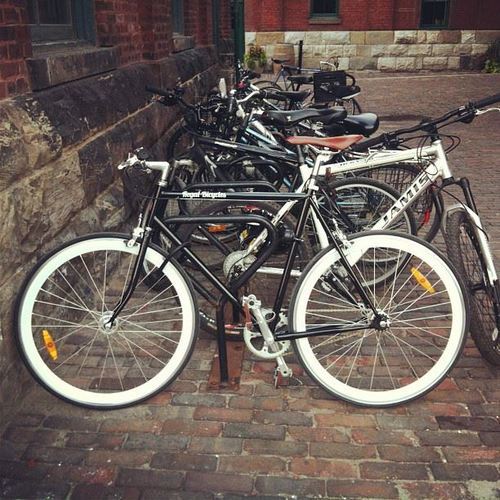
    This past Sunday night I was out for a bike ride with a few friends all around downtown Toronto. According to Strava, we did almost 22 km. Click here to see our route. During the ride, one of my friends said something to me that stood out. He said that when he’s on a bike he wants all cars off the road; but when he’s in a car, he wants all bikes off the road.

    Now, this may seem like a fairly banal statement, but I think it demonstrates a number of things about people and the way we interact with cities. First, we’re all probably pretty selfish. We want what we want at a specific moment in time and we easily forget what it’s like to be on the other side of a situation.

    Second, I think it reinforces what I wrote a month ago in a post called: Every street can’t be everything to everyone. If we want to improve the user experience for a variety of different use cases (driving, biking, walking and so on), we should decide when and where we’re going to optimize for each. 

    The reason my friend said what he said was because we were riding on a road with no bike lanes. We were swerving in and around cars. And when the street is shared like this it naturally becomes a competition of who can be the most aggressive and dominate the road–bikes or cars. But as exciting as that might be, it’s probably not an ideal way to build our cities.

  • How will climate change affect our coastal cities?

    One of the reasons New York is the city it is today is because of the superiority of its port. For a number of reasons, which are better explained here by urban economist Edward Glaeser, New York was almost destined to become “America’s port.” Of course, this phenomenon is something that has been repeated all throughout history. Being connected to the right body of water, in the right way, has meant all the difference in terms of economic success.

    But with study after study demonstrating that our economic success is leading to severe climate change and to the melting of arctic ice sheets, those very same port cities are now being put at serious risk. How ironic. Hurricane Sandy was the largest storm surge in the history of New York. Prior to it occurring, the likelihood of such a storm would have been calculated at 0.1%. It was greater than a 1,000 year storm.

    But if the research is correct, we’re going to see more storm surges and we’re going to see rising sea levels. This makes many, if not all, sea port cities a high risk zone for flooding, which is why cities, such as Boston, have prepared comprehensive reports on how to manage a rising tide. From adjustable parapet walls to multipurpose green spaces that can absorb excess water levels, cities around the world are looking for solutions.

    But these are merely reactive solutions.

    What need to also be looking at is how we can fundamentally improve our economy so that we’re operating in a sustainable way. Some of the research suggests that what we’ve done is irreversible, but that doesn’t mean we should continue to make it any worse. Part of the issue with this “wicked problem” is that it doesn’t seem immediate to most people, yet. It’s too easy to ignore. But that doesn’t mean it doesn’t exist.

    Image: This Big City

  • Cities without ground

    image

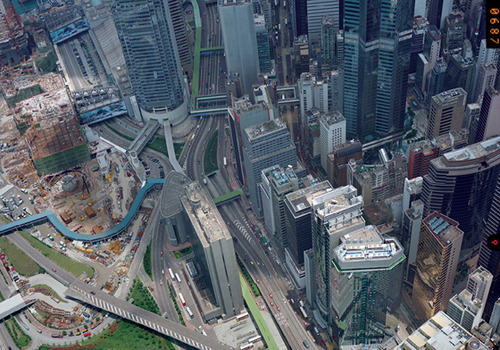
    The “ground plane” is an important reference in architecture. The ground is typically where people walk. The ground is where our fabricated buildings meet the earth. And the ground is where our experience of the urban environment–however good or bad it may be–truly takes shape. Often times I feel that we, city dwellers, spend far too much time worrying about the height of buildings and not enough time worry about the ground floor.

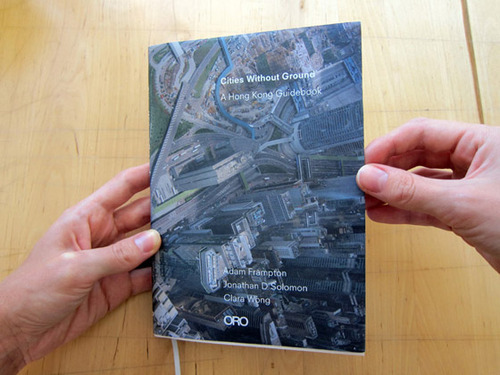
    But what if there were no clearly defined ground plane? This morning I stumbled upon an interesting book called, Cities Without Ground: A Hong Kong Guidebook. The authors call it “a manifesto for a new theory of urban form.” And the argument is that Hong Kong has developed a unique series of public/private spaces that allow it to function as a fully three-dimensional city. 

    image

    Through underground tunnels, above ground walkways, escalators, and other connective infrastructure, Hong Kong is reinventing the way we typically think about cities–both from a user experience and a real estate standpoint. Here’s an excerpt from the Guardian architecture and design blog:

    The phenomenon began in the 1960s, when the Hongkong Land company, one of the main developers in the region, built an elevated walkway to connect a luxury hotel to the second storey of an adjacent shopping mall. An insignificant move, perhaps, but it in fact had the effect of changing the rentable values within the building: suddenly the mall’s second floor units could be rented out for more than those at ground level. It entirely recalibrated the vertical logic of real estate value.

    Now, you could argue that Hong Kong is a unique place. And it is. Other, less dense cities, have found above and below grade walkways to be a destroyer of urban vibrancy. But in Hong Kong it works and, as many other cities around the world focus their energies on urban intensification, we may find that Hong Kong is indeed a new model for urban form.

  • New ideas need old buildings

    In reading a recent Financial Times article called, Are creative people the key to city regeneration?, I was reminded of a famous line from the late urbanist Jane Jacobs: “New ideas need old buildings.” What she meant by that is the following:

    Cities need old buildings so badly it is probably impossible for vigorous streets and districts to grow without them…. for really new ideas of any kind—no matter how ultimately profitable or otherwise successful some of them might prove to be—there is no leeway for such chancy trial, error and experimentation in the high-overhead economy of new construction. Old ideas can sometimes use new buildings. New ideas must use old buildings.

    And what she was effectively getting at is that we live in a world obsessed with historical data and precedence. To use the words of business thinker Roger Martin: “The enemy of innovation is the phrase ‘prove it.’” Because, if it’s never been done before, how can you prove it? You can certainly imagine it. But you can’t prove it.

    If you’re in the business of building buildings, convincing your lender to give you the money to build something that’s never been done before, is an almost impossible sell. That’s not the way it works. Which is why Jane Jacobs famously said that “new ideas need old buildings.”

    We’ve seen this story play out in countless cities around the world. The creatives move into an scuzzy neighborhood, make it cool and then investment follows. The neighborhood has been proven. But for this cycle to continue, we need a continuous stock of derelict buildings and undesirable neighborhoods, or at least areas that offer the same kind of affordability and flexibility to creative entrepreneurs.

    Often these circumstances have been the result of failure. The proven ideas that got the buildings built in the first place became no longer relevant. And so the buildings were left to expire. But in many global cities, these kinds of areas are an endangered specifies. However, it’s in our best interest to make sure that we don’t lose our creativity alongside them.

  • Vancouver boomers are sitting on $163 billion of mortage-free property

    Continuing with our discussion of Vancouver, I was reading today that baby boomers in the metro area (those aged 55 and older) are estimated to be holding over $163 billion of clear title property. That is, homes without any mortgage. This figure comes from Rennie Marketing Systems out of Vancouver.

    What’s interesting about this number is that it signals both a lot of equity that could be used for downsizing, rightsizing and lateral moves into a condo, and a source of capital for millennials to buy their first home. In fact, according to a survey that Rennie Marketing also conducted, somewhere around 40% of first time buyers in Vancouver are getting deposit help from their parents and/or grandparents.

    But the question that comes to my mind is: Are there going to be enough middle aged people willing and able to buy $163 billion worth of real estate? Because one person’s sale is another person’s buy.

  • The future of Vancouver’s West End

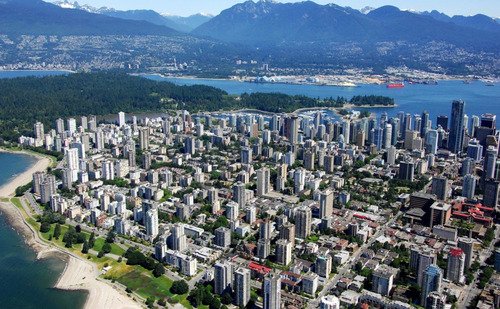
    Spacing Vancouver recently published an interesting look at Vancouver’s West End neighborhood. And it led me into a deep dive of the neighborhood’s recently adopted Community Plan (November 2013). So today I’d like to talk a bit about the neighborhood and also their plans for managing growth over the next 30 years.

    Officially established in 1969, the West End spent the next 3 decades as the most densely populated area of Vancouver. But starting in the 2000s with the development of high-rise condo towers in neighbouring areas such as Downtown South to the southeast and Triangle West and Coal Harbour to the northeast, the West End lost this position. Today it’s the 4th most densely populated neighborhood in the city.

    The bulk of the housing (77%) is in the form of apartments with 5 or more storeys. And 81% of residents are renters. This is well above the city average of 52% and is likely a reflection of the neighborhood’s younger demographic (25-29 years old is the largest segment) and its position as a landing ground for new Vancouverites.

    But as a large central area with exceptional access to natural amenities, I would imagine that development pressures are and will continue to be significant. To plan for this growth, the city wants to intensify the central areas of the neighborhood with low-rise and mid-rise form and the periphery with high-rise towers. And already this is happening with developments such as the 62-storey Shangri-La Hotel.

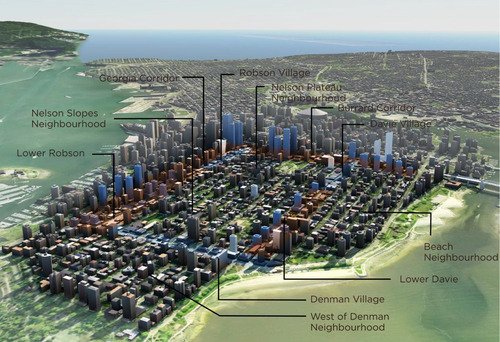
    Here’s an image depicting their 30 year vision:

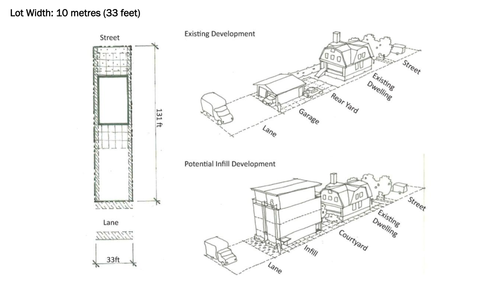
    But what stands out for me in the Plan is Vancouver’s continued commitment to laneway intensification. The Plan refers to it as “Laneway 2.0” and they specifically mention the opportunity to redevelop the West End’s wide laneways with “ground oriented infill housing.” Below is an example of how this could be done on a small residential lot, but the Plan also includes images for how the same might be accomplished on underutilized apartment building sites.

    Laneway housing is a topic I’ve written about extensively on ATC. Toronto is absolutely behind on this. And as I’ve argued before, we need to be looking at urban intensification across all scales, from low-rise to high-rise, if we want to create inclusive and vibrant cities. With the West End Community Plan, Vancouver seems to be doing just that.

  • Tomorrow’s capital of the world

    Last week I polled the ATC community and asked which city they consider to be the “capital of the world.”

    image

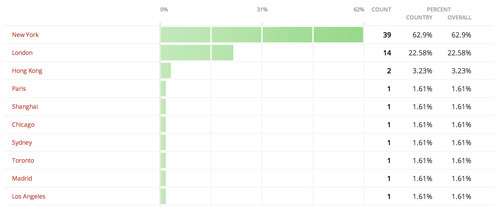
    I received 62 votes and the overwhelming majority (63%) voted for New York. London came in a distant second with 23% of the vote. Though there’s probably a geography bias here (most of the readers of this blog are from North America), I did have a few people comment on Twitter that the answer to this question is blatantly obvious. The capital of the world is New York.

    But what I was really trying to do was establish a baseline for this week’s poll, which I think is a much more interesting question. Which city do you think will be the “capital of the world” in 2050? Again, there are no other instructions. Just select whatever first comes to mind. I’m using the same list of cities as before, but you can now add a city if you think the right answer is missing. If for whatever you can’t see the poll below, click here.