Daily insights for city builders, delivered every morning at 6 AM ET. I’m Brandon Donnelly — a Toronto-based real estate developer and founder of Globizen. I’ve been writing here since 2013.

Tag: atc

  • Is inclusionary zoning a good or bad thing for cities?

    Today is Christmas Eve. It’s the season of giving. So I thought it would be appropriate to talk about affordable housing.

    Yesterday, Mitchell Cohen – who is a real estate developer and the president of The Daniels Corporation – wrote an opinion piece in the Toronto Star talking about just that. It was called: A perfect storm for action on affordable housing.

    Here’s a snippet that summarizes the things he believes we should be doing:

    Municipalities across Ontario also have significant tools at their disposal to make a difference. To date, these tools have not been co-ordinated to achieve maximum bang for the buck. Property taxes can and should be waived not only for affordable rental homes but for affordable ownership homes as well. Additionally, cities can and should waive all development levies and other municipal fees for affordable rental and ownership housing.

    Combined, these two measures provide municipalities with powerful leverage to implement inclusionary zoning — the most important tool in the affordable housing tool box. Inclusionary zoning on a city-wide basis creates a level playing field, an opportunity for a constructive partnership between municipalities and private sector developers to create both affordable ownership and rental homes within every new building approved for construction.

    For those of you who might be unfamiliar with inclusionary zoning, it’s essentially a zoning requirement to build a certain number of affordable units in any new construction project. It originated – as far as I know – in the US, but has been fairly controversial since the outset.

    So today I thought we could have a discussion on the merits of inclusionary zoning. Do you think it’s a good or bad thing for cities? Is it really the most effective way to deliver affordable housing at scale? Leave your thoughts in the comment section below 🙂

    I don’t have a strong view on inclusionary zoning, but I do believe that affordable housing and a mix of incomes is critical to cities and neighborhoods.

    I do, however, wonder if it’s one of those things that seems to make a lot of sense, but actually has a bunch of negative externalities associated with it. Maybe the answer is to just prototype the idea and then iterate on it.

    What do you think?

  • My identity crisis

    If you’re a regular reader of Architect This City, there are many things that you might know about me

    You might know that I was initially trained as an architect, but that I immediately transitioned into real estate development after grad school (where I studied both architecture and real estate).

    After becoming a real estate developer, you might know that I completed an MBA with a focus on innovation and entrepreneurship (which happened by default as a result of the electives I ended up being interested in).

    And finally, you might know, given the content of this blog and my startup history, that I have a significant interest in technology. More specifically though, you might know that my interest is in figuring out how technology will continue to infiltrate and impact “non-tech” industries such as real estate.

    But what you might not know is how I even ended up in architecture and real estate in the first place. Unlike a lot of people who seem to have grown up wanting to be an architect – perhaps because they had a relative who was one – I didn’t decide to study architecture until a bit later on.

    Growing up my primary interests were: art and computers.

    During high school, my art teachers used to tell my parents that I was going to be an artist. And my computer teachers used to tell my parents that I was going to be a computer geek – or maybe they said computer scientist.

    Maybe it had to do with timing and the emergence of the commercial internet in the 1990s, but computers sort of won out during that point in my life. I spent a lot of time building them from scratch, playing with software, and asking my mom not to pick up the phone because I was literally dialed-in to the internet.

    So when it came time to enrol in university, I fairly effortlessly decided on computer science. It just seemed to make sense. But after about a year I realized that it wasn’t for me. I didn’t love programming like my classmates did and the thought of doing it for a living scared me.

    At the same time, I felt like I needed to feed the artist in me. I wanted something both artistic and technical. So I decided to drop out of computer science and give architecture a try. It just seemed like the perfect marriage of my interests.

    I immediately fell in love with architecture. And I spent the next 7 years studying it across 2 degrees.

    But during that time, two things hit me. First, I came to the realization that real estate developers are the ones who really have the most say in terms of how our cities are built. And second, that technology was having a massive impact on business and life.

    This told me that design alone wasn’t going to be enough. I also needed to engross myself in real estate, finance, business, and technology. So that’s what I set out to do. And I really enjoyed it. On the technology side, it felt like I was coming full circle in a way.

    But today, I feel a bit like a 3 legged stool. There’s the design leg. The real estate/business leg. And the technology leg. And oftentimes I feel like life would be a lot simpler if I could just balance on one of those legs – instead of trying to stand on all three. But that’s simply not me.

    These are my passions and I need all of them to stand-up.

  • Pushing and pulling

    image

    Venture capitalist Chris Dixon recently published an interesting post called, Two eras of the internet: pull and push. In it, he describes two patterns that have emerged within the internet over the past decade and a half.

    Pull (2000s):

    Pull is when you are seeking information, usually an answer to a question. You want to know the closing time of a restaurant, the description of a hotel where you are thinking about staying, the details of an historical event you heard about, etc. You go to your computer and pull the information. The killer app for pulling information was Google.

    Push (2010s):

    Push is when you are using the internet in a more passive way and content comes to you. The killer app for push is social networks, the most popular being Facebook. Information is pushed from user to user via likes, shares, tweets, etc. People tend to push things they find funny, interesting, moving, outrageous, etc.

    Now let’s think about this for a second, because it’s a pretty significant change.

    Google’s mission is to organize the world’s information. And they have certainly made it easier for us to get the information we want. Instead of physically searching for something, you just type in a few keywords and it pops up. But, it still involves us deciding we want something and then pulling the information.

    What’s fascinating to me about push is the idea that content and information comes to you. And it’s one of the reasons that I’ve always found Foursquare more interesting than Yelp – even though Yelp is far more popular as a tool to help you find somewhere to eat, drink and so on.

    When I walk into a restaurant or bar now, oftentimes I’ll see a Foursquare notification popup on my phone showing me a tip that somebody has left: “Try the meatballs – they’re to die for”. I didn’t search for that. I didn’t ask for a recommendation. But Foursquare knew where I was and presented me with that information.

    Now, there are obviously potential downsides to constant interruption, but let’s focus here on the opportunities. How could these same principles to be applied to other industries such as, say, real estate?

    I think there’s a pull and push parallel.

    Today MLS operates in a way like a search engine for homes. You decide you might be interested in buying a home and so you go online and start pulling listings.

    Of course, the vast majority of people also work with a real estate agent. And in a way they’re kind of like your push. They get to know you, they figure out what you’re looking for, and then they push relevant listings and information to you.

    And maybe that’s why nobody has killed off real estate agents – despite the numerous attempts. Everybody has been focusing on new pull platforms (listing platforms) as opposed to a new push platform.

    Who knows.

    But I think it would be naive to think that these emerging push platforms won’t reach far beyond social media.

  • Being exemplary

    image

    Yesterday morning I had coffee with a good friend of mine and fellow city geek. We don’t connect nearly as often as I’d like, but when we do we always have great conversations about cities and about Toronto.

    One of the things he asked me was whether I was still loving Toronto. And I responded by saying absolutely. We then both agreed that there are a lot of exciting things happening in the city right now. 

    But I qualified this statement by saying that I wish we were bolder. I wish we took more chances. Because while it’s great that we’re doing things like building more bike lanes and intensifying our growth centers, lots of other cities are doing those things as well.

    To be a leading city, you have to be prepared to do things that other cities think are wrong or won’t work and that are truly remarkable. Whether you’re city, company, or an individual, following trends is never enough.

    Take for example the dramatic anti-pollution measures that were recently announced by Paris mayor Anne Hidalgo:

    By 2020, no diesel fuel at all will be burnt within Paris. Regular cars will be banned outright from its more polluted roads, which will be open solely to electric and hybrid vehicles. Meanwhile, the city’s most central districts (the first four arrondissements) will be barred to all but residents’ vehicles, deliveries, and emergency services, transforming Paris’ Right Bank core into a semi-pedestrian zone. As a counterbalance, the number of cycle lanes will be doubled by 2020, while the city will fund an extended electric bikeshare scheme to encourage more people to get on two wheels. “I want us to be exemplary” Mayor Hidalgo has declared. 

    That’s how you win hearts: by being exemplary.

    As always though, I’m incredibly optimistic about the future. Toronto has a new leader at its helm and I know that there are a lot of passionate people in this city who care deeply about its future. I am certainly one of them.

    Image: Not my actual coffee (via Flickr)

  • The power of architecture

    Architect Bjarke Ingels recently gave a talk at the WIRED by Design conference. I’m a big fan of his work and so I think you’ll really enjoy the talk. What I like is how process driven his firm is. As he explains at the beginning of the video, they always start by researching and analyzing the situation before figuring out how they’re going to intervene. That’s what informs their designs.

    Click here to watch the video. It’s about 20 minutes long.

  • The Fundamental Law of Road Congestion

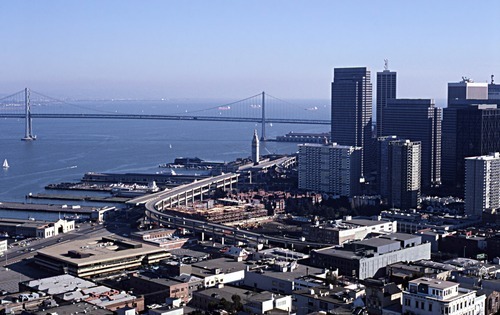
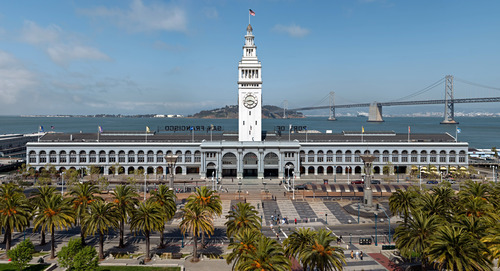
    A few days ago I wrote a post talking about what happens when you demolish an urban highway. It was a link to an article giving 5 examples of cities that have removed their urban highways and benefited.

    After I wrote the post, a number of people responded on Twitter. Some thought it was a great idea and gave examples of other cities, such as Detroit, that are thinking about doing the same. But others responded and said that I was out of line. And that while it might work in some cities, it simply isn’t a viable option in cities like Toronto.

    So as somebody who believes we should be taking down the Gardiner Expressway, I thought it would be worthwhile to revisit the topic and provide a bit more information.

    To be clear, I’m not suggesting we remove the Gardiner and replace it with nothing. My belief is that we should replace it with a broad surface street that would still move lots of cars, but that would make our waterfront much more open and accessible to everyone.

    So how is this feasible?

    Again it comes back to the concept of induced demand. Back in 2009, two economists from the University of Toronto and University of Pennsylvania – which are actually both of my alma maters – published a study called The Fundamental Law of Road Congestion.

    In it they discovered something really fascinating: there’s a near perfect relationship between new roads and highways built and the total number of miles driven. In other words, as cities increased road capacities (during their study period of 1980 to 2000), the amount of driving went up just as much.

    What this should tell you is that trying to build your way of out road congestion is usually a losing proposition. That’s why every large city has a traffic problem. Try and think of one that has solved this. And as much as it might seem intuitive to tell people at cocktail parties that your city simply needs to build more roads and highways, it’s typically not that simple. (In my view, the solution is road pricing.)

    The other really interesting thing that this study revealed is that it works both ways. When you reduce road capacity, drivers start to disappear. People choose to live closer to where they work. People choose transit. People go into the office at different times. People make all sorts of different decisions in response to this road change, just as they do when there are more free roads available to them.

    So within a reasonable band (obviously you can’t remove all roads), there is no perfect amount of road capacity. If you added another lane to your highway, it would be full. If you took away a lane, it would end up equally full. That’s why removing the Gardiner Expressway isn’t lunacy.

    Instead, it actually makes a lot of sense:

    • It’s the cheapest solution (compared to repairing it or burying it)
    • It would free up money for transit and other mobility solutions
    • It would make our waterfront more open and accessible
    • It would beautify our downtown
    • It would increase land values all along the waterfront

    And since we’re still in the early days of developing our eastern waterfront, now is the time to do it. The longer we wait, the harder it’ll get and the more expensive it’ll get.

    So I hope that the leaders in this city will think long and hard about this as opposed to immediately assuming we need an elevated highway to keep this city moving. The last time I checked, it doesn’t work so well in its current state.

    Images: Before and After the Embarcadero Freeway in San Francisco (via Gizmodo)

  • Muuto stacked shelf system

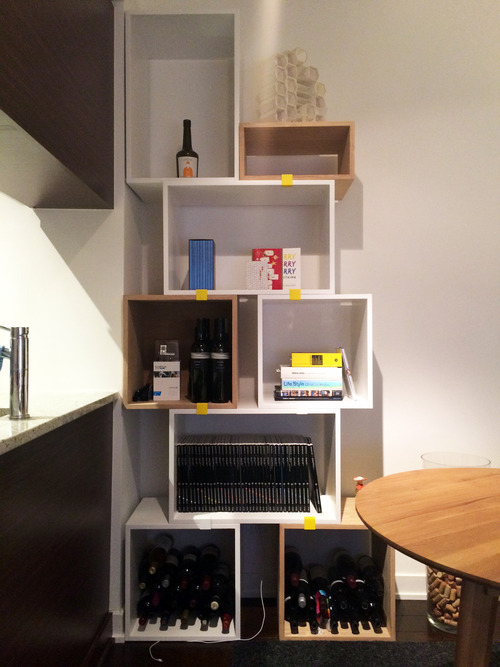
    I don’t have a lot to say today. I had a busy day and then this evening I set up some new shelving in my apartment. Here’s what it looks like:

    There’s a bulkhead directly above it (that you can’t see in this picture) and so I’ve been wanting to put shelving in this corner ever since I moved in almost 2 years ago. I haven’t really organized the contents yet, but I did get some wine into the bottom of it. First things first.

    Initially I thought about getting built-in shelves. But custom millwork is expensive and, to do something even remotely interesting, the pricing got stupid. So I searched and searched and eventually stumbled upon the Muuto stacked shelf system designed by JDS Architects.

    This is the picture that sold me:

    My setup doesn’t look nearly as impressive, but I’m still thrilled with it.

    The way it works is really simple. You stack up the boxes however you would like and then, once you’re satisfied, you just clip them together. That’s what those yellow things are in my picture. You can hide them at the back if you want, but I purposely ordered yellow ones in order to highlight how the system actually goes together.

    It wasn’t the cheapest option out there, but I’d rather have fewer things of higher quality. I already have too many things.

  • What happens when you demolish a highway

    Earlier today I tweeted this:

    //platform.twitter.com/widgets.js

    It’s a link to an article talking about 5 cities – New York, Milwaukee, Seoul, Portland, and San Francisco – who all demolished an elevated highway that used to run through their downtowns.

    To be completely fair, some of these cities didn’t really have a choice. San Francisco’s Central Freeway was so badly damaged in an earthquake that it had to be closed. But it doesn’t make the lessons any less relevant.

    In all of these cases, the elevated highways were taken down and never replaced with another highway. Some were turned into large boulevards. Others were turned into parks. But in none of the cases was a new road of similar capacity built.

    Intuitively it might seem like this would cause utter chaos. I mean, where were all of these cars going to go? 

    But that didn’t happen. Instead, demand redistributed itself. Car volumes dropped dramatically. More people took transit. Some people took other routes. And some people traveled at different times. Oh, and nearby property values all went up.

    And the reason this happened is because of something that economists call induced demand (I’ve written about it before, here). What it means is that as you increase the supply of some valuable good (such as free highways), more of that good becomes demanded.

    In other words: more free highways = more cars on the road.

    So if you’re a city – like Toronto – with an elevated highway running through your downtown, you should give this some serious thought. The outcomes aren’t as bad as you might think. In fact, they’re quite good.

    Image: Seoul via D Magazine

  • A labor of love

    image

    We’ve taught generations of architects to speak out as artists, but we haven’t taught them how to listen.

    This is a line from a recent New York Times op-ed that has been making the rounds online today called: How to Rebuild Architecture

    The premise of the article is that architects have marginalized themselves by being pompous elitists who increasingly serve only the rich and don’t respond to public opinion about architecture.

    For too long, our profession has flatly dismissed the general public’s take on our work, even as we talk about making that work more relevant with worthy ideas like sustainability, smart growth and “resilience planning.”

    The author’s recommendation is that architects need to get better at listening to their clients and listening to the public. 

    Reconnecting architecture with its users — rediscovering the radical middle, where we meet, listen and truly collaborate with the public, speak a common language and still advance the art of architecture — is long overdue. It’s also one of the great design challenges of our time.

    What’s interesting about this viewpoint is that it’s precisely the sort of thing that entrepreneurs and business people are trained to do today. The mantra is that you should never build your product or service in isolation. Get out of the building. Talk to customers. Get feedback. Adjust. And iterate.

    But architects don’t like to do this. Why is that?

    The answer, at least partially, comes down to taste. As the author correctly pointed out, the kinds of buildings that architects like are often not the same ones that the general public likes.

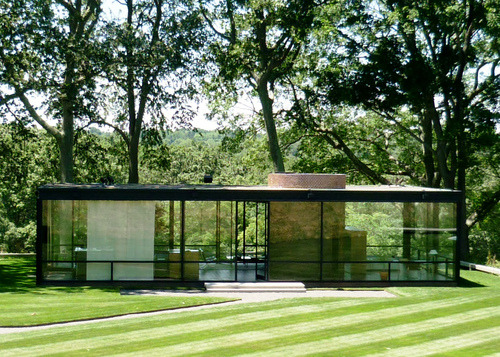
    I don’t have any hard data to support this claim, but I suspect that most people out there – particularly those with money – would prefer their home to look like something that Robert Stern designed as opposed to a glass box designed by Philip Johnson.

    And yet the latter is what architects and architecture students make pilgrimages to. I certainly did when I was in architecture school. 

    In fact, I think you’d have a difficult time getting into any architecture school right now with a portfolio of work as traditional as the work of Robert Stern. It’s simply not part of the architectural discourse at this stage.

    So to many architects, it can be difficult – even painful – to listen to what the public wants. Architects are not trained in terms of market size and profit maximization. It’s about passion. It’s a labor of love. And when you’ve already fallen in love, it can be hard to change your mind.

    Image: Flickr

  • 19 Duncan Street bought for $47 million

    image

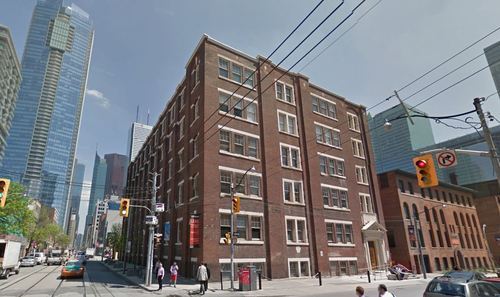
    Last week it was announced that Allied Properties and Westbank have acquired 19 Duncan Street in Toronto for $47 million.

    The property sits at the southeast corner of Adelaide Street West and Duncan Street (shown above), and includes an existing 61,911 square foot (GLA) office building, 36 surface parking spots, and a laneway (it was specifically called out in the press release).

    The plan is to restore the existing heritage building, as well as build additional retail space, office space, and rental apartments. Given the nature of this site and the team behind it, I have high hopes that it will end up a remarkable development project.

    It’s interesting to see the continuing interest in rental apartments here in Toronto – which is something I’ve written about before. Up until recently, the development community had almost zero interest in purpose built rental apartment buildings. Now they’re coming back in fashion.

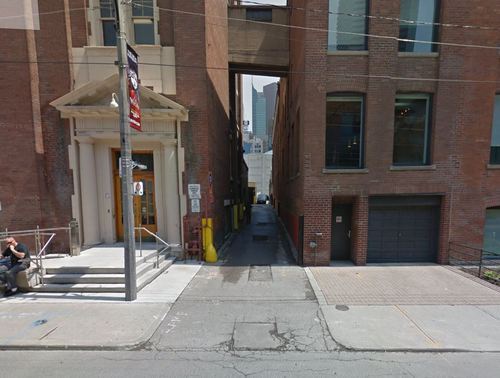
    But the other piece that’s interesting to me is the laneway. Below is a photo from Google streetview, showing what I believe is the laneway that the press release is referring to.

    image

    As many of you know, I’m involved in a non-profit here in Toronto called The Laneway Project (advisory role only). We want to transform Toronto’s underutilized laneways. And this strikes me as a perfect opportunity to do something really exciting at the corner of Adelaide and Duncan in the Entertainment District.

    So if the new owners have any interest in things that are exciting, I would encourage them to get in touch with me or one of the founders of The Laneway Project.