Daily insights for city builders, delivered every morning at 6 AM ET. I’m Brandon Donnelly — a Toronto-based real estate developer and founder of Globizen. I’ve been writing here since 2013.

Tag: atc

  • The unfinished city

    https://500px.com/embed.js

    Earlier this week I attended a talk at the University of Toronto called Data Innovation and City Governance. It was by Mark Kleinman who is from London, but is now a Visiting Scholar at the Munk School of Global Affairs.

    The topics covered would have been familiar to anyone who is a regular reader of this blog (the power of open data, the knowledge economy, etc…), so I’m not going to repeat it all here. But I did want to touch on one of his impressions of Toronto, which is that this is a city that is “never finished.”

    What does that mean?

    The opposite of a city that is never finished would be a city like Paris that feels a bit like a monument that is now done and shouldn’t be touched anymore. It’s a city that almost feels too precious to intervene in. This is obviously not the case for all of Paris, but I think you get the point.

    Toronto, on the other hand, is a city that is constantly building, changing, and renewing itself. There are often layers upon layers of new interventions being applied, which gives you the impression that the city will never be done. It’s constantly in flux.

    Some of you may not appreciate this kind of “messy” urbanism, but I think it gives cities a kind of entrepreneurial resiliency (resiliency is a hot topic right now in urbanist circles). Cities are an ecological system. And the most resilient ecological systems in the world are the ones that are able to adapt to constant change.

    So in my view I look at this as a feature, not a bug. The only constant is change.

  • Learning to build real estate financial models

    One of the things I did when I was in graduate school studying real estate and early on in my career was take a bunch of ARGUS and Excel modeling classes. Some of them I took through the University of Pennsylvania. Some of them I took through work. And some of them I just took on my own.

    Regardless, I always found them incredibly helpful. Because at the end of the day, you’re not just learning the software; you’re also learning the real estate business. You can’t build a financial model if you don’t understand the business. And I mean really understand it.

    So if you’re looking to get into real estate development or you just want to brush up on your skills, I would encourage you to consider taking a financial modeling course. I plan to do a refresher later this year.

    The last one I completed was through a company called REFM (Real Estate Financial Modeling). The founder is a Penn (Wharton) alum – so it must be good, right? 😉 There are a lot of self-study options if you just want to take them online from home and all of them include prebuilt Excel models that you can then use (and customize) going forward.

    Click here to check out REFM.

  • Value creation, transparency, and authenticity

    https://500px.com/embed.js

    I started writing this blog a year and 10 months ago. 

    At that time, I had no real title for it (it was just called “Cities”) and I had no idea where it was going to take me. All I knew was that I enjoyed the discipline of writing every day and that I wanted to talk about cities and city building. It was a way for me to neatly organize all of my passions – which span everything from architecture and real estate to technology and transportation.

    Since that time, this blog got a name (Architect This City). It was named by the Guardian (UK) as one of the best city blogs in the world. I’ve met an incredible array of different people (send me an email if you like coffee and are doing cool things). I get invited to comment on city building issues on a regular basis. And an incredible community of almost 10,000 daily readers has emerged (you can email subscribe here).

    A big thank you to everyone who reads and contributes to ATC.

    But over the course of writing this blog, something else unexpected happen. I started getting referred to as a “brander, marketer, and content creator.” Now, I’ll admit that I’ve become increasingly interested in these fields over the years, but it was certainly not something I thought of or could have predicted at the outset.

    What really happened though is that I simply started riding a wave that arguably took hold sometime around the mid-2000s and then focused my attention on an industry that has historically been slow to change (real estate). And that wave is the shift towards inbound marketing (as opposed to outbound or interruption marketing).

    If you’re a marketer, this is old news. You already know this. But I think there’s still lots of room for this to take hold in the real estate industry. So let’s talk about it a bit.

    To give you an example from outside real estate, take a look at Five O’ Clock magazine by Harry’s. Harry’s is a shaving company out of New York that offers moderately priced well-designed shaving supplies for men. It’s simple model that works very well.

    Their positioning has been around the idea of “Own Your AM”, which makes sense given that they are a shaving company. And so what they often do in their Five O’ Clock magazine is profile the mornings of interesting people, such as professional skier Jimmy Chin (who happens to live in one of the best places on earth).

    But if you do a search for the word “shave” in that Chin article, you won’t find it. Because it’s not about just creating content so that you can plug your business at every opportunity; it’s about creating value for your customers and building a relationship.

    And that’s really fundamental to the change I’m talking about. 

    Today, the marginal cost of reaching your customers has dropped to almost zero (even if you’re reaching out to them on a one-on-one basis over, say, social media). And so the opportunity exists for companies, brands, and individuals to do things that simply weren’t feasible before.

    Because of this, it is now possible for everyone to easily establish their own personal brand. I think we’re going to see more, not less, of that. And it has changed how we message and communicate – whether it be via blogs, social media, or online magazines.

    In my view it comes down to 3 considerations: value creation, transparency, and authenticity. If you can create value for your target audience and be transparent and authentic, you’re going to naturally draw people in. I try and do all of that on this blog and hopefully it comes through.

  • Driverless cars, urban mobility, and Toronto’s Gardiner Expressway

    image

    About a week ago I wrote a post questioning what driverless cars will mean for cities. I ended by saying that that it feels as if we’re going to see increasing tension between private and public transport.

    What I meant by that was simply that conventional notions around private car use are going to change. And ultimately that is going to mean that we need to rethink public transport and how that fits into a broader urban mobility framework.

    What do I mean by this?

    The International Transport Forum at the OECD recently published a fascinating report called, Urban Mobility System Upgrade: How shared self-driving cars could change city traffic. And it deals with exactly the sorts of things I am thinking about.

    The study looked of what might happen when all cars become self-driving in a mid-sized European city (specifically Lisbon, Portugal). They leveraged existing transportation data from the city, but replaced 100% of the human powered cars with two types of self-driving cars: TaxiBots and AutoVots.

    TaxiBots were driverless cars that would be shared with multiple people at the same time. In other words, they were a kind of pseudo-public transit. And AutoVots we’re your more conventional private taxi. They picked up one person at a time.

    So, what did they find?

    In the first scenario, they combined their TaxiBots and AutoVots with public transit (light rail) and discovered that the same number of people could be moved around with only 10% of the cars currently on the road. That’s a 90% reduction!

    They also found that the city needed 20% less on-street parking and 80% less off-street parking since driverless cars don’t need to sit idle waiting for a driver.

    In the second scenario, they removed mass transit from the equation. And in this instance they found that the city was still able to get around, but with an 80% reduction in the number of cars on the road. Remarkably, it also led to a 10% reduction in rush hour commute times.

    These are pretty profound changes. Reducing the number of cars on the road by 80-90% is a significant change. 

    But it’s also why I’ve been thinking about the tension between private and public transport. As we get better at optimizing “cars” (their definition will change), what becomes the role of true public transit?

    Ultimately, I think what will happen is a blurring of the two. In the example above, the TaxiBots served basically as small scale public transit. But that does not necessarily mean that true mass transit will become irrelevant. We’re just going to need to rethink how the entire mobility network fits together.

    I’d now like to bring this discussion back to Toronto for a minute.

    As many of you probably know from this blog, Toronto is on the cusp of deciding what to do with the eastern portion of the Gardiner Expressway (an elevated highway that runs across the downtown waterfront). It will go to City Council next month. 

    I firmly believe that we should remove it, but there many people who believe we shouldn’t. The main objection seems to be that the traffic projections indicate that removing it could make commuting into downtown – by car – 3 to 5 minutes longer by 2031

    By today’s standards, I believe this concern represents an outdated way of thinking about cities and urban mobility. Adding more lanes is like loosening your belt to deal with obesity. However, it gets even worse when you think about urban mobility in the context of this post.

    Given the profound transportation changes that are currently underway, I think there’s a strong likelihood that the Gardiner projections we have today will be completely wrong by 2031. I don’t know know for sure, but I’m guessing the models don’t account for the efficiencies being created by driverless cars and peer-to-peer networks.

    In other words, I am suggesting that those 3 to 5 minutes could prove to be a red herring. The relevant question should be: Which decision will allow Toronto to build the absolute best waterfront in the world? And in my opinion that leads to removing the Gardiner East.

    If you feel similarly, I would encourage you to write your local City Councillor.

  • A new chapter

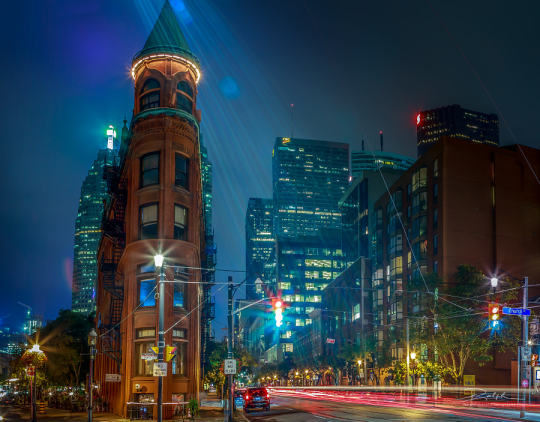
    Photograph St. Lawrence by Ralph Sobanski on 500px

    St. Lawrence by Ralph Sobanski on 500px

    I have an announcement to make on Architect This City today.

    Next week I’m joining the development team at CAPREIT (TSE: CAR.UN) here in Toronto. CAPREIT is one of Canada’s largest residential landlords. They are a growth-oriented real estate investment trust with over 41,839 residential units in major urban centers across both Canada and Ireland.

    They also happen to be headquartered in the St. Lawrence Market area, which means I now live and work in the same neighborhood. As we discussed here, location matters a lot.

    So here’s to a new chapter. I’m looking forward to diving into the multi-family business. Change is good.

  • How Bitcoin could transform home buying

    Earlier today a friend of mine sent me this Fast Company article talking about bitcoin and the future of home buying. I’m really glad he did. Both because I wasn’t yet sure what I was going to write about today and because this is a topic that I’m deeply interested in.

    I recently heard Brad Burnham (venture capitalist at Union Square Ventures) say in a talk that if you’re thinking about Bitcoin just as a currency, then you’re thinking about it in the wrong way. If you take nothing else away from today’s post, I think you should remember that. Bitcoin, and the underlying block chain architecture, have the potential to be very transformative.

    The Fast Company article was written by Matt Weiss of IDEO (the powerhouse design and innovation firm). Here’s an introductory snippet:

    Insert block chains: a relatively new and promising technology that could transform the way we digitally exchange value, similarly to how Internet protocols, like TCP/IP, transformed the way we exchanged information. For example, to transfer ownership of a home today, there are countless check of authenticity and intermediaries involved to insure the transfer is legitimate. By using a distributed database (a.k.a. “a block chain,” the same technology behind Bitcoin) to prove authenticity, we could legitimately transfer ownership immediately without the need of a middleman. In fact, when we think about block-chain technology and the industries it could disrupt, real estate tops the list. While Trulia, Redfin, Angie’s List and others have brought some transparency to the opaque world of home buying and home ownership, most of our experiences in this industry are fraught with incomplete, inaccurate, and asymmetric information.

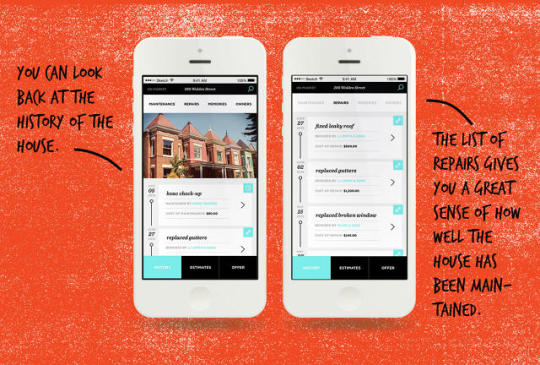
    Following this, he goes on to talk about what it might be like – each step of the way – to buy a house using the block chain technology. There are even mockups of what the app could look like. I highly recommend you give it a read if you’re interested or involved in this space.

    The real estate industry hasn’t seen a lot of innovation. It remains an opaque market with lots of information asymmetries. I have no doubt that will one day change; it’s just a question of when. Perhaps it’ll be the block chain that makes that happen.

    Image: IDEO via Fast Company

  • 32

    Today is my 32nd birthday. It felt like a beautiful summer day here in Toronto and so I mostly took the day off from anything too serious.

    At 1:00pm though, I did participate in a Jane’s Walk taking place right around the corner from me. As part of that, I spoke briefly about why I think Toronto should remove the eastern portion of the Gardiner Expressway and replace it with a surface boulevard.

    Given what the other speakers had to say and given some of what I heard at the event, this is definitely not a universal position. In fact, one person commended me on taking a “courageous stance.”

    A number of people seemed to support Quadrangle Architect’s Green Ribbon proposal and/or the notion that, whatever is done, the Gardiner Expressway must remain in operation.

    At the same time, quite a few of the people I spoke to seemed unsure of any position and instead came to the walk simply to learn more about the options. Hopefully by the end of it they were closer to one.

    If I have one piece of constructive feedback on the walk it’s that it wasn’t interactive enough. It’s fine to standup and talk for 5 minutes, but it would have been great to also have a discussion and debate. At the very least, I would have liked to see where most people stand. Hopefully you will all share that in the comment section of this post.

    I continue to believe that removing the Gardiner East is the right city building decision. But I also respect anyone who is willing to take a firm stance. Toronto City Council has already punted this decision before. It’s now time to make a decision and own it.

  • Tesla introduces a battery for your home

    image

    By accident, this week on Architect This City seems to be turning into Elon Musk week.

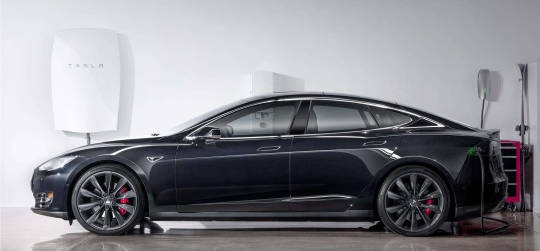
    Yesterday, Musk announced something called the Powerwall home battery. Measuring about 3′ x 4′, the shield looking battery pack will charge using the electricity generated from solar panels (or from the grid when rates are at their lowest) and then power your home.

    It’s designed for consumers and will cost between US$3,000 – $3,500 depending on capacity. The individual Powerwalls can also be daisy chained to increase capacity. It will be available starting this summer.

    A wall battery may not seem all that interesting to some, but I think this is actually a big deal for a few reasons.

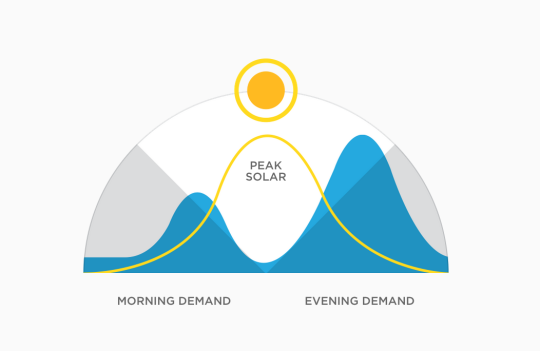
    Renewable energy is often both intermittent and produced when you don’t need it. Here’s a great chart from Tesla that shows what I mean:

    image

    During peak solar hours, most people aren’t home and most people aren’t consuming at peak levels. That’s why it’s important to be able to store the energy that you collect, whether it be from solar, wind or other renewal energy source. And from what I hear from my friends in the industry, storage has been a bit of an Achilles heel for adoption.

    It will also help to further decentralize energy production. What is produced locally (from say solar panels) will be stored locally for when it’s needed locally. This is in contrast to centralized production or producing energy locally and then feeding any excess capacity into the grid for use somewhere else. That requires transmission and will be by definition less efficient.

    Finally, the other interesting thing about Powerwall is that it closes the loop on two of Musk’s businesses: SolarCity and Tesla. SolarCity is about the production of renewable energy and Tesla is about the consumption renewable energy. But as the chart above shows, storage is often needed to link those two activities in an efficient way.

    All of this makes me excited about Powerwall.

    If any of you are an expert in this industry (which I am not) or you just have additional thoughts, I would love to hear from you in the comment section below.

    Images: Tesla

  • Segregation and income inequality in cities

    Photograph Baltimore Harbor by Wes Bunton on 500px

    Baltimore Harbor by Wes Bunton on 500px

    Given what is going on in Baltimore and other cities in the US right now, I thought it would be worthwhile to share an interesting article from City Observatory talking about income disparity and racial segregation in cities.

    There are significant racial income gaps in the United States (as well as in Canada). According to City Observatory, the average black household earns 42% less than the average white household in America. There is, of course, lots of regional variation, but this is what it looks like nationwide.

    The interesting thing about this racial income gap though, is that there’s one factor that seems to account for the bulk (up to 60%) of the variation: residential segregation. In other words, the more segregated a city becomes, the more this black/white income disparity increases.

    Here’s a snippet from Joe Cortright of City Observatory:

    …there are good reasons to believe that high levels of segregation impair the relative economic opportunities available to black Americans. Segregation may have the effect of limiting an individual’s social networks, lowering the quality of public services, decreasing access to good schools, and increasing risk of exposure to crime, all of which may limit or reduce economic success. This is especially true in neighborhoods of concentrated poverty, which tend to be disproportionately neighborhoods of color.

    We also know that there are all kinds of negative externalities associated with income inequality. Therefore, there’s a strong case to be made for addressing segregation and the spatial organization of our cities. 

    I recommend you read the City Observatory article for a more nuanced explanation of the above relationship.

  • The psychological benefits of third places

    Photograph - by rinatus (rinatus) on 500px

    – by rinatus (rinatus) on 500px

    Today I’m thinking about extraversion and third places within cities.

    As many of you I’m sure know, the idea of a third place is that after your home (first place) and your work (second place), cities have what are known as third places. This could be a coffee shop, a barber shop, or a public space (to name only a few examples).

    This, of course, is not a new idea. For decades people have been arguing that third places are essential for establishing a sense of community, place, and belonging. In fact, this emphasis on third place is one of the ingredients that made Starbucks so successful.

    But with the rise of the internet and freelancing, third places are becoming even more important. That’s why coffee shops have become arguably the best example of a third place in today’s cities. They’ve even become the new second place for some (many?) people.

    But beyond just a place to meet and socialize, I’ve been thinking today (while I was at a third place) about the psychological benefits of these spaces.

    For example:

    One of the key differences between extraverts and introverts is where they draw their energy from. For introverts, they tend to draw it from within. In order to recharge, they often feel the need to retreat and be left alone. Extroverts, on the other hand, draw their energy from the outside world. They charge up by being around other people.

    When I was completing my MBA at Rotman, one of the things they had us do at the beginning and at the end of the program was complete the Myers-Brigg personality test

    In both instances, I was as extroverted as they come (I am consistently what is known as an ENTJ). And from experience, I can say that I definitely feed off the energy of other people.

    But the interesting thing about this – to tie both of these topics back together – is that there appears to be a clear correlation between extroversion and a preference for living in urban centers. And given what I just said, that probably makes sense to you.

    So if you too classify yourself as an extroverted person, then third places are more than just a busy coffee shop or a vibrant public space. They are where you derive your energy and where you feel alive. And that’s a pretty powerful thing in my view.